Category Archives: E.coli

RASFF Alert – E.coli – Smooth Clams

RASFF

Escherichia coli in smooth clam (Callista chione) from Italy in Italy

Research – Consumer Knowledge and Behaviors Regarding Food Safety Risks Associated with Wheat Flour

Journal of Food Protection

Consumers do not consider flour, a low-moisture food product, a high risk for microbial contamination. In the past 10 years, however, flour has been identified as a source of pathogenic bacteria, including Salmonella and Escherichia coli. Online surveys were conducted to study consumers’ flour handling practices and knowledge about food safety risks related to flour. The survey also evaluated message impact on three food safety messages in communicating information and convincing consumers to adopt safe flour handling practices. Flour-using consumers (n = 1,045) from the United States reported they used flour to make cakes, cookies, and bread. Most consumers stored flour in sealed containers. Less than 1% kept a record of product identification numbers, such as lot numbers, and less than 11% kept brand and use-by date information. Many consumers (85%) were unaware of flour recalls, or outbreaks, and few (17%) believed they would be affected by flour recalls or outbreaks. If the recall affected the flour they bought, nearly half of the consumers (47%) would buy the same product from a different brand for a few months before they returned to the recalled brand. Among consumers who use flour to bake, 66% said they ate raw cookie dough or batter. Raw dough “eaters” were more difficult to convince to avoid eating and playing with raw flour than “noneaters.” Food safety messages were less impactful on those raw dough eaters than noneaters. Compared with the food safety message with only recommendations, those messages with recommendations and an explanation as to the benefits of the practice were more effective in convincing consumers to change their practices. These findings provide insight into effective consumer education about safe flour handling practices and could assist in the accurate development of risk assessment models related to flour handling.

Wales – North Wales playgroup, breakfast and afterschool clubs closed after child struck down with E.coli

Daily Post

Public health chiefs have confirmed that as a result Cylch Meithrin and Clwb Y Morfa, Breakfast Club and Afterschool Club have all closed for a deep clean.

A parent at Ysgol Glan Morfa, who asked not to be named, said: “There are a number of kids in my child’s class who have been off all week.”

Public Health Wales, Conwy County Borough Council and Betsi Cadwaladr University Health Board are now investigating

Richard Firth, consultant in health protection at Public Health Wales confirmed a single case of a Shiga toxin-producing E.coli (STEC) has been identified in a pupil at the Cylch Meithrin, Abergele.

Research – The serious and long-term effects of foodborne illness

MSU

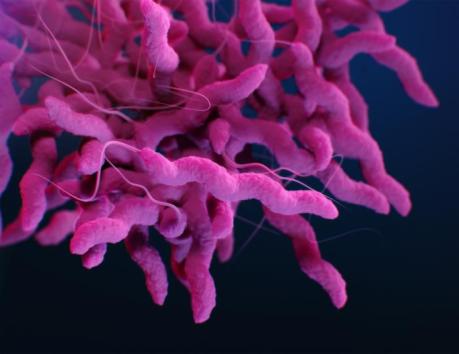
Campylobacter kswfoodworld

Many people think if they eat something “bad” they might spend some uncomfortable time in the restroom then go on with their lives in a day or two. Actually, foodborne illness can lead to chronic disease, permanent disability and even death. Here are some of the lesser-known facts about the long term effects of food borne pathogens.

Reactive arthritis, a type of joint inflammation that affects the knees, ankles or feet can develop after being exposed to Campylobacter jejuni  or Salmonella. Reactive arthritis usually lasts fewer than 6 months, but this condition may recur or become chronic arthritis. Campylobacter is found in raw and undercooked poultry, unpasteurized milk and contaminated water. Salmonella is also found in eggs, undercooked meat and poultry, and can be transferred to other foods through feces. Campylobacter infection afflicts millions of Americans annually and hospitalizes more than 10,000. Campylobacter is associated with Guillain-Barré syndrome (GBS). GBS patients can become permanently disabled and paralyzed; many require hospital care. Campylobacter also can trigger arthritis, heart infections and blood infections.

Foodborne illnesses caused by bacteria also increase the risk of developing irritable bowel syndrome (IBS). IBS is a disorder of unknown cause that is associated with abdominal pain, bloating, and diarrhea or constipation or both. There is no cure for IBS.

Children are the most likely to be infected and have the most serious complications from E. coli O157:H7. They can develop hemolytic uremic syndrome (HUS), HUS can lead to death, or in some cases t long-term or permanent health problems, including end-stage kidney disease, neurological complications, and insulin-dependent diabetes. Adults who had recovered from E. coli O157:H7 infections had increased risks of high blood pressure, kidney problems and cardiovascular disease. E. Coli is found in undercooked ground beef, unpasteurized (raw) milk and juice, soft cheeses made from raw milk, and raw fruits and vegetables (such as sprouts). It can also be found in contaminated water and feces of infected people.

Listeria monocytogenes infects thousands of Americans every year and has been associated with infections of the brain and spinal cord, resulting in serious neurological dysfunctions or death. Most reported cases occur in children under the age of 4, and about 1 in 5 people afflicted die as a result of the infection. In pregnant women, listeriosis can cause miscarriage, premature birth or stillbirth.

Listeriosis survivors often are left with serious neurological dysfunctions, including seizures, paralysis and impaired ability to see, hear, swallow or speak. Severe cases often result in partial to total impairment and can require life-long residential care with no possibility of work. Listeria is found in ready-to-eat deli meats and hot dogs, refrigerated pâtés or meat spreads, unpasteurized (raw) milk and dairy products, soft cheese made with unpasteurized milk, such as queso fresco, feta, brie, camembert, refrigerated smoked seafood and raw sprouts.

The long-term effects of foodborne disease are still not fully understood. New findings unfold as research is performed, but until then, taking foodborne illness seriously can go a long way in protecting health. This is another instance where prevention truly is the best medicine.

Hawaii – DEPARTMENT OF HEALTH WARNS PUBLIC NOT TO DRINK RAW MILK

HHG

DOH embargoes unpasteurized goat milk
from various pet store supply and food retailers

HONOLULU – Hawai‘i Department of Health Food Safety Branch inspectors are visiting pet supply stores and food retailers throughout the state and issuing cease and desist notices to those engaged in the illegal sale of unpasteurized goat milk.

An embargo on raw milk products, which are not safe for human consumption, is now in effect. Pet stores or any other retailer that has raw milk in their possession must remove the product from sale immediately and destroy or return the product to their supplier. Failure to do so may result in seizure and fines of up to $10,000 per day.

As of July 1, there were nearly 20 O‘ahu pet stores that were selling the unpasteurized goat milk product. The health department is continuing its inspections today.

Under Hawai‘i law, only Grade A pasteurized milk and milk products may be sold to the final consumer or to restaurants.

“The goat milk is being advertised as ‘pet food,’ but the sale of any form of raw fluid milk is a risk to public health because it is easily diverted for human consumption,” said Peter Oshiro, chief of the Food Safety Branch. “There are many in our community that mistakenly believe that drinking raw milk is healthy, but this is simply untrue.”

Drinking unpasteurized milk is unsafe because it may result in serious illnesses, hospitalizations and even death. Raw milk has the potential to carry and transmit dangerous pathogens including E. Coli, Salmonella, and a host of other bacteria that can cause disease. It is especially dangerous for our keiki, kupuna, or those with weakened immune systems to drink raw milk because they may not be able to fend off these pathogens as a normal healthy individual would.

Drinking raw milk is particularly dangerous because children infected through consumption of raw milk can spread disease through fecal-oral means and cause a serious disease outbreak among other children with whom they come into contact. Raw milk consumption by a few individuals has the potential to negatively impact our community at large by causing an outbreak of disease.

The Food Safety Branch protects and promotes the health of Hawai‘i residents and visitors through education of food industry workers and regulation of food establishments statewide. The branch conducts routine health inspections of food establishments where food products are prepared, manufactured, distributed, or sold. The branch also investigates the sources of foodborne illnesses and potential adulteration; and is charged with the prevention or mitigation of foodborne outbreaks. Health inspectors work with business owners, food service workers, and the food industry to ensure safe food preparation practices and sanitary conditions.

# # #

PDF: Department of Health warns public not to drink raw milk – unpasteurized goat milk product embargoed

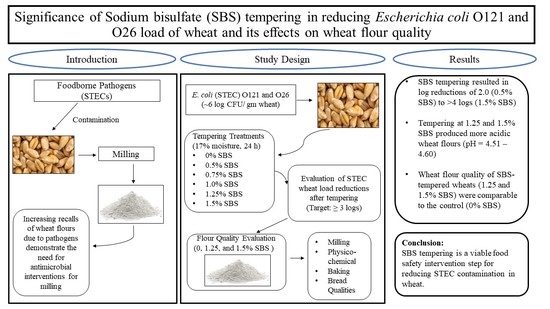
Research – Significance of Sodium Bisulfate (SBS) Tempering in Reducing the Escherichia coli O121 and O26 Load of Wheat and Its Effects on Wheat Flour Quality

MDPI

The occurrence of recalls involving pathogenic Escherichia coli-contaminated wheat flours show the need for incorporating antimicrobial interventions in wheat milling. The objectives of this study were to assess the efficacy of sodium bisulfate (SBS) tempering in reducing E. coli O121 (ATCC 2219) and O26 (ATCC 2196) wheat load and to evaluate the impact of effective (≥3.0 log reductions) SBS treatments on wheat flour quality. Wheat grains were inoculated with E. coli (~6 log CFU/g) and tempered (17% moisture, 24 h) using the following SBS concentrations (%wheat basis): 0, 0.5, 0.75, 1.0, 1.25, and 1.5% SBS. Reductions in E. coli O121 and O26 wheat load at different time intervals (0.5, 2, 6, 12, 18, and 24 h) during tempering were evaluated. The addition of SBS during tempering resulted in E. coli (O121 and O26) log reductions of 2.0 (0.5% SBS) to >4.0 logs (1.5% SBS) (p ≤ 0.05). SBS tempering (1.25 and 1.5% SBS) produced acidic wheat flours (pH = 4.51–4.60) but had comparable wheat flour properties in terms of composition, dough, and bread-making properties relative to the control (0% SBS). SBS tempering reduced the E. coli O121 and O26 load of wheat after tempering with minimal effects on wheat flour quality. View Full-Text

Vietnam Research – Microbiological safety of ready-to-eat foods in hospital and university canteens in Hanoi, Vietnam

Journal of Food Protection

The aim of this study is to analyze and document the microbiological safety and quality of ready-to-eat foods in hospital and university canteens in Hanoi, Vietnam. A total of 420 ready-to-eat food products from 21 canteens were sampled in July 2018 and May 2019. The ratio of samples exceeding the unsatisfactory level for Total Plate Count (TPC) was 31%. Escherichia coli, Listeria and Staphylococcus aureus were detected in 35 (8.3%), 99 (24%), 46 (11%) samples, with 3%, 10% and 0% exceeding the unsatisfactory level, respectively. The Total Plate Count (TPC), Listeria, Bacillus cereus, E. coli, S. aureus ranged from below detection limit to 5×10 9 , 4.6×10 5 , 6.2×10 3 , 3.4×10 3 , 7.6×10 3 CFU/g, respectively. Listeria monocytogenes was isolated from 3/420 samples (0.7%). In addition, there were 21 out of 410 samples (5%) contaminated with Salmonella. Overall, our data indicate frequent problems with the microbiological quality and safety of these canteen foods in Hanoi, and provide a baseline measurement that will allow environmental health officers and food microbiologists to develop targeted intervention strategies to reduce the economical and public health risk associated with these foods.

RASFF Alert – E.coli – Live Mussels

RASFF

Too high count of Escherichia coli in live mussels (Mytilus edulis) from the Netherlands in France

Czech Republic- Beef tartare – E.coli EPEC

Potravinynapranyri

Illustration photo no. 1

Place of inspection:
Velka Bystrice ( CSA 987, 783 53 Velka Bystrice )
Company ID: 64945880
Unsatisfactory parameter:

Escherichia coli enteropathogenic (EPEC)

Escherichia coli enteropathogenic, which causes diarrhea and vomiting , has been detected in the product  .

Lots: DP 10.05.2021
Expiration date: 10.05.2021
Packaging: food packaging
Quantity of product in package: 250 g
Producer: Uzeniny Příbram, as Antala Staška 1670/80, Prague 4, Czech Republic
Date of sampling: 4. 5. 2021
Reference number: 21-000165-CAFIA-CZ
The sample was found by an official inspection of the State Agricultural and Food Inspection Authority.

USA – Merkley and Sons Packing Co. recalls ground beef over E. coli test

Food Poison Journal

Merkley & Sons Packing Co. of Jasper, is voluntarily recalling certain ground beef products because of possible E. coli contamination.

The company says the recall involves 1-pound and 5-pound packages of “Ground Beef, 80% Lean,” and is out of an abundance of caution after product tracing.