Category Archives: E.coli

Major E. coli, and Salmonella outbreaks highlighted at a conference; investigations ongoing

Food Safety News

Two major foodborne outbreaks have recently been highlighted at a European conference on infectious diseases.

Presentations at the European Scientific Conference on Applied Infectious Disease Epidemiology (ESCAIDE) covered an E. coli outbreak from Nestlé pizzas in France and a multi-country monophasic Salmonella Typhimurium outbreak due to Ferrero chocolate.

In February 2022, Santé Publique France identified more cases of the pediatric hemolytic uremic syndrome (HUS) than usual with eight infections. Cases were positive for Shiga toxin-producing E. coli (STEC) O26:H11 or O103:H2 identified by whole genome sequencing (WGS). Only two people were sick from E. coli O103.

Ireland – E. coli found in 1 in 20 private water supplies, says EPA.

EPA

Key Findings for 2021

➤Compliance with drinking water standards in private supplies hasn’t improved in recent years. One in 20 supplies failed to meet the standard, compared to 1 in 200 for public water supplies.

➤Local authorities are not monitoring over a quarter of small private supplies for E. coli – and there may be many more supplies which need to be registered with the local authority.

➤Despite these shortcomings, over 60% of government funding available for infrastructural improvements went unused by water suppliers.

➤The timely completion of the Government review of rural water services will provide direction and support to water suppliers to address risks to public health.

Viet Nam – Salmonella, Bacillus cereus, E.coli detected in food samples in Nha Trang school outbreak

Outbreak News Today

In a follow-up on the food poisoning outbreak that affected hundreds of schoolchildren at the Ischool Nha Trang in Khanh Hoa province, Vietnam, health officials now report test results from the Pasteur Institute Nha Trang show pathogenic bacteria were found in the fried chicken wings of the meal, causing the outbreak which sickened students at a Ischool Nha Trang.

Specifically, Salmonella sp., Bacillus cereus and Escherichia coli were detected in food samples. In addition, Bacillus cereus was also detected in fish sauce samples.

According to our previous report, some 400 students were sickened including more than 200 hospitalizations and one death was reported in a first grade student after eating a school lunch.

France – HULLS – E.coli

Gov france

Identification information of the recalled product

  • Product category Feed
  • Product subcategory Fishery and aquaculture products
  • Product brand name/
  • Model names or references HULLS SOLD AT THE FISH STAND FROM 5 TO 7 NOVEMBER 2022
  • Identification of products
    Batch
    HULLS SOLD AT THE FISH STAND FROM 5 TO 7 NOVEMBER 2022
  • Products ListReminder_product_Auchan_Luxeuil.pdfAttachment
  • Packaging Hulls sold in bulk
  • Marketing start/end date From 05/11/2022 to 07/11/2022
  • Storage temperature Product to be stored in the refrigerator
  • Health mark/
  • Further information The packaging date is indicated on the bag label
  • Geographic area of ​​sale Auchan-Luxeuil
  • Distributors Auchan-Luxeuil

Practical information regarding the recall

  • Reason for recall presence of E Coli
  • Risks incurred by the consumer Escherichia coli

Research – Low levels of E. coli found in Norwegian produce testing

Food Safety News

Testing of fresh produce in Norway has found a low level of E. coli contamination.

The Norwegian Food Safety Authority (Mattilsynet) commissioned the Veterinary Institute to examine ready-to-eat lettuce and sugar snap peas in 2021.

A total of 118 samples, of which 37 were sugar snap peas and 81 ready-to-eat leafy greens, were analyzed. Salmonella was not detected, while E. coli was found in 11 samples, one of sugar snap peas and 10 of lettuce. E. coli, as a hygiene indicator, at levels above the guideline values was only detected in one sample of lettuce.

Results were considered unsatisfactory if three or more samples contained more than 100 colony forming units per gram or one sample contained above 1,000 CFU/g.

Officials said finding high levels of E. coli in lettuce may indicate the production process is not working optimally. Good raw material control and management of the washing and rinsing process are important, so microorganisms do not build-up and cross-contamination via water is minimized.

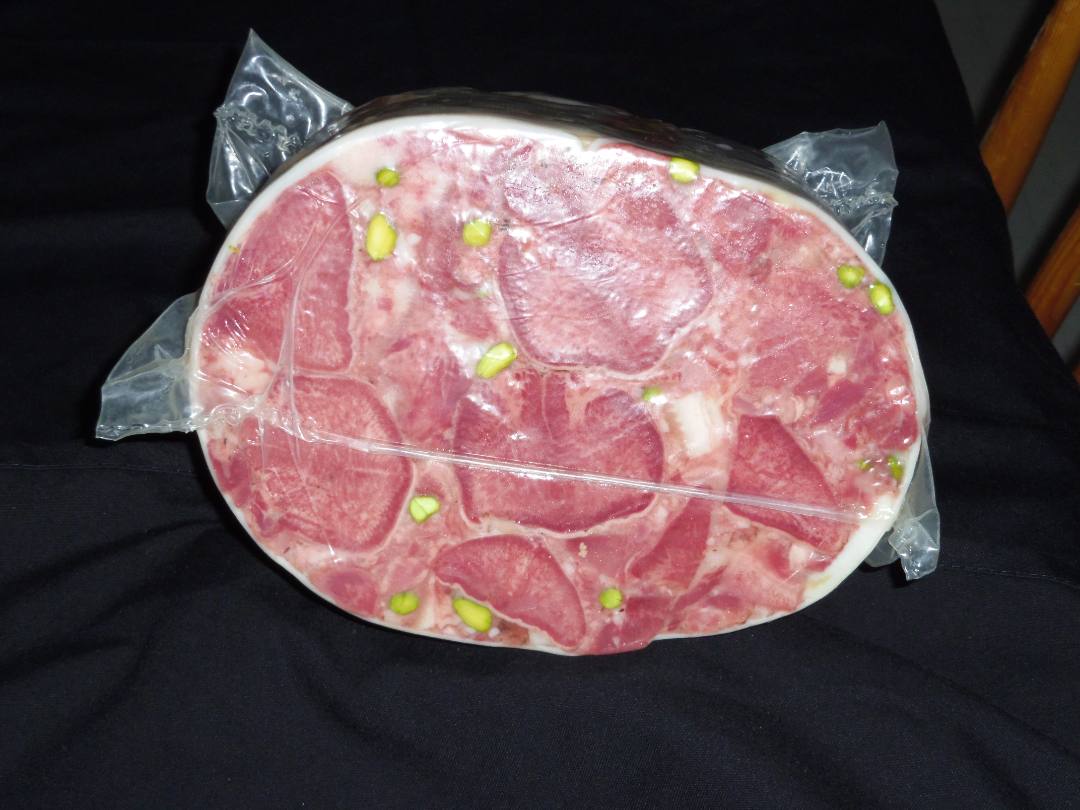
France – Pistachio rolled head – E.coli and Staphylococcus aureus

Gov france

Identification information of the recalled product

  • Product category Feed
  • Product subcategory Meats
  • Product brand name DIENNET REGIONAL CHARCUTERIE
  • Model names or references PISTACHIO ROLLED HEAD DIENNET
  • Identification of products
    Lot Date
    224203 Use-by date 16/11/2022
  • Packaging Slices vacuum packed 250g Whole 2.5kg and/or 4.5kg
  • Marketing start/end date From 19/10/2022 to 02/11/2022
  • Storage temperature Product to be stored in the refrigerator
  • Health mark FR 01 263 001 EC
  • Further information Product sold in the LS and traditional and LS charcuterie department, non-contractual photo
  • Geographic area of ​​saleDepartments: AIN (01), RHONE (69)
  • DistributorsCarrefour City, Carrefour Contact, Leclerc, Proxi, Super U, U Express, Utile
  • List of points of saleclient_list.pdf

Practical information regarding the recall

  • Reason for recallMICROBIOLOGICAL NON-COMPLIANCE
  • Risks incurred by the consumerEscherichia coli
    Staphylococcus aureus (agent responsable d’intoxination staphylococcique)

Austria sees a rise in reports of E. coli in 2021

Food Safety News

Austria recorded an increase in the number of reported E. coli infections in 2021, based on the latest data.

In 2021, 1,437 specimens were processed at the National Reference Centre for E. coli. Overall, 1,286 human samples, 79 food, and 35 pet food samples were analyzed.

A total of 476 human stool samples tested positive for Shiga toxin-producing E. coli (STEC). Of these, 310 isolates were confirmed as Shiga toxin-producing compared to 242 in 2020.

In 2021, only 34 were E. coli O157 with the rest non-O157. Among the latter, there were 25 O26, 26 O103, three O111, and 12 O145 isolates. In the Austrian Epidemiological Notification System (EMS), 384 cases were reported, up from 304 in 2020.

In Upper Austria, 53 cases were reported to the EMS in 2020 compared to 104 in 2021. This same state sent 123 human samples to the National Reference Centre in 2020 versus 566 in 2021.

USA – FDA – Core Outbreak Table

FDA

What’s New

  • For the outbreak of Listeria monocytogenes (reference #1057) in Ice Cream, the outbreak has ended, and FDA’s investigation has closed.
  • For the outbreak of E. coli (reference #1121) in a not yet identified food, the case count has increased from 10 to 11 cases.

France – Nestlé ‘found E. coli in flour at Buitoni pizza factory in 2021’


Just Food

Nestlé reportedly found E. coli in flour at the Buitoni pizza factory in France linked to a fatal outbreak this year back in August 2021.

French TV programme Envoyé Spécial has claimed an internal document shows the bacteria was picked up in flour at the Caudry site seven months before the Swiss giant recalled almost 1m pizzas and halted production.

Around fifty children fell sick, cases that have been linked to eating Buitoni Fraîch’Up pizzas. Two children died.

USA – Say No to Raw Dough!

CDC

What You Need to Know

  • Don’t taste or eat raw (unbaked) dough or batter.
  • Don’t let children handle or play with raw dough, including play clay and dough for crafts.
  • Uncooked flour and raw eggs can contain germs that can make you sick if you taste raw dough.
  • Wash your hands, bowls, utensils, and countertops after handling raw flour, eggs, or dough.

Spending time with family while baking is a great way to celebrate special occasions. When making cookies, brownies, cakes, or bread, you might be tempted to taste a bite before it’s fully baked.

But you can get sick after eating or tasting raw (unbaked) dough or batter. Children can get sick from handling or eating raw dough used for crafts or play clay, too. Follow these safety tips to help you and your loved ones stay healthy when preparing and handling raw dough.

Raw Dough Can Contain Germs That Make You Sick

Flour doesn’t look like a raw food, but most flour is raw. That means it hasn’t been treated to kill germs that cause food poisoning, such as Escherichia coli (E. coli). These harmful germs can contaminate grain while it’s still in the field or flour while it’s being made. Steps like grinding grain and bleaching flour don’t kill harmful germs—and these germs can end up in flour or baking mixes you buy at the store. You can get sick if you eat unbaked dough or batter made with flour containing germs. Germs are killed only when food made with flour is baked or cooked.

CDC investigated outbreaks of E. coli infections linked to raw flour or cake mix in 20162019, and 2021. Some of these investigations led to recalls. Flour and baking mixes containing flour have long shelf lives, meaning they do not go bad quickly. It’s a good idea to check your pantry to see if you have any flour or baking mixes that have been recalled in recent years (search FDA’s recall listexternal icon). If you have any recalled flour or baking mixes, throw them away.

Raw eggs are another ingredient in dough and batter that can make you or your loved ones sick. Raw or lightly cooked eggs can contain Salmonella, a germ that causes food poisoning. Find out how to handle and cook eggs properly.

Some companies make edible cookie dough and brownie batter that you can find in stores. These products are made with heat-treated flour and pasteurized eggs or no eggs. Read the label carefully to make sure the dough is meant to be eaten without baking or cooking.

Stay Safe When Handling Flour and Other Raw Ingredients

Follow these practices to prevent food poisoning when you are baking and cooking with flour and other raw ingredients.

  • Do not taste or eat any raw dough or batter. This includes dough or batter for cookies, brownies, cakes, pie crusts, tortillas, pizza, biscuits, pancakes, or crafts made with raw flour, such as homemade play dough or holiday ornaments.
  • Do not let children play with or eat raw dough, including dough for crafts.
  • Bake raw dough, such as cookie dough, and batter, such as cake mix, before eating.
  • Follow the recipe or package directions for cooking or baking. Use the temperature and cooking time given in the recipe or directions.
  • Do not make milkshakes with products that contain raw flour, such as cake mix.
  • Do not use raw homemade cookie dough in ice cream.
    • Cookie dough ice cream sold in stores contains dough that has been treated to kill harmful germs.
  • Keep raw foods, such as flour and eggs, separate from ready-to-eat foods. Because flour is a powder, it can spread easily.
  • Follow label directions to refrigerate products containing raw dough or eggs until they are baked or cooked (for example, store-bought cookie dough).
  • Clean up thoroughly after handling flour, eggs, or raw dough.
    • Wash your hands with soap and water after handling flour, raw eggs, or any surfaces they have touched.
    • Wash bowls, utensils, countertops, and other surfaces with warm, soapy water.