Category Archives: E.coli

Research- Repeated cross-sectional study identifies differing risk factors associated with microbial contamination in common food products in the United Kingdom

Science Direct

Highlights

E. coli was found in 29–99% of the five food types studied.

Salmonella was higher in imported frozen chicken than domestic chilled chicken.

E. coli and Klebsiella detection were higher in summer and autumn for leafy greens.

Klebsiella detection was higher in summer for chicken and pork.

Vibrio contamination was common in raw prawns at 60.4%.

Abstract

All foods carry microbes, many of which are harmless, but foods can also carry pathogens and/or microbial indicators of contamination. Limited information exists on the co-occurrence of microbes of food safety concern and the factors associated with their presence. Here, a population-based repeated cross-sectional design was used to determine the prevalence and co-occurrence of Escherichia coli, Klebsiella spp., Salmonella spp. and Vibrio spp. in key food commodities – chicken, pork, prawns, salmon and leafy greens. Prevalence in 1,369 food samples for these four target bacterial genera/species varied, while 25.6% of all samples had at least two of the target bacteria and eight different combinations of bacteria were observed as co-occurrence profiles in raw prawns. Imported frozen chicken was 6.4 times more likely to contain Salmonella than domestic chicken, and imported salmon was 5.5 times more likely to be contaminated with E. coli. Seasonality was significantly associated with E. coli and Klebsiella spp. contamination in leafy greens, with higher detection in summer and autumn. Moreover, the odds of Klebsiella spp. contamination were higher in summer in chicken and pork samples. These results provide insight on the bacterial species present on foods at retail, and identify factors associated with the presence of individual bacteria, which are highly relevant for food safety risk assessments and the design of surveillance programmes.
Research – Inactivation of Escherichia coli in an Orange Juice Beverage by Combined Ultrasonic and Microwave Treatment

MDPI

Abstract

The inactivation of Escherichia coli is one of the major issues in the food industry. The present study focuses on the application of a combined microwave-ultrasound system for the optimization of the inactivation of Escherichia coli ATCC 25922 in an orange juice drink. Using response surface methodology (RSM), trials were planned with a Box–Behnken Design (BBD) to maximize the impact of microwave power (A: 300–900 W), microwave treatment time (B: 15–35 s), and time of ultrasound (C: 10–30 min) on E. coli inactivation. Analysis of variance (ANOVA) was carried out and E. coli inactivation was expressed with a mathematical equation depending on the factors. The results showed that both the microwave treatment time and the time of ultrasound were effective as independent variables in eliminating the E. coli strain. However, the effect of these two variables, ultrasound and microwave exposure time, in combination was significantly greater than when examined separately. RSM modeling determined that optimal treatment conditions include 900 W microwave power, 33 s microwave treatment time, and 20 min time of ultrasound to achieve an 8-log reduction of E. coli, constituting total inactivation. The results of this study showed that ultrasound-microwave treatment is a potential alternative processing method for an orange juice beverage.

Research – Use of a phage cocktail to reduce the numbers of seven Escherichia coli strains belonging to different STEC serogroups applied to fresh produce and seeds

Wiley Online

Abstract

The aims of this research were to evaluate the effectiveness of a phage cocktail at reducing seven Shiga toxigenic Escherichia coli (STEC) serogroups on different food matrixes: mung bean sprouts (MBP), lettuce, and mung bean seeds (MBS) and to test the phage cocktail effectiveness to reduce E. coli O157 on Romaine and iceberg lettuce. To study the effect of the type of food matrix on the STEC phage cocktail effectiveness, a mixture of seven highly sensitive STEC strains designated as phage propagation strains (PPS) were used to adulterate Romaine lettuce, MBP, and MBS matrixes at a concentration of 105 logs CFU/g. A subsample of the treated MBS was germinated to assess STEC survival. Recovered STEC strains were confirmed using latex agglutination and PCR. To test the phage cocktail effectiveness to reduce E. coli O157:H7 on Romaine and iceberg lettuce, a mixture of four STEC strains (different than phage propagation strains, non-PPS) at both low (103 CFU/g) and high (105 CFU/g) concentrations were used to spike the samples in scaled up trials for the purpose of potential commercialization. Phage treatments including a combination of STEC phage cocktail and chlorinated water treatment were then applied to lettuce in a simulated scaled-up trial. STEC was assessed on the treated samples at different storage time and temperatures (0, 24, 48, and 72 hr at 2, 10 and 25°C). In the food matrix trial, the combination of STEC phage cocktail and chlorinated water-reduced PPS (p < 0.001) STEC on lettuce by 2.1 log10 CFU/g and on MBP by 2.2 log10 CFU/g. However, isolates from all 7 STEC serogroups remained viable after phage treatment in both lettuce and MBP; particularly those associated with serogroup O111, O121, O103, and O145, while only a few colonies of serogroup O26, O45, and O157 were detected. Lettuce adulterated with low levels of 4 non-PPS E. coli O157:H7 (103 CFU/g) achieved a reduction of 2.6–3.2 logs. While a reduction 1.7–2.3 logs was achieved by the phage cocktail when lettuce was inoculated with 105 CFU/g. Overall phage performance was more effective at 2 and 10°C and improved over storage time up to 72 hr. However, for MBS, the phage cocktail was not able to kill any of the STEC populations as all of them recovered during germination.

Research – Effects of UV-C Irradiation and Vacuum Sealing on the Shelf-Life of Beef, Chicken and Salmon Fillets

MDPI

Abstract

One-third of the world’s food supply is lost, with meat being a major contributor to this loss. Globally, around 23% of all meat and 35% of all seafood products are lost or wasted. Meats and seafood products are susceptible to microbial spoilage during processing, storage, and distribution, where microbial contamination causes significant losses throughout the supply chain. This study examined the efficacy of UV-C irradiation and vacuum-sealing in preventing microbiological deterioration in beef, chicken, and salmon fillets. The samples were sterilized using a constant UV-C irradiation dose of 360 J/m2 and stored under a reduced pressure of 40 kPa. A microbiological analysis was conducted daily to examine the microbial contamination, which included counting the colonies of Pseudomonas spp., aerobic bacteria, lactic acid bacteria (LAB), Salmonella, and Escherichia coli, as well as monitoring the increase in pH levels. The results demonstrated a statistically significant difference (p > 0.05) in the aerobic bacteria counts between the storage conditions and storage days in all samples, which is a primary indicator of microbial spoilage. In contrast, the differences varied in the Pseudomonas spp. and LAB counts between the storage conditions and storage days, and there was no significant difference (p < 0.05) in the pH levels between the storage conditions. The results indicate that the combination of UV-C irradiation and vacuum sealing effectively inhibits microbial growth and extends the shelf-life of beef, chicken, and salmon fillets by 66.6%.

Germany – BIOGRENO Organic Herb Mix, deep-frozen – SeBIOGRENO Organic Herb Mix, deep-frozen -STEC E.coli

LMW

Alert type: Food
Date of first publication: 02/01/2023
Product name:

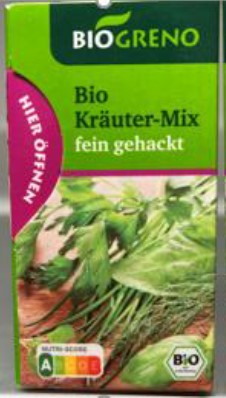
BIOGRENO Organic Herb Mix, deep-frozen

Product images:

Image BIOGRENO herbal mix.jpg

Photo from the Dresden consumer market by employees

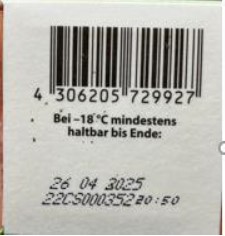
Image batch +BID BIOGRENO herb mix.jpg

Photo from the Dresden consumer market by employees

Manufacturer (distributor):

Manufacturer: Distributor: Darégal SAS Darégal Gourmet Deutschland GmbH 6 boulevard Joffre Gewerbepark 5a F- 91490 Milly-la-Forêt D – 49143 Bissendorf

Reason for warning:

Detection of verotoxin-producing Escherichia coli (VTEC/STEC)

Packaging Unit: Cardboard box – 50g
Durability: 04/26/2025
Production date: 04/26/2022
Lot identification: 22CS000352
Further information:

Escherichia coli (E.coli)

Enterohemorrhagic Escherichia coli (EHEC) An EHEC (synonyms: STEC, VTEC) disease usually manifests itself within a week after infection with diarrhea and abdominal cramps. Babies, small children, the elderly and people with a weakened immune system in particular can develop more severe illnesses with bloody diarrhea. Rarely, especially in small children, acute kidney failure can occur in a second flare-up a few days after the onset of diarrhea. Anyone who has eaten this food and develops severe or persistent symptoms should seek medical attention and report possible EHEC infection. It makes no sense to seek preventive medical treatment without symptoms.

Click to access 2023_01_31+Produktr%FCckruf+BIOGRENO.pdf

Further information on the pathogen can be found here: http://www.infectionsschutz.de/erregersteckbriefe/ehec/

Research – Small Contaminations on Broiler Carcasses Are More a Quality Matter than a Food Safety Issue

MDPI

Abstract

Depending on the interpretation of the European Union (EU) regulations, even marginally visibly contaminated poultry carcasses could be rejected for human consumption due to food safety concerns. However, it is not clear if small contaminations actually increase the already present bacterial load of carcasses to such an extent that the risk for the consumers is seriously elevated. Therefore, the additional contribution to the total microbial load on carcasses by a small but still visible contamination with feces, grains from the crop, and drops of bile and grease from the slaughter line was determined using a Monte Carlo simulation. The bacterial counts (total aerobic plate count, EnterobacteriaceaeEscherichia coli, and Campylobacter spp.) were obtained from the literature and used as input for the Monte Carlo model with 50,000 iterations for each simulation. The Monte Carlo simulation revealed that the presence of minute spots of feces, bile, crop content, and slaughter line grease do not lead to a substantial increase of the already existing biological hazards present on the carcasses and should thus be considered a matter of quality rather than food safety.

Research UK – FSA annual reports shows rise in incidents and recalls

Food Safety News

The number of food incidents, recalls and cases of four pathogens went up over a 12-month period, according to the latest published data.

The Food Standards Agency’s (FSA) annual report and accounts covers performance and activities in 2021/22 across England, Wales and Northern Ireland at a cost of £130.5 million ($160.2 million).

In 2021, cases of Campylobacter and Listeria reported in the UK returned to pre-COVID-19 levels but Salmonella and Shiga toxin-producing E. coli (STEC) O157 stayed lower than pre-pandemic figures. Data for all four pathogens showed an increase compared to more than 49,000 Campylobacter, 566 E. coli, 4,442 Salmonella and 136 Listeria cases in 2020.

A series of related Salmonella outbreaks in 2020 and 2021 were linked to breaded chicken products from Poland and affected more than 1,000 people.

Nine emerging risks were identified including Listeria in enoki mushrooms from Asia which had a 90 percent non-compliance rate.

Food, animal feed and environmental contamination incidents went up by almost 20 percent to 2,336. Pathogenic microorganisms were the leading cause of incidents, allergens were second and pesticide residues third, driven by the Europe-wide incident relating to non-permitted ethylene oxide in sesame products and items containing locust bean gum.

Notifications published in 2021/22 rose to 150 from 136 in the previous period. This included 84 allergy alerts and 66 product recall information notices.

Foodborne disease made up 17 percent of FSA spend on research and evidence programs. PATH-SAFE, a £19 million ($23.5 million) project was started to look at novel methods to improve foodborne disease and antimicrobial resistance surveillance.

Canada – Mother Dairy brand Paneer Fresh Cheese recalled due to generic E. coli

CFIA

Summary

Product
Paneer Fresh Cheese
Issue
Food – Microbial Contamination – E. Coli – non-pathogenic
What to do

Do not use, sell, serve or distribute the affected products

Audience
Hotels, restaurants and institutions
Retail

Affected products

Mother Dairy brand Paneer Fresh Cheese recalled due to generic E. coli.
The recalled products were sold in Alberta, Ontario and Quebec.

Korea – Approximately 10% of plated pet food exceeds microbiological standards

Korea IT Times

Food poisoning bacteria such as Salmonella and pathogenic Escherichia coli were also detected in some pet foods.
According to the Korea Food Communication Forum (KOFRUM) on the 25th, a research team from the Gwangju City Research Institute of Health and Environment investigated the degree of microbial contamination and the use of food additives in 130 pet food and snacks distributed in Gwangju from March to August 2021, and this was revealed. .

The results of this study investigation of microbial contamination and food additive use of pet food and snacks distributed in the Gwangju area were published in the latest issue of the Journal of the Korean Society of Livestock Hygiene.

출처 : Korea IT Times(https://www.koreaittimes.com)

Research – Isolation of Listeria monocytogenes from poultry red mite (Dermanyssus gallinae) infesting a backyard chicken farm in Greece

Nature.com

The poultry red mite (PRM), Dermanyssus gallinae, is arguably the most harmful, ubiquitous haematophagous ectoparasite infesting egg-laying hens. PRM is a vector of various microorganisms, with some being important for food microbiology and public health. The present study aimed to investigate the presence of specific pathogens, including Escherichia coliSalmonella spp. and Listeria spp., carried by PRM infesting a chicken farm in Greece. Mites were caught using cardboard traps (Avivet), and 100 unwashed PRM were homogenized and used for microbiological cultures. Microbiological cultures were carried out on general and selective substrates to detect the above-mentioned bacteria. Specifically for Listeria spp., DNA was extracted from bacteria grown in Tryptone Soya Yeast Extract Agar using a commercial kit. The hly gene encoding the Listeriolysin O protein was amplified by PCR. Mites were identified as D. gallinae using morphological keys as well as by COI DNA barcoding. Microbiological cultures and PCR assays were positive for Listeria monocytogenes. No other bacteria were detected. The current study constitutes the first molecular isolation of L. monocytogenes from Dgallinae, confirming that PRM can carry this food-borne pathogen. PRM control measures and hygiene practices should be applied to minimize any possible contamination risk of poultry products with L. monocytogenes and safeguard public health.