Category Archives: E.coli

Sweden sees another rise in illnesses for 2022


Food Safety News

Most foodborne infections rose in Sweden in 2022 compared to the year before, according to the latest figures.

A report by the National Veterinary Institute (SVA), Folkhälsomyndigheten (the Public Health Agency of Sweden), Livsmedelsverket (the Swedish Food Agency) and Jordbruksverket (Swedish Board of Agriculture) showed a rise for Campylobacter, Salmonella, Listeria, and E. coli infections. Some of this was because of increased travel and more people being infected abroad.

A total of 5,165 cases of campylobacteriosis were reported in 2022 and 57 percent of these were domestic. This is up on more than 4,000 cases in 2021. For domestic infections in 2022, the median age was 51 with a range of 0 to 101. More men, 54 percent, than women were sick.

A correlation between human cases and Campylobacter-positive broiler batches underscores the need for further preventive measures, said the report.

Quebec – Notice not to consume hummus manufactured and sold by Olly Fresco’s in Montreal – E.coli

Quebec

QUEBEC CITY , June 30, 2023 /CNW/ – The Ministry of Agriculture, Fisheries and Food (MAPAQ), in collaboration with the Food Inspection Division of the City of Montreal and the company Olly Fresco’s , located at 625 Ste-Catherine Street West, in Montreal, is warning the public not to consume the product listed in the table below because this food may contain  E.coli bacteria.

Product name

Format

Expiration date

“HUMMUS”

Unitary

30JN23

The product that is the subject of this warning was offered for sale until June 30, 2023 and only at the establishment designated above. It was packaged in clear plastic containers and sold chilled. The product label includes, in addition to its name, the mention “Olly Fresco’s”.

The operator is voluntarily recalling the product in question. It has agreed with MAPAQ and the Food Inspection Division of the City of Montreal to distribute this warning as a precautionary measure.

In addition, people who have this product in their possession are advised not to consume it. They must return it to the establishment where they bought it or throw it away. Foods contaminated with E.coli bacteria do not necessarily have any visible spoilage or suspicious smell, but can still make you sick. The possible symptoms are as follows: nausea, vomiting, more or less acute abdominal cramps and diarrhea.

It should be noted that no case of illness associated with the consumption of this food has been reported to MAPAQ to date.

Additional information

The Ministry publishes various information documents concerning food safety. Interested persons can consult the FoodThis link will open in a new window. section  of the Government of Quebec website. They also have the possibility of registering online to receive, by e-mail, the food recallThis link will open in a new window. press releases published by the Ministry. Finally, it is possible to follow “MAPAQfoods” on Twitter at the following address: www.twitter.com/MAPAQfoodsThis link will open in a new window.

Hazard Classification: Class 1
Reference Number: 4761

England and Wales – Shiga toxin-producing Escherichia coli (STEC) data: 2020

Gov UK

Main points

A total of 402 confirmed cases of Shiga toxin-producing Escherichia coli (STEC) O157 were reported in England and Wales in 2020.

The lowest incidence of STEC O157 was in the London region (0.29 per 100,000 population) and the highest in the South West region (1.04 per 100,000 population).

Children aged 5 to 9 years had the highest incidence of infection (1.50 per 100,000 population, 95% confidence interval (CI) 1.12 to 1.96).

One-third of confirmed STEC O157 cases in England were hospitalised and 3% were reported to have developed Haemolytic Uraemic Syndrome (HUS).

A further 286 specimens in England and 41 in Wales were positive for Shiga toxins (Stx) genes on polymerase chain reaction (PCR) at the Gastrointestinal Bacteria Reference Unit (GBRU) but an organism was not cultured.

The most commonly isolated non-O157 STEC serogroup was STEC O26 (England: n=103 out of 553, 19%; and Wales: n=26 out of 268, 15%).

Three outbreaks of STEC involving 63 cases in England were investigated in 2020.

Wales – E.coli cases being investigated at North Wales school

Daily Post

A North Wales school will be closed to nursery and reception-aged children after two children were diagnosed with an E.coli infection. Children who have been identified as close contacts to the cases are being asked to provide a stool sample as Public Health Wales investigate the infection.

Public Health Wales has confirmed that it is investigating two confirmed cases of E.coli in two children who attend Ysgol Pen Barras in Ruthin. The school will be closed on Monday and Tuesday.

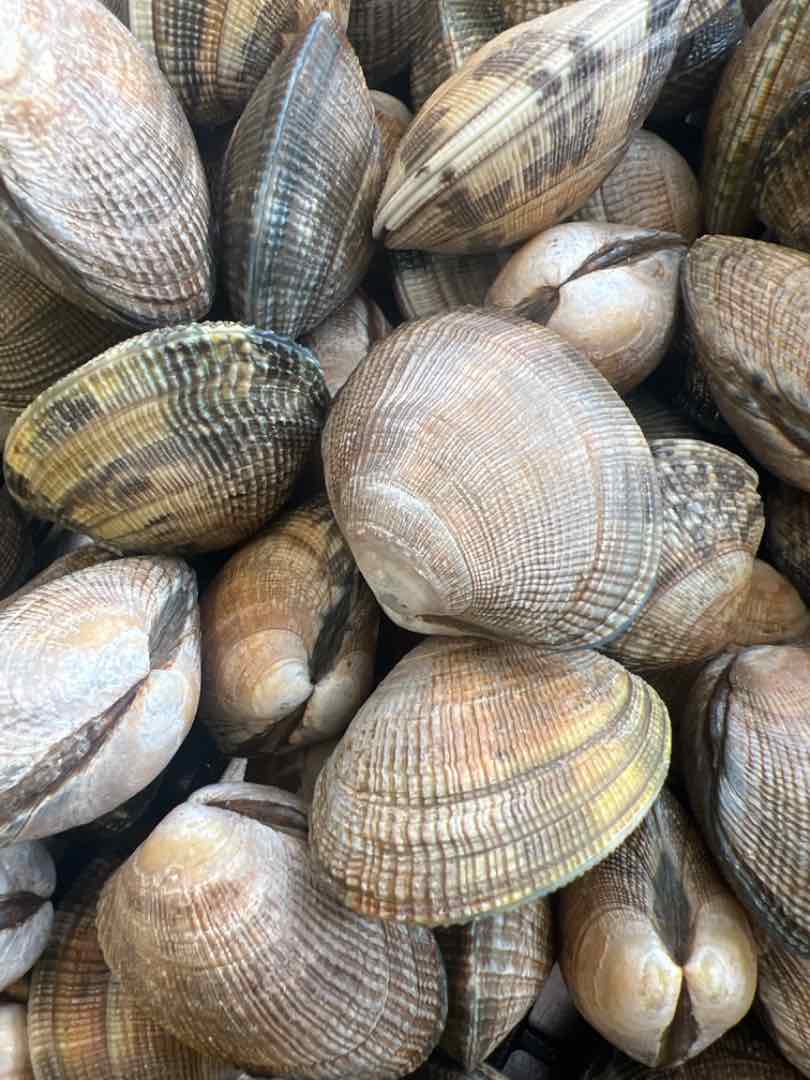
France – JAPANESE CLAMS (Ruditapes philippinarum) – E.coli

Gov france

Identification information of the recalled product

  • Product category Feed
  • Product subcategory Fishery and aquaculture products
  • Product brand name JAPANESE CLAMS
  • Model names or references MEDIUM CLAMS
  • Identification of products
    Batch
    Pal1823 Gouz1606
  • Products List BL_OCEAN.pdfAttachment
  • Packaging 5,10,20kg
  • Marketing start/end date From 06/16/2023 to 06/26/2023
  • Storage temperature Product to be stored at room temperature
  • Health mark Pal1823
  • Further information Clam
  • Geographic area of ​​sale QUIBERON ETEL
  • Distributors LA BOISSONNERIE, BOUT DU QUAI, LA VOGLIA, LA PASSERELLE, PRADIC FISH SHOP

Australia – Jalna Dairy Foods Pty Ltd Yoghurt 1Kg – E.coli

FSANZ

Product information

Jalna Dairy Foods Pty Ltd is conducting a recall of Jalna Lactose Free Vanilla, 1kg and Jalna Sweet & Creamy Greek Coconut, 1kg​.

​​​The products has been available for sale in major supermarkets nationally including Coles, IGA, Woolworths and Independent Grocery Stores.​

Date markings​

Jalna Lactose Free Vanilla, 1kg
Use by 28 Jul 23
Jalna Sweet & Creamy Greek Coconut, 1kg
U​se by 02 AUG 23

Problem

The recall is due to potential contamination of E. coli.​

Food safety hazard

Food products contaminated with E. coli may cause illness if consumed.

Country of origin

Australia

What to do​

Any consumers concerned about their health should seek medical advice. and should return the products to the place of purchase for a full refund.
For further information please contact:
Jalna Dairy Foods Pty Ltd
1800 676 961
Related links:

Research- Impact of nanoscale coating of stainless steel on Salmonella Enteritidis and Escherichia coli

Wiley Online

Cross-contamination in the poultry slaughtering process can lead to thespread of zoonotic bacteria like Salmonellaenterica. Surfaces of equiptment may facilitate contamination of carcasses due to bacterial adherence and transfer. In this study, attachment, proliferation, and detachment of Salmonella Enteritidis and Escherichia coli were comparatively investigated on uncoated and silica-coated stainless-steel surfaces. The conditions occurring in the slaughtering workflow were imitated on laboratory scale, for example, spilling of contaminated liquid onto equipment surfaces, pressing or sliding of carcasses against surfaces during the slaughtering procedure, and cleaning of contaminated stainless-steel surfaces with water or detergent. Growth on stainless-steel surfaces was measured for 8 h. The applied silica coating led to a partly higher repelling effect without impact on proliferation for the target organisms on stainless steel. Further development of the coating and daption to the exact circumstances as well as more extending testing under real conditions would be the next steps.

France sees a rise in outbreaks in 2021

Food Safety News

The number of outbreaks in France went up in 2021 but was still below 2018 and 2019 levels.

Figures from Santé publique France show there were 1,309 outbreaks affecting 11,056 people in 2021. A total of 512 people went to hospitals and 16 died.

Reported outbreaks rose from 1,010 in 2020 when figures were strongly impacted by the COVID-19 pandemic, according to officials.

For 327 incidents in 2021, a pathogen could be microbiologically confirmed in food or in at least one sick person per outbreak. A pathogen was suspected without microbiological confirmation for 734 outbreaks.

16 deaths in outbreaks
The most frequently microbiologically confirmed pathogen was Salmonella 147 times. It was mostly Salmonella Enteritidis, followed by monophasic Salmonella Typhimurium but the type was not known in 92 incidents. Confirmed Salmonella outbreaks were responsible for 935 patients and 166 hospitalizations.

Campylobacter caused 52 outbreaks with 178 patients and Bacillus cereus had 46 with 665 patients. Nineteen norovirus outbreaks sickened 493 and 11 histamine outbreaks affected 35 people.

Seven outbreaks were due to E. coli, six to Yersinia enterocolitica, four to Shiga toxin-producing E. coli (STEC), and one each because of Listeria monocytogenes, Clostridium botulinum, and Shigella.

The pathogen was identified in patients for 208 outbreaks, of which 143 were confirmed with Salmonella. Identification of the agent took place in food samples for 89 epidemics with 67 confirmed as Bacillus cereus, Staphylococcus aureus and Clostridium perfringens.

The top suspected pathogens based on epidemiological and clinical information, but not microbiologically confirmed, were the toxins Bacillus cereus, Staphylococcus aureus and Clostridium perfringens. For these three pathogens, 3,787 patients and 169 hospital trips were recorded.

Research – UAE: Counts of E.coli in vegetables from retailers in Abu Dhabi and Dubai

Horti Daily

A new study by Ihab Habib, Rami H Al-Rifai, Mohamed-Yousif Ibrahim Mohamed, Akela Ghazawi, Afra Abdalla, Glindya Lakshmi, Neveen Agamy and Mushtaq Khan investigates the counts, antimicrobial resistance profile, and genome-based characterization of Escherichia coli in 11 different types of fresh salad vegetable products (n = 400) sampled from retailers in Abu Dhabi and Dubai in the United Arab Emirates.

E. coli was detected in 30% of the tested fresh salad vegetable items, with 26.5% of the samples having an unsatisfactory level (≥100 CFU/g) of E. coli, notably arugula and spinach. The study also assessed the effect of the variability in sample conditions on E. coli counts and found, based on negative binominal regression analysis, that samples from local produce had a significantly higher (p-value < 0.001) E. coli count than imported samples.

The analysis also indicated that fresh salad vegetables from the soil-less farming system (e.g., hydroponic and aeroponic) had significantly (p-value < 0.001) fewer E. coli than those from traditional produce farming. The study also examined the antimicrobial resistance in E. coli (n = 145) recovered from fresh salad vegetables and found that isolates exhibited the highest phenotypic resistance toward ampicillin (20.68%), tetracycline (20%), and trimethoprim-sulfamethoxazole (10.35%).

A total of 20 (13.79%) of the 145 E. coli isolates exhibited a multidrug-resistant phenotype, all from locally sourced leafy salad vegetables. The study further characterized 18 of the 20 multidrug-resistant E. coli isolates using whole-genome sequencing and found that the isolates had varying numbers of virulence-related genes, ranging from 8 to 25 per isolate. The frequently observed genes likely involved in extra-intestinal infection were CsgA, FimH, iss, and afaA. The β-lactamases gene blaCTX-M-15 was prevalent in 50% (9/18) of the E. coli isolates identified from leafy salad vegetable samples.

The study highlights the potential risk of foodborne illness and the likely spread of antimicrobial resistance and resistance genes associated with consuming leafy salad vegetables. It emphasizes the importance of proper food safety practices, including appropriate storage and handling of fresh produce.

Click here to access the entire research.

UK – Worrying levels of E. coli found inside some UK oysters

ITV

Exclusive research carried out by ITV News and Watershed Investigations found some shellfish areas have seven times the E. coli levels deemed safe for eating. See the video at the link above.