Category Archives: E.coli O26 :H11

Research – Genomic surveillance of STEC/EHEC infections in Germany 2020 to 2022 permits insight into virulence gene profiles and novel O-antigen gene clusters

Science Direct

Abstract

Shiga toxin-producing E. coli (STEC), including the subgroup of enterohemorrhagic E. coli (EHEC), are important bacterial pathogens which cause diarrhea and the severe clinical manifestation hemolytic uremic syndrome (HUS). Genomic surveillance of STEC/EHEC is a state-of-the-art tool to identify infection clusters and to extract markers of circulating clinical strains, such as their virulence and resistance profile for risk assessment and implementation of infection prevention measures. The aim of the study was characterization of the clinical STEC population in Germany for establishment of a reference data set. To that end, from 2020 to 2022 1257 STEC isolates, including 39 of known HUS association, were analyzed and lead to a classification of 30.4 % into 129 infection clusters. Major serogroups in all clinical STEC analyzed were O26, O146, O91, O157, O103, and O145; and in HUS-associated strains were O26, O145, O157, O111, and O80. stx1 was less frequently and stx2 or a combination of stx, eaeA and ehxA were more frequently found in HUS-associated strains. Predominant stx gene subtypes in all STEC strains were stx1a (24 %) and stx2a (21 %) and in HUS-associated strains were mainly stx2a (69 %) and the combination of stx1a and stx2a (12.8 %). Furthermore, two novel O-antigen gene clusters (RKI6 and RKI7) and strains of serovars O45:H2 and O80:H2 showing multidrug resistance were detected. In conclusion, the implemented surveillance tools now allow to comprehensively define the population of clinical STEC strains including those associated with the severe disease manifestation HUS reaching a new surveillance level in Germany.
11 sick in French cheese STEC O26 E. coli outbreak

Food Safety News

The number of children sick in a severe E. coli outbreak in France linked to raw milk cheese has risen to 11.

The 11 hemolytic uremic syndrome (HUS) cases were reported in late 2023. HUS is a severe complication associated with E. coli infections that causes kidney failure. Santé publique France surveillance on HUS only covers children younger than 15 years old in the country, so there could be other sick people in the outbreak.

Five young children attending the Minimes crèche in Toulouse had to be hospitalized in November. Stool cultures revealed Shiga toxin-producing E. coli (STEC) infection. Cheese has tested positive for E. coli O26.

The other six children with HUS infected with the outbreak strain are unrelated to the crèche and live in different regions.

Speaking to different French media outlets, the parents of two girls, Élise, aged 7, and Clara, 18 months old, revealed how their children had been affected and their ongoing health issues

RASFF Alerts – STEC E.coli – Minced Bovine Meat- Bos Taurus Cuts – Raw Cured Deer Sausage

RASFF

STEC (stx+;eae+) in minced bovine meat from Belgium in the Netherlands

RASFF

Escherichia coli shiga toxin-producing stx2 in Bos Taurus cuts from Brazil in the Netherlands and Belgium

RASFF

E coli STEC 026 presumptive detection in 25 g in raw cured deer sausage from Italy in Germany

France – Raw milk cheese sickens six children in France – STEC E.coli O26

Food Safety News

A cheese made from raw milk has been linked to half a dozen serious E. coli infections in France.

Six cases of hemolytic uremic syndrome (HUS) have been reported. HUS is a severe complication associated with E. coli infections that causes kidney failure.

Following severe diarrhea, young children attending the Minimes crèche in Toulouse had to be hospitalized in November. Stool cultures revealed Shiga toxin-producing E. coli (STEC) infection. Cheese has tested positive for E. coli O26.

The crèche was closed for a few days, but has since reopened. Samples from surfaces were taken and analyzes of the meals were carried out as well as a thorough cleaning of the premises.

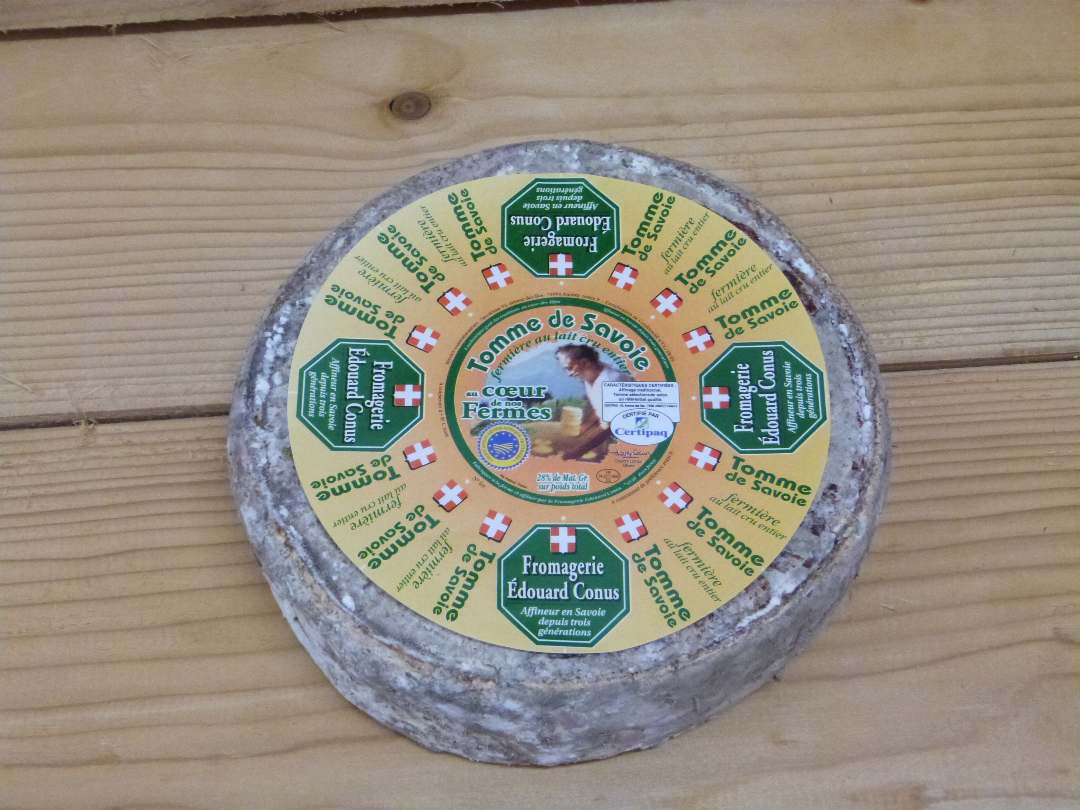
Luxembourg – Tomme Savoie Fermière IGP from the Conus brand sold in bulk – STEC E.coli O26:H11

SAP

Name Tomme Savoie Fermière IGP 29.1% fat
Brand Conus
Product appearance Bulk sale
Barcode 3389190132232
Use-by date (DLC) 12/20/2023
Batch 40031023
Sales period 10/20/2023 to 11/29/2023

Danger: Presence of E. coli STEC O26:H11

Escherichia coli O26 can cause, in the week following consumption, possibly hemorrhagic gastroenteritis, accompanied or not by fever, and which may be followed by severe renal complications in young children. People who have consumed the products mentioned above and who present this type of symptoms are invited to consult a doctor and report this consumption.

Sale confirmed in Luxembourg by: Match. A sale by other operators cannot be excluded.

Information Source: Recall Notification

Communicated by: Luxembourg Veterinary and Food Administration.

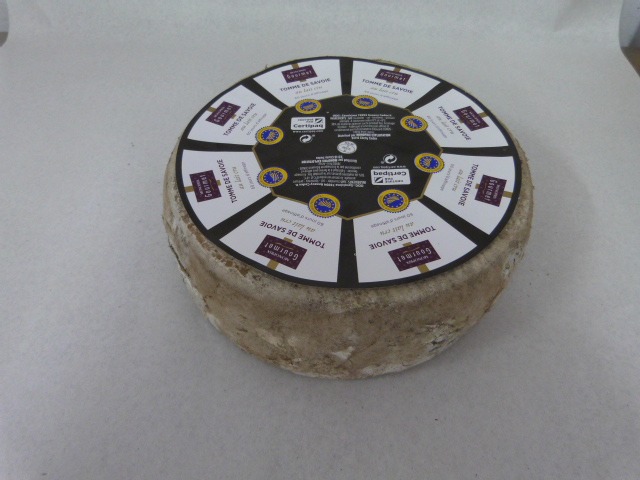
France – TOMME DE SAVOIE FARM – STEC E.coli O26

Gov France

Product category
Food
Product subcategory
Milk and dairy products
Product brand name
MONOPRIX GOURMET
Model names or references
TOMME DE SAVOIE FARM MONOPRIX GOURMET
Product identification
GTIN Batch Date
3350030176648 40031023 Use-by date 12/24/2023
3350030176648 40031023 Use-by date 12/25/2023
3350030176648 40031023 Use-by date 12/28/2023
Packaging
1.5 kg grinding wheel
Start/end date of marketing
From 10/30/2023 to 11/28/2023
Storage temperature
Product to keep in the refrigerator
Health mark
FR 74.211.060 CE
Further information
Product sold by the cut
Geographical sales area
Whole France
Distributors
Monoprix

France – Tomme de Savoie Farm IGP – STEC E.coli – O126

Gov France

Product category
Food
Product subcategory
Milk and dairy products
Product brand name
Conus
Model names or references
Tomme de Savoie Farm IGP
Product identification
GTIN Batch Date
3389190132232 40031023 Minimum durability date 12/22/2023
3389190132232 40031023 Minimum durability date 12/20/2023
3389190132232 40031023 Minimum durability date 12/19/2023
Packaging
Whole 4 pieces per carton
Start/end date of marketing
From 10/30/2023 to 11/02/2023
Storage temperature
Product to keep in the refrigerator
Health mark
FR 74-211-060 CE
Geographical sales area
Whole France
Distributors
Carrefour (CSD Alby sur Chéran) and wholesalers

Denmark Solves E. coli Outbreak; More Sick in Norwegian outbreak

Food Safety News

The SSI, Danish Veterinary and Food Administration (Fødevarestyrelsen), and DTU Food Institute investigated the outbreak that was linked to a type of beef steak, thanks to patient interviews.

Meanwhile, in Norway, four other cases have been added to a different E. coli outbreak.

The Norwegian Institute of Public Health (FHI) reported that E. coli O26:H11 had been detected in 24 people. It is one of the country’s most severe E. coli outbreaks.

Fifteen of those infected are under the age of 13, and nine children have developed hemolytic uremic syndrome (HUS).

Research – Sporadic Shiga Toxin–Producing Escherichia coli–Associated Pediatric Hemolytic Uremic Syndrome, France, 2012–2021

CDC

Abstract

Shiga toxin–producing Escherichia coli–associated pediatric hemolytic uremic syndrome (STEC-HUS) remains an important public health risk in France. Cases are primarily sporadic, and geographic heterogeneity has been observed in crude incidence rates. We conducted a retrospective study of 1,255 sporadic pediatric STEC-HUS cases reported during 2012–2021 to describe spatiotemporal dynamics and geographic patterns of higher STEC-HUS risk. Annual case notifications ranged from 109 to 163. Most cases (n = 780 [62%]) were in children ❤ years of age. STEC serogroups O26, O80, and O157 accounted for 78% (559/717) of cases with serogroup data. We identified 13 significant space-time clusters and 3 major geographic zones of interest; areas of southeastern France were included in >5 annual space-time clusters. The results of this study have numerous implications for outbreak detection and investigation and research perspectives to improve knowledge of environmental risk factors associated with geographic disparities in STEC-HUS in France.

Burgers suspected as source of E. coli outbreak in Norway – O26:H11

Food Safety News

Norwegian officials have named the suspected source of an E. coli outbreak that affected 15 people.

The Norwegian Institute of Public Health (FHI) said the same type of E. coli O26:H11 had been detected in all those infected.

Two hamburger products that are the likely source of the ongoing outbreak have been recalled.

In August, it was reported that six people across the country were sick.