Category Archives: DON

Research – Mycotoxin control in cereals: safe guarding food

Safe Food Net

The aim of this research was to review (and where possible improve/refine
current rapid screening methods for the mycotoxin T-2 and its metabolites in
cereals for human consumption.
Researchers engaged with the relevant sector of the cereal processing industry in
Ireland and the UK, and the relevant primary production sector, to gain detailed,
valuable information.
The research conducted was designed to clarify deficits in T-2 toxin control in the
relevant processing and primary production sectors, evaluate the robustness of
current analytical detection and control methods therein, augment same if deemed
necessary, and implement workable T-2 toxin control solutions at sectoral level.
Objectives
The specific objectives of the research project were to:
• Conduct a literature review of the most up-to-date scientific and
regulatory data for T-2 toxin and its metabolites, the specific environmental conditions required for their production, and the impact of climate change on their occurrence and distribution.
• Undertake a thorough analysis of the currently available commercial rapid analytical techniques for the screening of T-2 and HT-2 toxins in cereals for direct human consumption.
• Undertake a survey of the relevant processing and primary production sectors to determine what testing they currently conduct for mycotoxins, to fully understand the shortfalls in relation to mycotoxin monitoring and control within the industry.
Conduct a survey of oats and barley (n≥100) using mass spectrometry to identify contamination levels of, not only the mycotoxins of interest, i.e., T-2 and HT-2, but also all other regulated mycotoxins including aflatoxins, deoxynivalenol, zearalenone, fumonisins and ochratoxin A.
• Perform a thorough evaluation of a selected number of rapid test kits to ascertain fitness for purpose and determine how to adapt the most robust methods for better performance. If required, undertake a training workshop on the use of the best performing rapid testing kits.
• Engage with stakeholders to discuss the implications of the findings of
the project and produce a series of conclusions and recommendations
for stakeholders on the island of Ireland.
Research – Analysis of flour and rice shows high levels of harmful fungal toxins

Medical Express

By analyzing samples of flour and rice stored in homes in Ribeirão Preto, in the interior of the state of São Paulo (Brazil), researchers from the University of São Paulo (USP) found the presence of high levels of fungal toxins (mycotoxins). The study is published in the journal Food Research International.

The six toxins of concern were found in all the food samples analyzed: aflatoxins (AFs), fumonisins (FBs), zearalenone (ZEN), T-2 toxin, deoxynivalenol (DON), and ochratoxin A (OTA). In the case of the mycotoxins FBs, ZEN, and DON, the levels were above the tolerance limit set by the health authorities. This study was the first in Brazil to use biomarkers to characterize the risk associated with mycotoxins in the diet of children and adolescents.

China – Harbin Beer Found with Vomit Toxin, Company Responds

CMGM

After testing for 8 common beer mycotoxins, the results showed that one sample, “Harbin,” was found with deoxynivalenol (DON), with a detection level of 26 micrograms per kilogram. No other samples were found with mycotoxins.

Deoxynivalenol (DON), also known as vomit toxin, is mainly produced by Fusarium graminearum and Fusarium culmorum, which can be found in soil and are pathogens of cereals (especially wheat and maize).

The Joint FAO/WHO Expert Committee on Food Additives recommends a daily intake of 1 microgram per kilogram of body weight for DON, meaning that long-term exposure below this level is unlikely to pose a health risk to most people. For a 60-kilogram adult, consuming 4 cans of the sample (Harbin) detected with DON in one day would still be within safe levels.

However, the article reminds consumers that this intake level is set to protect public health, especially in cases where long-term or large amounts of DON intake may have adverse effects on health.

The article mentioned that the manufacturer of “Harbin” stated that the company has never exported tested products to Hong Kong for sale. The product has always been produced and sold only in mainland China and is not intended for sale in other regions. The entire production and sales process of the product comply with relevant laws and regulations in mainland China. The detected DON content in the samples is both compliant with and far below the relevant upper limit standards set internally, domestically, and internationally for cereal products.

RASFF Alerts- Mycotoxins – DON – Corn

RASFF

Deoxynivalenol (DON) in corn from South Africa, via the Netherlands in Germany

RASFF Alert Animal Feed- Mycotoxins – Deoxynivalenol and Fumonisins

RASFF

Deoxynivalenol and Fumonisins B1 + B2 in a compound feed from Italy. in Belgium

Research- Monitoring of Animal Feed Contamination by Mycotoxins: Results of Five Years of Official Control by an Accredited Italian Laboratory

MDPI

Abstract

Mycotoxin contamination of animal feed is a complex issue in both animal wellness and food safety. The most diffused mycotoxins subject to the official control of animal feed are Aflatoxin B1 (AF), Zearalenone (ZEA), Deoxynivalenol (DON), Ochratoxin A (OCRA), Fumonisins (FUMO), and T-2/HT-2 toxins. This work describes the results of five years of monitoring focused on the evaluation of mycotoxin contamination of animal feed. Analytical determinations were carried out by means of accredited ELISA. The obtained results showed a non-alarming scenario, with several samples resulting as “non-compliant” according to the Maximum Residue Limits (MRLs) set in European Regulation No. 574/2011. Out of 722 analyzed samples coming from 2 Italian regions, Apulia and Basilicata, 14 samples were characterized by mycotoxin concentrations higher than related MRL; in particular, 5, 4, and 5 non-compliant samples for DON, AF, and ZEA, respectively. This study also evaluated the possible correlations between mycotoxin type and feed use with a special focus on animal sensitivity to mycotoxins.

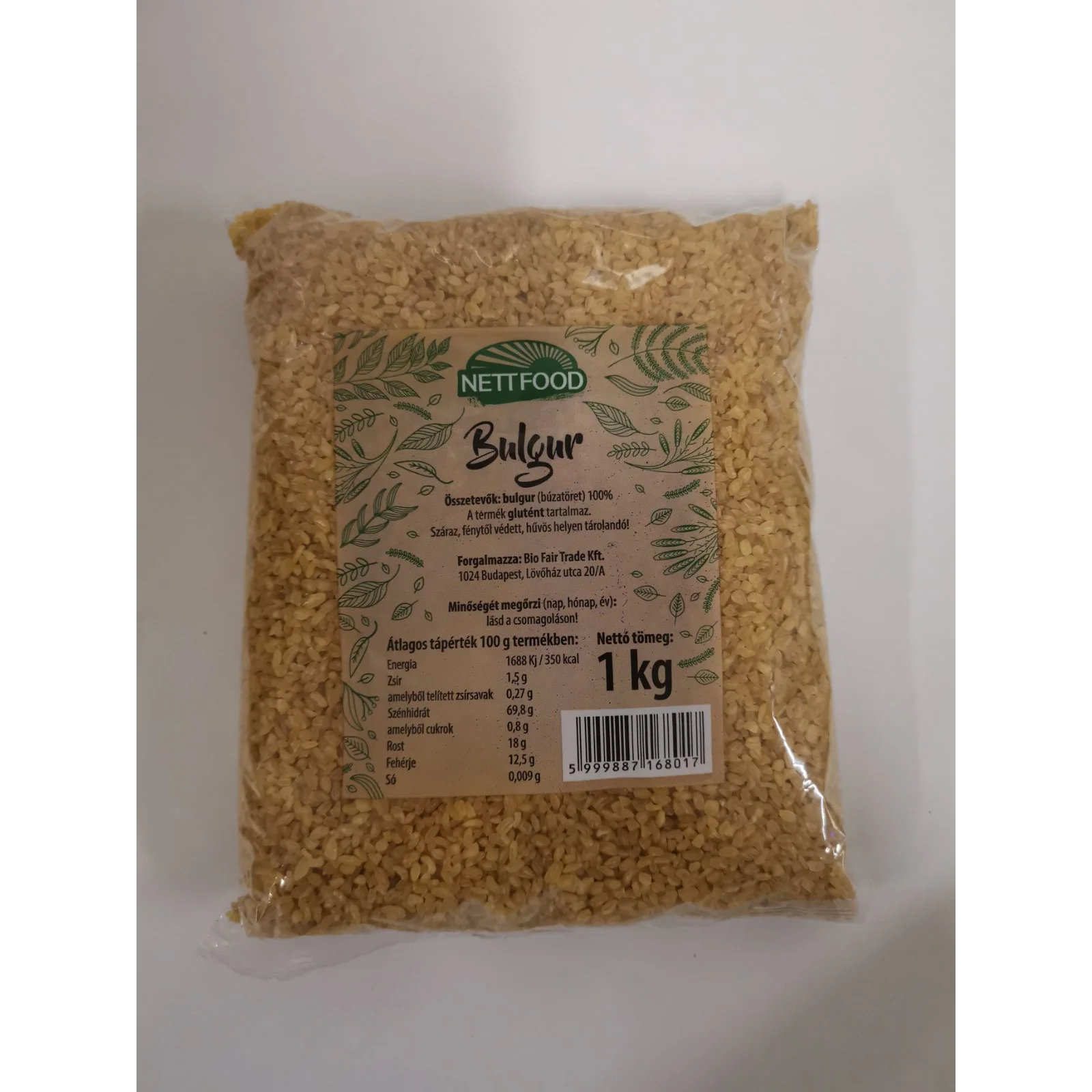
Hungary – Nett Food Bulgur, 1 kg – Mycotoxin – DON – Deoxynivalenol

Nebih

Date 2024-01-16
Name of Product Nett Food Bulgur, 1 kg
Nature of the problem Mycotoxin (DON – deoxynivalenol) content exceeding the limit value
DetailsNébih asks customers not to consume the product that matches the identification data below!

Notifier: Bio Fair Trade Kft.

Product name: Nett Food Bulgur, 1 kg

Brand: NETTFOOD

Product origin: Ukraine

Picture of the product:

Nett Food Bulgur, 1 kg

Nature of the problem: Mycotoxin (DON – deoxynivalenol) content exceeding the limit value

Quality retention times: 

• 01.07.2024.
• 01.08.2024. 
• 08.05.2024.

Packaging: 1 kg

Manufacturer: Bio Fair Trade Kft.

Distributor: Bio Fair Trade Kft.

Action: Product recall

Bio Fair Trade Kft. informed its customers about the recall on its website . 

The affected product can be returned to any Auchan store, and the full purchase price of the product will be refunded.

You can read more about the nature of the problem here .

The product recall only applies to the product identified by the above data.

Research – Fungal and Toxin Contaminants in Cereal Grains and Flours: Systematic Review and Meta-Analysis

MDPI

Abstract

Cereal grains serve as the cornerstone of global nutrition, providing a significant portion of humanity’s caloric requirements. However, the presence of fungal genera, such FusariumPenicilliumAspergillus, and Alternaria, known for their mycotoxin-producing abilities, presents a significant threat to human health due to the adverse effects of these toxins. The primary objective of this study was to identify the predominant fungal contaminants in cereal grains utilized in breadmaking, as well as in flour and bread. Moreover, a systematic review, including meta-analysis, was conducted on the occurrence and levels of mycotoxins in wheat flour from the years 2013 to 2023. The genera most frequently reported were Fusarium, followed by PenicilliumAspergillus, and Alternaria. Among the published reports, the majority focused on the analysis of Deoxynivalenol (DON), which garnered twice as many reports compared to those focusing on Aflatoxins, Zearalenone, and Ochratoxin A. The concentration of these toxins, in most cases determined by HPLC-MS/MS or HPLC coupled with a fluorescence detector (FLD), was occasionally observed to exceed the maximum limits established by national and/or international authorities. The prevalence of mycotoxins in flour samples from the European Union (EU) and China, as well as in foods intended for infants, exhibited a significant reduction compared to other commercial flours assessed by a meta-analysis investigation.

Research – Determination of mycotoxins in nuts, cereals, legumes, and coffee beans and effectiveness of a selenium-based decontamination treatment

Wiley Online

Abstract

Liquid chromatography-tandem mass spectrometry (LC-MS/MS) was used for the rapid quantification of multiple mycotoxins, specifically aflatoxins B1, B2, G1, and G2 (AFB1, AFB2, AFG1, and AFG2), ochratoxin A (OTA), deoxynivalenol (DON), and zearalenone (ZEN), in walnuts, pistachios, peanuts, coffee beans, rice, and chickpeas from various countries. Total counts of fungi, Aspergillus flavus, and Aspergillus parasiticus were also assessed, along with the effectiveness of a decontamination treatment with inorganic selenium to reduce mycotoxin levels. Of the 78 samples tested, 69% were contaminated with mycotoxins. ZEN, the predominant mycotoxin contaminant, was detected in all the contaminated samples in concentrations often exceeding the maximum level, followed by AFG1 (28% of the contaminated samples), DON (22%), AFG2 (11%), and AFB1 (5.5%). The occurrence of aflatoxins was associated with high proportions of A. flavus and A. parasiticus. Complete removal of AFB1 from walnuts and DON from roasted coffee beans was achieved by treatment with aqueous selenium, while the levels of ZEN and AFG1 were respectively lowered by 65% to 89% depending on the commodity and by about 56% in roasted coffee beans. While this novel treatment is a promising approach for mycotoxin decontamination, it is not intended to replace safe practices upstream.

RASFF Alert – Mycotoxin – Deoxynivalenol (DON) Flour – Corn Grits

RASFF

Deoxynivalenol content above regulatory tolerance in one batch of flour from Germany in France

RASFF

Deoxynivalenol in corn grits from Ukraine in Slovakia

RASFF

Deoxynivalenol in corn grits from Ukraine in Slovakia