Category Archives: Decontamination Microbial

Research – Evaluation of pulsed light treatment for inactivation of Salmonella in packaged cherry tomato and impact on background microbiota and quality

Wiley Online

Abstract

The microbial safety of produce continues to be a real concern. The objective of this study was to investigate the efficacy of high intensity short time pulsed light (PL) application on survival of Salmonella in packaged cherry tomato. Treatment effects on reduction of native microbiota and quality were also evaluated. Stem scars of cherry tomatoes, inoculated with a three serotypes cocktail of Salmonella enterica, was treated with PL for up to 60 s. Polyethylene (PE) films of 25.4, 50.8 and 76.2 μm thickness were used for packaging treatment. A10 s treatment equivalent to a fluence dose of 10.5 J/cm2 was considered optimum. Both packaged and direct PL treatments provided >1 log reduction of the pathogen in 10 s (10.5 J/cm2). Direct treatment for 10 s resulted in 1.9 ± 0.17 log CFU/g reduction of Salmonella. For packaged tomatoes, log reductions decreased with increasing film thickness but not significantly (p < .05). Also, no significant difference in PL decontamination efficacy between packaged and unpackaged tomatoes was observed. Treatment significantly reduced the initial populations of aerobic mesophilic bacteria (3.6 ± 0.31 log), molds and yeast (2.43 ± 0.22 log) by >1 log, respectively. Packaged tomatoes were softer after treatment but not significantly. Storage time did not affect fruit firmness. No significant change in the visual appearance of fruits were observed after treatment and during 14 days of storage. Overall, the results of this study demonstrate that high intensity short time PL treatment may be used to enhance microbial safety and reduce postprocessing contamination of packaged cherry tomato.
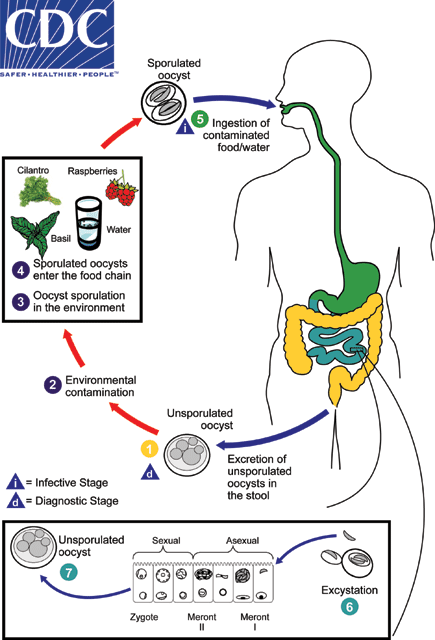

Research – Studies Aim to Improve Detection, Control Methods for Cyclospora

Food Safety.Com

Two ongoing studies funded by the Center for Produce Safety (CPS) are looking to improve detection and control methods for Cyclospora cayetanensis. A complex protozoan parasite, C. cayetanensis is extremely challenging to culture in a laboratory setting, and requires complicated microscopy for detection in samples.

The first project, led by Purdue University’s Lia Stanciu, Ph.D., seeks to use “aptamers”—or short strands of synthesized DNA—to bind to C. cayetanensis. The aptamers would then be used to create a paper-based, low-cost, and easy-to-use water test for the parasite, similar to rapid COVID-19 or pregnancy tests.

The second study is exploring the use of zero-valent iron (ZVI) sand filters to remove C. cayetanensis from water, evaluating the basic principle that physical exclusion might be an option to reduce parasite burdens.

Research USA – Seafood-Related Natural Toxin and Scombrotoxin Fish Poisoning Illnesses for Fish Other than Molluscan Shellfish Investigation Update

FDA

Investigated Illnesses and Outbreaks Table Update for Seafood Related Natural Toxin and Scombrotoxin Fish Poisoning

Table 1: Closed Illness and Outbreak Incidents is a list of investigations that were managed by FDA’s Seafood-Related Natural Toxin and Scombrotoxin Fish Poisoning Team for Fish Other Than Molluscan Shellfish. The listed incidents have been completed at this time.

The table is managed and updated when a significant number of illnesses have been investigated in a specific period of time or at least quarterly.

The table has been updated to illustrate additional information such as

  • Pending analytical results;
  • Confirmed fish/fishery product species identifications; and
  • Completed analytical results are listed in their own column.

The following FDA tracking numbers, and illness type have been added to the table:

  • 20-09-08: CFP;
  • 22-08-15: SFP;
  • 22-08-17: SFP;
  • 22-09-18: SFP;
  • 22-09-20: CFP/SFP;
  • 22-10-21: Unknown;
  • 22-11-22: SFP; and
  • 22-12-23: SFP.

The table may be found at: How to Report Seafood-Related Toxin and Scombrotoxin Fish Poisoning Illnesses | FDA

Research – An excimer lamp to provide far-ultraviolet C irradiation for dining-table disinfection.

Nature.com

Abstract

Dining tables may present a risk to diners by transmitting bacteria and/or viruses. Currently, there is a lack of an environmental-friendly and convenient means to protect diners when they are sitting together. This investigation constructed far-UVC excimer lamps to disinfect dining-table surfaces. The lamps were mounted at different heights and orientations, and the irradiance on table surfaces was measured. The irradiation doses to obtain different inactivation efficiencies for Escherichia coli (E. coli) were provided. In addition, numerical modeling was conducted for irradiance and the resulting inactivation efficiency. The surface-to-surface (S2S) model was validated with the measured irradiance. The germicidal performance of far-UVC irradiation, the far-UVC doses to which diners were exposed, and the risk of exposure to the generated ozone were evaluated. The results revealed that an irradiation dose of 12.8 mJ/cm2 can disinfect 99.9% of E. coli on surfaces. By varying the lamp irradiance output, the number and positions of the lamps, the far-UVC irradiation can achieve a 3-log reduction for a dining duration of 5 min. Besides, the far-UVC lamp has a low damage risk to diners when achieving an effective inactivation rate. Moreover, there is virtually no ozone exposure risk in a mechanically ventilated dining hall.

Research – Cross-Contamination to Surfaces in Consumer Kitchens with MS2 as a Tracer Organism in Ground Turkey Patties

Journal of Food Protection

ABSTRACT

It is estimated that one in five cases of foodborne illnesses is acquired in the home. However, how pathogens move throughout a kitchen environment when consumers are preparing food is not well characterized. The purpose of this study was to determine the prevalence and degree of cross-contamination across a variety of kitchen surfaces during a consumer meal preparation event. Consumers (n = 371) prepared a meal consisting of turkey patties containing the bacteriophage MS2 as a tracer organism and a ready-to-eat lettuce salad. Half were shown a video on proper thermometer use before the trial. After meal preparation, environmental sampling and detection were performed to assess cross-contamination with MS2. For most surfaces, positivity did not exceed 20%, with the exception of spice containers, for which 48% of the samples showed evidence of MS2 cross-contamination. Spice containers also had the highest MS2 concentrations, at a mean exceeding 6 log viral genome equivalent copies per surface. The high level of MS2 on spice containers drove the significant differences between surfaces, suggesting the significance of spice containers as a vehicle for cross-contamination, despite the absence of previous reports to this effect. The thermometer safety intervention did not affect cross-contamination. The efficiency of MS2 transfer, when expressed as a percentage, was relatively low, ranging from an average of 0.002 to 0.07%. Quantitative risk assessment work using these data would aid in further understanding the significance of cross-contamination frequency and efficiency. Overall, these data will help create more targeted consumer messaging to better influence consumer cross-contamination behaviors.

HIGHLIGHTS
  • Forty-eight percent of spice containers sampled showed evidence of MS2 cross-contamination.
  • Spice containers had the highest MS2 concentrations across kitchen surfaces.
  • Spice containers may be a key vehicle for cross-contamination.
  • The thermometer safety intervention did not affect cross-contamination.
  • The efficiency of MS2 transfer was relatively low, ranging from 0.002 to 0.07%.

Research – Quantifying risk associated with changes in EHEC physiology during post-harvest pre-processing stages of leafy green production

CPS

Summary

The goal of this project is to determine if the time between harvest and end use of romaine lettuce impacts E. coli O157:H7 pathogenicity and detectability resulting in increased health risk. Laboratory scale experiments with inoculated lettuce undergoing simulated harvest and cooling will be used to measure changes in E. coli O157:H7 stress tolerance and virulence. Input from industry partners including temperature data from commercial romaine harvesting and cooling, and details on supply chain logistics, will be combined with the laboratory scale experimental data and used to model risk associated with specific harvest and handling practices. The resulting quantitative tool will be publicly available and allow for growers and producers to determine any practices that should be implemented to reduce the potential for O157 transmission on romaine lettuce.

Research – Foodborne Parasites and Their Complex Life Cycles Challenging Food Safety in Different Food Chains

MDPI

Abstract

Zoonotic foodborne parasites often represent complex, multi host life cycles with parasite stages in the hosts, but also in the environment. This manuscript aims to provide an overview of important zoonotic foodborne parasites, with a focus on the different food chains in which parasite stages may occur. We have chosen some examples of meat-borne parasites occurring in livestock (Taenia spp., Trichinella spp. and Toxoplasma gondii), as well as Fasciola spp., an example of a zoonotic parasite of livestock, but transmitted to humans via contaminated vegetables or water, covering the ‘farm to fork’ food chain; and meat-borne parasites occurring in wildlife (Trichinella spp., Toxoplasma gondii), covering the ‘forest to fork’ food chain. Moreover, fish-borne parasites (Clonorchis spp., Opisthorchis spp. and Anisakidae) covering the ‘pond/ocean/freshwater to fork’ food chain are reviewed. The increased popularity of consumption of raw and ready-to-eat meat, fish and vegetables may pose a risk for consumers, since most post-harvest processing measures do not always guarantee the complete removal of parasite stages or their effective inactivation. We also highlight the impact of increasing contact between wildlife, livestock and humans on food safety. Risk based approaches, and diagnostics and control/prevention tackled from an integrated, multipathogen and multidisciplinary point of view should be considered as well.

Research – Transmission Scenarios of Listeria monocytogenes on Small Ruminant On-Farm Dairies

MDPI

Abstract

Listeria monocytogenes can cause severe foodborne infections in humans and invasive diseases in different animal species, especially in small ruminants. Infection of sheep and goats can occur via contaminated feed or through the teat canal. Both infection pathways result in direct (e.g., raw milk from an infected udder or fresh cheese produced from such milk) or indirect exposure of consumers. The majority of dairy farmers produces a high-risk product, namely fresh cheese made from raw ewe’s and goat’s milk. This, and the fact that L. monocytogenes has an extraordinary viability, poses a significant challenge to on-farm dairies. Yet, surprisingly, almost no scientific studies have been conducted dealing with the hygiene and food safety aspects of directly marketed dairy products. L. monocytogenes prevalence studies on small ruminant on-farm dairies are especially limited. Therefore, it was our aim to focus on three main transmission scenarios of this important major foodborne pathogen: (i) the impact of caprine and ovine listerial mastitis; (ii) the significance of clinical listeriosis and outbreak scenarios; and (iii) the impact of farm management and feeding practices.

Research – Intervention Strategies to Control Campylobacter at Different Stages of the Food Chain

MDPI

Abstract

Campylobacter is one of the most common bacterial pathogens of food safety concern. Campylobacter jejuni infects chickens by 2–3 weeks of age and colonized chickens carry a high C. jejuni load in their gut without developing clinical disease. Contamination of meat products by gut contents is difficult to prevent because of the high numbers of C. jejuni in the gut, and the large percentage of birds infected. Therefore, effective intervention strategies to limit human infections of C. jejuni should prioritize the control of pathogen transmission along the food supply chain. To this end, there have been ongoing efforts to develop innovative ways to control foodborne pathogens in poultry to meet the growing customers’ demand for poultry meat that is free of foodborne pathogens. In this review, we discuss various approaches that are being undertaken to reduce Campylobacter load in live chickens (pre-harvest) and in carcasses (post-harvest). We also provide some insights into optimization of these approaches, which could potentially help improve the pre- and post-harvest practices for better control of Campylobacter.

Research – Pseudomonas fluorescens and Escherichia coli in Fresh Mozzarella Cheese: Effect of Cellobiose Oxidase on Microbiological Stability during Refrigerated Shelf Life

MDPI

Abstract

Background: Mozzarella cheese possesses a high moisture content (50–60%) and a relatively high pH (around 5.5) and is therefore considered a perishable food product characterized by high quality deterioration and the potential risk of microbial contamination. Moreover, it can be spoiled by Pseudomonas spp. and coliform bacteria, which may be involved in different negative phenomena, such as proteolysis, discolorations, pigmentation, and off-flavors. To prevent these, different methods were investigated. In this context, the present study aims to assess the antimicrobial effect of cellobiose oxidase on Pseudomonas fluorescens (5026) and Escherichia coli (k88, k99) in mozzarella cheese during refrigerated shelf life. Methods: microbiological challenge tests were designed by contaminating the mozzarella covering liquid containing different cellobiose oxidase concentrations with P. fluorescens (5026) and E. coli (k88, k99). The behavior of these microorganisms and the variation of hydrogen peroxide concentrations were then tested under refrigerated conditions for 20 days to simulate the mozzarella cheese shelf life. Results and Conclusions: The data obtained demonstrated the effect of cellobiose oxidase on microbial growth. In particular, E. coli (k88, k99) was inhibited over the entire shelf life, while P. fluorescens (5026) was only partially affected after a few days of refrigerated storage.