Category Archives: Decontamination Microbial

Finland joins countries with travel-related Shigella cases

Food Safety News

Shigella - kswfoodworld

Image CDC

Finland is the latest country to report Shigella infections in people returning from Cape Verde.

The Finnish Institute of Health and Welfare (THL) recorded eight patients with shigellosis in November and December 2022, with a history of travel to Cape Verde.

Based on typing, the strains in five of these cases match those found in other European countries. Almost all Shigella infections found in Finland originate from abroad.

During 2022, more travel-related shigellosis cases than usual were recorded in several European countries. Patients are linked by trips to Cape Verde.

Related cases have been reported by the United Kingdom, the Netherlands, France, Germany, Denmark, and Portugal.

Spain – UPDATE: Six hospitalised after 59 get food poisoning from famous Madrid tortilla restaurant

Euro Weekly News

According to local health authorities, the number of cases of food poisoning had risen to 59 by Wednesday, February 1 with at least six hospitalised, one of whom is said to be in intensive care. That patient is said to be very ill but their condition remains stable.

The owners of the restaurant have said the results of the inspection of the premises and the tests carried out are still awaited, with the cause still unknown.

In the meantime, they have asked anyone who has been affected to get in touch via email to enable them to respond to individual cases. The email address to write to is reclamacionescasadani@gmail.com.

Research – Use of a phage cocktail to reduce the numbers of seven Escherichia coli strains belonging to different STEC serogroups applied to fresh produce and seeds

Wiley Online

Abstract

The aims of this research were to evaluate the effectiveness of a phage cocktail at reducing seven Shiga toxigenic Escherichia coli (STEC) serogroups on different food matrixes: mung bean sprouts (MBP), lettuce, and mung bean seeds (MBS) and to test the phage cocktail effectiveness to reduce E. coli O157 on Romaine and iceberg lettuce. To study the effect of the type of food matrix on the STEC phage cocktail effectiveness, a mixture of seven highly sensitive STEC strains designated as phage propagation strains (PPS) were used to adulterate Romaine lettuce, MBP, and MBS matrixes at a concentration of 105 logs CFU/g. A subsample of the treated MBS was germinated to assess STEC survival. Recovered STEC strains were confirmed using latex agglutination and PCR. To test the phage cocktail effectiveness to reduce E. coli O157:H7 on Romaine and iceberg lettuce, a mixture of four STEC strains (different than phage propagation strains, non-PPS) at both low (103 CFU/g) and high (105 CFU/g) concentrations were used to spike the samples in scaled up trials for the purpose of potential commercialization. Phage treatments including a combination of STEC phage cocktail and chlorinated water treatment were then applied to lettuce in a simulated scaled-up trial. STEC was assessed on the treated samples at different storage time and temperatures (0, 24, 48, and 72 hr at 2, 10 and 25°C). In the food matrix trial, the combination of STEC phage cocktail and chlorinated water-reduced PPS (p < 0.001) STEC on lettuce by 2.1 log10 CFU/g and on MBP by 2.2 log10 CFU/g. However, isolates from all 7 STEC serogroups remained viable after phage treatment in both lettuce and MBP; particularly those associated with serogroup O111, O121, O103, and O145, while only a few colonies of serogroup O26, O45, and O157 were detected. Lettuce adulterated with low levels of 4 non-PPS E. coli O157:H7 (103 CFU/g) achieved a reduction of 2.6–3.2 logs. While a reduction 1.7–2.3 logs was achieved by the phage cocktail when lettuce was inoculated with 105 CFU/g. Overall phage performance was more effective at 2 and 10°C and improved over storage time up to 72 hr. However, for MBS, the phage cocktail was not able to kill any of the STEC populations as all of them recovered during germination.

Research – Effect of pesticide application on Salmonella survival on inoculated tomato leaves

Wiley Online

Abstract

Outbreaks of Salmonellosis have been traced to contaminated tomato. The produce production environment poses a risk for Salmonella contamination; however, little is known about the effects of pest management practices on Salmonella during production. The study objective was to evaluate pesticide application on the inactivation of Salmonella on tomato leaves. Thirty greenhouse-grown tomato plants were inoculated with S. enterica serovars Newport or Typhimurium. Inoculation was performed by dipping tomato leaves in an 8-log CFU/mL Salmonella suspension with 0.025% (vol/vol) Silwet L-77 surfactant for 30 s, for a starting concentration of 6–7 log CFU/mL. Plants were treated with one of four pesticides, each with a different mode of action [acibenzolar-S-methyl, copper-hydroxide, peroxyacetic acid (PAA), and streptomycin]. Pesticides were applied at manufacturers’ labeled rate for plant disease management with water as a control treatment. Salmonella was enumerated at 0.125 (3 h), 2, 6, and 9 days post-inoculation (dpi), and counts log-transformed. Growth of Salmonella was not observed. At 2 dpi, PAA and streptomycin significantly reduced surface Salmonella concentrations of inoculated tomato leaves (0.7 and 0.6-log CFU/g, respectively; p ≤ 0.05), while significant Salmonella log reduction occurred in the ground tomato leaves after copper hydroxide treatment (0.8-log CFU/g; p ≤ 0.05), compared to the control. No significant differences in Salmonella populations on tomato leaf surface and in ground leaves were observed from 2 to 9 dpi, regardless of pesticide application. These findings suggest single in-field pesticide applications may not be an effective mitigation strategy in limiting potential Salmonella contamination. Future research, including multiple in-field pesticide applications, or pesticide use in combination with other mitigation strategies, may offer intriguing management practices to limit possible preharvest contamination.

Research – Extending the Shelf Life of Raw Milk and Pasteurized Milk with Plantaricin FB-2

MDPI

Abstract

Raw milk and pasteurized milk are characterized by a short shelf life, and drinking expired raw milk and pasteurized milk causes illness. In the study, Plantaricin FB-2 (extracted from Lactiplantibacillus plantarum FB-2) was added to liquid milk. By evaluating the microbial growth, acidity changes, protein content, and sensory changes in raw milk and pasteurized milk during storage, it was found that when Plantaricin FB-2 was added at 0.4 g/kg, the shelf life of raw milk was extended by 3 days (7 days if not added). The shelf life of pasteurized milk with Plantaricin FB-2 was extended to 31 days (25 days in the control group), and the optimal amount was 0.3 g/kg. This confirmed that Plantaricin FB-2 can effectively prolong the shelf life of raw and pasteurized milk. This study provides valuable information for the application of bacteriocins produced by Lactiplantibacillus plantarum in raw milk and pasteurized milk to improve their shelf life.

USDA Method Update – Isolation and Identification of Salmonella from Meat, Poultry, Pasteurized Egg, Carcass, and Environmental Sponges

This method describes the laboratory procedure for performing Isolation and Identification of Salmonella from Meat, Poultry, Pasteurized Egg, Products and Carcass and Environmental Sponges

Research – Natural Killers: Opportunities and Challenges for the Use of Bacteriophages in Microbial Food Safety from the One Health Perspective

MDPI

Abstract

Ingestion of food or water contaminated with pathogenic bacteria may cause serious diseases. The One Health approach may help to ensure food safety by anticipating, preventing, detecting, and controlling diseases that spread between animals, humans, and the environment. This concept pays special attention to the increasing spread and dissemination of antibiotic-resistant bacteria, which are considered one of the most important environment-related human and animal health hazards. In this context, the development of innovative, versatile, and effective alternatives to control bacterial infections in order to assure comprehensive food microbial safety is becoming an urgent issue. Bacteriophages (phages), viruses of bacteria, have gained significance in the last years due to the request for new effective antimicrobials for the treatment of bacterial diseases, along with many other applications, including biotechnology and food safety. This manuscript reviews the application of phages in order to prevent food- and water-borne diseases from a One Health perspective. Regarding the necessary decrease in the use of antibiotics, results taken from the literature indicate that phages are also promising tools to help to address this issue. To assist future phage-based real applications, the pending issues and main challenges to be addressed shortly by future studies are also taken into account.

Research – Campylobacter jejuni and Campylobacter coli from Houseflies in Commercial Turkey Farms Are Frequently Resistant to Multiple Antimicrobials and Exhibit Pronounced Genotypic Diversity

MDPI

Abstract

Campylobacter is a leading foodborne pathogen, and poultry are a major vehicle for infection. Houseflies play important roles in colonization of broiler flocks with Campylobacter but comparable information for turkey farms is limited. Here, we investigated houseflies as potential vectors for Campylobacter in 28 commercial turkey flocks. We characterized species, genotypes, and the antimicrobial resistance (AMR) profiles of Campylobacter from turkey feces and houseflies in the same turkey house. Of the 28 flocks, 25 yielded Campylobacter from turkey droppings and houseflies, with an average of 6.25 and 3.11 Campylobacter log CFU/g feces and log CFU/fly, respectively. Three flocks were negative for Campylobacter both in turkey feces and in houseflies. Both C. coli and C. jejuni were detected in turkey feces and houseflies, with C. coli more likely to be recovered from houseflies than feces. Determination of Campylobacter species, genotypes, and AMR profiles revealed up to six different strains in houseflies from a single house, including multidrug-resistant strains. For the predominant strain types, presence in houseflies was predictive of presence in feces, and vice versa. These findings suggest that houseflies may serve as vehicles for dissemination of Campylobacter, including multidrug-resistant strains, within a turkey house, and potentially between different turkey houses and farms in the same region.

Czech Republic – Tudlee Budapest spread – Microbial Contamination

Potravinynapranyri

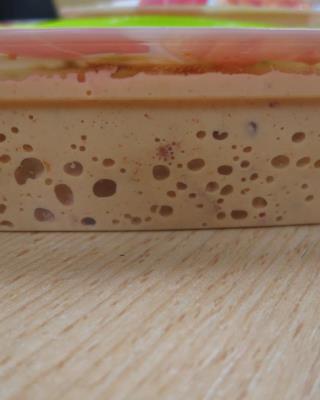
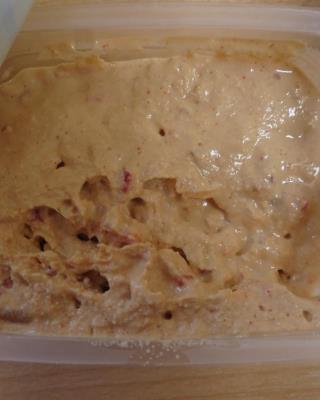
Illustrative photo #5

Illustrative photo #9

Place of inspection:
Hodonín ( Dvořákova 4054/10, 695 01 Hodonín )
ID: 26178541
Food group: Cold food Other cold food

Tudlee Budapest spread
Category: Dangerous foods
Invalid parameter:

changes caused by microbial activity
content appearance

The packaging of the product was swollen, it was obvious that fermentation was taking place – bubbles were visible in the product. Food is not considered safe if it shows signs of spoilage. 

Unsuitable storage temperatures of this product were not detected during the inspection, the food did not have an expired use-by date.

Expiration date: 20/12/2022
Packaging: plastic tub with sealed printed foil and label
Quantity of the product in the package: 120 g
Producer: GASTRO-MENU EXPRESS as, Konská 199, 739 61 Třinec
Date of sample collection: 13/12/2022
Reference number: 23-000054-SZPI-CZ
The sample was detected by the official control of the State Agricultural and Food Inspection.

Research – Zoonoses, foodborne outbreaks and antimicrobial resistance guidance for reporting 2022 data

EFSA

Abstract

This technical report of the European Food Safety Authority (EFSA) presents the guidance to reporting European Union (EU) Member States and non‐Member States in data transmission using extensible markup language (XML) data transfer covering the reporting of isolate‐based quantitative antimicrobial resistance data, as well as reporting of prevalence data on zoonoses and microbiological agents and contaminants in food, foodborne outbreak data, animal population data and disease status data. For data collection purposes, EFSA has created the Data Collection Framework (DCF) application. The present report provides data dictionaries to guide the reporting of information deriving from 2022 under the framework of Directive 2003/99/EC, Regulation (EU) 2017/625, Commission Implementing Regulation (EU) 2019/627 and Commission Implementing Decision (EU) 2020/1729. The objective is to explain in detail the individual data elements that are included in the EFSA data models to be used for XML data transmission through the DCF. In particular, the data elements to be reported are explained, including information about the data type, a reference to the list of allowed terms and any additional business rule or requirement that may apply.