Category Archives: Cryptosporidium

EU – Outbreak results reported at ECDC conference

Food Safety News

Experts have shared findings from Cryptosporidium, Listeria, Trichinella, and Salmonella outbreaks at an event in Europe.

Among presentations at the European Scientific Conference on Applied Infectious Disease Epidemiology (ESCAIDE) was one about the Danish perspective on two multi-country outbreaks. These included a Salmonella outbreak linked to chicken meat from Poland and Listeria in fish from a Danish producer.

The meeting organized by the European Centre for Disease Prevention and Control (ECDC) also discussed a July 2023 botulism outbreak linked to potato omelets (tortilla de patata) eaten in Spain. Italy and Norway had two cases of people who had been to Spain. Potential contamination pathways remain unknown.

Research – APHA reports role in E. coli and Cryptosporidium outbreaks

Food Safety News

The Animal and Plant Health Agency (APHA) has been involved in four E. coli outbreak investigations so far this year in the United Kingdom.

A Shiga toxin-producing E. coli (STEC) O145 outbreak was linked to unpasteurized milk cheese produced by Mrs. Kirkham’s in Lancashire. APHA contributed to the incident management team investigation, including an advisory visit and epidemiologically relevant sampling.

Patients fell ill between July and December 2023. In late July 2024, the UK Health Security Agency (UKHSA) notified the Food Standards Agency (FSA) of four cases between June and July, taking the number of sick people to 40, including two deaths. One death was part of the latest update. While there is a microbiological link between the latest patients and previous cases, investigations did not identify a food chain connection between them and Mrs. Kirkham’s products.

Research – Cryptosporidium spp.

ACSA

crypto

When the European Food Safety Authority published a review of the public health risk of foodborne parasites in 2018, it focused on three, which it considers to be the most pressing today and in the future immediate, either for current production systems, the effectiveness of control measures, eating habits or because of their severity. The selection included Cryptosporidium spp., Toxoplasma gondii and Echinococcus ssp. These parasites are resistant in the environment, they do not have specific controls, and the food industry’s awareness of them is variable, in contrast to what happens with Trichinella spiralis and Anisakidae .

Cryptosporidiosis is generally associated with acute gastrointestinal conditions, has no specific treatment, and outbreaks have occurred related to the consumption of contaminated fresh produce.

EFSA

UK – Cases double in cryptosporidium parasite outbreak as ‘100 more have symptoms’

UK News Yahoo

The number of confirmed cases of a waterborne disease caused by a microscopic parasite has more than doubled, while more than 100 further people have reported similar symptoms. Around 16,000 households and businesses in the Brixham area of Devon have been told not to use their tap water for drinking without boiling and cooling it first.

The UK Health Security Agency (UKHSA) said on Friday that 46 cases of cryptosporidium had now been confirmed in the fishing town, up from 22 cases on Thursday, and that more cases were anticipated. It added other reported cases of diarrhoea and vomiting in residents and visitors to Brixham were also under investigation.

Dr Bayad Nozad, consultant in health protection at UKHSA, said the Government agency was aware of further reports of illness above their confirmed numbers.

UK – Cryptosporidium confirmed in water supply in two Brixham areas – live updates

DevonLive

South West Water (SWW) has confirmed that further testing has found the presence of cryptosporidium in two areas of Brixham. Yesterday, May 14, the UK Health Security Agency confirmed 16 cases of the infection and around 70 reported cases of diarrhoea and vomiting in Brixham, with more cases reported by victims on social media.

Yesterday SWW stated that all its current water supply tests had come back clear and that customers should continue to use their water as normal. Today, May 15, it has announced it has detected ‘small traces’ of the organism in Alston and the Hillhead area of Brixham.

Research – Opportunistic Pathogens in Drinking Water Distribution Systems—A Review

MDPI

Abstract

In contrast to “frank” pathogens, like Salmonella entrocoliticaShigella dysenteriae, and Vibrio cholerae, that always have a probability of disease, “opportunistic” pathogens are organisms that cause an infectious disease in a host with a weakened immune system and rarely in a healthy host. Historically, drinking water treatment has focused on control of frank pathogens, particularly those from human or animal sources (like Giardia lambliaCryptosporidium parvum, or Hepatitis A virus), but in recent years outbreaks from drinking water have increasingly been due to opportunistic pathogens. Characteristics of opportunistic pathogens that make them problematic for water treatment include: (1) they are normally present in aquatic environments, (2) they grow in biofilms that protect the bacteria from disinfectants, and (3) under appropriate conditions in drinking water systems (e.g., warm water, stagnation, low disinfectant levels, etc.), these bacteria can amplify to levels that can pose a public health risk. The three most common opportunistic pathogens in drinking water systems are Legionella pneumophilaMycobacterium avium, and Pseudomonas aeruginosa. This report focuses on these organisms to provide information on their public health risk, occurrence in drinking water systems, susceptibility to various disinfectants, and other operational practices (like flushing and cleaning of pipes and storage tanks). In addition, information is provided on a group of nine other opportunistic pathogens that are less commonly found in drinking water systems, including Aeromonas hydrophilaKlebsiella pneumoniaeSerratia marcescensBurkholderia pseudomalleiAcinetobacter baumanniiStenotrophomonas maltophiliaArcobacter butzleri, and several free-living amoebae including Naegleria fowleri and species of Acanthamoeba. The public health risk for these microbes in drinking water is still unclear, but in most cases, efforts to manage Legionella, mycobacteria, and Pseudomonas risks will also be effective for these other opportunistic pathogens. The approach to managing opportunistic pathogens in drinking water supplies focuses on controlling the growth of these organisms. Many of these microbes are normal inhabitants in biofilms in water, so the attention is less on eliminating these organisms from entering the system and more on managing their occurrence and concentrations in the pipe network. With anticipated warming trends associated with climate change, the factors that drive the growth of opportunistic pathogens in drinking water systems will likely increase. It is important, therefore, to evaluate treatment barriers and management activities for control of opportunistic pathogen risks. Controls for primary treatment, particularly for turbidity management and disinfection, should be reviewed to ensure adequacy for opportunistic pathogen control. However, the major focus for the utility’s opportunistic pathogen risk reduction plan is the management of biological activity and biofilms in the distribution system. Factors that influence the growth of microbes (primarily in biofilms) in the distribution system include, temperature, disinfectant type and concentration, nutrient levels (measured as AOC or BDOC), stagnation, flushing of pipes and cleaning of storage tank sediments, and corrosion control. Pressure management and distribution system integrity are also important to the microbial quality of water but are related more to the intrusion of contaminants into the distribution system rather than directly related to microbial growth. Summarizing the identified risk from drinking water, the availability and quality of disinfection data for treatment, and guidelines or standards for control showed that adequate information is best available for management of L. pneumophila. For L. pneumophila, the risk for this organism has been clearly established from drinking water, cases have increased worldwide, and it is one of the most identified causes of drinking water outbreaks. Water management best practices (e.g., maintenance of a disinfectant residual throughout the distribution system, flushing and cleaning of sediments in pipelines and storage tanks, among others) have been shown to be effective for control of L. pneumophila in water supplies. In addition, there are well documented management guidelines available for the control of the organism in drinking water distribution systems. By comparison, management of risks for Mycobacteria from water are less clear than for L. pneumophila. Treatment of M. avium is difficult due to its resistance to disinfection, the tendency to form clumps, and attachment to surfaces in biofilms. Additionally, there are no guidelines for management of M. avium in drinking water, and one risk assessment study suggested a low risk of infection. The role of tap water in the transmission of the other opportunistic pathogens is less clear and, in many cases, actions to manage L. pneumophila (e.g., maintenance of a disinfectant residual, flushing, cleaning of storage tanks, etc.) will also be beneficial in helping to manage these organisms as well.

UK – APHA sees Cryptosporidium workload rise but E. coli outbreaks fall.

Food Safety News

crypto

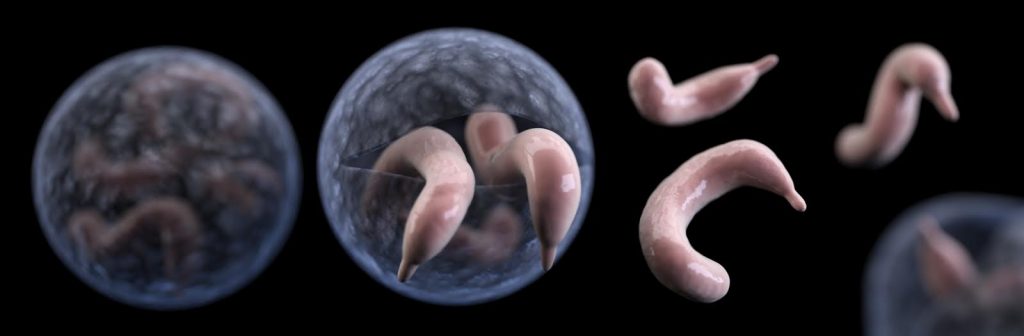
The number of Cryptosporidium outbreaks involving an agency of the UK Department for Environment, Food and Rural Affairs (Defra) increased in 2023.

The Animal and Plant Health Agency (APHA) assisted with investigations into seven Cryptosporidium parvum outbreaks linked to an animal origin. Five were in England and two were in Wales. One outbreak of cryptosporidiosis was epidemiologically linked to a milk vending machine.

Of the other human outbreaks, three were epidemiologically linked to open farms, two to commercial farms, and one to a farm shop which had animals on site.

E.coli

APHA was also part of investigations into two Shiga toxin-producing E. coli (STEC) outbreaks in 2023 which were epidemiologically linked to separate animal-contact visitor attractions.

Research – Most major pathogens see an increase in Ireland

Food Safety News

The number of E. coli, Salmonella, Campylobacter, and Listeria infections has gone up in Ireland, according to 2022 data from the Health Protection Surveillance Centre (HPSC).

During the COVID-19 pandemic, reporting rates for giardiasis, listeriosis, norovirus, rotavirus, salmonellosis, shigellosis, and toxoplasmosis in Ireland decreased compared to pre-pandemic levels. Still, rates for campylobacteriosis, cryptosporidiosis, E. coli, and yersiniosis increased or remained unchanged. In 2022, most of these diseases returned to or remained at pre-pandemic levels.

A 2021 cyber-attack at the Health Service Executive (HSE) also affected data validation and collection, reporting of enhanced data variables, and outbreak notification.

Sweden – Cryptosporidium outbreak (Sweden December 2023–)

Folkhalsomyndigheten

Since 15 December 2023, 68 people from 14 regions have been reported infected with Cryptosporidium in Sweden. Most of the disease cases are from Halland and Jönköping. Of the disease cases, 72 percent are women, the average age is 41 years and 79 percent are in the age group 21-60 years. Based on the available data, the latest case of the disease contracted on January 3 (see figure). Typing of a selection of samples shows that 13 out of 18 belong to the same type of Cryptosporidium, which indicates that the disease cases have a common source of infection.

Affected infection control units, the Swedish Food Agency and the Public Health Agency are investigating the outbreak to identify the source of infection, which is suspected to be fresh food. Information about what the outbreak cases have eaten before becoming ill is done via interviews and the collection of questionnaires. The answers are then compared to what people in a healthy comparison group indicate that they have eaten to assess whether there are foods that the outbreak cases have eaten to a greater extent than the comparison group.

RASFF Alert- Cryptosporidium – Goat Milk Cheese

RASFF

Goat milk cheese suspected to be the source of an outbreak of cryptosporidiosis in Sweden product from France