Category Archives: CDC

USA – Norovirus implicated in Carnival Splendor outbreak

Outbreak News Today

In a follow-up on the gastrointestinal outbreak that affected 93 people (passengers and crew) onboard a recent voyage of Carnival Cruise Line’s, Carnival Splendor, the Centers for Disease Control and Prevention (CDC) now states that norovirus was the causative agent of the outbreak.

Seventy-seven passengers and 16 crew members suffered with symptoms of vomiting and diarrhea during the May 24–31, 2022 voyage.

Research – Foodborne Illness Outbreaks Reported to National Surveillance, United States, 2009–2018

CDC

Abstract

Foodborne outbreaks reported to national surveillance systems represent a subset of all outbreaks in the United States; not all outbreaks are detected, investigated, and reported. We described the structural factors and outbreak characteristics of outbreaks reported during 2009–2018. We categorized states (plus DC) as high (highest quintile), middle (middle 3 quintiles), or low (lowest quintile) reporters on the basis of the number of reported outbreaks per 10 million population. Analysis revealed considerable variation across states in the number and types of foodborne outbreaks reported. High-reporting states reported 4 times more outbreaks than low reporters. Low reporters were more likely than high reporters to report larger outbreaks and less likely to implicate a setting or food vehicle; however, we did not observe a significant difference in the types of food vehicles identified. Per capita funding was strongly associated with increased reporting. Investments in public health programming have a measurable effect on outbreak reporting.

Foodborne diseases remain a major public health challenge in the United States, where 31 known pathogens cause an estimated 9 million illnesses, 56,000 hospitalizations, and 1,300 deaths annually (1). Efforts to improve food safety and reduce the burden of foodborne disease rely on data from foodborne disease surveillance and outbreak investigations to help prioritize food safety interventions, policies, and practices. Data from foodborne illness outbreaks reported to the Centers for Disease Control and Prevention (CDC) provide vital information on the foods causing illness and common food–pathogen pairs. Those data are used by the Interagency Food Safety Analytics Collaboration (IFSAC) to inform outbreak-based attribution models that attribute illnesses to specific food categories (2,3).

Foodborne illness outbreaks are investigated by local, state, and territorial health departments, CDC, the US Food and Drug Administration (FDA), and the Food Safety and Inspection Service of the United States Department of Agriculture and are reported to CDC’s Foodborne Disease Outbreak Reporting Surveillance System (FDOSS) through the web-based National Outbreak Reporting System (NORS). Although reported outbreaks are a rich data source, they represent a subset of all outbreaks occurring in the United States; not all outbreaks will be detected, investigated, and reported. Factors influencing which outbreaks are detected, investigated, and reported to CDC include both structural factors associated with the jurisdiction in which the outbreak occurred (e.g., infrastructure and capacity) and characteristics of the outbreak (e.g., size, geographic location, pathogen).

We integrated data from a variety of sources to examine structural factors and describe outbreak characteristics of foodborne outbreaks involving Salmonella, Shiga toxin–producing Escherichia coli (STEC) O157, norovirus, and bacterial toxins that were reported to national surveillance. In addition, we assessed the effects of state variation in outbreak reporting on the types of food vehicles identified.

USA – BEAM Dashboard

CDC

The BEAM (Bacteria, Enterics, Amoeba, and Mycotics) Dashboard is an interactive tool to access and visualize data from the System for Enteric Disease Response, Investigation, and Coordination (SEDRIC). The BEAM Dashboard provides timely data on pathogen trends and serotype details to inform work to prevent illnesses from food and animal contact. Currently, the dashboard focuses on data for Salmonella bacteria, but it will eventually include additional pathogens, antimicrobial resistance data, and epidemiologic data from outbreak investigations.

Frequently Asked Questions (FAQ)

For additional questions, please contact simso@cdc.gov.

USA – CDC issues Health Alert: Investigation of Illness Complaints After Consuming Lucky Charms Cereal

Food Poison Journal

During April 2022, there has been an increase in complaints of gastrointestinal illness (GI) attributed to eating Lucky Charms cereal reported primarily to a crowdsourcing website. Some complaints of illness have also been reported to the U.S. Food and Drug Administration (FDA), state, and local health departments. There are very little data on the clinical presentation of these complaints, e.g., symptom profiles, incubation periods, and illness durations, as well as a lack of laboratory testing of clinical specimens. The scarcity of data and lack of a consistent clinical presentation are making it difficult to ascertain if any of these illnesses are linked to the suspected cereal.

The Centers for Disease Control and Prevention (CDC) is coordinating with state and federal partners to characterize the clinical presentations and epidemiology of recent illness reports. CDC is also collaborating with state and federal partners to evaluate data collected from ill people to determine if an outbreak of GI illnesses is occurring and its potential link to Lucky Charms cereal.

USA – USDA investigating a new Salmonella Enteritidis outbreak. Little information has been released.

Food Poisoning News

The US Department of Agriculture Food Safety and Inspection Service (FSIS) announced this week they are investigating a Salmonella Enteritidis outbreak. Not much information has been released, but according to the FSIS situation report, the early stages of the investigation have been launched.

The FSIS has not released details about how many people are sick or where they live. The most recent update was posted on April 20, 2022 and states that chicken is a possible source of the outbreak and Salmonella Enteritidis is the pathogen involved.

The Centers for Disease Control and Prevention (CDC) has not released any information on this particular outbreak, but they frequently post updates on illnesses from all kinds of foodborne pathogens.

Symptoms of a Salmonella infection include diarrhea, fever and abdominal cramps that develop within 12 hours to 3 days after exposure to the organism. The illness typically lasts four to seven days and most people recover without treatment. However, in some cases, hospitalization is necessary and in rare cases death can occur. Children, the elderly and people with compromised immune systems are at an increased risk for severe illness.

If you think you have a Salmonella infection, it’s important to see a doctor right away for treatment.

USA – CDC – Lettuce, Other Leafy Greens, and Food Safety

CDC

Leafy greens arranged on a white background

Vegetables are an important part of a healthy diet. Leafy vegetables (called leafy greens on this page), such as lettuce, spinach, cabbage, kale, and bok choy, provide nutrients that help protect you from heart diseasestroke, and some cancers.

But leafy greens, like other vegetables and fruits, are sometimes contaminated with harmful germs. Washing leafy greens does not remove all germs. That’s because germs can stick to the surface of leaves and even get inside them. If you eat contaminated leafy greens without cooking them first, such as in a salad or on a sandwich, you might get sick.

Although anyone can get a foodborne illness, sometimes called food poisoning, some groups of people are more likely to get one and to have a serious illness. These groups include:

  • Adults aged 65 and older
  • Children younger than 5 years
  • People who have health problems or take medicines that lower the body’s ability to fight germs and sickness (a weakened immune system)external icon
  • Pregnant people

Eating Leafy Greens

Are leafy greens safe to eat?

Millions of servings of leafy greens are eaten safely every day in the United States. But leafy greens are occasionally contaminated enough to make people sick. To reduce your chance of getting sick, always follow the steps for safely handling and preparing leafy greens before eating or serving them.

Are leafy greens safe for my pet to eat?

Some animals can get sick from some germs that also make people sick. Always follow the steps for safely handling and preparing leafy greens before feeding them to pets and other animals. Never feed recalled food to pets or other animals.

Safely Handling and Preparing Leafy Greens

Do I need to wash all leafy greens?

Prewashed greens don’t need to be washed again. If the label on a leafy greens package says any of the following, you don’t need to wash the greens:

  • Ready-to-eat
  • Triple washed
  • No washing necessary

Prewashed greens sometimes cause illness. But the commercial washing process removes most of the contamination that can be removed by washing.

All other leafy greens should be thoroughly washed before eating, cutting, or cooking.

What is the best way to wash leafy greens?

The best way to wash leafy greens is by rinsing them under running water. Studies show that this step removes some of the germs and dirt on leafy greens and other vegetables and fruits. But no washing method can remove all germs.

Follow these steps to wash leafy greens that you plan to eat raw:

  • Wash your hands for 20 seconds with soap and water before and after preparing leafy greens.
  • Get rid of any torn or bruised leaves. Also, get rid of the outer leaves of cabbages and lettuce heads.
  • Rinse the remaining leaves under running water. Use your hands to gently rub them to help get rid of germs and dirt.
  • Dry leafy greens with a clean cloth or paper towel.

Should I soak leafy greens before washing them?

No. Do not soak leafy greens. If you soak them in a sink, germs in the sink can contaminate the greens. If you soak them in a bowl, germs on one leaf can spread to the other leaves. Rinsing leafy greens under running water is the best way to wash them.

Should I wash leafy greens with vinegar, lemon juice, soap, detergent, or produce wash?

Use plain running water to wash leafy greens and other produce. Kitchen vinegar and lemon juice may be used, but CDC is not aware of studies that show vinegar or lemon juice are any better than plain running water.

Do not wash leafy greens or other produce with soap, detergent, or produce wash. Do not use a bleach solution or other disinfectant to wash produce.

What other food safety steps should I keep in mind when I select, store, and prepare leafy greens and other produce?

  • Select leafy greens and other vegetables and fruits that aren’t bruised or damaged.
  • Make sure pre-cut produce, such as bagged salad or cut fruits and vegetables, is refrigerated or on ice at the store.
  • Separate produce from raw meat, poultry, seafood, and eggs in your shopping cart, grocery bags, and refrigerator.
  • Store leafy greens, salads, and all pre-cut and packaged produce in a clean refrigerator with the temperature set to 40°F or colder.
  • Use separate cutting boards and utensils for produce and for raw meat, poultry, seafood, and eggs. If that isn’t an option, prepare produce before working with raw meat.
  • Wash utensils, cutting boards, and kitchen surfaces with hot, soapy water after each use.
  • Cook thoroughly or throw away any produce that touches raw meat, poultry, seafood or their juices.
  • Refrigerate cooked or cut produce, including salads, within 2 hours (1 hour if the food is exposed to temperatures above 90°F, like a hot car or picnic).

Germs, Outbreaks, and Recalls

How do leafy greens get contaminated with germs?

Germs that make people sick can be found in many places, including in the soil, in the feces or poop of animals, in refrigerators, and on kitchen surfaces.

Germs can contaminate leafy greens at many points before they reach your plate. For example, germs from animal poop can get in irrigation water or fields where theexternal icon vegetables grow. Germs can also get on leafy greens in packing and processing facilities, in trucks used for shipping, from the unwashed hands of food handlers, and in the kitchen. To prevent contamination, leafy greens should be grown and handled safely at all points from farm to fork.

Read a study by CDC and partners on what we have learned from 10 years of investigating E. coli outbreaks linked to leafy greens.

How common are outbreaks linked to leafy greens?

In 2014–2018, a total of 51 foodborne disease outbreaks linked to leafy greens (mainly lettuce) were reported to CDC. Five of the 51 were multistate outbreaks that led CDC to warn the public. Among those five outbreaks, two were linked to packaged salads, two were linked to romaine lettuce, and one could not be linked to a specific type of leafy greens.

Most recently, in 2019–2021, CDC investigated and warned the public about nine multistate outbreaks linked to leafy greens. Among those outbreaks, six were linked to packaged salads, one was linked to romaine lettuce, one was linked to baby spinach, and one could not be linked to a specific type of leafy greens. Learn about these outbreaks.

Most foodborne illnesses are not part of a recognized outbreak. The nearly 2,000 illnesses reported in 2014–2020 outbreaks linked to leafy greens represent only a small part of illnesses caused by contaminated leafy greens during those years.

Does CDC warn the public about every foodborne disease outbreak?

No. CDC does not warn the public about every foodborne outbreak—including ones linked to leafy greens. Some reasons for this include:

  • Most sources of foodborne outbreaks are never identified.
  • By the time a source is identified, it might no longer be in stores, restaurants, or homes. This can happen with foods that are perishable (foods that spoil or go bad quickly), such as leafy greens.
  • Most outbreaks affect people in only one state, so local or state health departments lead the work to identify, investigate, and communicate about those outbreaks. CDC typically communicates only about outbreaks that affect people in more than one state.

Investigating outbreaks linked to leafy greensexternal icon can be especially challenging. These outbreaks often go unidentified or unsolved.

What should I do with leafy greens that are part of a recall?

  • Never eat, serve, or sell food that has been recalled, even if some of it was eaten and no one got sick.
  • Return the recalled food to the store or throw it away at home.
    • Throw out the recalled food and any other foods stored with it or that touched it.
    • Put it in a sealed bag in an outside garbage can with a tight lid (so animals cannot get to it).
    • If the recalled food was stored in a reusable container, wash the container in the dishwasher or with hot, soapy water.
  • Follow CDC’s instructions for cleaning your refrigerator after a food recall.

Organic, Hydroponic, and Home-Grown Leafy Greens

Are organic leafy greens less likely to be contaminated than non-organic ones?

All kinds of produce, including organic leafy greens, can be contaminated with harmful germs at any point from farm to fork. CDC is not aware of any evidence that organic greens are safer.

Learn about some outbreaks linked to organic foodsexternal icon.

Are hydroponic or greenhouse-grown leafy greens less likely to be contaminated?

Leafy greens grown using these methods also can be contaminated with harmful germs at any point from farm to fork.

Learn about an outbreak linked to greenhouse-grown leafy greens.

How do I keep leafy greens in my garden safe to eat?

Home gardens can be an excellent source of fruits and vegetables. Follow these tips to help prevent food poisoning:

  • Plant your garden away from animal pens, compost bins, and manure piles.
  • Water your garden with clean, drinkable water.
  • Keep dirty water, including storm runoff, away from the parts of plants you will eat.

Learn about raised bed gardening pdf icon[PDF – 1 page].

Looking to the Future

What steps are industry and the government taking to make leafy greens safer?

CDC is collaborating with FDA, academia, and industry to investigate the factors that contribute to leafy greens contamination.

The leafy greens industry, FDA, and state regulatory authorities have been implementing provisions of the Produce Safety Ruleexternal icon as part of the FDA Food Safety Modernization Act (FSMA).external icon They are considering what further measures can be taken. FDA’s 2020 Leafy Greens STEC Action Planexternal icon describes the agency’s plans to work with partners to make leafy greens safer.

USA – Outbreak Investigation of E. Coli O157:H7 – Spinach (November 2021) – FDA’s investigation is complete. CDC declares outbreak over.

FDA

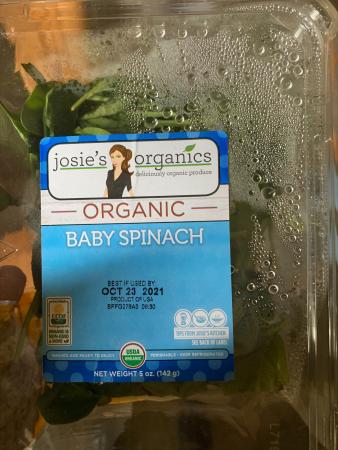
Outbreak Investigation of E. Coli O157:H7 in Spinach (November 2021): Sample Image of Josie's Organics Baby Spinach

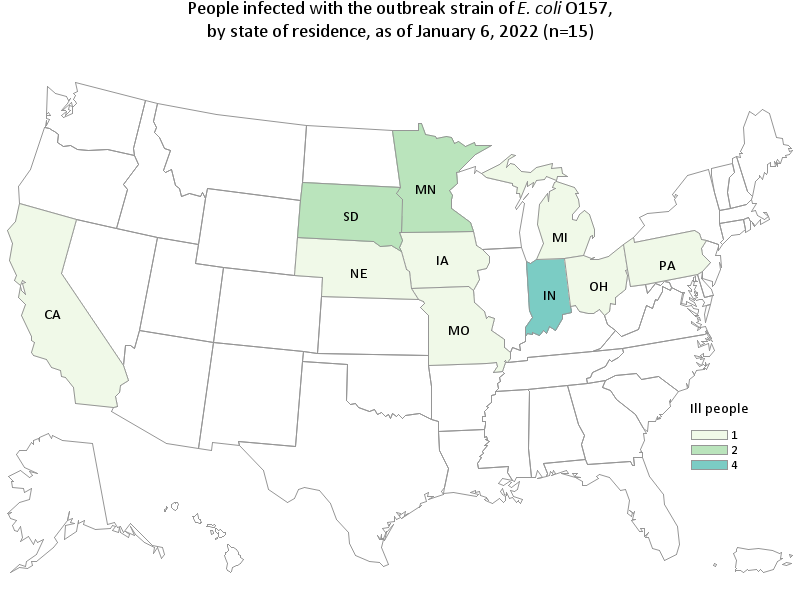
The FDA and CDC, in collaboration with state and local partners, investigated illnesses in a multistate outbreak of E. coli O157:H7. As of January 6, 2022, CDC declared this outbreak over.

FDA traced the supply chain for this positive product sample and deployed investigators to three farms in two separate states: California and Oregon. FDA conducted inspections, including sample collection and analysis, but inspections were limited because at the time the fields were fallow and no production activities were being conducted for spinach at any of the three farms. All samples collected were reported negative and no source or direct routes of contamination to the suspected spinach were found during the inspections. Investigators did report that one location processes product and sometimes uses product from multiple growers in one production run. This type of product co-mingling is not uncommon; but continues to present challenges for traceback investigations of foodborne outbreaks.

Recommendation

CDC announced the outbreak is over. There are no recommendations for consumers, retailers, or suppliers.


Case Count Map Provided by CDC

Outbreak Investigation of E. Coli O157:H7 in Spinach: Case Count Map Provided by CDC (January 6, 2022)

Case Counts

Total Illnesses: 15
Hospitalizations: 4
Deaths: 0
Last Illness Onset: November 8, 2021
States with Cases: CA (1), IA (1), IN (4), MI (1), MN (2), MO (1), NE (1), OH (1), PA (1) SD (2)

USA – CDC – Food Safety Page

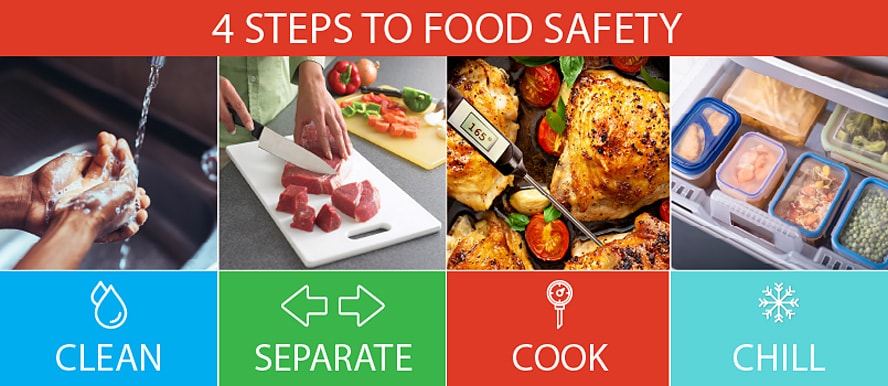
4 Steps to Food Safety - Clean, Separate, Cook and Chill

CDC

USA – CDC – This year’s investigation of Salmonella outbreaks linked to backyard poultry is over

CDC

Salmonella Campylobacter

November 18, 2021

CDC and public health officials in several states investigated multistate outbreaks of Salmonella infections with serotypes of Enteritidis, Hadar, Indiana, Infantis, Mbandaka, and Muenchen.

Epidemiologic and laboratory data showed that contact with backyard poultry made people sick.

Epidemiologic Data

A total of 1,135 people infected with one of the outbreak strains were reported from 48 states, the District of Columbia, and Puerto Rico (see map). The true number of sick people in these outbreaks was likely much higher than the number reported, and these outbreaks may not have been limited to the states with known illnesses. This is because many people recover without medical care and are not tested for Salmonella.

Illnesses started on dates ranging from December 15, 2020, to October 10, 2021 (see timeline). Age information was available for 1,132 people. Their ages ranged from less than 1 to 97 years, with a median age of 37 years. Many were young children: 268 (24%) were under 5 years and 140 (12%) were under 1 year. Of 1,107 people with sex information available, 646 (58%) were female. Of 829 people with information available, 273 (33%) were hospitalized. Two deaths were reported, one from Indiana and one from Virginia.

State and local public health officials interviewed people about the animals they came into contact with the week before they got sick. Of the 677 people interviewed, 449 (66%) reported contact with backyard poultry before getting sick.

Traceback Data

Of 293 people who reported contact with backyard poultry and provided more information, 212 (72%) reported that they bought backyard poultry this year. Purchase locations included feedstores, auctions, and directly from hatcheries. Traceback of these purchases did not identify a single, common source of backyard poultry. A total of 264 separate purchases from more than 150 purchase locations of 70 different companies were reported. At least 17 hatcheries supplied backyard poultry to these purchase locations.

Laboratory Data

Public health investigators used the PulseNet system to identify illnesses that were part of this outbreak. CDC PulseNet manages a national database of DNA fingerprints of bacteria that cause gastrointestinal illnesses. DNA fingerprinting is performed on bacteria using a method called whole genome sequencing (WGS). WGS showed that bacteria from sick people’s samples were closely related genetically. This means that people in these outbreaks likely got sick from the same type of animal.

Public health officials from several states found two of the outbreak strains (Hadar and Enteritidis) from sick people’s backyard poultry and the backyard poultry environment.

  • On April 15, public health officials in Ohio found the outbreak strain of Salmonella Hadar from a sick person’s ducklings.
  • On May 7, local public health officials in California found the outbreak strain of Salmonella Hadar from a sick person’s duck environment (the ground, duck poop, and duck’s sleeping area).
  • On June 1, public health officials in Arizona found the outbreak strain of Salmonella Hadar from a sick person’s chickens and the chicken environment (chickens’ roost and water source).
  • On June 15, public health officials in Maryland found the outbreak strain of Salmonella Enteritidis from a sick person’s chickens.

WGS was also used to identify any predicted antibiotic resistance for bacteria from 1,101 sick people’s samples, 4 animal samples, and 7 environmental samples. Of the 1,112 samples, 394 (35%) were predicted to be resistant to one or more of the following antibiotics: amoxicillin-clavulanic acid (0.5%), ampicillin (0.9%), chloramphenicol (0.3%), cefoxitin (0.5%), ceftriaxone (0.5%), ciprofloxacin (0.1%), gentamicin (1.8%), kanamycin (0.4%), streptomycin (33.8%), sulfamethoxazole (2.2%), tetracycline (32.6%), and trimethoprim-sulfamethoxazole (0.2%). Testing of 11 sick people’s samples using standard antibiotic susceptibility testing methods by CDC’s National Antimicrobial Resistance Monitoring System (NARMS) confirmed these results (streptomycin and kanamycin were not tested by this method).

Most people with Salmonella illness recover without antibiotics. However, if antibiotics were needed, some illnesses in these outbreaks may have been difficult to treat with some commonly recommended antibiotics and may have required a different antibiotic choice.

Public Health Action

CDC always advises everyone to take steps to stay healthy around backyard poultry. CDC routinely works with hatcheries and stores that sell poultry to educate new poultry owners and control the spread of Salmonella at hatcheries.

USA – Outbreak Investigation of E. Coli O157:H7 – Spinach (November 2021)

FDA

Outbreak Investigation of E. Coli O157:H7 in Spinach (November 2021): Sample Image of Josie's Organics Baby Spinach

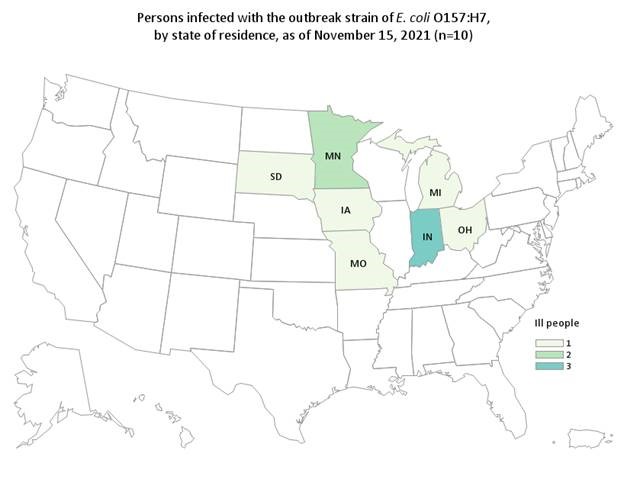
The FDA and CDC, in collaboration with state and local partners, are investigating illnesses in a multistate outbreak of E. coli O157:H7. According to the CDC, as of November 15, 2021, 10 people infected with the outbreak strain of E. coli O157:H7 have been reported from 7 states. Illnesses started on dates ranging from October 15 to October 27, 2021. Five people in this outbreak report eating spinach in the week before becoming sick and one person reported Josie’s Organics brand.

On November 15, 2021, the Minnesota Department of Agriculture reported that, as part of this outbreak investigation, a sample of Josie’s Organics Baby Spinach collected from the home of an ill person tested positive for E. coli O157:H7. This sample had a “Best If Used By” date of October 23, 2021 and is undergoing Whole Genome Sequencing (WGS) analysis to determine if the strain of E. coli O157:H7 present in the product sample matches the outbreak strain.

As WGS analysis of the sample is underway, FDA is tracing back the supply of the baby spinach in the positive product sample. Thus far, FDA has traced supply chains for this product back to a small number of farms in two different geographic regions and is deploying investigators along the supply chains of interest.

FDA and state partners are working with the firm to determine if additional products could be affected. This is an ongoing investigation and additional information will be provided as it becomes available.

Recommendation

Consumers, restaurants, and retailers, should not eat, sell, or serve Josie’s Organics Baby Spinach with a “Best If Used By” date of October 23, 2021. Josie’s Organics Baby Spinach is sold in a clear plastic clamshell with the Best If Used By Date on the top label.

Although this product is past expiration and should no longer be available for purchase, consumers should check their homes for product and discard it. If consumers froze fresh Josie’s Organics Baby Spinach, they should discard it.


Case Count Map Provided by CDC

Outbreak Investigation of E. Coli O157:H7 in Spinach: Case Count Map Provided by CDC (November 15, 2021)

Case Counts

Total Illnesses: 10
Hospitalizations: 2
Deaths: 0
Last Illness Onset: October 27, 2021
States with Cases: IA (1), IN (3), MI (1), MN (2), MO (1), OH (1), SD (1)