Category Archives: Campylobacter

Research – Prevalence and Association of Campylobacter spp., Salmonella spp., and Blastocystis sp. in Poultry

MDPI

Foodborne Pathogen

Abstract

Poultry and poultry meat are considered the most important sources of human campylobacteriosis and salmonellosis. However, data about the occurrence of Campylobacter and Salmonella concomitantly with intestinal protozoa such as Blastocystis sp. in poultry remain very scarce. Therefore, this study aimed to investigate the presence and possible interactions between these three microorganisms in fecal samples from 214 chickens collected either on farms or from live bird markets in Egypt. The results obtained showed that Campylobacter spp., Salmonella spp., and Blastocystis sp. were present in 91.6% (196/214), 44.4% (95/214), and 18.2% (39/214) of tested samples, respectively, highlighting an active circulation of these microorganisms. Moreover, a significant positive correlation was reported between the occurrence of Campylobacter spp. and Blastocystis sp. together with a significant negative correlation between Blastocystis sp. and Salmonella spp. This study confirms the association reported previously between Blastocystis sp. and Campylobacter spp. while disclosing an association between Blastocystis sp. and Salmonella spp.; it also highlights the need to improve studies on the interactions between bacteria and eukaryotes in the gut microbiota of poultry.

Research – Estimating the Prevalence of Foodborne Pathogen Campylobacter jejuni in Chicken and Its Control via Sorghum Extracts

MDPI

Abstract

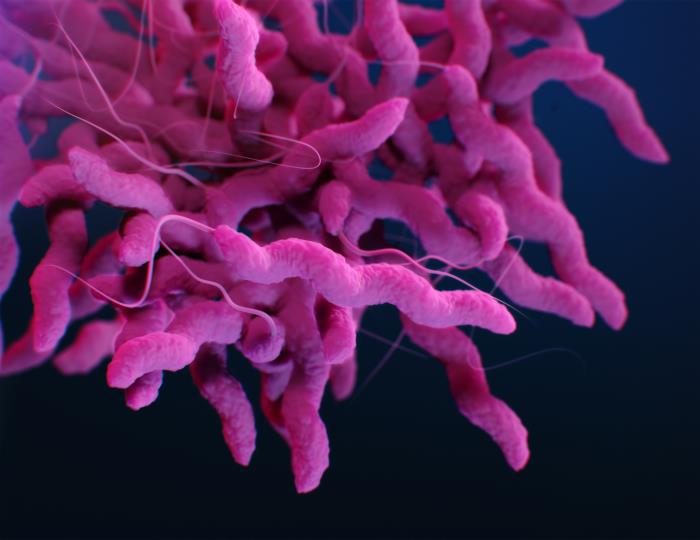
CDC Campy

Campylobacter jejuni is a Gram-negative bacterium which is considered as the most reported cause of foodborne infection, especially for poultry species. The object of this work is to evaluate the occurrence of C. jejuni in chicken meat as well its control via three types of sorghum extracts (white sorghum (WS), yellow sorghum (YS), and red sorghum (RS)); antibacterial activity, antioxidant power, and cytotoxicity of sorghum extracts were also assessed. It was found that C. jejuni is very abundant in chicken meat, especially breast and thigh. WS extract showed more effectiveness than both yellow and red ones. Lyophilized WS extract offered high total phenolic compounds (TPCs) and total flavonoid compounds (TFCs) of 64.2 ± 0.8 mg gallic acid equivalent (GAE/g) and 33.9 ± 0.4 mg catechol equivalent (CE)/g, respectively. Concerning the antibacterial and antioxidant activities, WS showed high and significant antibacterial activity (p < 0.001); hence, WS displayed a minimum inhibitory concentration (MIC) of 6.25%, and revealed an inhibition zone of 7.8 ± 0.3 mm; it also showed an IC50 at a concentration of 34.6 μg/mL. In our study, different samples of chicken fillet were collected and inoculated with pathogenic C. jejuni and stored at 4 °C. Inoculated samples were treated with lyophilized WS extract at (2%, 4%, and 6%), the 2% treatment showed a full reduction in C. jejuni on the 10th day, the 4% treatment showed a full reduction in C. jejuni on the 8th day, while the 6% treatment showed a full reduction in C. jejuni on the 6th day. Additionally, 2%, 4%, and 6% WS extracts were applied on un-inoculated grilled chicken fillet, which enhanced its sensory attributes. In sum, WS extract is a promising natural preservative for chicken meat with accepted sensory evaluation results thanks to its high antibacterial and antioxidant potentials.

Research – Bacteriophages for the Targeted Control of Foodborne Pathogens

MDPI

Abstract

Foodborne illness is exacerbated by novel and emerging pathotypes, persistent contamination, antimicrobial resistance, an ever-changing environment, and the complexity of food production systems. Sporadic and outbreak events of common foodborne pathogens like Shiga toxigenic Ecoli (STEC), SalmonellaCampylobacter, and Listeria monocytogenes are increasingly identified. Methods of controlling human infections linked with food products are essential to improve food safety and public health and to avoid economic losses associated with contaminated food product recalls and litigations. Bacteriophages (phages) are an attractive additional weapon in the ongoing search for preventative measures to improve food safety and public health. However, like all other antimicrobial interventions that are being employed in food production systems, phages are not a panacea to all food safety challenges. Therefore, while phage-based biocontrol can be promising in combating foodborne pathogens, their antibacterial spectrum is generally narrower than most antibiotics. The emergence of phage-insensitive single-cell variants and the formulation of effective cocktails are some of the challenges faced by phage-based biocontrol methods. This review examines phage-based applications at critical control points in food production systems with an emphasis on when and where they can be successfully applied at production and processing levels. Shortcomings associated with phage-based control measures are outlined together with strategies that can be applied to improve phage utility for current and future applications in food safety.

USA – Raw Milk recall in Pennsylvania due to Campylobacter

Food Poison Journal

The Pennsylvania Department of Agriculture warns that consumers should immediately discard raw goat milk sold from Dove Song Dairy due to possible contamination with Campylobacter. Three persons who consumed this product and became ill with campylobacteriosis were reported by the Department of Health. Raw milk samples tested by the Pennsylvania Department of Agriculture are presumptively positive for Campylobacter.

Japan sees rise in food poisoning from eating raw chicken

The Mainichi

TOKYO — Japan’s health ministry is calling for caution amid an increase in food poisoning caused by Campylobacter, a form of bacteria found in raw and half-cooked chicken.

Food poisoning cases usually rise in Japan during the damp rainy season from late May to early July. This year, experts have expressed concern about a sudden rise due to the easing of coronavirus-related restrictions, which have brought more customers back to dining out.

Once infected with Campylobacter, commonly found in raw or not fully cooked meat dishes such as sashimi, Korean “yukhoe” and lightly seared “tataki,” the bacteria can cause stomach pain and diarrhea among other symptoms. Although usually not fatal, children and the elderly are at risk of developing serious illness. In addition, the bacteria can result in Guillain-Barre syndrome (GBS), which can bring about difficulty breathing and paralysis of the limbs and face.

Around 2,000 people are afflicted with food poisoning by Campylobacter annually. Some regions, such as Kagoshima Prefecture, where chicken sashimi is part of the local cuisine, have established strict hygiene standards for the consumption of raw chicken meat, but caution is needed as about 70% of cases occur at restaurants.

Research USA – FoodNet 2022 Preliminary Data

CDC

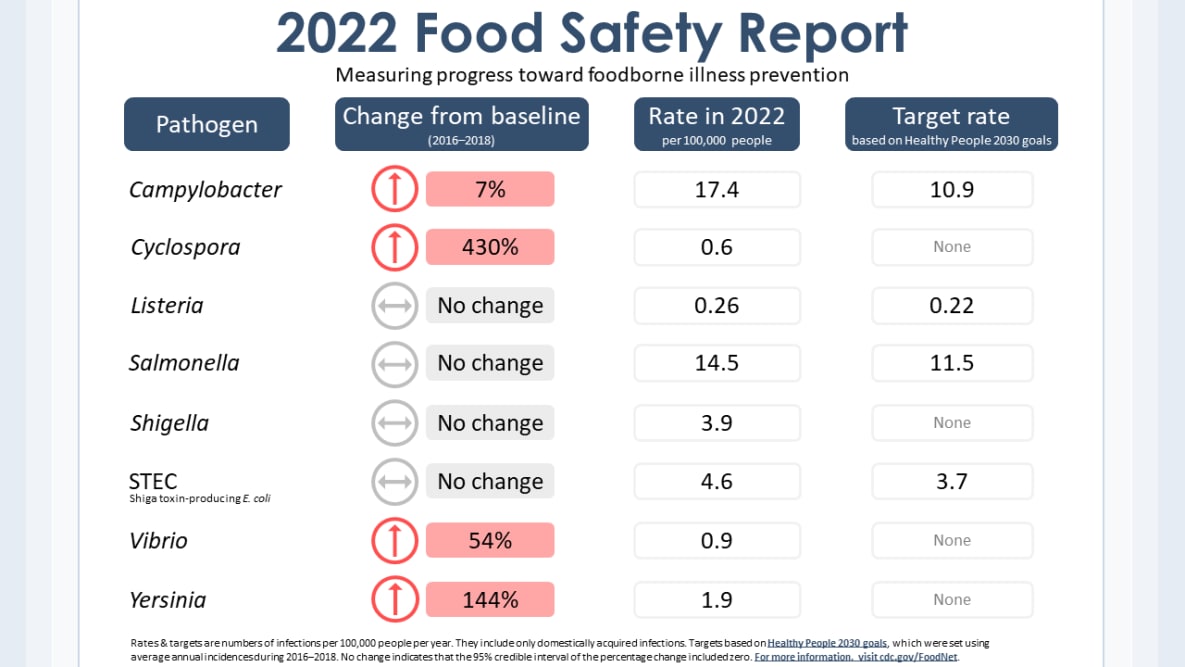
Graphic showing progress in 2022 toward foodborne illness prevention, with changes from the 2016–2018 baseline, rates in 2022, and target rates based on Healthy People 2030 goals. Rates increased for Campylobacter, Cyclospora, Vibrio, and Yersinia and did not change for Listeria, Salmonella, Shigella, and Shiga toxin-producing E. coli. Rates for Campylobacter, Listeria, Salmonella, and Shiga toxin-producing E. coli are all higher than their established target rates.

This year’s report summarizes 2022 preliminary surveillance data. It describes 2022 incidence compared with the average incidence for 2016–2018, the reference period used for the U.S. Department of Health and Human Services (HHS) Healthy People 2030 goals. The report also summarizes cases of hemolytic uremic syndrome (HUS) during 2021.

  • In 2022, enteric (intestinal) infections monitored by FoodNet generally returned to or exceeded levels observed in 2016–2018 (before the COVID-19 pandemic).
    • Incidence of CampylobacterListeriaSalmonella, and Shigella infections did not change in 2022 compared with 2016–2018.
    • Incidence of Cyclospora, STEC, Vibrio, and Yersinia infections increased in 2022 compared with 2016–2018.
  • Campylobacter and Salmonella remain the top causes of enteric infections monitored by FoodNet.
  • Increased use of CIDTs contributed to the increased detection of infections.
  • FoodNet data show lack of progress during 2022 toward Healthy People 2030 goals for reducing foodborne illness. Concerted efforts are needed to implement effective prevention strategies to reduce disease burden.

Research – Modeling the survival of Campylobacter jejuni in raw milk considering the viable but non-culturable cells (VBNC)

Wiley Online

Abstract

Campylobacter spp. cannot grow in raw milk, but it is able to transform into a viable but non-culturable (VBNC) state enabling the survival in such harsh conditions. In this study, Campylobacter jejuni survival in raw milk was investigated taken into consideration colony-forming units (CFUs) and VBNC cells. CFU from two different strains of C. jejuni (DSM 4688 and BfR-CA-18043) were enumerated at three temperatures (5°C, 8°C, and 12°C). In parallel, a viability real-time PCR was conducted to quantify intact and putatively infectious units (IPIUs) (comprising CFU and VBNC bacteria). The data generated were used to model the viability of C. jejuni during raw milk storage. Here, a one-step fitting approach was performed using parameter estimates from an intermediate two-step fit as starting values to generate tertiary models. Different primary model equations (Trilinear and Weibull) were required to fit the CFU and the IPIU data. Strain-specific linear secondary models were generated to analyze the effect of storage temperature on the maximum specific inactivation rate of the CFU data. The time of the first decimal reduction parameter of the IPIU models could be modeled by a strain-independent linear secondary model. The developed tertiary models for CFU and IPIU differ significantly in their predictions, for example, for the time required for a one log10 reduction. Taken into consideration that VBNC could revert to a culturable state during the raw milk storage, our results underline the importance of considering IPIU and not only CFU to avoid underestimation of the survival of C. jejuni in raw milk.

Research – Assessing the Risk of Seasonal Effects of Campylobacter Contaminated Broiler Meat Prepared In-Home in the United States

MDPI

Abstract

Campylobacter has consistently posed a food safety issue in broiler meat. This study aimed to create a quantitative microbial risk assessment model from retail to consumption, designed to evaluate the seasonal risk of campylobacteriosis associated with broiler meat consumption in the United States. To achieve this, data was gathered to build distributions that would enable us to predict the growth of Campylobacter during various stages such as retail storage, transit, and home storage. The model also included potential fluctuations in concentration during food preparation and potential cross-contamination scenarios. A Monte Carlo simulation with 100,000 iterations was used to estimate the risk of infection per serving and the number of infections in the United States by season. In the summer, chicken meat was estimated to have a median risk of infection per serving of 9.22 × 10⁻⁷ and cause an average of about 27,058,680 infections. During the winter months, the median risk of infection per serving was estimated to be 4.06 × 10⁻⁷ and cause an average of about 12,085,638 infections. The risk assessment model provides information about the risk of broiler meat to public health by season. These results will help understand the most important steps to reduce the food safety risks from contaminated chicken products.

Sweden – Increase in cases of illness with Campylobacter infection

Folkhalsomyndigheten

Campylobacter kswfoodworld

In recent weeks, there has been an increase in the number of people who have contracted campylobacter infection. The rise in the number of cases is preceded by an increase in campylobacter in broiler flocks. Good hygiene when handling raw chicken reduces the risk of becoming infected.

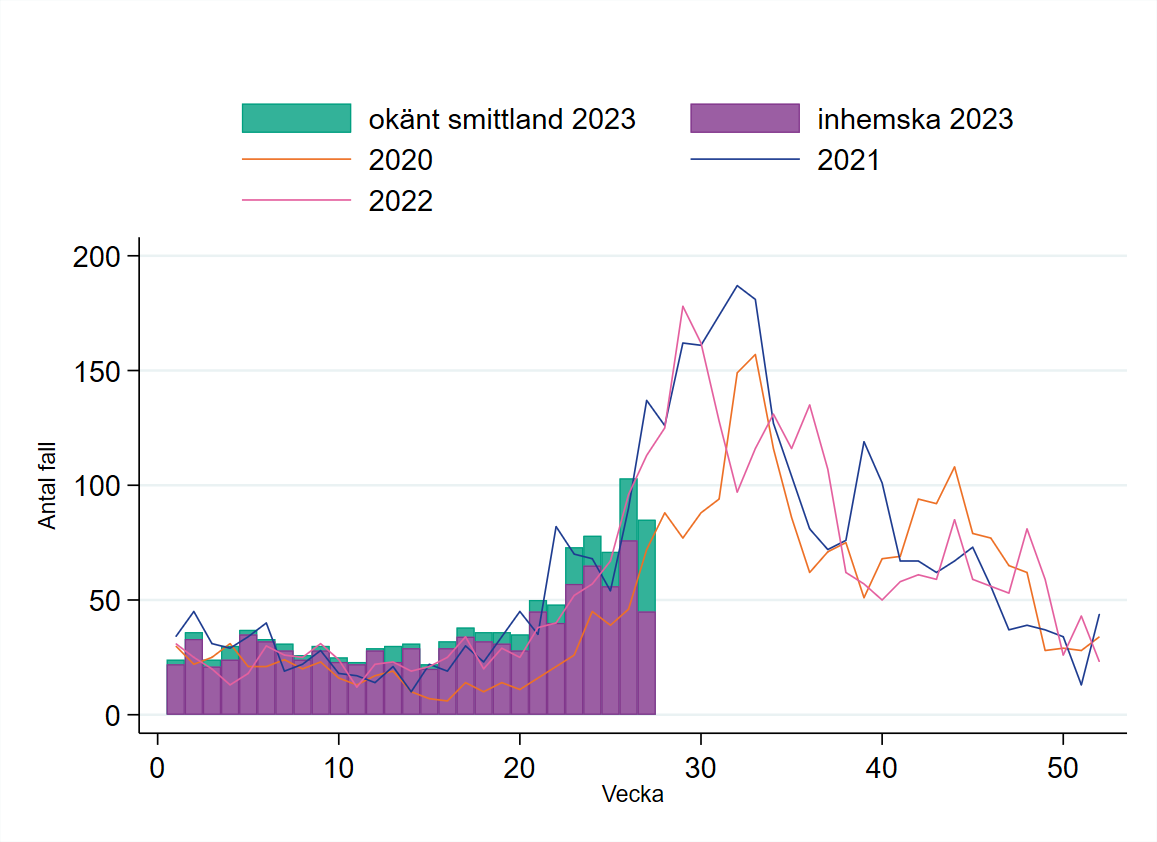
There has been an increase in the number of people who have been infected by the intestinal bacteria campylobacter in recent weeks. During week 26, the number of reported cases increased further compared to previous weeks and the increase looks set to continue.

Figure: The number of reported cases of campylobacter per week infected in Sweden or with an unknown country of infection (230706). Week 27 is not yet complete.

The number of sick people increased from week 21 to 60 cases per week from 30 cases.  In week 26, the cases increased further, a similar increase is seen in 2020-2022.

From mid-June, an increase in the occurrence of campylobacter in Swedish broiler flocks has also been observed. Previous studies have shown a connection between campylobacter infection and the consumption of fresh chicken, where around a third of those who have contracted the disease have been linked to fresh chicken. Campylobacter infection in humans is more common in summer as is the presence of campylobacter in broiler flocks.

Sweden sees another rise in illnesses for 2022


Food Safety News

Most foodborne infections rose in Sweden in 2022 compared to the year before, according to the latest figures.

A report by the National Veterinary Institute (SVA), Folkhälsomyndigheten (the Public Health Agency of Sweden), Livsmedelsverket (the Swedish Food Agency) and Jordbruksverket (Swedish Board of Agriculture) showed a rise for Campylobacter, Salmonella, Listeria, and E. coli infections. Some of this was because of increased travel and more people being infected abroad.

A total of 5,165 cases of campylobacteriosis were reported in 2022 and 57 percent of these were domestic. This is up on more than 4,000 cases in 2021. For domestic infections in 2022, the median age was 51 with a range of 0 to 101. More men, 54 percent, than women were sick.

A correlation between human cases and Campylobacter-positive broiler batches underscores the need for further preventive measures, said the report.