Category Archives: Aflatoxin

RASFF Alerts – Aflatoxin – Millet Flour – Pistachios – Basmati Rice – Groundnuts – Pakistan Rice – Brazil Nuts

RASFF

Aflatoxins in Millet flour from Senegal in the Netherlands

RASFF

Aflatoxins in pistachio kernels from Iran in Italy

RASFF

Aflatoxine B1 and Ochratoxine A in basmati rice from India in Ireland and the Netherlands

RASFF

Aflatoxin B1 in Basmati rice from India in Belgium, France and Netherlands

RASFF

Aflatoxin in Egyptian groundnuts in the Netherlands

RASFF

Aflatoxin in Egyptian groundnuts in the Netherlands

RASFF

Aflatoxins in Indian Groundnut Kernels in the Netherlands and Switzerland

RASFF

Aflatoxin in Egypt groundnuts in the Netherlands

RASFF

Aflatoxin in Pakistan Rice in the Netherlands

RASFF

Aflatoxins in Brazil nuts from Bolivia in Belgium, Czech Republic, Denmark, Finland, France, Germany, Greece, Ireland and Netherlands

Research – Aflatoxin Reduction and Retardation of Aflatoxin Production by Microorganisms in Doenjang during a One-Year Fermentation

MDPI

Meju, a raw material for doenjang preparation, is highly vulnerable to aflatoxin-producing fungi. The aim of this study was to evaluate the effect of a one-year fermentation on aflatoxins and aflatoxin-producing fungi in doenjang spiked with aflatoxins B1, G1, B2, and G2 and inoculated with toxigenic Aspergillus flavus. A significant reduction in aflatoxins was observed after a year of fermentation, measuring 92.58%, 100%, 98.69%, and 100% of B1, G1, B2, and G2, respectively. After a year of fermentation, 6.95 ± 3.64 µg/kg of total aflatoxin was detected, which represents a 97.88% reduction in the total aflatoxin compared with the initial value (328.83 ± 36.60 µg/kg). Several aflatoxin-degrading fungi (Aspergillus versicolorCladosporium subcinereumAspergillus ochraceus) and bacteria (Bacillus albusBacillus velezensis) isolated from doenjang were identified as the major contributors to the reduction of aflatoxin. Furthermore, it was observed that most of the aflatoxin contamination in doenjang occurred during the meju stage, and this stage was found to be most susceptible to A. flavus contamination and growth. These findings reveal that native microorganisms mediate aflatoxin clean-up in doenjang during fermentation and support the use of such microorganisms as a starter culture for the preparation of aflatoxin-free doenjang.

Research – Aflatoxin B1 in rice: effects of storage duration, grain type and size, production site and season

Journal of Food Protection

Our study aimed to evaluate the AFB1 levels in packed rice marketed in Lebanon and determine the exposure to this toxin from the rice consumption. A total of 105 packed white, parboiled and brown rice bags were collected. ELISA was used to measure AFB1. A comprehensive FFQ was filled by 500 participants to determine the patterns of rice consumption and subsequently the exposure levels to AFB1 from the rice consumption in Lebanon. AFB1 was detected in all rice samples (100%). The average concentration ± standard deviation of AFB1 was 0.5±0.3μg/kg. Contamination ranged between 0.06 and 2.08μg/kg. Moisture content in all rice samples was below the recommended percentage (14%). Only 1% of the samples had an AFB1 level above the European Union (EU) limit (2μg/kg). Brown rice had a significantly higher AFB1 level than white and parboiled rice (p=0.02), while a significant difference was found between both collections for the same brands (p=0.016). Packing season, packing country, country of origin, presence of a food safety management certification, grain size, and time between packing and purchasing had no significant effect. Exposure to AFB1 from rice consumption in Lebanon was calculated as 0.1-2 ng/kg bodyweight/day.

Belgium – Golden Sun brand Basmati rice – Aflatoxin B1

AFSCA

LT Foods recall
Product: Golden Sun brand Basmati rice.
Problem: Aflatoxin B1 content too high.
LT Foods has decided, in agreement with the FASFC, to withdraw the product Basmati Rice (1 kg) of the Golden Sun brand from sale and to recall it from consumers because of an excessively high aflatoxin B1 content.

We ask that you do not consume this product and return it to your point of sale. You will be reimbursed even without presenting the receipt. Product description: – Product name: Basmati rice – Brand: Golden Sun – Best before date (BDD): 06/10/2023 – EAN code: 20364625

 Sale period: from 08/10/2021 to 18/02 /2022 – Type of packaging: plastic packaging (bag) – Weight: 1 kg The product was distributed in Belgium by Lidl.

For any further information , contact Lidl customer service ( 0800/73520 (free))

RASFF Alerts – Aflatoxin – Rice – Dried Figs – Peanuts – Groundnuts – Nutmeg- Golden Sun Basmati Rice

RASFF

Aflatoxin in Pakistan Rice in the Netherlands

RASFF

Aflatoxin in Pakistan Rice in the Netherlands

RASFF

Aflatoxins beyond the limits allowed in Dried Figs from Turkey in Italy

RASFF

Excessive aflatoxin levels (aflatoxin B1 and total aflatoxin) in dried figs from Turkey in Germany

RASFF

Aflatoxin in peanuts from Argentina in the Netherlands

RASFF

Aflatoxin in groundnut kernels from Argentina in the Netherlands

RASFF

Aflatoxin in Indian groundnuts in the Netherlands and Switzerland

RASFF

Aflatoxin in Indian groundnuts in the Netherlands and Switzerland

RASFF

Aflatoxin in Turkish Figs in the Netherlands and Germany

RASFF

Aflatoxin B1 found in golden sun basmati rice from Pakistan in Belgium and the Netherlands

RASFF

Aflatoxin in Indonesian Nutmeg in the Netherlands

Research – Spain – Report of the Scientific Committee of the Spanish Agency for Food Safety and Nutrition (AESAN) on the safety of foods air-dried outdoors that are produced by traditional methods and which require an adjustment of the hygiene requirements that must be fulfilled

AESAN

Abstract
The European Union recognises that traditional methods of food production are a valuable and irreplaceable heritage that must be preserved over time. Therefore, Regulation (EC) No. 852/2004 permits a degree of flexibility in its application provided food hygiene goals are not compromised. For decades, both plant and animal-based foods have been produced in Spain which are air-dried outdoors until reaching a low water activity (aw) that enables their preservation at room temperature. These foods include, raisins, dried apricots, dried figs, ñora peppers, dried fish or octopus that are at least partially air-dried, among others.
The Scientific Committee of the Spanish Agency for Food Safety and Nutrition (AESAN) is of the opinion that the processing of naturally dried foods leads to their correct preservation, provided they reach an aw that inhibits the proliferation of pathogenic microorganisms and the production of toxins in them. Some of the stages in the process may cause microbial inactivation.
Above all, it is necessary to ensure the absence of the formation of toxins, with aflatoxins being the ones that have been most frequently identified. Thus, it is considered that the drying should be conducted in the least time possible, ensuring a decrease of aw within the first 2-3 days of below 0.90 to inhibit the development of aflatoxins, and this drying should be continued until aw levels lower than 0.70 are reached, preventing the growth of pathogenic microorganisms that cause spoilage. It is necessary to guarantee suitable hygienic conditions during processing in order to prevent contamination by pathogens and/or toxins.
Although they cannot proliferate in the stated preservation conditions, they can remain viable in the final product, therefore they may pose a risk to consumer health. Microorganisms with a low infective dose and those that have been identified in dried products (such as S. aureus and Salmonella) and microbial toxins are especially relevant. Autonomous Communities must monitor compliance with the requirements to ensure that they do not pose a risk in these products.
Although these types of products have a low aw, within the range of 0.6 to 0.8 according to avail-able literature, given that this information is not available for each assessed product, the level of safety reached cannot be established on an individual basis. Additionally, the diverse factors used in some of them (additives and preservatives, pasteurisation processes, etc.) require individual assessment once all the necessary information is available. Therefore, the drying must reach aw levels below 0.70 in the least time possible for these types of products to be considered stable, as given these conditions, there is no scientific evidence that shows that the safety and stability of the dried products are compromised, provided good hygiene practices are maintained during their preservation and storage.
For final levels of aw that are higher, correct preservation may be achieved through a combination of factors which proves that it is effective throughout the shelf life of the product, maintaining the aforementioned appropriate hygiene practices.

Research – How do Time, Tannin and Moisture Content Influence on Toxicogenic Fungal Populations during the Storage of Sorghum Grains?

Journal of Food Protection

Cereal grains are usually ensiled to improve their nutritional value and are one of the main sources of feed for dairy cattle. However, during storage, grains can be contaminated with toxicogenic fungi. Sorghum is one of the most economically important cereals in the world. Therefore, the aim of this work was to evaluate the influence of storage duration and tannin and moisture contents on toxicogenic fungal populations in sorghum grain storage. Samples were prepared with variety high in tannins (genotypes Morgan 108 and ACA 558, >5g/kg DM) and with variety low tannin content (genotypes Flash 10 and ACA 546, <1g/kg DM) were collected and manually compacted in experimental laboratory silos where they received different moisture content treatments, namely low (15-25%), medium (26-32%) and high (33-42%). Freshly harvest grains were analyzed at time 0 and storage grains were analyzed at different times (30, 90 and 180 days). Fungal isolation and identification were performed following conventional mycological methods. Penicillium citrinum (34%), Aspergillus flavus (60%) and Fusarium nygamai (68%) were the most abundant species. Rapid detection of aflatoxins and fumonisins in each sample was performed by ELISA according to the AOAC method, and the quantification of aflatoxin B 1 was performed by HPLC. Aflatoxins were detected in four samples with levels of 6.7-28.8 µg/kg and aflatoxin B 1 with a level of 2-14 µg/kg in pre- and post-storage grains . Fumonisins were only detected in two freshly harvested samples with levels of 500-900 µg/kg . In general, the storage time favored the increase of Penicillium population, instead the Aspergillus and Fusarium are reduced. Conversely the abundance of the three population was not affected by the moisture content. The results of this study show that fungal population must be analyzed at different times.

RASFF Alerts -Aflatoxin – Shelled Pistachios – Dried Figs – Peanuts – Groundnuts- Basmati Rice

RASFF

AFLATOSSINE B1 E TOTALI OLTRE I LIMITI DI LEGGE.1881/2006 from the USA in Italy

RASFF

High content of aflatoxins (total: 28.2 – B1:26.3 µg/kg) in shelled pistachios from Turkey origin Iran in Italy

RASFF

Too high content of aflatoxins in dried figs from Turkey in France

RASFF

Aflatoxins in peanuts in shell from Egypt in Germany

RASFF

Aflatoxins in Brazilian peanuts in the Netherlands

RASFF

Aflatoxins in Egyptian Organic Groundnuts in Germany and the Netherlands

RASFF

Aflatoxin in Basmati rice from Pakistan in Finland, France and the Netherlands

RASFF

Aflatoxins in Bolivian Peanuts in the Netherlands

RASFF Alerts – Aflatoxin – Pistachios – Groundnuts – Peanuts

RASFF

Aflatoxins in pistachios inshell from Turkey in Greece

RASFF

Aflatoxins in pistachios inshell from Turkey in Greece

RASFF

Aflatoxin in Egyptian groundnuts in Germany and the Netherlands

RASFF

Aflatoxin in USA groundnuts in the Netherlands

RASFF

Aflatoxins in Egyptian Organic Peanut Kernels in the Netherlands

RASFF

Aflatoxin in South African groundnuts in the Netherlands

RASFF

Aflatossine oltre i limiti consentiti in Pistacchio in guscio da Iran/Aflatoxins beyond the allowed limits in Pistachio in shell from Iran in Italy

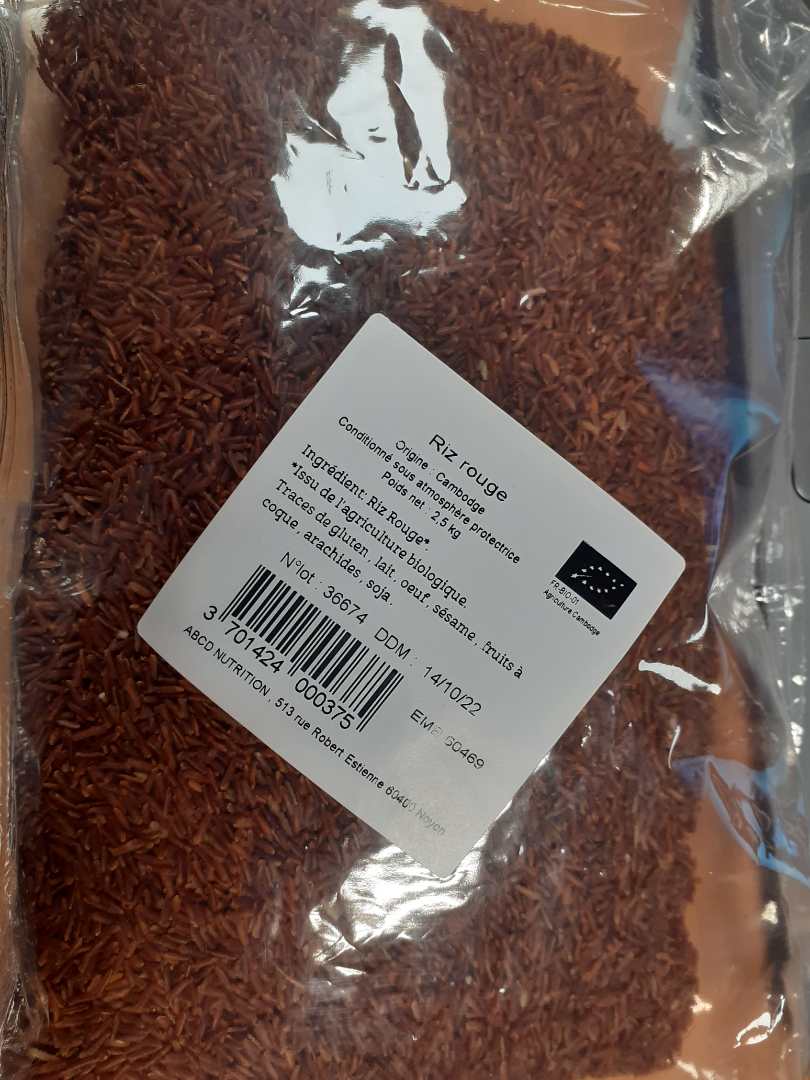
France – ORGANIC red rice – Aflatoxin

Gov france

Identification information of the recalled product

  • Product category Food
  • Product subcategory Others
  • Product brand name BULK RADIUS
  • Model names or references ORGANIC red rice
  • Identification of products
    GTIN Lot Dated
    3701424000375 36674 Date of minimum durability 14/10/2022
  • Packaging Bulk, product in hopper on the BIO shelf
  • Marketing start/end date From 19/10/2021 to 29/11/2021
  • Storage temperature Product to be stored at room temperature
  • Health mark Not concerned
  • Further information Bulk product found in the hopper in the BIO departments
  • Geographic area of ​​sale Whole France
  • Distributors Carrefour Cora Auchan Leclerc Intermarché System U Organic time

Practical information regarding the recall

  • Reason for recall Aflatoxin B1 and B, G levels
  • Risks incurred by the consumer Aflatoxins