Author Archives: KSW

UK – Shiga toxin-producing Escherichia coli (STEC) data: 2021

Gov UK

Updated 18 April 2024

The main points of the 2021 annual report are:

Overall, 1,181 confirmed cases of STEC were reported in England during 2021, a decrease of 2% compared to 2020.

A total of 365 confirmed cases of Shiga toxin-producing Escherichia coli (STEC) O157 were reported in England in 2021, no change compared to 2020. A total of 1,234 confirmed cases of Shiga toxin-producing Escherichia coli (STEC) non-O157 were reported in England in 2021, an increase of 46% compared to 2020.

The lowest annual incidence of STEC O157 was in the East Midlands region (0.41 per 100,000 population) and the highest in the North East region (1.02 per 100,000 population). The lowest incidence of STEC non-O157 was in the Yorkshire and Humber region (0.62 per 100,000 population) and the highest in the London region (4.21 per 100,000 population).

Children aged 1 to 4 years had the highest annual incidence of infection due to STEC O157 (2.3 per 100,000 population, 95% confidence interval (CI) 1.78 to 3.02). Children aged under 1 years had the highest incidence of infection due to STEC non O157 (7.08 per 100,000 population, 95% confidence interval (CI) 7.01 to 7.21).

Around a third (36%, 127 out of 365) of confirmed STEC O157 cases in England were hospitalised and 2% (6 out of 365) were reported to have developed haemolytic uraemic syndrome (HUS). Where information is available, two-thirds (65%, n=274 out of 431) of confirmed STEC non-O157 cases in England were hospitalised; and 1% (14 out of 1,234) of all STEC non-O157 were reported to have developed HUS).

A further 443 specimens in England were positive for stx genes on PCR at the Gastrointestinal Bacteria Reference Unit (GBRU), indicating STEC, but an organism was not cultured therefore a STEC serogroup could not be ascertained.

The most commonly isolated non-O157 STEC serogroup was STEC O26 (n=145 out of 786, 18%).

Four outbreaks of STEC in England involving 52 cases, ranging from 10 to 19 cases, were investigated in 2021: 2 involved STEC O157 and suspected vehicles were identified and 2 involved STEC O26 outbreaks and no vehicles were identified.

Since 2018, the number of STEC O157 notifications has declined and the number of STEC non-O157 has increased two-fold (218%). Overall, there is an increase in STEC notifications, and the burden placed on public health and clinical services is also increasing, especially given the two-fold increase in hospitalisation reported in 2021 for non-O157 cases.
USA – Quaker Oats to Close Plant Tied to Salmonella Recalls

Food Poisoning News

Quaker Oats has confirmed that it will shutter its Danville, Illinois food production plant on June 8, 2024.  A community staple for 65 years, the plant’s closure will result in the loss of 510 local jobs.

The plant’s fate was sealed by a series of unfortunate events.  In December 2023 and January 2024, Quaker Oats faced a double whammy of recalls due to potential Salmonella contamination. This dangerous bacterium can spread through raw foods and contaminated surfaces, which can lead to severe gastric distress, infections in other parts of the body after circulating in the bloodstream, and potentially typhoid fever, although rare in the United States. Over 60 products manufactured at the Danville plant were affected by the recall.

Danish campaign results show Norovirus uncertainty

Food Safety News

According to the Danish food agency, there is still uncertainty among chefs and kitchen workers about the management of norovirus.

A Danish Veterinary and Food Administration (Fødevarestyrelsen) control and guidance campaign targeted restaurants, kitchens, and shops that supply ready-to-eat (RTE) food. Work involved 829 visits from June to November 2023.

The agency asked kitchen managers what steps they should take to prevent outbreaks. Some said they were unsure how far they could go concerning an employee’s illness and health.

Taiwan – Three test positive for norovirus after dining at sushi restaurant chain

Focus Taiwan

Taipei, April 17 (CNA) Three of the 23 people who reported suspected food poisoning after dining at branches of the sushi restaurant chain Kura Sushi have tested positive for norovirus, the Taiwan Food and Drug Administration (TFDA) said Wednesday.

At a press conference on Wednesday morning, TFDA Director-General Wu Shou-mei (吳秀梅) said the TFDA and local health bureaus have received reports of 10 suspected food poisoning cases involving 23 individuals who had meals at different branches of the sushi restaurant chain.

Of the 23, three have tested positive for norovirus, while testing of samples taken from the remaining 20 individuals is still underway, Wu said, adding that a chef tested negative for norovirus, without specifying the branch where the three dined or where the chef worked.

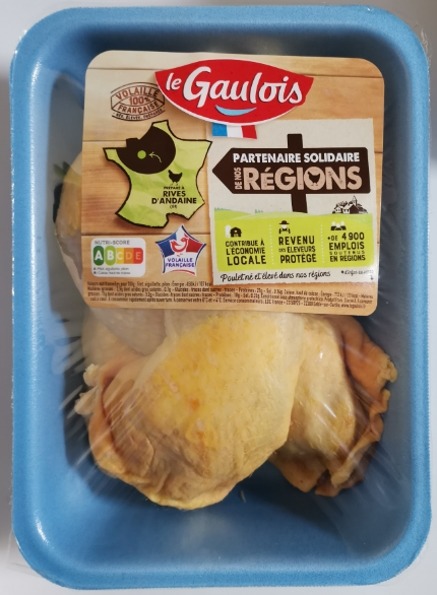
France – Chicken thigh – Listeria monocytogenes

Gov France

Product category
Food
Product subcategory
Meats
Product brand name
Gallic
Model names or references
Le Gaulois chicken leg 1 kg
Product identification
GTIN Batch Date
3266980017439 0244091716 Use-by date 04/11/2024
Products List
INFO_CONSO_Cuisse_de_poulet_Le_Gaulois_16_04_24___Product_List.pdfAttachment
Packaging
Tray under protective atmosphere
Start/end date of marketing
From 04/01/2024 to 04/11/2024
Storage temperature
Product to keep in the refrigerator
Health mark
FR 61 096 020 CE
Geographical sales area
Departments: CALVADOS (14), EURE (27), MANCHE (50), SEINE-MARITIME (76)
Distributors
E. Leclerc
List of points of sale
INFO_CONSO_Cuisse_de_poulet_Le_Gaulois_16_04_24___Liste_clients.pdf

Hong Kong – Salads – Food Safety Booklet

CFS

Salads are mixtures of minimally processed ready-to-eat vegetables
with or without dressings. Common ingredients include fruits, poultry,
meat, seafood, eggs, pasta, herbs, nuts or cooked vegetables. Salads
are usually served cold, and are considered high-risk foods as some of
the ingredients are raw or undercooked. Pathogenic bacteria like
Listeria monocytogenes and Salmonella spp. may also be present in
some common ingredients such as eggs, salad dressings and fresh
vegetables. Moreover, their preparation requires a lot of handling,
which increases the risk of contamination with bacteria such as
Staphylococcus aureus from human skin and other microorganisms
with antimicrobial resistance (i.e. “superbugs”) if personal and
environmental hygiene is not maintained. To ensure the safety of
salads, food handlers should be alert to possible food safety problems
and take appropriate measures in the production process.
This set of guidelines is intended for food business operators (FBOs)
who prepare and sell salads at premises. It aims to help the food trade
to implement food safety measures in their operations in order to
produce and supply safe and wholesome salads.
While this is not a legal document and its use is voluntary, it reviews
some essential parameters related to Good Hygiene Practices (GHPs)
and recommends best practices that any FBO should consider in
providing safe foods to consumers.
Introduction and scope

Denmark reports fatal multi-year Listeria outbreak

Food Safety News

Danish officials are trying to find the source of a Listeria outbreak that has affected 17 people since 2019.

Two illnesses have provisionally been registered in 2024, said the Statens Serum Institut (SSI).

Patients have been infected with the same type of Listeria monocytogenes since the summer of 2019.

Research – Health warning due to Aflatoxins in almonds linked to production of cancer cells

D1

The EU’s Rapid Alert System for Food and Feed (Rasf) has issued an alert after detecting its presence. aflatoxin above the permissible level in Almond Coming from the United States. The analysis has been done at border controls.

aflatoxins are Very poisonous mushroom and harmful for human consumption, is associated with chronic exposure to these substances production of cancer cells,

The notification states “Serious” risk When the analyzes conducted exceeded the maximum permitted level of this substance of 10 micrograms/kg – ppb. However, the RASF system does not offer any data related to the region of the country, the brand under which it is marketed or the plantation from which these contaminated almonds come.

In that sense, FACUA-Consumers in Action criticizes that the limited information published by the European Commission creates doubts about all almonds coming from the United States, since it is not the producing company or even the region of the country. Does not give details about. Which has been cultivated.

Researchers Estimate Leafy Greens Foodborne Illness Outbreaks Cost U.S. $5 Billion Annually

Food Safety.com

A recent review authored by researchers from Ohio State University has established pathogen-specific foodborne illness burden estimates for leafy greens in the U.S. by combining three outbreak-based attribution models with illness incidence and economic cost models.

USA -FDA – Investigations of Foodborne Illness Outbreaks

FDA

What’s New

  • A new outbreak of E. coli O157:H7 illnesses linked to a not yet identified product (ref #1221) has been added to the table. FDA has initiated traceback.
  • For the outbreak of Salmonella Typhimurium (ref #1218) in a not yet identified food, the case count has increased from 11 cases to 12 cases.
  • For the outbreak of Listeria monocytogenes (ref #1214) linked to queso fresco and cotija cheese, the advisory was updated on April 10, 2024. The outbreak has ended, and FDA’s investigation is closed.
  • For the investigation of elevated lead levels in Cinnamon Applesauce Pouches (ref # 1198), these products are off the market and no longer available for sale; however, they have a long shelf life. Consumers should check their pantries and discard any recalled products. FDA’s response has transitioned from this investigation to post-incident actions and activities. Future updates on lead-related actions and activities can be found on the FDA Post- Incident Response Activities: Elevated Lead & Chromium Levels: Cinnamon Applesauce Pouches page.