Recall and withdrawal of French cheeses following official confirmation of Brucella melitensis infection in a herd from France in the UK and Belgium
KSWFoodWorld

Recall and withdrawal of French cheeses following official confirmation of Brucella melitensis infection in a herd from France in the UK and Belgium
Listeria monocytogenes in toba de porc din Romania/// Listeria monocytogenes in pig head cheese from Romania
Listeria monocytogenes on goat raw milk cheese from France in Denmark
Salmonella spp., Listeria and labelling deficiencies in minced meat from Bulgaria in Germany
Salmonella Newport in poultry carcasses, elements of poultry meat, poultry offal from Poland in Bulgaria, Czech Republic, Latvia and Romania
Salmonella enterica ser. Enteritidis (in 1 out of 5 samples /25g) and Salmonella enterica ser. Infantis (in 2 out of 5 samples /25g) in chilled chicken meat from Poland in Italy and the Czech Republic
Salmonella enterica ser. Enteritidis (present /10g) in frozen chicken tulips from Poland in France
Prezenta Salmonella enteritidis in pipote pui congelate din Polonia // Salmonella enteritidis in frozen chicken gizzards from Poland in Romania
S.typhimurium in turkey meat from Poland in Italy
Salmonella in black pepper from Brazil in Spain
Salmonella in frozen salted chicken half breasts from Brazil in the Netherlands
Salmonella Enteritidis in chicken neck skin samples from Poland in Poland and Ghana
Salmonella enterica ser. Enteritidis in chilled chicken meat from Poland in Hungary, Czech Republic and Latvia
Salmonella enteritidis in pipote pui origine Polonia/// salmonella enteritidis in frozen chicken meat from Poland in Romania
Salmonella spp., Listeria and labelling deficiencies in minced meat from Bulgaria in Germany
Presence of Salmonella Newport in frozen chicken meat from Netherlands origin Poland in Italy, Spain
Posted in Uncategorized
Sunflower meal from Ukraine infested with moulds in Poland

| GTIN | Lot | Date |
|---|---|---|
| 3252950011002 | 300921LI2 | Use-by date between 11/14/2021 and 11/23/2021 |
Next week, Americans will enjoy Thanksgiving with family and friends. While the COVID-19 pandemic is still top-of-mind, the U.S. Department of Agriculture (USDA) reminds us all that it’s also important to keep family and friends safe from foodborne illness this Thanksgiving.
“Thanksgiving is one of my favorite times to remind people about food safety,” said Agriculture Secretary Tom Vilsack. “I personally know how much effort it takes to prepare a full Thanksgiving meal, and I always ensure I’m following safe food practices like handwashing, using a food thermometer and avoiding cross-contamination.”
By following the tips below, you’ll lessen the chances of having a visit from foodborne illness — an unwelcome visitor — at your table this Thanksgiving.
Always wash your hands before preparing and handling food. Handwashing helps to prevent the spread of germs. Recent USDA observational research showed that 95 percent of participants failed to properly wash their hands before handing food. Make sure to follow the steps to wash your hands properly.
Clean and sanitize any surfaces that will touch food such as tabletops, kitchen counters, stoves, sinks, etc.
In a recent study (PDF, 1.7 MB), USDA found 60 percent of kitchen sinks were contaminated with germs after participants washed or rinsed poultry. USDA advises against washing your turkey; however, if you do wash your turkey in the sink, it must be fully cleaned and sanitized afterwards. To clean, rub down surfaces — including the sink, cutting boards and counter tops — with soap and hot water, and then sanitize them with a cleaning solution to remove any residual germs. You can use a homemade solution of one tablespoon of unscented, liquid chlorine bleach in one gallon of water. Let the surfaces air dry. Be sure to use separate cutting boards—one for meat and another for vegetables and fruit.
Never thaw a turkey on a counter or in hot water. USDA recommends thawing a turkey in a refrigerator since this allows for slow and safe thawing. The turkey will need about 24 hours for every four to five pounds of turkey. After thawing, it is safe to store in the refrigerator for one to two days. Turkey can also be thawed in a cold-water bath or microwave; however, it must be cooked immediately after it has thawed using these methods. If using the cold-water method, allow 30 minutes per pound and submerge the turkey in its original wrapping to avoid cross-contamination. It’s safe to cook a turkey from its frozen state; however, it will take at least 50 percent longer to fully thaw. Lastly, never leave a raw turkey out at room temperature for more than two hours.
Make sure your turkey reaches an internal temperature of 165 F. Use a food thermometer to measure the internal temperature in three parts: the thickest part of the breast, the innermost part of the wing and the innermost part of the thigh. USDA recommends using a food thermometer even if the turkey has a pop-up temperature indicator to ensure it has reached 165 F in the three previously stated places. When cooking a turkey breast instead of a whole turkey, check the temperature with the food thermometer to ensure it reaches 165 F at the thickest part the breast. All previously cooked side dishes should be reheated to 165 F.
USDA does not recommend stuffing your turkey because it can be a breeding ground for bacteria if not prepared carefully. However, if you plan to stuff your turkey, please keep the following in mind:
For more information on turkey stuffing, visit Turkey Basics: Stuffing.
All perishable foods must be refrigerated within two hours of being cooked, or one hour if the temperature is 90 F or above. After two hours, perishable food will enter the “Danger Zone” (between 40 F and 140 F), which is where bacteria can multiply quickly and cause the food to become unsafe. Discard all foods that have been left out for more than two hours.
After the meal (but within the two-hour rule), separate larger quantities of leftovers in small shallow containers and place them in the refrigerator. Thanksgiving leftovers are safely stored in a refrigerator for up to four days. In the freezer, leftovers can be safely frozen indefinitely but will keep best quality for two to six months. Reheat leftovers to an internal temperature of 165 F. Check the internal temperature of the food in several places with a food thermometer after allowing a resting time.
For Thanksgiving food safety questions, call the USDA Meat and Poultry Hotline at 1-888-MPHotline (1-888-674-6854), email MPHotline@usda.gov or chat live at ask.usda.gov from 10 a.m. to 6 p.m. Eastern Time, Monday through Friday.
Do you have any last-minute turkey day questions? The Meat and Poultry Hotline will be open on Thanksgiving Day from 8am-2pm EST.
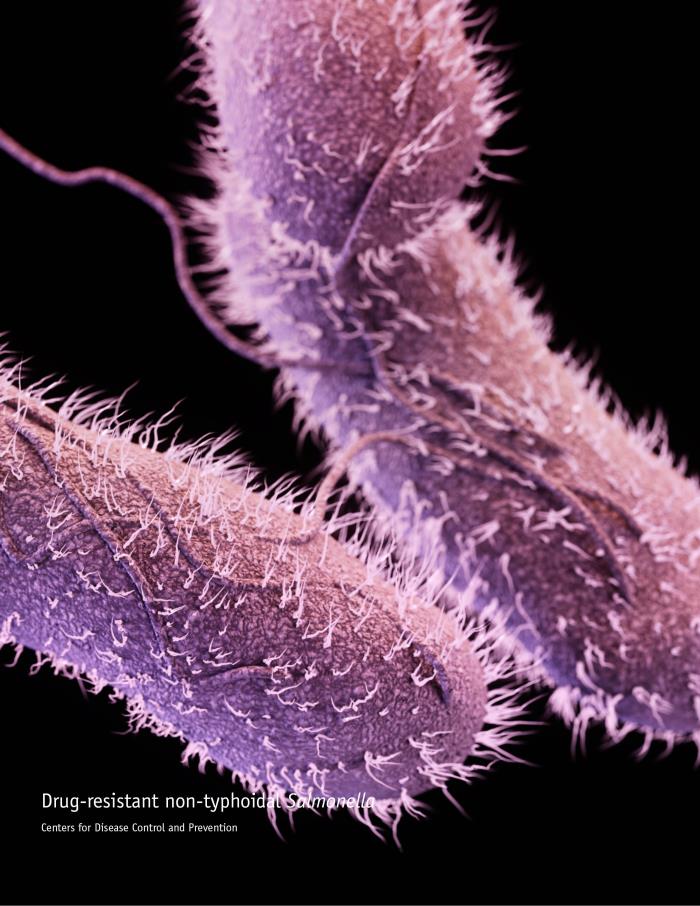
We sought to determine which Salmonella serotypes cause illness related to the Thanksgiving holiday in the United States and to foods disproportionately eaten then (e.g., turkey). Using routine surveillance for 1998–2018 and a case-crossover design, we found serotype Reading to be most strongly associated with Thanksgiving.
Thanksgiving, celebrated annually in the United States on the fourth Thursday of November, often brings together family and friends who eat specific traditional foods, such as mashed potatoes, cranberry sauce, and pumpkin pie; the most prominent food eaten is turkey (1). In 2017, ≈45 million turkeys were produced for Thanksgiving, ≈18% of annual production (2). Turkey is popular across regions, races, sexes, and generations; 88% of person in the United States report eating turkey during their Thanksgiving meal (1,3,4).
Foodborne Salmonella infections cause substantial illness and death in the United States: an estimated1 million cases, 20,000 hospitalizations, and 400 deaths occur annually (5). Typical illness consists of diarrhea, fever, and abdominal pain lasting 3–7 days; only a minority of persons seek health care. Incubation typically ranges from 6 hours to 6 days (5). Salmonella outbreaks caused by serotypes Hadar and Saint Paul have been most commonly attributed to turkey, and serotypes Enteritidis, Heidelberg, and Typhimurium have been frequent causes of turkey-associated outbreaks (6). During 2015‒2020, Reading and Hadar were the serotypes most often isolated from turkeys (7); less is known about which serotypes cause turkey-associated sporadic Salmonella infections. We aimed to determine which Salmonella serotypes cause sporadic enteric infections after the Thanksgiving holiday and are most likely related to foods disproportionately eaten then, particularly turkey.
Posted in food bourne outbreak, Food Illness, Food Micro Blog, Food Microbiology, Food Microbiology Blog, Food Microbiology Research, Food Microbiology Testing, Foodborne Illness, foodborne outbreak, foodbourne outbreak, Illness, microbial contamination, Microbiological Risk Assessment, Microbiology, Microbiology Investigations, outbreak, Research, Salmonella
Tracking artificially seeded foodborne pathogens in foods with high background microbiota is challenging. Wheat flour and its subsidiary products are known to carry a high native microbial load, which could interfere with tracking and enumeration of target organisms in such matrices. Shiga toxin-producing Escherichia coli (STEC) serogroups O26, O121, and O157:H7 were transformed with the pGFPuv plasmid encoding ampicillin resistance (+Amp) and green fluorescent protein and were additionally conferred resistance to streptomycin (+Amp + Strep) through exposure to incremental concentrations of the antibiotic. Growth characteristics of these antibiotic-resistant strains were compared to those of the nonresistant native strains (NR). The supplementation of ampicillin and ampicillin + streptomycin in growth media was evaluated for its ability to suppress growth of the native microbial load of three different commercial cake mixes. Antibiotic supplementation in growth media was successful in suppressing the native microbiota of the cake mixes, while the growth characteristics of the +Amp + Strep variants of the three STEC strains did not differ significantly from the NR strains (p > .05). These results indicate that STEC strains with ampicillin and streptomycin resistance markers have improved trackability over their wild-type counterparts when isolated from food matrices with high background microbiota. These strains would be advantageous for use in laboratory experiments on STEC survival in wheat and wheat derived products as their detection and enumeration can occur without interference from native microbial load.
Posted in Antibiotic Resistance, E.coli O121, E.coli O157, E.coli O157:H7, E.coli O26, Food Micro Blog, Food Microbiology, Food Microbiology Blog, Food Microbiology Research, Food Microbiology Testing, microbial contamination, Microbiological Risk Assessment, Microbiology, Microbiology Investigations, Research, STEC, STEC E.coli

The Food Safety Information Council (FSIC) has urged consumers not to become complacent about food poisoning.
The message comes as part of Australian Food Safety Week which runs from Nov. 13 to 20. The focus is on food safety in emergency situations and how understanding the hazards and preparing for them can help reduce risks associated with foodborne illness and contamination.
Each year, there are an estimated 4.1 million cases of food poisoning in the country which result in 31,920 hospitalizations, 86 deaths and a million visits to doctors.
Posted in food contamination, Food Hazard, Food Hygiene, Food Illness, Food Inspections, Food Micro Blog, Food Microbiology, Food Microbiology Blog, Food Microbiology Research, Food Microbiology Testing, Food Pathogen, food recall, Food Safety, Food Safety Alert, Food Temperature Abuse, Food Testing, Research

The function of packaging is crucial in the maintenance of fresh meat product quality. This study aimed to assess the efficiency of six films added with coatings 2379L/220 and 2379L/221 (containing sage extracts) to inhibit Salmonella typhimurium, Staphylococcus aureus, and Escherichia coli, which showed that two of the six films had a significant effect. Additionally, the effects of the films on refrigerated skinless chicken breast meat were evaluated based on microbiological content, colour, weight loss, texture and pH. Four of the six films were examined could extend the storability of refrigerated chicken breast fillets for up to seven days. All six treated films improved the pH, colour stability, weight loss, and texture of the chicken fillets. Therefore, these findings suggested that the coatings containing sage extracts having different viscosities (2379L/220 and 2379L/221) were effective as antimicrobial adhesives in food packaging films and can be commercially applied in prolonging the storage of chicken breast meat without affecting their quality. View Full-Text
Posted in Decontamination Microbial, E.coli, escherichia coli, Food Micro Blog, Food Microbiology, Food Microbiology Blog, Food Microbiology Research, Food Microbiology Testing, microbial contamination, Microbiology, Microbiology Investigations, Research, Salmonella, Salmonella in Chicken, Staphylococcus aureus


