Monthly Archives: April 2023

USA – Seven Seas International USA, LLC is Voluntarily Recalling Biltmore Smoked Sockeye Salmon Because of Possible Health Risk – Listeria monocytogenes

FDA

Summary

Company Announcement Date:
FDA Publish Date:
Product Type:
Food & Beverages
Fish
Foodborne Illness
Reason for Announcement:
Potential Foodborne Illness/Listeria
Company Name:
Seven Seas International USA, LLC.
Brand Name:
Biltmore
Product Description:
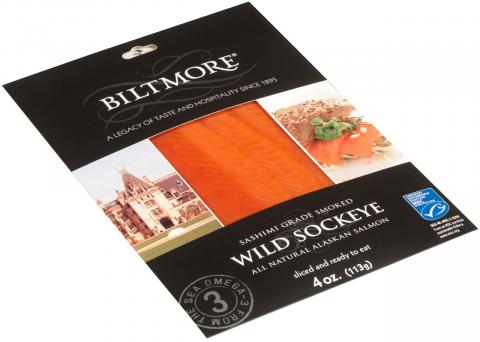
Biltmore Smoked Wild Sockeye Salmon

Company Announcement

Date: March 14, 2023
Sold at Publix Supermarkets only

Seven Seas International USA, LLC of St. Petersburg, Florida is voluntarily recalling 295 cases of Biltmore Smoked Sockeye Salmon with production lot R4058 because Listeria monocytogenes may be present in some product. The issue was discovered through routine regulatory testing conducted by the Florida Department of Agriculture and Consumer Services. Consumers who have purchased this product with this lot code are being advised not to consume it and return it to the store where it was originally purchased for a full refund. Listeria monocytogenes can cause serious and sometimes fatal infections, especially in preschool age children, older adults, or people who are immune compromised. Additionally, it can cause miscarriages and stillbirths in pregnant women. Only packages sold prior to 14th March 2023 which have a lot code R4058 printed on the clear plastic film that protects the product are affected by this recall, please check for this code, no other production codes are affected by this recall.

Customers who have additional questions or concerns may contact Seven Seas International USA, LLC at 1(888) 627-5668 or visit their website at www.7siusa.comExternal Link Disclaimer.

Information regarding Biltmore Salmon products sold at Publix affected by this recall:

Product Name: Biltmore Smoked Sockeye Salmon
GTIN #: 007-36211-88774
Lot Code/Best By Date: R4058/April 14 2023


Company Contact Information

Consumers:
Seven Seas International USA, LLC
 1(888) 627-5668
 www.7siusa.com

Product Photos

France – DRY GOAT CHEESE – STEC E.coli

Gov france

Identification information of the recalled product

  • Product category Feed
  • Product subcategory Milk and dairy products
  • Product brand name CHEVRIGNY CHEVENET
  • Model names or references Churns Mini Churns
  • Identification of products
    GTIN Batch Date
    3503963014208 087 Date of minimum durability 05/15/2023
    3503965270008 065 Date of minimum durability 04/24/2023
  • Packaging plastic tray
  • Marketing start/end date From 06/03/2023 to 29/03/2023
  • Storage temperature Product to be stored in the refrigerator
  • Health mark FR-71-235-001-CE
  • Further information Dry goat cheese
  • Geographic area of ​​saleRegions: Auvergne-Rhône-Alpes, , , , , , , Burgundy-Franche-Comté, , , , , , , Grand-Est, , , , , , , New-Aquitaine, , , , , , , Occitanie, , , , , , , Provence-Alpes-Côte d’Azur
  • Distributors FROMAGER des HALLES SOUTH EAST INTERMARCHE St Quentin Fallavier BUTCHERS ANDRE

Practical information regarding the recall

  • Reason for recall Recall for health reasons
  • Risks incurred by the consumer Toxigenic Shiga Escherichia coli (STEC)

France – DRY GOAT CHEESE – STEC E.coli

Gov france

Identification information of the recalled product

  • Product category Feed
  • Product subcategory Milk and dairy products
  • Product brand name CHEVRIER des CRAYS – CHEVRIGNY
  • Model names or references Maconnais
  • Identification of products
    GTIN Batch Date
    3503962313005 061 Date of minimum durability 04/17/2023
    3503960021506 062 Date of minimum durability 04/24/2023
  • Packaging wooden tray
  • Marketing start/end date From 03/03/2023 to 10/03/2023
  • Storage temperature Product to be stored in the refrigerator
  • Health markFR-71-235-001-CE
  • Further information Mâconnais goat cheese
  • Geographic area of ​​sale Regions: Auvergne-Rhône-Alpes, , , , , , Burgundy-Franche-Comté, , , , , , Centre-Val de Loire, , , , , , Grand-Est, , , , , , Hauts-de-France, , , , , , Île-de-France, , , , , , New-Aquitaine, , , , , , Occitanie, , , , , , Provence-Alpes-Côte d’azur
  • Distributors FROMAGER des HALLES SOUTH EAST BUTCHERS ANDRE AUCHAN FRANCE CARREFOUR SOUTH EAST

Practical information regarding the recall

  • Reason for recall Recall for health reasons
  • Risks incurred by the consumer Toxigenic Shiga Escherichia coli (STEC)

Canada – Solstice Ciderworks brand Haskap Cider recalled due to bursting cans – Microbial Contamination

CFIA

Summary

Product
Haskap Cider
Issue
Food – Microbial Contamination – Non harmful (quality or spoilage)
What to do

Do not use, sell, serve or distribute the affected product.

Audience
Retail

Affected products

Solstice Ciderworks brand Haskap Cider recalled due to bursting cans.

The recalled product has been sold in the Yukon.

France – ASC smoked salmon from Norway 4 slices – Listeria monocytogenes

Gov france

Identification information of the recalled product

  • Product category Feed
  • Product subcategory Fishery and aquaculture products
  • Product brand name Nautical
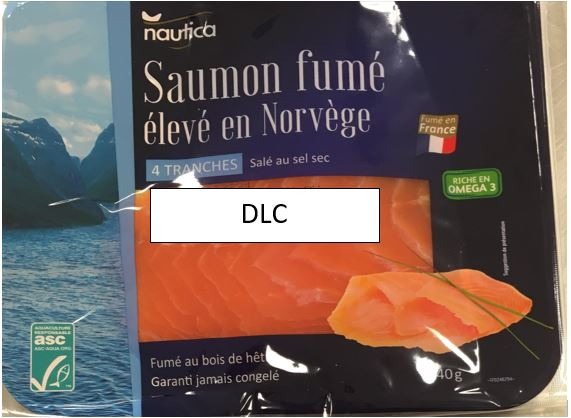
  • Model names or references ASC smoked salmon from Norway 4 slices 140g
  • Identification of products
    GTIN Batch Date
    4056489615156 G0540372 Use-by date 03/26/2023
  • Packaging 140g
  • Marketing start/end date From 03/01/2023 to 03/26/2023
  • Storage temperature Product to be stored in the refrigerator
  • Health mark EN 76.664.003 EC
  • Geographic area of ​​sale See List of affected stores
  • Distributors Some LIDL supermarkets (see List attached)
  • List of points of sale List_stores_concerned.pdf

Practical information regarding the recall

  • Reason for recall A self-check revealed the presence of Listeria monocytogenes.
  • Risks incurred by the consumer Listeria monocytogenes (causative agent of listeriosis)

France – Thin cuts of Roquefort made from frozen raw sheep’s milk – Staphylococcal Toxins

Gov france

Identification information of the recalled product

  • Product category Feed
  • Product subcategory Milk and dairy products
  • Product brand name ROQUEFORT COMPANY
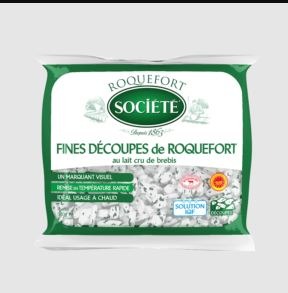
  • Model names or references fine cuts of Roquefort made from frozen raw sheep’s milk – ROQUEFORT SOCIETE
  • Identification of products
    GTIN Batch Date
    3023260030232 L61821 Date of minimum durability 30/08/2023
  • Packaging 500g bag
  • Marketing start/end date From 08/11/2022 to 03/28/2023
  • Storage temperature Product to keep in the freezer
  • Health mark FR 12-203-011 EC
  • Geographic area of ​​sale Whole France
  • Distributors Restaurants and wholesalers

Practical information regarding the recall

  • Reason for recall Detection of staphylococcal enterotoxins
  • Risks incurred by the consumer Staphylococcus aureus (causative agent of staphylococcal poisoning)

Italy – NORTHERN SHRIMPS IN BRINE – Listeria monocytogenes

Salute

Brand : GIOIA DI MARE

Name : NORTHERN SHRIMPS IN BRINE

Reason for reporting : Recall due to microbiological risk

Date of publication : 31 March 2023

Documentation

Documentation

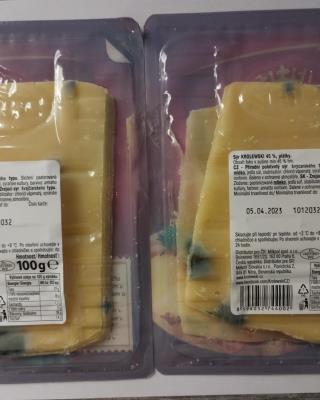
Czech Republic – Cheese KROLEWSKI 45%, slices – Mold/Mould

Potravinynapranyri

Illustrative photo #1

Illustrative photo #2

Place of inspection:
Valašské Meziříčí ( Boženy Němcové 411, 757 01 Valašské Meziříčí )
ID: 44012373
Food group: Milk and milk products Cheese

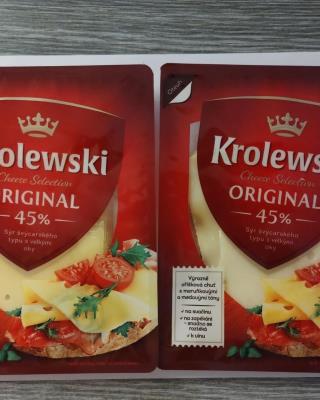
Cheese KROLEWSKI 45%, slices
Category: Dangerous foods
Invalid parameter:

fungi visible to the eye

Some of the packaging was found to contain mold visible to the naked eye. These packages had a broken package in the seam.

The product did not have an expired minimum shelf life date, during the inspection no unsatisfactory storage temperatures of this product were found.

Batch: 1012032
Best before date: 04/05/2023
Packaging: PE with print
Quantity of the product in the package: 100 g
Distributor: for the Czech Republic: Milkpol spol. s ro, Reinerova 1657/23, 163 00 Prague 6
Country of origin:  Poland
Date of sample collection: 2/17/2023
Reference number: 23-000133-SZPI-CZ
The sample was detected by the official control of the State Agricultural and Food Inspection.

Norovirus confirmed on three recent cruises

Outbreak News Today

Celebrity Cruises’ Celebrity Equinox’s March 9–March 18, 2023 voyage had 136 illnesses among passengers and crew.

Celebrity Cruises’ Celebrity Constellation March 6–March 17, 2023 voyage had 96 passengers and crew sickened with norovirus.

Princess Cruises’ Ruby Princess February 26–March 5, 2023 voyage had 318 cases of vomiting and diarrhea from norovirus.

In 2023 to date, nine cruise ship voyages have had outbreaks investigated by the CDC. Four had norovirus as the etiology, while the other five remain unknown.

Norovirus is a highly contagious viral illness that often goes by other names, such as viral gastroenteritis, stomach flu, and food poisoning.

The symptoms include nauseavomitingdiarrhea, and some stomach cramping. Sometimes people additionally have a low-grade fever, chills,headache, muscle aches, and a general sense of tiredness. The illness often begins suddenly, and the infected person may feel very sick. In most people, the illness is self-limiting with symptoms lasting for about 1 or 2 days. In general, children experience more vomiting than adults do.

Research – Special Issue: Beneficial Properties and Safety of Lactic Acid Bacteria

MDPI

The application of LAB in various sectors, including in the biotechnical and food industry, in human and veterinary practice, and in health-promoting practices and cosmetics, has been the subject of intensive research across the globe, with a range of traditional and innovative methods currently being explored. The rediscovery of old practices, the establishment of new processes based on the production and application of different metabolites produced by LAB, and the formation of novel perspectives on the fermentation processes initiated by LAB, have become areas of significant interest in recent years. Various antimicrobial peptides, including bacteriocins, have been proposed as alternatives to antibiotics or have been suggested for use as their synergistic “partners”. The application field of probiotics is being widened to encompass new innovative areas that are targeted towards personalized practice, with the aim of improving human health. An increasingly extensive understanding of bioactive peptides has heralded their application in practices that are alternative or complementary to Western medicine. Approaches to bio-preservation require fewer chemical preservatives and are, currently, thoroughly explored in food research. The enrichment and fortification of food products with biologically active metabolites, including vitamins, antimicrobials, and immunomodulators, are only some of the research areas that ought to be explored as options for the application of various LAB in the food industry.
The concepts associated with the beneficial properties and safety of LAB have been, and always need to be, jointly explored. Even if several LAB strains have been applied historically as safe and beneficial cultures, various other representatives of LAB have been documented as human and animal pathogens, as phytopathogens, and as also including strains associated with spoilage and deterioration [1]. LAB represent a universe of varied microorganisms, with all of them characterized as Gram-positive, catalase negative, as possessing a common metabolism and as initiating the formation of a similar end product (lactic acid) as a result of carbohydrate fermentation [2]. As a diverse group of microorganisms, they are adapted to various ecosystems and environmental conditions, and can grow at different temperatures and use a variety of carbon sources [1,2]. They are associated with virtually all living forms, from simple eukaryotic organisms and plant material, to the skin and GIT of vertebrates, insects, mollusks, crustaceans, etc. They may be described as either beneficial or as pathogens, but they always possess a clear ecological role in numerous life cycles [2]. Of particular note are species such as Enterococcus spp., some of which are unmistakably opportunistic pathogens and, when associated with vancomycin resistance, pose a serious health threat to humans and to animals [3]; these pathogens are typically associated with nosocomial infections [3]. Simultaneously, however, LAB also comprise species that play a beneficial role in the production of various plants, dairy and meat fermented food products [4], or even as probiotics [5]. It has been suggested that enterococci are producers of bacteriocins, some of which can be applied in the control of food-borne and hospital-associated (human and veterinary) pathogens [6]. However, before proposing a strain, even one belonging to a species with a history of safe application, its safety properties must be appropriately evaluated; this is a necessary and essential step that must be completed prior to its application in food fermentation, as a probiotic for human and animals, in human and veterinary medicine, or in agricultural practices. The novel tools utilized in the evaluation of the safety of microbial cultures, including DNA-associated experimental approaches, have become routine in the last two decades. Considering this, the validation of safety, both of new microbial and currently applied cultures, is now considered essential. In addition to “classical” PCR-based approaches, whole genome sequencing and the appropriate analysis of the generated data have become routine in the evaluation of the safety profile of microbial cultures [7,8,9].