Monthly Archives: March 2022

USA – FDA Warning Letter – Greenhead Lobster Products LLC

FDA

The United States Food and Drug Administration (FDA) inspected your ready-to-eat (RTE) seafood processing facility located at 122 Heritage Park Rd., Bucksport, ME 04416-4603, on September 21, 22, 23, 27, and 30, and October 6, 2021. During our inspection we collected environmental samples (i.e., swabs) from various areas in your facility, including areas that are near food during processing operations and your food-contact surfaces. FDA laboratory analyses of environmental samples found the presence of Listeria monocytogenes (L. monocytogenes), a human pathogen, in your facility. Additionally, FDA found serious violations of the Seafood Hazard Analysis and Critical Control Point (HACCP) regulation, Title 21, Code of Federal Regulations (CFR), Part 123 (21 CFR Part 123).

In accordance with 21 CFR 123.6(g), failure of a processor of fish or fishery products to have and implement a HACCP plan that complies with this section or otherwise operate in accordance with the requirements of Part 123, renders the fish or fishery products adulterated within the meaning of Section 402(a)(4) of the Federal Food, Drug, and Cosmetic Act (the Act), 21 U.S.C. § 342(a)(4). Based on our inspectional results, including review of FDA’s environmental testing and your HACCP plan, we have determined that your RTE cooked lobster products are adulterated within the meaning of section 402(a)(4) of the Act, 21 U.S.C. § 342(a)(4), in that they have been prepared, packed, or held under insanitary conditions whereby they may have become contaminated with filth or rendered injurious to health. You may find the Act, the seafood HACCP regulation, and the 4th Edition of the Fish and Fisheries Products Hazards and Controls Guidance through links in FDA’s home page at www.fda.gov.External Link Disclaimer

At the conclusion of the inspection, the FDA investigators issued your facility a Form FDA 483, Inspectional Observations. You provided responses to the FDA Form 483 and FDA’s environmental sample findings via email on October 7 and 13, 2021, which included corrective actions taken by your firm. We have reviewed the documentation and continue to have serious concerns with your current HACCP programs as further described in this letter.

Research – France – History of a food alert.

Sante Publique

How does a food alert work in France? What is the organizational scheme? Public Health France traces in infographics the system of consultation of the patient on the alert.

Infographic in French

Click to access INFOGRAPHIE_ALERTE_ALIMENTAIRE_VDEF.pdf

Denmark – Three people died in Danish E. coli outbreak; dozens more infected

Food Safety News

Danish authorities have revealed three people died in an E. coli outbreak this past year. Imported spring onions were investigated as the source.

An update by the Statens Serum Institut (SSI) revealed that from Nov. 23 to Dec. 31, 2021, 85 people were infected with EIEC.

Enteroinvasive E. coli (EIEC) is usually associated with travel diarrhea but the patients had not been abroad.

It was previously reported that 68 people were ill in the outbreak linked to spring onions from Egypt via a Dutch supplier that were used in ready-to-eat salads.

Enteroinvasive E. coli was isolated from 36 patients and the remaining 47 were PCR positive for a gene specific to Shigella species and EIEC.

Further analysis identified two E. coli types in the outbreak: O136:H7 and O96:H19 with confirmation by whole genome sequencing.

Belgium – Swiss cream verrine with speculoos from the Crelem Bakeries brand – Listeria monocytogenes

AFSCA

Recall of Crelem Bakeries
Product: Swiss cream verrine with speculoos from the Crelem Bakeries brand.
Problem: possible presence of Listeria monocytogenes.

In consultation with the FASFC, Crelem Bakeries is withdrawing the product “Verrine Swiss cream with speculoos” of the Crelem Bakeries brand from sale and recalling it from consumers because of the possible presence of Listeria monocytogenes.

Crelem Bakeries asks its customers not to consume this product and to return it to the point of sale.

Product Description

Product name: Verrine Swiss cream with speculoos
Brand name: Crelem Bakeries Best before
date (BBD): 03/03/2022
Sale period: from 02/21/2022 to 02/24/2022 inclusive
Type of packaging : Plastic pot
Weight: 100 g

The product was sold in various supermarkets and retail stores.

For more information , please contact:

Crelem Bakeries Quality Department
E-mail: Quality@crelembakeries.be

Research – France – Acute gastroenteritis: results of winter surveillance 2019-2020

Sante Publique

Food Borne Illness - Norovirus -CDC Photo

Public Health France publishes the 2019-2020 annual winter surveillance report for acute gastroenteritis in mainland France, marked by two major events and in particular a historic drop in AGEs never observed over the past 10 years. 

Acute winter gastroenteritis (AGE) is mainly of viral origin, with a dominant circulation of noroviruses and rotaviruses. Noroviruses are responsible for AGE in people of all ages, while rotaviruses mainly affect children under 5 years of age. A winter resurgence of cases is observed each year, in France, as in Europe, generating an increase in medical consultations for AGE usually between December and April. A peak is often observed during the first two weeks of January. 

Fluctuating activity for GEA over the 2019-2020 winter season

A significant peak observed in connection with an episode of collective food poisoning in several metropolitan areas

As in the two previous seasons, an increase in the number of AGE cases was observed at the start of the winter season, followed by a sharp increase in visits to hospital emergencies and general medicine at the end of December 2019 – beginning of January 2020, higher than the peaks of the 7 previous seasons in week 01-2020, and reaching 3.1% of total activity in hospital emergencies.

This upsurge in the number of AGE cases coincided with a significant and unusual occurrence of collective food poisoning that impacted several metropolitan areas in connection with the consumption of contaminated oysters that occurred in 2019* during the end-of-year celebrations. 

A sharp decrease in activity to historically low levels, most likely related to the measures put in place during the Covid-19 pandemic

Following the first confinement (March-April 2020) introduced as part of the Covid-19 pandemic , very low levels of activity for GEA were recorded from March and April 2020 in hospital emergencies and in general medicine (Sentinels Network and SOS Médecins).

Indeed, the proportion of emergency visits for gastroenteritis fell sharply at the start of 2020 to reach historically low levels and then stabilized at 0.5% of activity from April 2020 . According to data from the Sentinel Network, the 2019-2020 winter season was characterized by the lowest cumulative incidence rate of cases of acute diarrhea seen in general medicine consultations over the last 10 seasons .

This historic decrease in epidemic activity for acute gastroenteritis in France is most likely related to the measures introduced in the context of the COVID-19 pandemic (confinement, physical distancing, reinforcement of hand hygiene). Such levels have not been observed over 10 years of retrospective data for all monitoring indicators.

Key points 2019 – 2020 regarding acute gastroenteritis 

The analysis period corresponds to the winter monitoring period, from November 18, 2019 to April 13, 2020. 

  • 96,713 hospital emergency visits , i.e. 1.6% of emergency visits. 44.4% of visits for acute gastroenteritis concerned children aged under 5 years.
  • 144,499 SOS Médecins consultations for acute gastroenteritis, i.e. 8.7% of total consultations.
  • Cumulative incidence rate at the Sentinel Network: 
    • 2,963 cases per 100,000 inhabitants of all ages
    • 6,605 cases per 100,000 inhabitants, in children under 5 , the most affected population during this period.
  • Predominance of norovirus genotype GII.4 2012[P16], followed by genotype GII.17[P17].
  • Significant peak of activity observed at the end of December 2019-beginning of January 2020 , concomitant with a significant upsurge in collective food poisoning linked to the consumption of oysters
  • Following the first containment introduced as part of the Covid-19 pandemic, very low levels of activity were recorded from week 13-2020 

Nigeria – Class I Recall: Abbott Recalls Certain Powdered Infant Formula Linked To Food Borne Illness Outbreak Due To Presence Of Cronobacter Sakazakii And Salmonella Newport Bacteria

NAFDAC

In the U.S, four consumer complaints of infant illness were received from September 2021 to December 2021. This includes three reports of Cronobacter sakazakii infections and one Salmonella Newport infection. All four infants were hospitalized and Cronobacter may have contributed to one death.

Abbott’s recall of these powdered  infant formula produced at its facility in Sturgis, Michigan MI, has spread globally and now includes Croatia, Italy, Ireland, Netherlands, Slovenia, and Spain, among many other countries. Food Standards Agency (FSA) is investigating whether three infant illnesses reported recently  in the United Kingdom are connected to an outbreak in the United States from the recalled  infant formula.

Background:

Cronobacter bacteria can cause severe, life-threatening infections(sepsis) or meningitis. Symptoms of which include poor feeding, irritability, temperature changes, jaundice, grunting breaths and abnormal movement in infants. The infection can also lead to bowel damage and may spread through the blood to other parts of the body.

Salmonella bacteria causes gastrointestinal illness, fever called salmonellosis which may lead to diarrhea, fever, and abdominal cramps. A severe case of salmonella infection results in headache, lethargy, rash, blood in the urine or stool and may be fatal in some cases.

PLEASE NOTE THAT ABBOTT’S SIMILAC INFANT FORMULA POWDER REGISTERED BY NAFDAC ARE MANUFACTURED IN SOUTH AFRICA AND REPUBLIC OF IRELAND WHILE,

THE RECALLED PRODUCTS LISTED ABOVE WERE MANUFACTURED IN STURGIS, MICHIGAN- AMERICA.

Recommendation:

The Agency advises that parents of infant experiencing any of these symptoms after consumption of the recalled Abbott Infant formula, should notify your child’s healthcare provider and seek medical care for your child immediately.  Healthcare providers and health departments are encouraged to report any confirmed cases of Cronobacter sakazakii to relevant authorities.

NAFDAC implores importers, distributors, retailers and the public to exercise caution and vigilance to avoid  sale, distribution and consumption  of the recalled  products listed above or if in possession should  submit  to the nearest NAFDAC office or report to NAFDAC PRASCOR (20543 or 0800-1-623322) TOLL FREE from all networks) or via pharmacovigilance@nafdac.gov.ng or via e-Reporting platform available on the NAFDAC website http://www.nafdac,gov.ng.

NAFDAC……..Customer-focused, Agency-minded!!!

Belgium – Golden Sun brand Basmati rice – Aflatoxin B1

AFSCA

03/01/2022 (update of the recall of 02/18/2022)
LT Foods recall
Product: Golden Sun brand Basmati rice.
Problem: Aflatoxin B1 content too high.
LT Foods has decided, in agreement with the FASFC, to withdraw the product Basmati Rice (1 kg) of the Golden Sun brand from sale and to recall it from consumers because of an excessively high aflatoxin B1 content.

We ask that you do not consume this product and return it to your point of sale. You will be reimbursed even without presenting the receipt. Product description: – Product name: Basmati rice – Brand: Golden Sun – Expiry date (BDD): 05/07/2023 and 06/10/2023 – EAN code: 20364625

 Sale period: from 08/10 /2021 to 02/18/2022 – Type of packaging: plastic packaging (bag) – Weight: 1 kg

The product was distributed in Belgium by Lidl.

For any further information , contact Lidl customer service ( 0800/73520 (free))

Luxembourg – UPDATE: RECALL: GOLDEN SUN BRAND BASMATI RICE – Mycotoxins – Aflatoxin B1

SAP

LT Foods  is recalling the following product :

*Update

name Basmati rice
Mark Golden Sun
Unity 1kg
bar code 20364625
Date of minimum durability (MDD)* 05/07/2023* and 06/10/2023
Sale period* from 08/10/2021 until 01/03/2022*

Danger: excessive aflatoxin B1 content

Aflatoxins are mycotoxins produced by certain species of Aspergillus molds which develop when the degree of temperature and humidity of the food is high. Aflatoxins are considered genotoxic and carcinogenic by the European Food Safety Authority and can be dangerous with high and repeated consumption.

Sale in Luxembourg by: Lidl

Source of information: Lidl recall notification & RASFF (Rapid Alert System for Food and Feed)

TO KNOW MORE

France – ROCK Cheese – Listeria monocytogenes

Gov france

Identification information of the recalled product

  • Product category Food
  • Product subcategory Milk and dairy products
  • Product brand name Peak
  • Model names or references ROCK
  • Identification of products
    Lot Dated
    18012224 Date of minimum durability between 04/03/2022 and 27/03/2022
  • Marketing start/end date From 01/24/2022 to 03/01/2022
  • Storage temperature Product to be stored in the refrigerator
  • Health mark81.206.009
  • Further information section cut or fresh packed
  • Geographic area of ​​sale Whole France
  • Distributors WHOLESALE GMS

Practical information regarding the recall

  • Reason for recall Suspicion of the presence of Listeria Monocytogenes
  • Risks incurred by the consumer Listeria monocytogenes (causative agent of listeriosis)

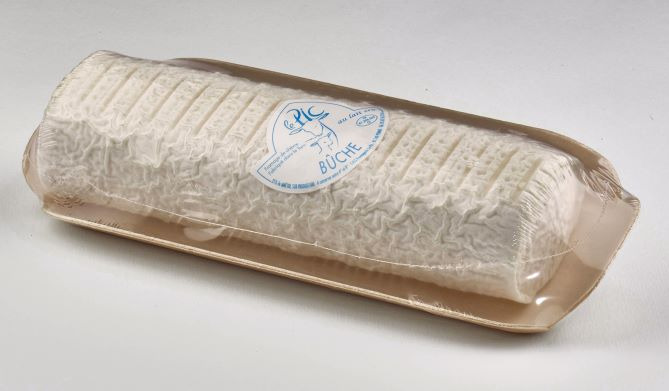
France – WHITE LOG LS Cheese – Listeria monocytogenes

Gov france

Identification information of the recalled product

  • Product category Food
  • Product subcategory Milk and dairy products
  • Product brand name Peak
  • Model names or references WHITE LOG LS
  • Identification of products
    GTIN Lot Dated
    3548783000017 18012224 Date of minimum durability 02/03/2022
  • Packaging Wooden tray
  • Marketing start/end date From 01/02/2022 to 01/03/2022
  • Storage temperature Product to be stored in the refrigerator
  • Health mark81.206.009
  • Further information LS radius
  • Geographic area of ​​sale Regions: New Aquitaine, Occitanie
  • Distributors WHOLESALE GMS

Practical information regarding the recall

  • Reason for recall Suspicion of the presence of Listeria Monocytogenes
  • Risks incurred by the consumer Listeria monocytogenes (causative agent of listeriosis)