Monthly Archives: November 2021

Australia – Barossa Fine Foods 110g Pate Products – Listeria monocytogenes

FSANZ

Product information

Knoll Consultants & Investments Pty. Ltd. is conducting a recall of Duck & Walnut Pate 110g, Black Pepper Port Pate 110g and Duck Terrine Pate 110g . The product has been available for sale at IGA supermarkets and independent grocers in NSW, ACT, QLD, VIC, SA, NT, WA and Foodlands in SA.

Date markings

USE BY: 17 Dec 2021

Barossa Fine Foods Pates

Problem

The recall is due to microbial (listeria monocytogenes) contamination.

Food safety hazard

Listeria may cause illness in pregnant women and their unborn babies, the elderly and people with low immune systems.

Country of origin

Australia

What to do​

Consumers should not eat this product. Any consumers concerned about their health should seek medical advice. and should return the products to the place of purchase for a full refund.

For further information please contact:

Knoll Consultants & Investments Pty. Ltd.

(08) 8255 3900

https://www.barossafinefoods.com.a​

Related links:

Austria -Dr. Oetker Chocolate Cookies -STEC E.coli

AGES

Product recall Dr. Oetker Schoko Ausstech Cookies
Opinion of the Dr. Oetker GmbH on the test report of the Institute for Food Safety Innsbruck with the order number 2112838.

Villach (OTS) – Object of
investigation Dr. Oetker Schoko
Cookie Cutter Lot / Batch / Best before: L169

When a sample was taken by the Innsbruck Institute for Food Safety, Vero / Shiga toxin-forming Escherichia coli were detected in the above-mentioned object of investigation.

Although according to the Federal Institute for Risk Assessment (BfR) in its opinion no. Oetker, who learned of the examination results on November 26th, 2021, received batch L 169 from Dr. Oetker chocolate cookie cutters back.
We would like to point out that E.Coli proof would only be possible in the raw dough, but baked biscuits can be enjoyed without hesitation.

Item No. 1-01-870700

GTIN EVE 4000521013288

Article description Chocolate cookie

cutter Best before 02.2023

The product concerned was placed on the Austrian market from September 2021. He was informed immediately. To avoid health risks, consumers are asked to return the recalled goods to the shop where the product was purchased. The purchase price will be refunded. Dr. Oetker apologizes to its customers for any inconvenience this may cause.

Original broadcast

More info

Verotoxin-producing Escherichia coli (VTEC)

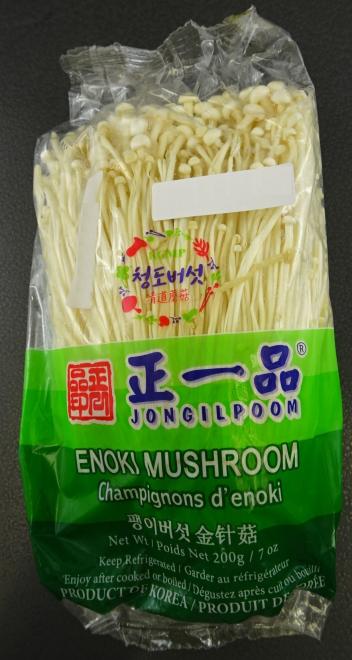
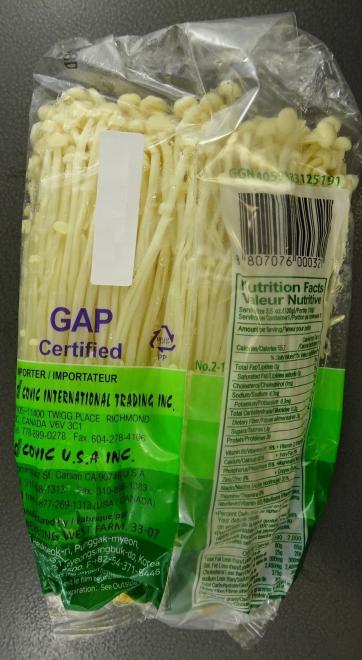
Canada – Jongilpoom brand Enoki Mushroom recalled due to Listeria monocytogenes

CFIA

Summary

Product
Enoki Mushroom
Issue
Food » Microbial Contamination » Listeria
What to do

Do not consume the recalled product

Affected products

Brand Product Size UPC Codes
Jongilpoom Enoki Mushroom 200 g 8 807076 000321 All codes up to and including CE 179D

Issue

Covic International Trading Inc. is recalling Jongilpoom brand Enoki Mushroom from the marketplace due to possible Listeria monocytogenes contamination.

The recalled product has been sold in British Columbia, Alberta, Saskatchewan, and Manitoba, and may have been distributed in other provinces and territories.

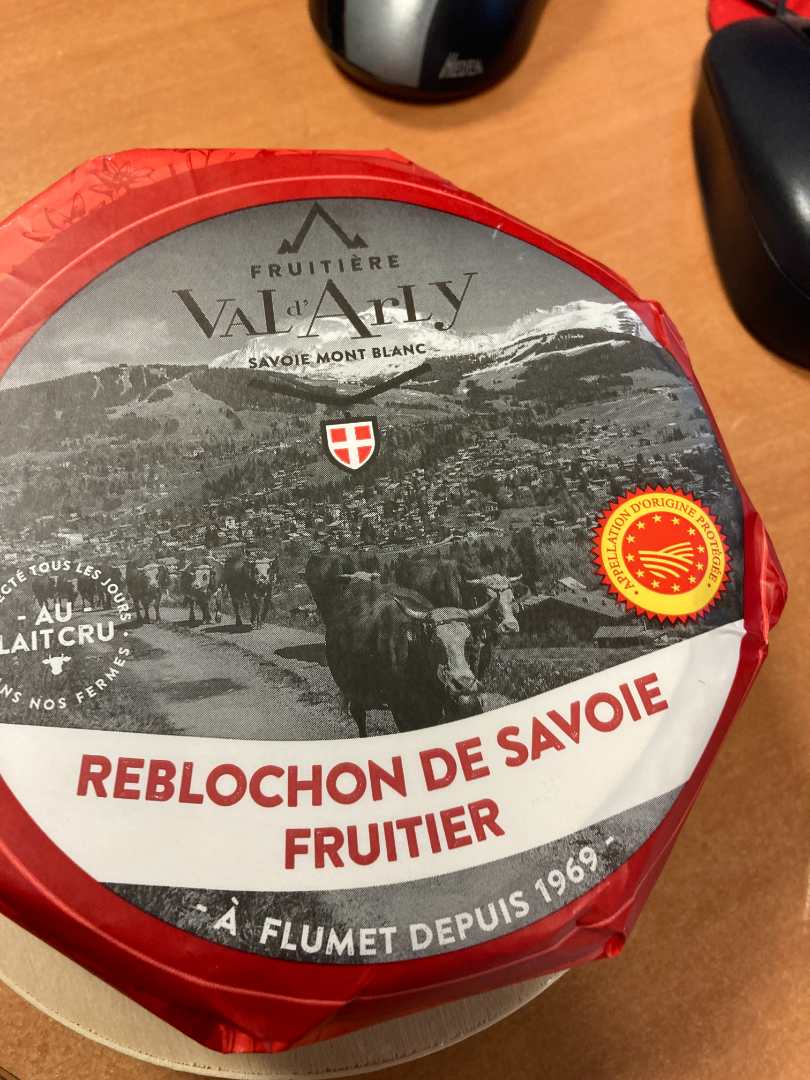
France – reblochon de savoie fruitier PDO – Brucella spp

Gov france

Identifying information for the recalled product

  • Product category Food
  • Product sub-category Milk and dairy products
  • Product brand name COOP VAL D’ARLY
  • Names of models or references Reblochon de savoie fruitier PDO
  • Product identification
    GTIN Lot Date
    3489450003200 LOTS 312013 AND 311932 Use-by date 12/07/2021
  • Packaging450 GRS
  • Start date / End of marketing From 10/21/2021 to 11/18/2021
  • Storage temperature Product to be stored in the refrigerator
  • Geographical sales area Whole France
  • Distributors PROMOCASH

Practical information regarding the recall

  • Reason for recall BRUCELLA

Research – Ultrashort-pulse lasers kill bacterial superbugs, spores

Science Daily

Life-threatening bacteria are becoming ever more resistant to antibiotics, making the search for alternatives to antibiotics an increasingly urgent challenge. For certain applications, one alternative may be a special type of laser.

Researchers at Washington University School of Medicine in St. Louis have found that lasers that emit ultrashort pulses of light can kill multidrug-resistant bacteria and hardy bacterial spores. The findings, available online in the Journal of Biophotonics, open up the possibility of using such lasers to destroy bacteria that are hard to kill by other means. The researchers previously have shown that such lasers don’t damage human cells, making it possible to envision using the lasers to sterilize wounds or disinfect blood products.

“The ultrashort-pulse laser technology uniquely inactivates pathogens while preserving human proteins and cells,” said first author Shaw-Wei (David) Tsen, MD, PhD, an instructor of radiology at Washington University’s Mallinckrodt Institute of Radiology (MIR). “Imagine if, prior to closing a surgical wound, we could scan a laser beam across the site and further reduce the chances of infection. I can see this technology being used soon to disinfect biological products in vitro, and even to treat bloodstream infections in the future by putting patients on dialysis and passing the blood through a laser treatment device.”

Tsen and senior author Samuel Achilefu, PhD, the Michel M. Ter-Pogossian Professor of Radiology and director of MIR’s Biophotonics Research Center, have been exploring the germicidal properties of ultrashort-pulse lasers for years. They have shown that such lasers can inactivate viruses and ordinary bacteria without harming human cells. In the new study, conducted in collaboration with Shelley Haydel, PhD, a professor of microbiology at Arizona State University, they extended their exploration to antibiotic-resistant bacteria and bacterial spores.

The researchers trained their lasers on multidrug-resistant Staphylococcus aureus (MRSA), which causes infections of the skin, lungs and other organs, and extended spectrum beta-lactamase-producing Escherichia coli (E. coli), which cause urinary tract infections, diarrhea and wound infections. Apart from their shared ability to make people miserable, MRSA and E. coli are very different types of bacteria, representing two distant branches of the bacterial kingdom. The researchers also looked at spores of the bacterium Bacillus cereus, which causes food poisoning and food spoilage. Bacillus spores can withstand boiling and cooking.

In all cases, the lasers killed more than 99.9% of the target organisms, reducing their numbers by more than 1,000 times.

Viruses and bacteria contain densely packed protein structures that can be excited by an ultrashort-pulse laser. The laser kills by causing these protein structures to vibrate until some of their molecular bonds break. The broken ends quickly reattach to whatever they can find, which in many cases is not what they had been attached to before. The result is a mess of incorrect linkages inside and between proteins, and that mess causes normal protein function in microorganisms to grind to a halt.

“We previously published a paper in which we showed that the laser power matters,” Tsen said. “At a certain laser power, we’re inactivating viruses. As you increase the power, you start inactivating bacteria. But it takes even higher power than that, and we’re talking orders of magnitude, to start killing human cells. So there is a therapeutic window where we can tune the laser parameters such that we can kill pathogens without affecting the human cells.”

Heat, radiation and chemicals such as bleach are effective at sterilizing objects, but most are too damaging to be used on people or biological products. By inactivating all kinds of bacteria and viruses without damaging cells, ultrashort-pulse lasers could provide a new approach to making blood products and other biological products safer.

“Anything derived from human or animal sources could be contaminated with pathogens,” Tsen said. “We screen all blood products before transfusing them to patients. The problem is that we have to know what we’re screening for. If a new blood-borne virus emerges, like HIV did in the ’70s and ’80s, it could get into the blood supply before we know it. Ultrashort-pulse lasers could be a way to make sure that our blood supply is clear of pathogens both known and unknown.”


Story Source:

Materials provided by Washington University School of Medicine. Original written by Tamara Bhandari. Note: Content may be edited for style and length.

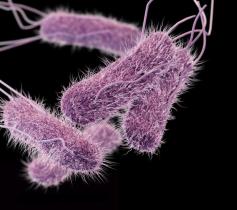
Research – A Strong Evidence Outbreak of Salmonella enteritidis in Central Italy Linked to the Consumption of Contaminated Raw Sheep Milk Cheese

MDPI

Salmonellaa

Salmonellosis is the second most commonly reported gastrointestinal infection in humans after campylobacteriosis, and an important cause of foodborne outbreaks in the EU/EEA. The vast majority (72.4%) of the salmonellosis foodborne outbreaks reported in EU in 2019 were caused by Salmonella enteritidis, even if their total number due to this serovar decreased. In spring 2020, a foodborne outbreak of S. enteritidis occurred in the Marche region (Central Italy), involving 85 people. The common exposure source was a cheese, pecorino “primo sale”, produced with raw sheep milk. The cheese batches were produced by two local dairies, with a livestock production facility, also including a sheep farm, being part of one dairy. Bacteriological analysis of samples collected allowed the detection of S. enteritidis in animal faeces, environmental samples, raw-milk bulk tanks and milk taken from single animals. These data confirm that, despite the scarce scientific evidence, S. enteritidis can infect sheep and be shed into the animals’ milk. Hence, this is a real risk for public health when unpasteurized milk is used in production of such cheese. The present paper describes the results of the investigations conducted to clarify this outbreak. View Full-Text

RASFF Alert- Bacillus cereus – Food Supplement

RASFF

Bacillus cereus (Enterotoxin-producing strain) in food supplement from United Kingdom in Finland

RASFF Alert – Mould – Pita Bread

RASFF

Mould on pita bread from Israel in Denmark

RASFF Alert- E.coli – Burrata Cheese

RASFF

Canadian Recall – E. coli in burrata cheese from Italy in Canada

RASFF Alerts – Ochratoxin A – Dried Figs

RASFF

OchratoxinA in Turkish dry figs in the Netherlands