Monthly Archives: March 2021

Kyrgyzstan – Food poisoning kills 6 in Kyrgyzstan

Xinhuanet

Six people have died from food poisoning in Kyrgyzstan after dining at a cafe, the press service of the country’s Ministry of Health reported on Thursday.

Early Thursday morning, four victims went to the Aksy Territorial Hospital in Jalal-Abad Oblast in the southern part of the country for treatment for food poisoning.

Three of them have died despite rescue measures while the other one continued to receive treatment, whose symptoms are moderate and the person’s condition is stable, the ministry said, adding that another three victims died from food poisoning at home.

The victims said that 19 people had salad and beshbarmak and drank alcohol diluted with water for lunch at a cafe on Tuesday.

At present, local health workers are checking the rest participants of the meal, and an epidemiological investigation into the poisoning is ongoing, the ministry said. Enditem

France – Collective food poisoning suspected to be linked to the consumption of oysters contaminated by Norovirus

Sante Publique

Several collective food poisoning infections possibly linked to the consumption of contaminated oysters have been reported since mid-February 2021 in several regions of France.

Since mid-February 2021, 46 mandatory declarations (DO) of collective food poisoning (TIAC) ​​suspected of being linked to the consumption of oysters have been sent to Public Health France and / or to the General Directorate of food . 

The meal dates at the origin of these toxi-infections are between 02/11/2021 and 02/25/2021 with a majority of meals reported on 02/14 (21 TIAC, 46%). All these TIACs took place in the context of a family meal with between 2 and 8 patients. A total of 164 patients were recorded and two people were hospitalized. 

Several departments affected, in particular the West region

These TIACs mainly took place in New Aquitaine (23 in the department 33, 7 in the 17, 4 in the 40 and 2 in the 64), 5 in Pays de la Loire, 3 in Occitanie, 1 in Brittany and 1 in Bourgogne-Franche-Comté. For 36 of these TIACs, the origin of the oysters is known: Arcachon basin for 24 TIAC, Hossegor lake for 5, Marennes d’Oléron for 6 and Baie de Plouharnel for 1. 

The investigations carried out

Stool analyzes carried out by the National Reference Center for Gastroenteritis Viruses in patients following 2 TIACs confirmed the presence of norovirus.

Shellfish collected from individuals who were sick after consuming oysters as well as from suppliers were analyzed by reference laboratories and laboratories approved by the Ministry of Agriculture and Food: noroviruses were identified . Noroviruses have also been detected in several production areas of consumed oysters.

The contamination of shellfish by norovirus for other TIACs is also suspected in view of the symptoms of sick people, mainly diarrhea and vomiting, and the incubation times between the consumption of shellfish and the onset of symptoms found during investigations of patients. TIAC. The torrential rains observed at the beginning of February may have favored the contamination of the environment / production areas and therefore of shellfish.

Actions taken since case detection

Four areas are currently closed by prefectural decrees temporarily prohibiting fishing, collection, transport, purification, shipping, storage, distribution, marketing and release for human consumption. shellfish following the discovery of the contamination of shellfish by noroviruses: the Arcachon basin (Gironde) since 02/18/2021, Hossegor lake (Landes) since 03/02/2021, the Chenaux du Payré (Vendée) since 25/02 and the bay of Plouharnel (Morbihan) since 03/03/2021.

Australia – Kenilworth Dairies Full Cream Milk 3L, 2L and 1L – E.coli

FSANZ

Product information

Kenilworth Dairies is conducting a recall of Kenilworth Dairies Full Cream Milk 3L, 2L and 1L. The product has been available for sale at independent grocers and Kenilworth Dairies Cafe in QLD.

Date markings

Best Before
BB 15/03/21

Full cream milk

Problem

The recall is due to microbial (E.coli) contamination.

Food safety hazard

Food products contaminated with E.coli may cause illness if consumed.

Country of origin

Australia

What to do​

Any consumers concerned about their health should seek medical advice and should return the product to the place of purchase for a full refund.

For further information please contact:

Kenilworth Dairies
07 5446 0144
info@kenilworthdairies.com.au

​​

Related links:

Tunisia – Tunisia: Aflatoxin-Contaminated Rice Still Stored in Oct’s Warehouses

All Africa

Tunis/Tunisia — A 800-tonne shipment of imported white rice, nearly half of which is contaminated with aflatoxins, is still stored separately in warehouses of the Tunisian Commerce Office (French: OCT), CEO Elyes Ben Ameur told TAP on Wednesday. Another shipment of 600 tonnes is being checked.

The value of imported shipments amounts to 1.5 million dinars. Ben Ameur said the OCT became aware of the contamination in early 2021 after a self-monitoring operation.

Aflatoxins are mycotoxins produced by certain fungi that proliferate in particular on seeds stored in hot and conditions. They are highly carcinogenic.

Korea – Food Poisoning Cases Plummet amid Attention to Personal Hygiene

Korea BizWire

South Korea’s drug safety agency said Thursday that the number of food poisoning cases in South Korea declined sharply last year, falling to about a half of the annual average for the previous five years, with the number of food poisoning patients more than halving.

The number of food poisoning cases occurring last year in the country stood at 178, which is equivalent to 52 percent of the annual average of 343 cases for the previous five years from 2015 to 2015, according to the Ministry of Food and Drug Safety.

Accordingly, the number of food poisoning patients also dropped to 2,747 last year, a level that is equivalent to 40 percent of the annual average of 6,874 for the previous five years.

The number of food poisoning patients per 1 million people stood at 139 in 2016, 109 in 2017, 222 in 2018, 79 in 2019 and 53 in 2020.

The numbers of both cases and patients marked the lowest the ministry has ever seen during the entire period that it has been collecting relevant data, since 2002.

The ministry attributed the decline in both food poisoning cases and patients to the sharp decrease in the number of group meal programs, including school meals, due to the outbreak of the coronavirus.

USA – Kareem Chef Tahina Recalled For Possible Salmonella Contamination

Food Poisoning Bulletin

Kareem Mart of Garden City, Michigan is recalling Kareem Chef Tahina because it may be contaminated with Salmonella bacteria. No illnesses have been reported to date to the company in connection with this problem.

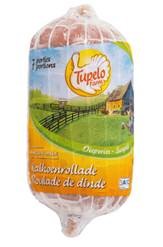
Belgium – Turkey roulade (700g) from the Tupelo farm brand – Salmonella

AFSCA

Recall of Aldi
Product: Turkey roulade (700g) from the Tupelo farm brand.
Problem: possible presence of Salmonella.PRODUCT DESCRIPTION

Name: TURKEY ROULADE 700 G (frozen product)
EAN code: 270 5360 7
Brand: Tupelo farm
Expiration date (DDM): 11/12/2021
Lot: RPS 27615
Sale period: 03/02/2021 – 03/05/2021
Points of sale: ALDI stores

NATURE OF THE PROBLEM

An internal analysis has shown the presence of Salmonella in the product “Turkey roll 700G (frozen)”.
ALDI has therefore decided, in consultation with the AFSCA, to withdraw this product from the market and to recall it to consumers.
Other ALDI products are not affected by this product recall.

DESCRIPTION OF THE RISK

Possible symptoms of salmonella poisoning are fever, abdominal cramps and diarrhea within 12 to 48 hours of consuming the contaminated food. The risk of infection is higher in the elderly, children, pregnant women and people with weakened immune systems.

ADVICE FOR CONSUMERS

Please do not consume these products and bring them back to the store.
The returned products will be reimbursed (also without receipt).
For any further information, you can contact ALDI via serviceclients@aldi.be .

Luxembourg – BARRIQUET GOAT CHEESE FROM THE MONS FROMAGER AFFINEUR BRAND- Listeria monocytogenes

SAP

The Luxembourg food safety authorities are informing about the following reminder:

Last name Barriquet
Mark Mons Fromager Affineur
Unit 400 g
Date of Minimum Durability (DDM) 03/23/21
Lot 130121; 140121; 260122

Danger  : Detection of Listeria monocytogenes

Listeria monocytogenes can cause fever, headache, and gastroenteritis. Vulnerable people such as the immunocompromised and the elderly and young children may experience neurological symptoms due to meningitis. Pregnant women should also pay special attention to these symptoms. Gastroenteritis can appear between a few hours and 3 days after consumption, while neurological symptoms can only appear after 3 months. People who have consumed these products and who have these symptoms are advised to consult a doctor, notifying him of this consumption.

Sale in Luxembourg by: Cactus

A sale by other operators cannot be excluded.

Luxembourg – TUPELO FARM BRAND TURKEY ROULADE -Salmonella

SAP

The ALDI company recalls the following product:

Last name Turkey roulade
Mark Tupelo farm
Unit 700 g
Use by date (DLC) 12/11/2021
Lot RPS 27615 09:46

Danger  : Presence of Salmonella

Salmonella can cause symptoms such as nausea, vomiting, abdominal cramps, diarrhea, fever and headache within 6 to 72 hours after consumption. These symptoms may be aggravated in young children, immunocompromised individuals and the elderly. People who have consumed these products and who have these symptoms are advised to consult a doctor, notifying him of this consumption.

Sale in Luxembourg by: ALDI

A sale by other operators cannot be excluded.

Information source: ALDI recall notification

Research – Assessment of aflatoxin B1 in animal feed and aflatoxin M1 in raw milk samples of different species of milking animals from Punjab, Pakistan

Wiley Online

The research was designed to investigate the amount of aflatoxin B1 (AFB1) in animal feed (corn, wheat bran, peanut cake, soybean meal, and cotton seed meal) and aflatoxin M1 (AFM1) in raw milk of animals (cow milk, buffalo milk, goat milk and sheep milk), from Punjab, Pakistan collected March 2017 till February 2018. The samples were examined with liquid chromatography, with a fluorescence detector. The findings demonstrated that 126 (65.3%) out of 193 samples of animal feed were found positive with AFB1, and 88 (45.6%) samples have levels higher than 5 μg/kg; positive samples are those whose levels of AFM1 ≥ LOD. The highest average amount of AFB1 was found in mustard oil cake meal (25.0 ± 4.5 μg/kg). Out of 278 samples of milk, 134 (48.2%) were found positive with AFM1, and 48 (17.3%) samples have levels of AFM1 higher than the European Union legal limit (i.e., 50 ng/L). The highest mean level of 70.5 ± 10.5 ng/L was found in raw milk of buffalo. The levels of AFM1 in milk from the urban region versus suburb region showed a significant difference (at α 0.05) except sheep milk samples, which presented a significant difference at α 0.01. Samples, 65 (64.4%) out of 140 from the urban region, and 69 (50%) from the suburb region were found positive with AFM1 in milk samples. The amount of AFB1 in animal feed and AFM1 in milk samples are comparatively high and could pose health hazards for local consumers.