Monthly Archives: March 2020

USA – Outbreak Investigation of E. coli O103: Clover Sprouts (February 2020)

FDA

March 17, 2020

Recommendation

Chicago Indoor Garden is recalling all products containing Red Clover sprouts. FDA is recommending that consumers not eat the following recalled items with “Best By” dates between 12/1/2019 and 3/12/2020 that were distributed to Whole Foods throughout the Midwest, Coosemans Chicago Inc., Battaglia Distributing, and Living Waters Farms:

  • Red Clover 4oz. clamshell
  • Red Clover 2lb. boxes
  • Sprout Salad 6oz. clamshell
  • Mixed Greens 4oz. clamshell
  • Spring Salad 6oz. clamshell
Sample Labels of Chicago Indoor Garden Sprout Products

(PDF: 849 KB)

The FDA’s analysis of a sample of this firm’s product identified the presence of E. coli O103. Whole Genome Sequencing of this bacteria showed that it matches the outbreak strain.

Generally, it is recommended that children, the elderly, pregnant women, and persons with weakened immune systems should avoid eating raw sprouts of any kind.

Background

FDA, along with CDC and state and local partners, are investigating an outbreak of 14 illnesses caused by E. coli O103 in Iowa, Illinois, Missouri, Texas and Utah likely linked to clover sprouts.

As the outbreak investigation progresses, the FDA will continue in its traceback investigation to determine where implicated sprouts have been distributed and will continue monitoring for additional illnesses associated with this outbreak.

Research – Survival and histamine production by histamine forming bacteria exposed to low doses of gamma irradiation

JFP

Histamine fish poisoning occurs when fish containing high amount of histamine are consumed. Since histamine is thermally stable, control of histamine forming bacteria in seafood is a good strategy to prevent the formation of histamine. One of the potential ways to do this is to apply gamma radiation on the histamine formers. In order to understand the effect of gamma radiation on the histamine forming bacteria, laboratory isolates of prolific histamine forming bacteria namely Morganella morganii, Klebsiella variicola and Proteus vulgaris were exposed to different doses of gamma radiation in nutrient broth and in tuna muscle spiked with histamine formers. None of the test bacteria survived in tuna muscle radiated at 2.0 kGy. Among the selected histamine formers, Klebsiella variicola was highly sensitive to gamma radiation and was eliminated at a dose of 1.5 kGy. Histamine production levels were also reduced as radiation dose increased. These results suggest that gamma irradiation can effectively eliminate histamine forming bacteria and the threat of histamine poisoning in seafood.

Scotland – New research into Campylobacter infection in Scotland

HPS

campy2

Image CDC

17 March 2020

Article: 54/1104

Food Standards Scotland (FSS) has published new research on Campylobacter, the most common cause of bacterial food poisoning in Scotland, which provides evidence concerning those at greater risk of infection and severe illness, and the estimated healthcare cost of infection. Conducted between 2013 and 2019, this research was undertaken by Health Protection Scotland (HPS) and the University of Aberdeen, on behalf of FSS.

The research confirmed that, while a higher number of cases are reported in more affluent areas of Scotland, those living in the most deprived areas are at an increased risk of developing serious illness and being hospitalised.

The results showed that overall, around 14% of Campylobacter cases lead to hospitalisation, with hospital admissions more likely to have one or more of the following risk factors:

  • being 65 years or older
  • having an underlying medical condition
  • being prescribed with proton pump inhibitor to reduce stomach acid production in the 90 days prior to infection

The findings from this research have enabled public health authorities to estimate that, with approximately 6,000 cases reported per year, Scotland’s total annual healthcare cost for Campylobacter infections is approximately three million pounds.

Research – Combination of ultraviolet light‐C and clove essential oil to inactivate Salmonella Typhimurium biofilms on stainless steel

Wiley Online

Abstract

Salmonella typhimurium is able to form biofilms as a resistance mechanism against antimicrobials; therefore, it represents a problem for assuring food safety and highlights the importance of research on anti‐biofilm technologies. In this study, S. typhimurium biofilms were inactivated with the combination of clove essential oil (CEO) and ultraviolet light (UV‐C). The volatile composition of the CEO determined by gas chromatography showed eugenol as the major constituent (82%). A combination of CEO with UV‐C achieved a complete bacterial reduction (6.8 log/cm2) on biofilms with doses of 1.2 mg/ml and 76.41 mJ/cm2, respectively. Individually, the CEO at 1.2 mg/ml caused a reduction of 1.8 log CFU/cm2 of attached bacteria cells on stainless steel, while UV‐C individually used at 620.4 mJ/cm2 caused a 2.9 log CFU/cm2 reduction compared to control biofilms. In conclusion, this study demonstrated a synergistic effect of combining CEO and UV‐C irradiation to inactivate biofilms of S. typhimurium.


USA – Cooked Butterfly Tail-On Whiteleg Shrimp (Sushi Ebi), Lot #2019.10.02 – Vibrio

FDA

CDC Vibrio

Image CDC

AFC Distribution Corp. (“AFC”) of Rancho Dominguez, California is voluntary recalling Cooked Butterfly Tail-On Whiteleg Shrimp (Sushi Ebi), Lot #2019.10.02, utilized in various prepared menu offerings with sell-by dates ranging from 02/19/2020 to 03/13/2020, because this ingredient may have a potential to be contaminated with Vibrio parahaemolyticusVibrio parahaemolyticus is an organism which can cause illnesses such as nausea, vomiting, diarrhea, fever and chills.

The recalled ingredient, Cooked Butterfly Tail-On Whiteleg Shrimp (Sushi Ebi), was distributed to designated retail AFC sushi counters, where it is further processed into prepared sushi items, within grocery stores, cafeterias, and corporate dining centers in the following states: AK, AL, AR, AZ, CA, CO, CT, FL, GA, IA, AD, IL, IN, KS, KY, LA, MA, MD, MI, MN, MO, MT, NC, ND, NE, NH, NM, NY, OH, OR, PA, SC, SD, TN, TX, UT, VA, WA, WV, WY.

To date there have been no confirmed illnesses.

While AFC has ceased using the recalled ingredient, we urge anyone who has any AFC product containing Cooked Butterfly Tail-On Whiteleg Shrimp to discard or return product to their point of purchase for a full refund.


Research – Pooling of laying hen environmental swabs and efficacy of Salmonella spp. detection

JFP imagesCAJOQ0KC

Environmental testing for  Salmonella  Enteritidis is required for U.S. shell egg producers with > 3,000 hens on a farm. The egg producer assumes all costs for the mandatory testing. According to the FDA Egg Rule, either manure scraper or drag swabs can be collected according to published guidelines and requirements. The current study was undertaken to determine the efficacy of  Salmonella  detection in single, two, and four swab pools of either manure scraper or drag swabs. Resistant isolates of  Salmonella  Enteritidis (1000 ppm streptomycin; SE), Heidelberg (200 ppm nalidixic acid (NA); SH), Typhimurium (200 ppm NA; ST), and Kentucky (200 ppm NA; SK) were utilized. Low (approximately 8.4 CFU) and high (approximately 84 CFU) dose inocula were introduced onto a single swab within a pool. A single flock of each conventional cage (manure scraper swabs) and cage-free barn (drag swabs) were monitored throughout the study at the ages required under the FDA Egg Rule. The greatest and most consistent recovery of inoculum was found in single swab samples. For low dose inocula, it was difficult to recover isolates from single manure scraper swabs (57.9 – 29.2 %) and decreased as more swabs were added to the pool. Recovery of isolates in manure scraper swabs was greater for high dose inoculum, though SH exhibited difficulty competing with naturally occurring flora. One and two swab pools of drag swabs had similar rates of recovery at both low and high dose SE, SH, and ST. When SE and SK were combined in an inoculum, SE was recovered at a much higher rate than SK for all types of swabs and doses of inocula. Pooling of two drag swabs allowed for similar detection of low and high dose  Salmonella  tested in the current study, but the pooling of manure scraper swabs decreased detection of low dose  Salmonella .

USA – Blackberries with Norovirus

Food Poison Journal


March 13th, 2020, WinCo Foods, LLC. of Boise, ID is recalling frozen Blackberries in a 16 oz. bag and frozen Berry Medley in 16 oz. and 32 oz. bags, manufactured by Rader Farms of Lynden, WA, because both products have the potential to be contaminated with Norovirus. Norovirus is a highly contagious virus. Typical symptoms of norovirus infection are acute onset of vomiting, watery, non-bloody diarrhea with abdominal cramps, and nausea. Systemic manifestations include, fever, myalgia and malaise, anorexia, and headache. Although most symptoms end within 48 hours, the elderly, young children and immunocompromised persons may develop prolonged or more severe symptoms.

WinCo Foods has removed the recalled products from store shelves.

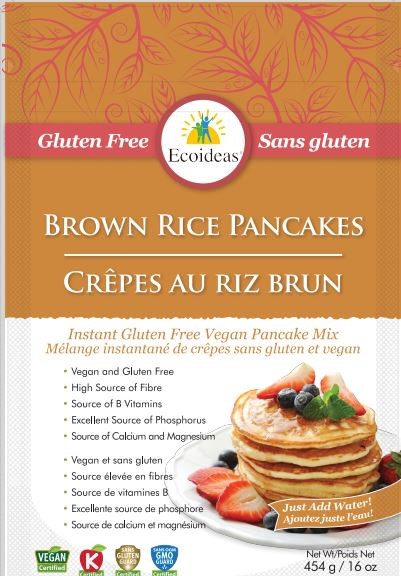
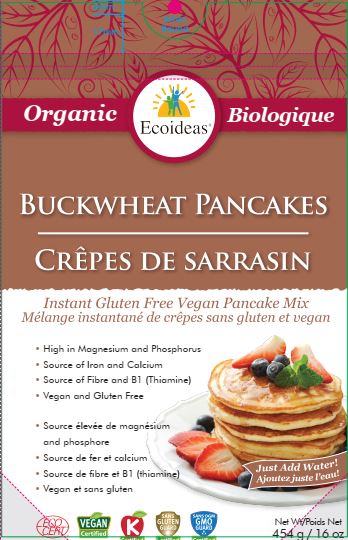
Canada – Ecoideas brand Chocolate Cake Mix and Pancakes Mixes recalled due to Salmonella

Canada Gov

Recall details

Ottawa, March 14, 2020 – Ecoideas Innovation Inc. is recalling Ecoideas brand Chocolate Cake Mix, Brown Rice Pancakes Mix and Buckwheat Pancakes Mix from the marketplace due to possible Salmonella contamination. Consumers should not consume the recalled products described below.

Recalled product

Brand Product Size UPC Codes
Ecoideas Chocolate Cake Mix 454 g 8 75405 00243 6 Lot # 43619305
BB: 10/31/2021

and

Lot #: 43620050
BB: 02/28/2022

Ecoideas Brown Rice Pancakes Mix 454 g 8 75405 00242 9 Lot #: 42920034
BB: 01/31/2022
Ecoideas Buckwheat Pancakes Mix 454 g 8 75405 00241 2 Lot #: 41219304
BB: 10/31/2021

and

Lot #: 41220030
BB: 01/30/2022

What you should do

If you think you became sick from consuming a recalled product, call your doctor.

Check to see if you have the recalled products in your home. Recalled products should be thrown out or returned to the store where they were purchased.

Food contaminated with Salmonella may not look or smell spoiled but can still make you sick. Young children, pregnant women, the elderly and people with weakened immune systems may contract serious and sometimes deadly infections. Healthy people may experience short-term symptoms such as fever, headache, vomiting, nausea, abdominal cramps and diarrhea. Long-term complications may include severe arthritis.

Background

This recall was triggered by the company. The Canadian Food Inspection Agency (CFIA) is conducting a food safety investigation, which may lead to the recall of other products. If other high-risk products are recalled, the CFIA will notify the public through updated Food Recall Warnings.

The CFIA is verifying that industry is removing the recalled products from the marketplace.

Illnesses

There have been no reported illnesses associated with the consumption of these products.

Product photos

Printer ready version of photos

  • Ecoideas – Chocolate Cake Mix – 454 grams
  • Ecoideas – Brown Rice Pancakes Mix – 454 grams
  • Ecoideas – Buckwheat Pancakes Mix – 454 grams

USA – Outbreak Investigation of E. coli O103: Clover Sprouts (February 2020)

FDA

Recommendation

FDA is recommending that consumers not eat the following sprout-containing items from Chicago Indoor Garden, Chicago, IL, with Best By dates between December 1, 2019 and March 12, 2020: red clover (with and without non-GMO labels), sprout salad, mixed greens, and spring salad. Labels of the products are below.

Sample Labels of Chicago Indoor Garden Sprout Products

(PDF: 849 KB)

The FDA’s analysis of a sample of this firm’s product identified the presence of E. coli O103. Whole Genome Sequencing of this bacteria showed that it matches the outbreak strain.

Generally, it is recommended that children, the elderly, pregnant women, and persons with weakened immune systems should avoid eating raw sprouts of any kind.

Background

FDA, along with CDC and state and local partners, are investigating an outbreak of 14 illnesses caused by E. coli O103 in Iowa, Illinois, Missouri, Texas and Utah likely linked to clover sprouts.

As the outbreak investigation progresses, the FDA will continue in its traceback investigation to determine where implicated sprouts have been distributed and will continue monitoring for additional illnesses associated with this outbreak.

Research – Prevalence of Salmonella spp. and Campylobacter spp. in alternative and conventionally produced chicken in the United States: A systematic review and meta-analysis

JFP

The burden of foodborne illness linked to the consumption of contaminated broiler meat is high in the United States. With the increase in popularity of alternative poultry rearing and production systems, it is important to identify the difference in food safety risks presented by alternative systems when compared to conventional methods. While many studies have been conducted surveying foodborne pathogen prevalence along the broiler supply chain, a systematic overview of all of the available results is lacking. In the current study, a systematic review and meta-analysis was conducted to quantify the differences in Salmonella spp. and Campylobacter spp. prevalence in farming environment, rehang, prechill, postchill, and retail samples between conventional and alternative production systems. A systematic search of Web of Science and PubMed databases was conducted to identify eligible studies. Studies were then evaluated by inclusion criteria, and included studies were qualitatively and quantitatively analyzed. In total, 137 trials from 72 studies were used in the final meta-analysis. Meta-analysis models were individually constructed for subgroups that were determined by sample type, pathogen, and production type. All subgroups possessed high amounts of heterogeneity (I 2 > 75%). For environmental sample subgroups, Campylobacter prevalence was estimated to be 15.8 and 52.8% for conventional and alternative samples, respectively. Similar prevalence estimates for both production types were observed for Salmonella environmental samples and all retail samples. For conventional samples, Campylobacter and Salmonella prevalence was highest in prechill samples, followed by rehang and postchill samples, respectively. The presented results will be of use in future quantitative microbial risk assessments to characterize the differences in foodborne illness risks presented by different broiler production systems.