USA – Cuisine Innovations Unlimited, LLC Issues Voluntary Recall of Two Varieties of Earth Grown Frozen Falafel Due to Possible Health Risk -STEC E.coli

FDA

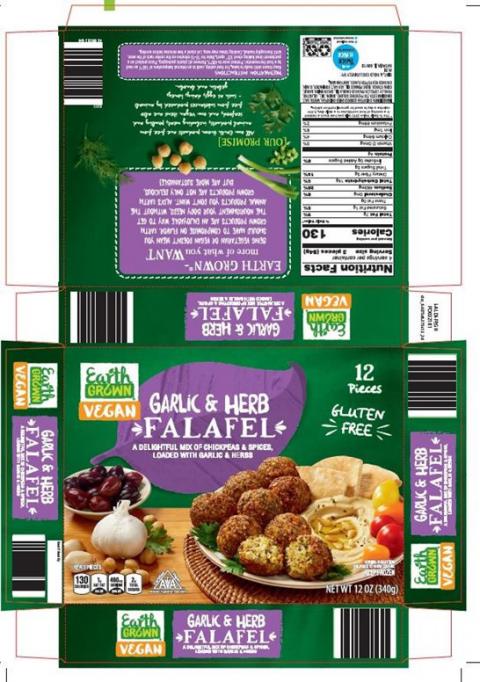
Package, Earth Grown Vegan Garlic and Herb Falafel”

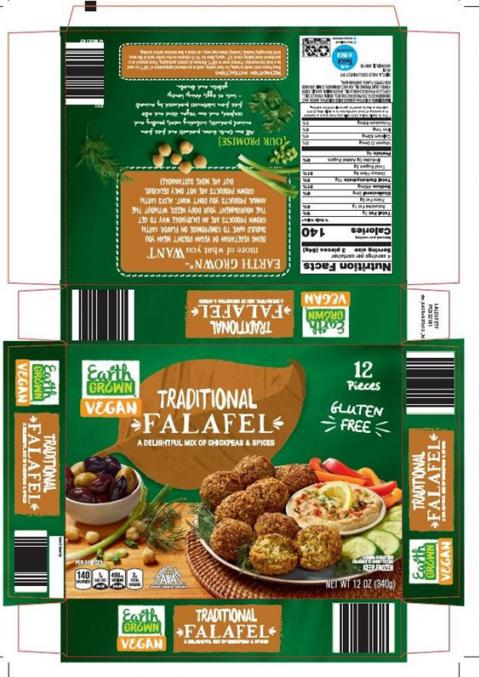
“Package, Earth Grown Vegan Traditional Falafel”

Summary

Company Announcement Date:
FDA Publish Date:
Product Type:
Food & Beverages
Foodborne Illness
Reason for Announcement:
Potential contamination with shiga toxin-producing E. Coli
Company Name:
Cuisine Innovations Unlimited LLC
Brand Name:
Earth Grown Vegan
Product Description:
Earth Grown Vegan Traditional Falafel and Garlic & Herb Falafel

Company Announcement

Cuisine Innovations Unlimited, LLC of 180 Lehigh Avenue, Lakewood, NJ, is voluntarily recalling its Earth Grown Vegan Traditional Falafel and Garlic & Herb Falafel Distributed & Sold Exclusively by Aldi, Batavia, IL due to the possible presence of Shiga toxin-producing E. coli.

Shiga-toxin-producing E. coli is an organism that can cause foodborne illness in a person who eats a food item contaminated with it. Symptoms of infection may include stomach cramps, diarrhea, and vomiting. The illness primarily impacts elderly individuals, children, and people with weakened immune systems. Most healthy adults and children rarely become seriously ill.

The voluntarily recalled Earth Grown Vegan Traditional Falafel And Garlic & Herb Falafel Distributed & Sold Exclusively by Aldi, Batavia, IL were distributed in ALDI retail stores in the following states:  Alabama, Arizona, Arkansas, California, Connecticut,  Delaware, District of Columbia, Florida, Georgia, Illinois, Indiana, Iowa, Kansas, Kentucky, Louisiana, Maryland, Massachusetts, Michigan, Minnesota, Mississippi, Missouri, Nebraska, New Hampshire, New Jersey, New York, North Carolina, North Dakota, Ohio, Oklahoma, Pennsylvania, Rhode Island, South Carolina, South Dakota, Tennessee, Texas, Virginia, West Virginia, and Wisconsin.

The product comes in a bag in a box marked with any of the following Lot numbers: 1472, 1481, 1531, 1532, 1541, 1552, 1561, 1581, 1601, 1611, 1612, 1661, 1682, 1732, 1752, 1762, 1782, 1802, and 1812, and would have been shipped to stores after June 24, 2021.  The lot number can be found in the “Best if used by” area on the outside flap of the box.  There has been no further production of this product.

There have been 20 reported cases in six (6) states (FL, IA, KS, MI, OH and WI) with onset dates reported between July 24, 2022 and September 19, 2022 with 5 hospitalization and no deaths.

Consumers who have purchased Earth Grown Vegan Traditional Falafel and Garlic & Herb Falafel Distributed & Sold Exclusively by Aldi, Batavia, IL with any of the above lot numbers after June 24, 2021, are urged to return them to the place of purchase for a full refund. Consumers with questions may contact the company Monday through Friday, 8:00 a.m. to 4:00 p.m. Eastern Time at 1-201-439-1036, Ext. 26.

Outbreak Advisory


Company Contact Information

Consumers:
 1-201-439-1036, Ext. 26

USA – Cut Fruit Express Recalls Caribou Coffee Fruit and Cheese Plate Because of Possible Health Risk – Listeria monocytogenes

FDA

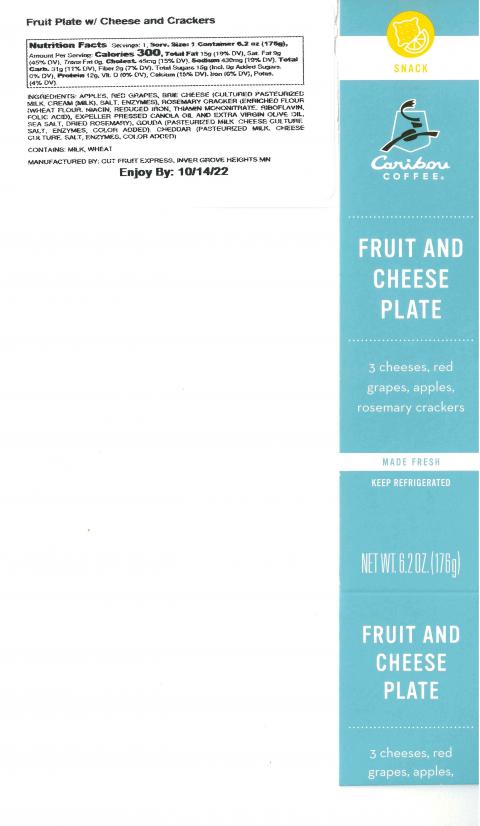
“Label, Caribou Coffee Fruit and Cheese Plate”

Summary

Company Announcement Date:
FDA Publish Date:
Product Type:
Food & Beverages
Prepared Food
Foodborne Illness
Reason for Announcement:
Listeria monocytogenes
Company Name:
Cut Fruit Express
Brand Name:
Caribou Coffee
Product Description:
Fruit and Cheese plate 6.2 oz

Company Announcement

Cut Fruit Express of Inver Grove Heights, MN is recalling Caribou Coffee Fruit and Cheese Plate 6.2oz because of potential contamination with Listeria Monocytogenes, an organism which can cause serious and sometimes fatal infections in young children, frail or elderly people, and others with weakened immune systems. Although healthy individuals may suffer only short-term symptoms such as high fever, severe headache, stiffness, nausea, abdominal pain and diarrhea, Listeria infection can cause miscarriages and stillbirths among pregnant women.

Caribou Coffee Fruit and Cheese Plate, item #3818, was distributed from Caribou Stores at the MSP Airport Caribou locations in the MSP Airport, Minnesota. The product comes in a clear plastic package. The USED BY DATES are 9/30/2022, 10/2/2022, 10/4/2022, 10/7/2022 and 10/9/2022.

Cut Fruit Express learned that their supplier is issuing a recall on Brie Cheese for potential contamination of Listeria Monocytogenes. Cut Fruit Express is initiating a recall on the affected product that contains the recalled Brie Cheese. The affected products were shipped between September 26th through October 5th, 2022.

Consumers should immediately DESTROY THE PRODUCT if they have it in their possession. Please do not share or give it to anyone to eat. Consumers who have purchased 6.2oz snack packages of Fruit and cheese plate may return them to the place of purchase for a full refund.

Consumers with questions may contact
Shelley M. Ryan
Partner | 952.746.2705 Hoff Barry, P.A.
100 Prairie Center Drive, Suite 200
Eden Prairie, MN 55344 952.941.9220 | hoffbarry.comExternal Link Disclaimer weekdays from 9:00 – 5:00 Central Time.


Company Contact Information

Consumers:
Shelley M. Ryan, Partner
 952.746.2705

France – Butter Mackerel Fillet – Histamine

Gov france

Identification information of the recalled product

  • Product category Feed
  • Product subcategory Fishery and aquaculture products
  • Product brand name Sans
  • Model names or references Mackerel fillet
  • Identification of products
    Lot
    sans
  • Marketing start/end date From 02/09/2022 to 05/09/2022
  • Storage temperature Product to be stored in the refrigerator
  • Geographic area of ​​sale Saint Ambroix
  • Distributors Intermarché Saint-Ambroix

Practical information regarding the recall

  • Reason for recall Presence of Histamine
  • Risks incurred by the consumer Undeclared allergenic substances

Canada – Certain Circle K / Couche Tard brand Sandwiches recalled due to Listeria monocytogenes

CFIA

Summary

Product
Sandwiches
Issue
Food – Microbial Contamination – Listeria
What to do

Do not consume, use, sell, serve, or distribute recalled products

Affected products

Issue

The affected products are being recalled from the marketplace due to possible Listeria monocytogenes contamination.

The recalled products have been sold in Quebec and may have been distributed in other provinces and territories.

What you should do

  • If you think you became sick from consuming a recalled product, contact your healthcare provider
  • Check to see if you have recalled products
  • Do not consume, serve, use, sell, or distribute recalled products
  • Recalled products should be thrown out or returned to the location where they were purchased

Food contaminated with Listeria monocytogenes may not look or smell spoiled but can still make you sick. Symptoms can include vomiting, nausea, persistent fever, muscle aches, severe headache and neck stiffness. Pregnant women, the elderly and people with weakened immune systems are particularly at risk. Although infected pregnant women may experience only mild, flu-like symptoms, the infection can lead to premature delivery, infection of the newborn or even stillbirth. In severe cases of illness, people may die.

Canada – No brand Low-Fat Mozzarella Cheese recalled due to Listeria monocytogenes

CFIA

Summary

Product
Low-Fat Mozzarella Cheese
Issue
Food – Microbial Contamination – Listeria
What to do

Do not use, sell, serve or distribute the affected product.

Audience
Warehouse

Affected products

Issue

No brand Low-Fat Mozzarella Cheese recalled due to Listeria monocytogenes.

The recalled product has been sold in Quebec.

Research – Straw Can Pose Mycotoxin Risk in Dairy Heifer Diets

Dairy Herd

Straw is a common, high-fiber, low-energy ingredient in U.S. dairy heifer rations. While we normally monitor grain quality to watch for harmful mycotoxins, it turns out straw can carry its own mycotoxin risk, according to a recent feed quality evaluation by Alltech, Inc.

Each year, Alltech conducts comprehensive mycotoxin testing programs in the U.S., Canada, and Europe to assess the mycotoxin risk in newly harvested grain crops. For the first time this year, wheat and barley straw were added to the sampling in Europe.

Danish farmers were worried about the damaging effects of wet weather both pre- and post-harvest. Because excessive moisture delayed straw harvest, the crops lay in the field for extended periods, damaging quality and fueling mold contamination.

A total of 70 straw samples from Denmark were evaluated. Deoxynivalenol (DON) was identified in 84% of samples, and emerging mycotoxins were found in 70% of samples. All told, 95% of samples contained some form of mycotoxin, with 50% containing two or more.

According a bulletin on mycotoxins in forage shared by the University of Wisconsin, DON may be a marker for other mycotoxins in contaminated feeds. When young dairy animals consume mycotoxins, they can be at risk for feed refusals, diarrhea, and immunosuppression. Additionally, mycotoxin-induced outcomes may be vague, and include unthriftiness, rough haircoat, poor body condition, and reproductive problems.

Alltech technical advisor and veterinarian, Dr. Radka Boutova, DVM, suggested adding straw to the list of feedstuffs that are screened for mycotoxins if it is a commonly used ingredient in a young stock ration. This is particularly important if the straw crop was stressed and/or delayed in the field due to unfavorable weather conditions, or for any straw that shows visible signs of mold.

Research – Cultivation Conditions of Spinach and Rocket Influence Epiphytic Growth of Listeria monocytogenes

MDPI

Leafy vegetables are associated with Listeriosis outbreaks due to contamination with Listeria monocytogenes. To date, contradictory findings were reported on spinach, rocket, and kale, where some studies reported growth of L. monocytogenes, while others did not. Thus, the current study investigated the reason for conflicting findings by producing leafy vegetables, where cultivation factors were known for growth potential studies. Of all polytunnel produce, kale Nero di Toscana demonstrated the highest growth potential (2.56 log cfu g−1), followed by spinach F1 Cello (1.84 log cfu g−1), rocket Buzz (1.41 log cfu g−1), spinach F1 Trumpet (1.37 log cfu g−1), and finally rocket Esmee (1.23 log cfu g−1). Thus, plant species and variety influenced L. monocytogenes growth potentials. Moreover, significantly lower growth potentials of 0.3 log cfu g−1 were identified when rocket Buzz was cultivated in open fields (1.11 log cfu g−1) instead of a polytunnel. The opposite effect was observed for spinach F1 Trumpet, where growth potentials increased significantly by 0.84 log cfu g−1 when cultivated in open fields (2.21 log cfu g−1). Furthermore, a significant seasonality effect between batches was found (p < 0.05). This study revealed that spinach and rocket cultivation conditions are at least co-factors in the reporting of differing growth potentials of L. monocytogenes across literature and should be considered when conducting future growth potential studies.

Research – Effects of nonthermal dielectric barrier discharge plasma against Listeria monocytogenes and quality of smoked salmon fillets

Wiley Online

The objective was to explore the effects of dielectric barrier discharge (DBD) plasma on bacterial reduction, physiological characteristics (pH and moisture), and sensorial quality against Listeria monocytogenes on the surface of smoked salmon. Reductions were treated with 5, 10, 20, 30, 40, 50, and 60 min with DBD plasma varied from 0.17, 0.25, 0.32, 0.70, 0.81, 1.05, and 1.25 log10 CFU/g, respectively. The R2 and D-value of L. monocytogenes was .98 and 49.01 min, respectively. However, moisture levels were significantly different after 30 and 60 min of treatment compared with the control but pH and the sensory qualities were not. This study found that treated with 60 min DBD plasma reduced L. monocytogenes by more than 90% without negatively affecting the smoked salmon. Based on these results, antibacterial treatment for smoked salmon, and this strategy could be explored in the seafood industry to increase food safety.

Research – Efficacy of Repeated Applications of Bacteriophages on Salmonella enterica-Infected Alfalfa Sprouts during Germination

MDPI

Nontyphoidal Salmonella enterica is one of the leading pathogens for foodborne outbreaks in a multitude of food commodities, including alfalfa sprouts, which are commonly consumed raw. The food industry has commonly used chlorinated washes, but such methods may not be perceived as natural; this can be a detriment as a large portion of sprouts are designated for the organic market. A natural and affordable antimicrobial method that has been acquiring popularity is the use of bacteriophages. This study compared the efficacy of repeated daily applications and a single application of two separate bacteriophage cocktails (SE14, SE20, SF6 and SE14, SF5, SF6) against four Salmonella enterica (S. enterica) strains on germinating alfalfa sprout seeds from days 0 to 7. The results show S. Enteritidis to be the most susceptible to both cocktails with ~2.5 log CFU/mL decrease on day 0 with cocktail SE14, SF5, and SF6. S. enterica populations on all strains continued to grow even with repeated daily bacteriophage applications but in a significantly decreased rate (p < 0.05) compared with a single bacteriophage application. The extent of the reduction was dependent on the S. enterica strain, but the results do show benefits to using repeated bacteriophage applications during sprout germination to reduce S. enterica populations compared with a single bacteriophage application.

USA – FSMA Final Rule on Laboratory Accreditation for Analyses of Foods (LAAF)

FDA

The FDA Food Safety Modernization Act (FSMA) final rule on Laboratory Accreditation for Analyses of Foods (LAAF) establishes a laboratory accreditation program for the testing of food in certain circumstances. Under the LAAF program, FDA will recognize accreditation bodies (ABs) that will accredit laboratories to the standards established in the final rule (referred to as LAAF-accredited laboratories).

The final rule specifies eligibility requirements that ABs and laboratories wishing to participate in the program will need to satisfy, as well as procedures for how the FDA will manage and oversee the program. In certain circumstances, owners and consignees will be required to use a LAAF-accredited laboratory for food testing. FDA will maintain an online public registry listing recognized accredited bodies and LAAF-accredited laboratories.

The establishment of the LAAF program is intended to improve the accuracy and reliability of certain food testing through the uniformity of standards and enhanced FDA oversight of participating laboratories.

Structures of the Laboratory Accreditation for Analyses of Foods (LAAF) Program

Enlarge in PDF (241KB)