Category Archives: Uncategorized

Research – Occurrence and Levels of Salmonella, Enterohemorrhagic Escherichia coli, and Listeria in Raw Wheat

Journal of Food Protection

ABSTRACT

Wheat flour has been implicated in several outbreaks of foodborne illness in recent years, yet little information is available regarding microbial pathogens in wheat and wheat flour. Information about microbial pathogens in wheat is needed to develop effective methods to prevent foodborne illnesses caused by wheat products. From 2012 to 2014, we conducted a baseline study to determine the prevalence and levels of pathogens in wheat samples taken before milling. A total of 5,176 wheat samples were tested for enterohemorrhagic Escherichia coli (EHEC), Salmonella spp., Listeria spp., and L. monocytogenes. Positive samples were assayed for most probable numbers (MPNs), and isolates were fingerprinted by pulsed-field gel electrophoresis (PFGE). The rate of detection of each pathogen tested was as follows: Salmonella was in 1.23% of the samples (average level of 0.110 MPN/g), EHECs occurred in 0.44% of the samples (0.039 MPN/g), and Listeria spp. occurred in 0.08% of samples (0.020 MPN/g), but L. monocytogenes was not detected. The PFGE assessment found a high diversity for all organisms. All EHEC PFGE patterns (22 of 22) were unique, and 39 of 47 Salmonella patterns (83%) were unique. These results indicate a diverse background of naturally occurring organisms. These findings suggest that the microbial contamination is coming from diverse sources and provide no evidence in support of a specific pathogen load. Altogether, our surveillance study shows that contamination of wheat with pathogens is clearly evident and poses a foodborne illness risk.

HIGHLIGHTS
  • Prevalence of Salmonella and E. coli in raw wheat emphasizes the need to cook wheat products.

  • 3,891 grain samples were tested for E. coli and Salmonella; 1,285 were tested for Listeria.

  • Of wheat berries sampled, 0.44% were positive for E. coli and 1.23% were positive for Salmonella.

  • Salmonella diversity was high, indicating various animal sources that are difficult to prevent.

  • Cooking wheat products is the best preventative measure against foodborne illness from wheat.
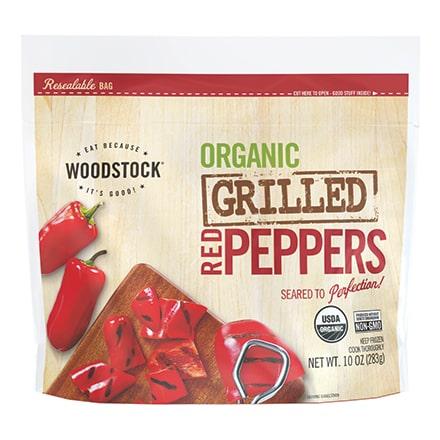
USA – UNFI Recalls its Woodstock Frozen Organic Grilled Red Peppers Because of Possible Health Risk

FDA

Company Announcement

Out of an abundance of caution, UNFI is voluntarily recalling its 10 ounce packages of Woodstock frozen Organic Grilled Red Peppers because they have the potential to be contaminated with Listeria monocytogenes . Listeria monocytogenes is an organism which can cause serious and sometimes fatal infections in young children, frail or elderly people, and others with weakened immune systems. Although healthy individuals may suffer only short-term symptoms such as high fever, severe headache, stiffness, nausea, abdominal pain and diarrhea, Listeria infections can cause miscarriages and stillbirths among pregnant women.

The product comes in a 10 ounce plastic package marked with UPC code 4256301714, lot #60B, and an expiration date of April 2020 stamped on the back of the package and was distributed nationally to retail stores.

No illnesses have been reported to date in connection with this problem.

The potential for contamination was noted after routine testing by the Rhode Island Department of Health (RIDOH) revealed the presence of Listeria monocytogenes in the lot number identified above. The production of the product has been suspended while RIDOH and UNFI continue to investigate.

Consumers who have purchased 10 ounce packages of Woodstock frozen Organic Grilled Red Peppers with the indicated lot code above, are urged to dispose of the product properly and may contact ResponseTeam@bluemarblebrands.com with any questions.


Company Contact Information

Media:
Jeff Swanson
 952-903-1645
 Jeffrey.S.Swanson@unfi.com

Product Photos

USA – Missouri Jack in the Box link in Hepatitis A scare

Food Poison Journal

The Franklin County Health Department is planning mass vaccinations after learning an employee who works at the Jack in the Box located at the Bourbeuse River Access in Union, Missouri had Hepatitis A while serving customers.

The Missouri Department of Health and Senior Services said the employee handled food on June 9 and June 10.

Hepatitis A  is a viral infection of the liver that can cause loss of appetite, nausea, tiredness, fever, and stomach pain. It’s usually spread when a person unknowingly ingests the virus from objects, food, or drinks that have been contaminated. Franklin County health officials have conducted several inspections of the Jack in the Box since the problem was discovered.

Health officials said it is uncommon for restaurant customers to become infected with Hepatitis A due to an infected food handler. However, anyone who consumed food or drinks at the restaurant on June 9 or June 10 is recommended to receive vaccination by June 23 as further protection from becoming ill.

USA – Blackberries recalled over Norovirus

Food Poison Journal Norovirus Food Safety kswfoodworld

Alma Pak of Alma, Georgia is recalling specific lots of product containing frozen blackberries (noted below) due to the potential of being contaminated with Norovirus. FDA testing of frozen blackberries was reported to have tested positive for Norovirus.

Norovirus is a highly contagious virus. Consumption of product contaminated with Norovirus may cause acute onset of symptoms of gastroenteritis including severe nausea, vomiting and diarrhea. Less common symptoms are low-grade fever, chills, headache, muscle aches and fatigue. Although most symptoms end within 48 hours, the elderly, young children and immunocompromised persons may develop prolonged, or more severe symptoms.

USA – New York Creamery recalls Cheeses over Listeria

Food Poisoning Journal

Cheese sold by Snow Farm Creamery at local markets has tested positive for Listeria monocytogenes, according to a release from the New York State Department of Agriculture and Markets.

Snow Farm Creamery Baby Swiss and Snow Farm Creamery Baby Swiss with Mustard Seed with a code “02 04 19” are all affected, but officials warn that if you do not know the code and purchased the cheese after April 24, you should not consume it.

RASFF Alert – Norovirus – Raspberries

RASFF-Logo

RASFF – norovirus (GII /25g) in raspberries from Morocco in Spain


RASFF Alert – Bacillus cereus Toxin – Cardamom

RASFF-Logo

RASFF – Bacillus cereus diarrheal enterotoxin (up to 45000 CFU/g) in cardamom from Guatemala in Finland

RASFF Alert – STEC E.coli – Boneless Beef Rump

RASFF-Logo

RASFF – shigatoxin-producing Escherichia coli (in 3 out of 5 samples /25g) and suspicion of shigatoxin-producing Escherichia coli (in 2 out of 5 samples /25g) in chilled boneless beef rump from Uruguay in Portugal


RASFF Alerts – Ochratoxin A – Chilli Powder – Spice Mix

RASFF-Logo

RASFF – aflatoxins (B1 = 39.1; Tot. = 39.9 µg/kg – ppb) and ochratoxin A (106.1 µg/kg – ppb) in chilli powder from Sri Lanka in Cyprus

RASFF – ochratoxin A (25; 27 µg/kg – ppb) in spice mix from France in France

RASFF Alerts – Aflatoxin – Pistachios – Chilli Powder – Groundnuts

RASFF-Logo

RASFF – aflatoxins (Tot. = 11.05 µg/kg – ppb) in pistachios in shell from Iran in Slovakia

RASFF – aflatoxins (B1 = 39.1; Tot. = 39.9 µg/kg – ppb) and ochratoxin A (106.1 µg/kg – ppb) in chilli powder from Sri Lanka in Cyprus

RASFF – aflatoxins (B1 = 13.4; Tot. = 15 µg/kg – ppb) in pistachio kernels from Iran in France

RASFF – aflatoxins (B1 = 8.7; Tot. = 9.7 µg/kg – ppb) in groundnuts in shell from Egypt in Germany