Category Archives: STEC

Research – Thermal Resistance of Single Strains of Shiga Toxin-Producing Escherichia coli O121:H19 and O157:H7 Based on Culture Preparation Method and Osmolyte-Reduced Water Activity

Journal of Food Protection

Pathogen thermal resistance studies on low-water activity foods (LWAF) use a variety of methods to inoculate food, as well as strategies to reduce water activity, which can influence thermal resistance observations. This study investigated effects of culture preparation method and osmolyte-induced water activity on thermal resistance of two Shiga toxin-producing Escherichia coli (STEC; O121:H19, O157:H7) challenged with isothermal conditions, determining D – and z -values for each isolate (56, 59, and 62 ° C). Tryptic Soy Broth (TSB) and Agar (lawn cultures) were compared. D -values of broth cultures were significantly and consistently larger than those of lawn cultures, and O121 was significantly more resistant than O157, but only at 56 ° C ( p < 0.05). To compare potential effects of water activity on STEC thermal resistance, cells were suspended in osmolyte solutions with varying water activity: high (TSB, a w 0.99), intermediate (61% glycerol or 26% NaCl, a w 0.75), and low (82% glycerol, a w 0.5). In most instances, STEC in high-water activity broth exhibited greater heat resistance compared to reduced-water activity solutions, except the glycerol intermediate-water activity solution (a w 0.75). Magnitudes varied with strain and temperature. The z -values of lawn cultures were significantly lower than those of broth cultures ( p < 0.05), but there were only some differences between high-a w and reduced-a w samples. There were no significant differences of z -values based on strain type. These results highlight that thermal resistance can be affected by culture preparation and that osmolyte-induced changes to water activity influence thermal inactivation of STEC by varying magnitudes. These results emphasize the challenges between extrapolating results from lab inactivation kinetic experiments to determine the inactivation of low water activity foods, especially those considered dry in nature.
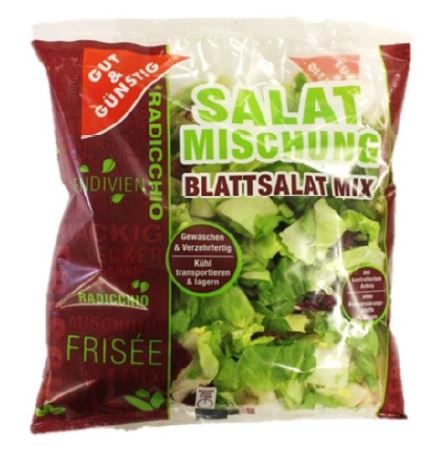
Germany – Good & cheap salad mix leaf salad mix – STEC E.coli

Warning type:

Food

Date of first publication:

02.10.2020

Product name:

Good & cheap salad mix leaf salad mix

Product pictures:

Product photo.jpg
Manufacturer (distributor):

GARTENFRISCH Jung GmbH

Reason for warning:

E. Coli producing shiga toxin

Packaging Unit:

150 g pack

Durability:

05/10/2020

Additional Information:

Reference is made to the attached press release from the food business operator.

Contact to the responsible authorities:

Baden-Württemberg:

poststelle@mlr.bwl.de

Bavaria:

poststelle@lgl.bayern.de

Hesse:

Schnellwarnung@rpda.hessen.de

Lower Saxony:

poststelle@ml.niedersachsen.de

Saxony:

poststelle@sms.sachsen.de

Thuringia:

LM-Ueberektiven@tlv.thueringen.de

Press releases and information
title Attachment or web link
Press release

Italy – AZ. AGR. ARMANNI ANGELO – TREVIOLO (BG) – Raw Milk Cheese – Stracchino – STEC E.coli -eae

MDS

Brand : AZ. AGR. ARMANNI ANGELO – TREVIOLO (BG)

Name : raw milk cheese – stracchino

Reason for reporting : Recall due to microbiological risk

Publication date : 30 September 2020

Documentation

Documentation

Research – Lessons Learned from a Decade of Investigations of Shiga Toxin–Producing Escherichia coli Outbreaks Linked to Leafy Greens, United States and Canada

CDC

Abstract

Shiga toxin–producing Escherichia coli (STEC) cause substantial and costly illnesses. Leafy greens are the second most common source of foodborne STEC O157 outbreaks. We examined STEC outbreaks linked to leafy greens during 2009–2018 in the United States and Canada. We identified 40 outbreaks, 1,212 illnesses, 77 cases of hemolytic uremic syndrome, and 8 deaths. More outbreaks were linked to romaine lettuce (54%) than to any other type of leafy green. More outbreaks occurred in the fall (45%) and spring (28%) than in other seasons. Barriers in epidemiologic and traceback investigations complicated identification of the ultimate outbreak source. Research on the seasonality of leafy green outbreaks and vulnerability to STEC contamination and bacterial survival dynamics by leafy green type are warranted. Improvements in traceability of leafy greens are also needed. Federal and state health partners, researchers, the leafy green industry, and retailers can work together on interventions to reduce STEC contamination.

Canada – Updated and Corrected Food Recall Warning – Provigo brand and Metro brand ground beef products recalled due to E. coli O157

CFIA

Advisory details

Ottawa, September 28, 2020 – The food recall warning issued on September 27, 2020 has been updated to include additional product information. The food recall warning issued on September 27, 2020 has also been amended to correctly identify the affected products. The corrections for these products are marked by an asterisk (*). This additional information was identified during the Canadian Food Inspection Agency’s (CFIA) food safety investigation.

JBS Food Canada ULC is recalling raw, fresh, lean ground beef due to possible E. coli O157 contamination. This product was further processed by other companies into raw ground beef products. Consumers should not consume the recalled products described below.

The following products have been sold exclusively at Provigo Hull, 1 du Plateau, Gatineau, Quebec and Metro (Marché Kelly), 910 Maloney boulevard east, Gatineau, Quebec.

Recalled product

Brand Product Size UPC Codes
Provigo Medium ground beef club pack Variable Starts with
0 213026
All Best Before dates from 23.SE2020 up to and including 28.SE 2020 *
Provigo Medium ground beef Variable Starts with
0 214117
All Best Before dates from 23.SE2020 up to and including 28.SE 2020
Provigo Lean ground beef club pack Variable Starts with
0 217334
All Best Before dates from 23.SE2020 up to and including 28.SE 2020 *
Provigo Lean ground beef Variable Starts with
0 217331
All Best Before dates from 23.SE2020 up to and including 28.SE 2020
Metro Lean ground beef Variable Starts with
0 201020
All  « pkgd on » dates from 24.SE 2020 up to and including 26.SE 2020
Metro Lean ground beef fam. pack Variable Starts with
0 201710
All  « pkgd on » dates from 24.SE 2020 up to and including 26.SE 2020

What you should do

If you think you became sick from consuming a recalled product, call your doctor.

Check to see if you have the recalled products in your home. Recalled products should be thrown out or returned to the store where they were purchased.

Food contaminated with E. coli O157 may not look or smell spoiled but can still make you sick. Symptoms can include nausea, vomiting, mild to severe abdominal cramps and watery to bloody diarrhea. In severe cases of illness, some people may have seizures or strokes, need blood transfusions and kidney dialysis or live with permanent kidney damage. In severe cases of illness, people may die.

Background

This recall was triggered by the company. The CFIA is conducting a food safety investigation, which may lead to the recall of other products. If other high-risk products are recalled, the CFIA will notify the public through updated Food Recall Warnings.

The CFIA is verifying that industry is removing the recalled products from the marketplace.

Illnesses

There have been no reported illnesses associated with the consumption of these products.

Product photos

Printer ready version of photos

  • Provigo - Medium ground beef club pack
  • Provigo - Medium ground beef
  • Provigo - Lean ground beef club pack
  • Provigo - Lean ground beef
  • Provigo - Lean ground beef - Nutrition facts
  • Provigo - Medium ground beef - Nutrition facts
  • Metro - Lean ground beef
  • Metro - Lean ground beef fam. pack

Public enquiries and media

Public enquiries
Toll-free: 1-800-442-2342 (Canada and U.S.)
Telephone: 1-613-773-2342 (local or international)
Email: cfia.enquiries-demandederenseignements.acia@canada.ca
Media relations
Telephone: 613-773-6600
Email: cfia.media.acia@canada.ca

Canada – Provigo brand ground beef products recalled due to E. coli O157

CFIA

Recall details

Ottawa, September 27, 2020 – JBS Food Canada is recalling Provigo brand ground beef products from the marketplace due to possible E. coli O157 contamination. Consumers should not consume the recalled products described below.

The following products have been sold at Provigo Hull, 1 du Plateau, Gatineau, Quebec.

Recalled product

Brand Product Size UPC Codes
Provigo Medium ground beef club pack Variable Starts with 0 213026 All packages bearing Best Before 16.SE2020 or 17.SE2020 or 18.SE2020
Provigo Lean ground beef fresh club pack Variable Starts with 0 217334 All packages bearing Best Before 16.SE2020 or 17.SE2020 or 18.SE2020

What you should do

If you think you became sick from consuming a recalled product, call your doctor.

Check to see if you have the recalled products in your home. Recalled products should be thrown out or returned to the store where they were purchased.

Food contaminated with E. coli O157 may not look or smell spoiled but can still make you sick. Symptoms can include nausea, vomiting, mild to severe abdominal cramps and watery to bloody diarrhea. In severe cases of illness, some people may have seizures or strokes, need blood transfusions and kidney dialysis or live with permanent kidney damage. In severe cases of illness, people may die.

Background

This recall was triggered by the company. The Canadian Food Inspection Agency (CFIA) is conducting a food safety investigation, which may lead to the recall of other products. If other high-risk products are recalled, the CFIA will notify the public through updated Food Recall Warnings.

The CFIA is verifying that industry is removing the recalled products from the marketplace.

Illnesses

There have been no reported illnesses associated with the consumption of these products.

Product photos

Printer ready version of photos

  • Provigo – Lean ground beef fresh club pack
  • Provigo – Medium ground beef club pack

Research – Association between Shiga Toxin–Producing Escherichia coli O157:H7 stx Gene Subtype and Disease Severity, England, 2009–2019

CDC

Abstract

Signs and symptoms of Shiga toxin–producing Escherichia coli (STEC) serogroup O157:H7 infection range from mild gastrointestinal to bloody diarrhea and hemolytic uremic syndrome (HUS). We assessed the association between Shiga toxin gene (stx) subtype and disease severity for »3,000 patients with STEC O157:H7 in England during 2009–2019. Odds of bloody diarrhea, HUS, or both, were significantly higher for patients infected with STEC O157:H7 possessing stx2a only or stx2a combined with other stx subtypes. Odds of severe signs/symptoms were significantly higher for isolates encoding stx2a only and belonging to sublineage Ic and lineage I/II than for those encoding stx2a only and belonging to sublineage IIb, indicating that stx2a is not the only driver causing HUS. Strains of STEC O157:H7 that had stx1a were also significantly more associated with severe disease than strains with stx2c only. This finding confounds public health risk assessment algorithms based on detection of stx2 as a predictor of severe disease.

Research – Netherlands – Surveillance zoonoses in broilers 2018-2019

RIVM

Animals can carry pathogens that can cause disease in humans. The diseases which they cause are known as zoonoses. In 2018 and 2019 the National Institute for Public Health and the Environment (RIVM) and the Netherlands Food and Consumer Product Safety Authority [Netherlands Food and Consumer Product Safety Authority] (NVWA) investigated how often some of these pathogens occurred in broilers. This study involved broilers at 198 farms as well as 132 livestock farmers, family members and employees. RIVM assessed whether the same pathogens also occurred in these persons. Most of these pathogens usually cause diarrhoea, but the infections can sometimes be more severe. ESBL-producing bacteria were also assessed, as they are resistant to an important group of antibiotics.

A number of pathogens occur frequently in the investigated broilers. They are present in the animals’ intestines and therefore in the manure as well. Meat can become contaminated in the slaughterhouse if it comes into direct contact with the manure. People can prevent an infection by only eating chicken that has been thoroughly cooked. It is also important to prevent other food from coming into contact with raw meat.

Of the pathogens investigated, ESBL-producing bacteria were found most often, namely in the broilers on 36% of the farms. Among livestock farmers and family members, these bacteria were found in 7% of participants. This is comparable to the percentage in the general Dutch population.

Campylobacter was found on 32% of broiler farms. This is comparable to the numbers from Campylobacter surveillance conducted between 1999 and 2002. Campylobacter was also found in two of the human participants.

Salmonella surveillance is carried out on all broiler farms according to European legislation. Salmonella was reported in broilers from 11% of the farms. The types of Salmonella bacteria identified are those that can cause diarrhoea in people. Salmonella was also found in one human participant.

STEC and Listeria were found on very few broiler farms. These bacteria were detected on 1% (Listeria) or less (STEC) of the investigated farms.

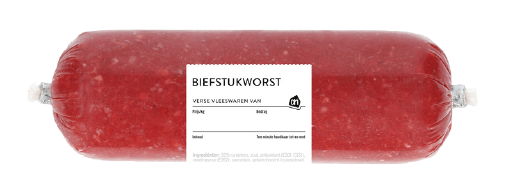
RASFF Alert – STEC E.coli – Chilled Steak Sausage

European Food Alerts

RASFF

shigatoxin-producing Escherichia coli (stx1, stx2, eae, v. 14 /25g) in chilled steak sausage from the Netherlands in the Netherlands

Netherlands – AH steak sausage 200 grams – E.coli

NVWA

Important safety warning AH steak sausage 200 grams

Albert Heijn has decided on the AH Steak sausage st. 200 grams from the stores. With the AH Steak sausage st. 200 grams with an expiry date of 21 September 2020, the bacterium e.coli was found.

Albert Heijn urges customers not to eat AH steak sausage and to bring it back to an Albert Heijn store, where they will be reimbursed for the purchase price upon return of the product.

See also the Albert Heijn website

E.coli

Eating a product with an E. coli bacteria (faeces bacteria, STEC, EHEC) can, if not thoroughly cooked, result in nausea, vomiting and (bloody) diarrhea within a week. Especially for young children, the elderly, people with low immunity and pregnant women. Consult your doctor or general practitioner for more information if you have health complaints after eating the said product.

Download ‘Important safety warning AH steak sausage 200 grams’

PDF document | 1 page | 97 KB

Warning | 19-09-2020

Steak sausage AH