Category Archives: STEC

Research – The Persistence of Bacterial Pathogens in Surface Water and Its Impact on Global Food Safety

MDPI

Water is vital to agriculture. It is essential that the water used for the production of fresh produce commodities be safe. Microbial pathogens are able to survive for extended periods of time in water. It is critical to understand their biology and ecology in this ecosystem in order to develop better mitigation strategies for farmers who grow these food crops. In this review the prevalence, persistence and ecology of four major foodborne pathogens, Shiga toxin-producing Escherichia coli (STEC), SalmonellaCampylobacter and closely related Arcobacter, and Listeria monocytogenes, in water are discussed. These pathogens have been linked to fresh produce outbreaks, some with devastating consequences, where, in a few cases, the contamination event has been traced to water used for crop production or post-harvest activities. In addition, antimicrobial resistance, methods improvements, including the role of genomics in aiding in the understanding of these pathogens, are discussed. Finally, global initiatives to improve our knowledge base of these pathogens around the world are touched upon.

Research – An assessment of the microbiological quality and safety of unpasteurised milk cheese for sale in England during 2019 – 2020

Journal of Food Protection

Cheese made with unpasteurised milk has been associated with outbreaks of illness. However, there are limited data on the prevalence of shiga-toxin producing E. coli (STEC) in these products, and a lack of clarity over the significance of E. coli as general indicators of hygiene in raw milk cheeses. The aim of this study was to provide further data to address both of these issues as well as assessing the overall microbiological quality of raw milk cheeses available to consumers in England. A total of 629 samples of cheese were collected from retailers, catering premises and manufacturers throughout England. The majority (80%) were made using cow’s milk with 14% made from sheep’s milk and 5% from goat’s milk. Samples were from 18 different countries of origin, with the majority originating from either the UK (40%) or France (35%). When interpreted against EU microbiological criteria and UK guidance, 82% were considered to be of satisfactory microbiological quality, 5% were borderline and 12% were unsatisfactory. Four samples (0.6%) were potentially injurious to health due to the isolation of STEC from one, >10 4 cfu/g of coagulase positive staphylococci in two and >100 cfu/g of Listeria monocytogenes in the fourth sample. Indicator E. coli and Listeria species were detected more frequently in soft compared to hard cheese. Higher levels of indicator E. coli were significantly associated with a greater likelihood of detecting shiga toxin genes ( stx 1 and/or stx 2).

Research – Characterization of Escherichia coli from Edible Insect Species: Detection of Shiga Toxin-Producing Isolate

MDPI

ecoli

Insects as novel foods are gaining popularity in Europe. Regulation (EU) 2015/2283 laid the framework for the application process to market food insects in member states, but potential hazards are still being evaluated. The aim of this study was to investigate samples of edible insect species for the presence of antimicrobial-resistant and Shiga toxin-producing Escherichia coli (STEC). Twenty-one E. coli isolates, recovered from samples of five different edible insect species, were subjected to antimicrobial susceptibility testing, PCR-based phylotyping, and macrorestriction analysis. The presence of genes associated with antimicrobial resistance or virulence, including stx1stx2, and eae, was investigated by PCR. All isolates were subjected to genome sequencing, multilocus sequence typing, and serotype prediction. The isolates belonged either to phylogenetic group A, comprising mostly commensal E. coli, or group B1. One O178:H7 isolate, recovered from a Zophobas atratus sample, was identified as a STEC. A single isolate was resistant to tetracyclines and carried the tet(B) gene. Overall, this study shows that STEC can be present in edible insects, representing a potential health hazard. In contrast, the low resistance rate among the isolates indicates a low risk for the transmission of antimicrobial-resistant E. coli to consumers. View Full-Text

USA – Kentucky reports outbreak of E. coli due to food distribution

Food Poison Journal

Kentucky Cabinet for Health and Family Services reports that ten Kentuckians recently tested positive with a strain of E. coli O157:H7. Of the cases, two individuals developed a rare but serious condition called hemolytic uremic syndrome (HUS). Public health investigators have not yet identified the source of the outbreak but have noted that some sort of food distribution is likely.

The reported cases primarily include adults, many of whom reside in western Kentucky. No deaths linked to the outbreak have been reported but six people have been hospitalized. Health care providers have been notified of the outbreak and are advised to be alert for patients experiencing acute diarrheal illness, which could be associated with E. coli. This is a particular strain of E. coli that produces a type of toxin (Shiga toxin) that can be dangerous for those infected.

France – MINCED STEAKS AND MINCED BEEF MEAT STEC E.coli O103

Gov france

Identifying information for the recalled product

  • Product category Food
  • Product sub-category Meats
  • Product brand name HIGH BEARN MEATS
  • Names of models or references STEAKS MINCES SV X2 / STEAKS MINCES SVX6 / AX BEEF SV
  • Product identification
    Lot Dated
    RGB02701 Use-by date 10/07/2021
    RGB02712 Use-by date 08/10/2021
  • Packaging UNDER A VACUUM
  • Start date / End of marketing From 09/27/2021 to 10/08/2021
  • Storage temperature Product to be stored in the refrigerator
  • Health mark FR 64.422.003 CE
  • Geographical sales area OLORON SAINTE MARIE / ACCOUS / ORTHEZ
  • Distributors NETTO OLORON / INTERMARCHE ACCOUS / CASINO ORTHEZ / BUTCHER VHB OLORON

Practical information regarding the recall

  • Reason for recall presence of Escherichia Coli 0103: H2
  • Risks incurred by the consumer Toxinogenic Escherichia coli shiga (STEC)

RASFF Alerts – STEC E.coli – Raw Milk Cheese – Frozen Mixed Herbs – Hare Meat

RASFF

Pathogenic microorganisms (ECOLI STEC) in raw milk cheese from Italy in Italy

RASFF

Vero/shigatoxin-producing Escherichia coli in frozen herb mix from Germany in Germany, Belgium and Luxembourg

RASFF

Presence of E.Coli Stec and Salmonella Typhimurium in hare meat from Uruguay in Italy

Canada – Updated Food Recall Warning – Updated Food Recall Warning – Jongilpoom brand Enoki Mushroom recalled due to Listeria monocytogenes

CFIA

Recall details

Ottawa, October 14, 2021 – The food recall warning issued on September 29, 2021 has been updated to include additional product information. This additional information was identified during the Canadian Food Inspection Agency’s (CFIA) food safety investigation.

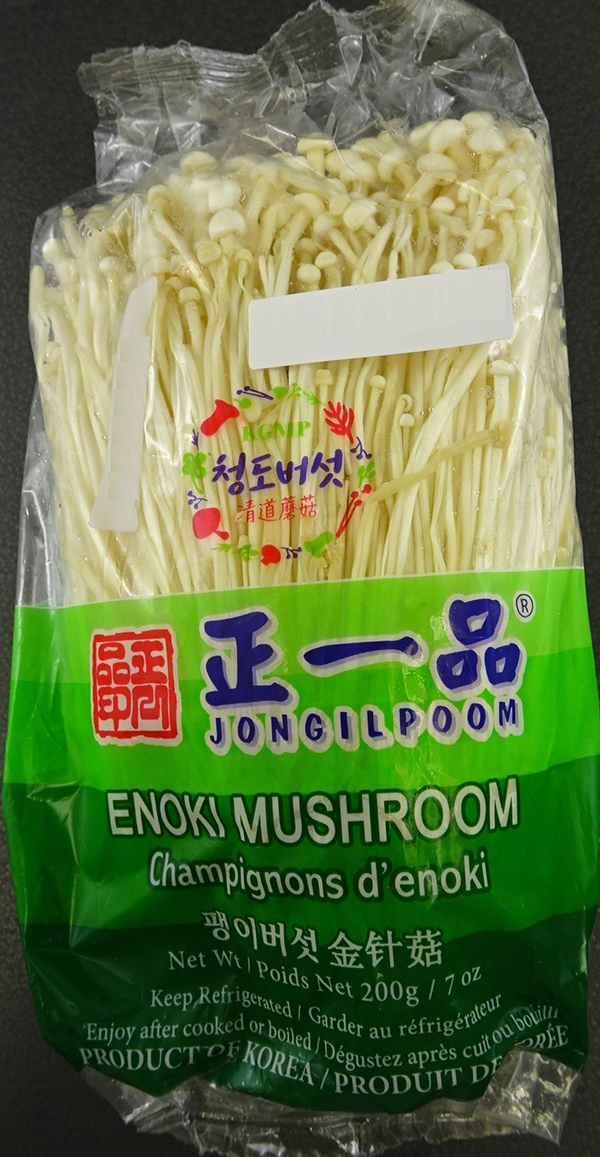
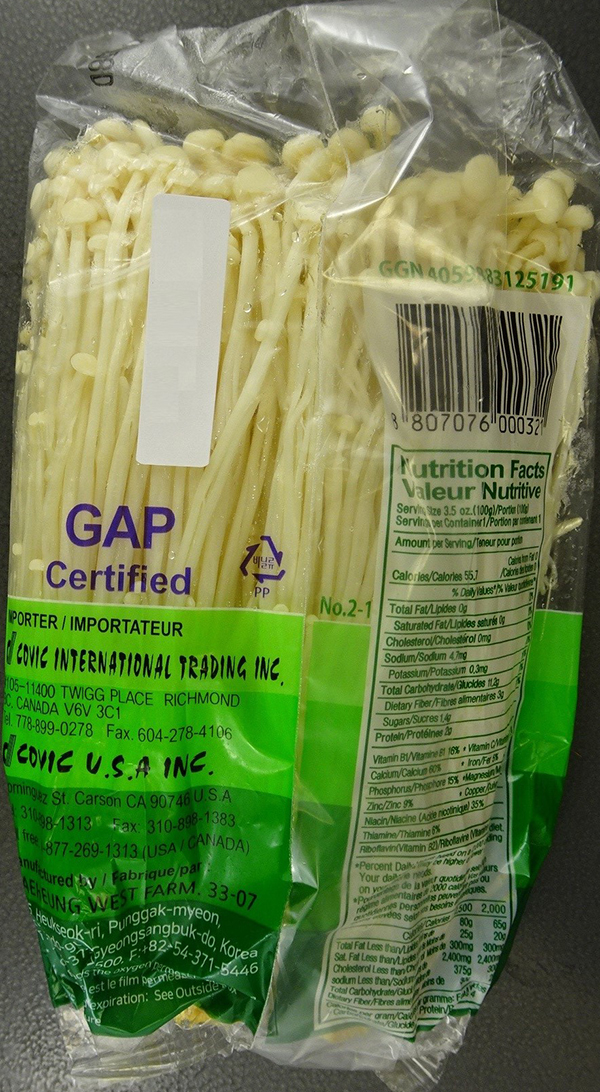
Covic International Trading Inc is recalling Jongilpoom brand Enoki Mushroom from the marketplace due to Listeria monocytogenes. Consumers should not consume the recalled product described below.

Recalled product

Brand Product Size UPC Codes
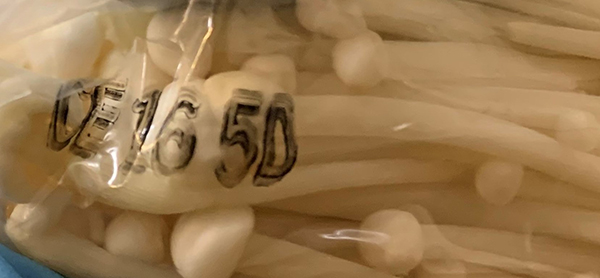
Jongilpoom Enoki Mushroom 200 g 8 807076 000321 CE 165D

What you should do

If you think you became sick from consuming a recalled product, call your doctor.

Check to see if you have the recalled product in your home. Recalled products should be thrown out or returned to the store where they were purchased.

Background

This recall was triggered by CFIA test results. The CFIA is conducting a food safety investigation, which may lead to the recall of other products. If other high-risk products are recalled, the CFIA will notify the public through updated Food Recall Warnings.

The CFIA is verifying that industry is removing the recalled product from the marketplace.

Illnesses

There have been no reported illnesses associated with the consumption of this product.

Product photos

Printer ready version of photos

  • Jongilpoom - Enoki Mushroom - front
  •  

  • Jongilpoom - Enoki Mushroom - back
  •  

  • Jongilpoom - Enoki Mushroom - code

Public enquiries and media

Company information
Covic International Trading Inc.
Telephone: 604-278-2104
Public enquiries
Toll-free: 1-800-442-2342 (Canada and U.S.)
Telephone: 1-613-773-2342 (local or international)
Email: information@inspection.gc.ca
Media relations
Telephone: 613-773-6600
Email: cfia.media.acia@inspection.gc.ca

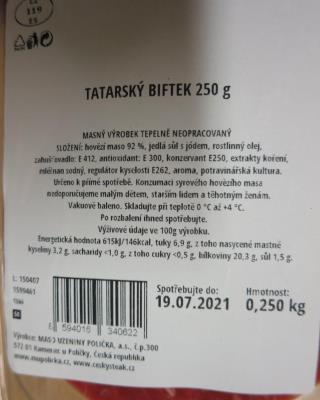
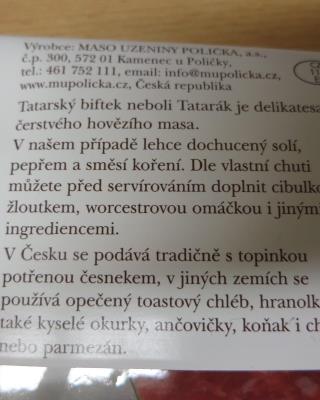
Czech Republic – TATAR STEAK – STEC E.coli

Potravinynapranyri

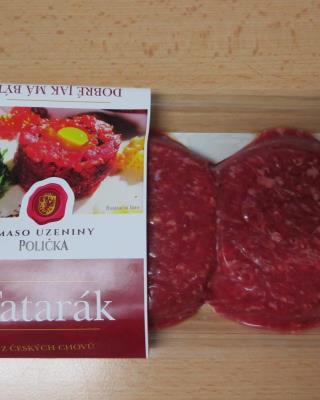
Illustration photo no. 1

Illustration photo no. 3

Illustration photo no. 4

Place of inspection:
Ústí nad Labem – Všebořice ( Všebořická 359/51, 400 10 Ústí nad Labem – Všebořice )
Company ID: 26178541
Unsatisfactory parameter:

Escherichia coli (presence of genes typical of pathogenic E. coli)

The product was found to contain the pathogenic bacterium Escherichia coli  producing shigatoxin.

Among other things, Shiga toxins cause diarrhea and can damage the kidneys.

Food cannot be considered safe.

Lots: L: 150407
Expiration date: 07/19/2021
Packaging: Vacuum packed
Quantity of product in package: 250 g
Producer: MASO UZENINY POLIČKA as, č.p. 300, 572 01 Kamenec u Poličky
Country of origin:  Czechia
Date of sampling: 13. 7. 2021
Reference number: 21-000386-CAFIA-CZ
The sample was found by an official inspection of the State Agricultural and Food Inspection Authority.

Italy – Hof zu Fall – “Natur” cutting cheese – STEC E.coli

Salute

Brand : Hof zu Fall

Denomination : “Natur” cutting cheese

Reason for reporting : Recall due to microbiological risk

Publication date : 14 October 2021

Click to access C_17_PubblicazioneRichiami_1522_azione_itemAzione0_files_itemFiles0_fileAzione.pdf

Research – O148 Shiga toxin-producing Escherichia coli outbreak: microbiological investigation as a useful complement to epidemiological investigation

Core

An outbreak of Shiga toxin-producingEscherichia coli(STEC) O148 infection occurred among weddingattendees in France in June 2002. A retrospective cohort study was performed and ten cases wereidentified, including two adults with haemolytic uraemic syndrome (HUS). The analytical studyrevealed that > 80%of affected individuals had eaten lightly roasted mutton and poultry paˆte ́, but onlythe consumption of paˆte ́tended to be associated with illness (relative risk 3.4; 95%CI 0.8–14.4). Left-overs (cooked mutton and raw offal) and processed foods (paˆte ́) from the same batches as served at theparty were sampled. Human, food and environmental samples were examined for the Shiga toxin (stx)gene and virulence traits by PCR.Stx-positive samples were cultured for STEC. HUS cases were testedfor serum antibodies against 26 major STEC serogroups. An STEC O26 strain (stx1,eae,ehxA) wasisolated from one case with diarrhoea, and an STEC O148 strain (stx2c) from one case of HUS. Serumantibodies against O26 were not detected in either of these patients; antibodies against O148 were nottested. Three STEC strains were isolated from the mutton and the offal (stx2c, O148), and two from thepaˆte ́(stx2c, O-X and O-Y). The isolates from the mutton were indistinguishable from the humanstx2cisolate, whereas the paˆte ́isolates differed. Although four different STEC strains were identified inpatients and foods, the results of molecular subtyping, in conjunction with analysis of food consumptionpatterns, strongly suggested that this outbreak was caused by mutton contaminated with STEC O148.