Category Archives: STEC

One dead and six in hospital after mystery E.coli outbreak in UK

GB News

An E.Coli outbreak in the UK has killed one and hospitalised six others, with health officials left puzzled at the source.

The UK Health Security Agency (UKHSA) is reportedly working with the Food Standards Agency (FSA) to determine what started the outbreak, which is believed to have begun in May.

24 cases of the illness have been reported since May, including 19 in England and 4 in Northern Ireland, according to Food Safety News.

“The outbreak’s source has not yet been identified, but we are working with partners, including the Food Standards Agency, to investigate,” she added.

The strain circulating currently, is the O183, a very rare strain of E.Coli, with only 15 reported cases in the UK since 2016.

Norway – Outbreak of E. coli (EHEC infection)

Matportalen

This outbreak is caused by a different EHEC bacterium than the outbreak reported in June. FHI has started an outbreak investigation together with relevant municipal chief medical officers, the Norwegian Food Safety Authority and the Veterinary Institute. All the infected fell ill in July and none of them have traveled abroad.

The infected are aged < 5 to 45 years, and live in Trøndelag (4), Viken and Vestfold and Telemark. Two of them have developed the serious complication haemolytic uraemic syndrome (HUS). In addition, a further HUS case has been notified where EHEC has been detected, but we are awaiting more analyzes before we can say whether the person is infected with the same strain of bacteria as the other cases. It is not yet known what the source of infection is, but it is common for gastrointestinal bacteria to become infected through food.

– At the present time, we cannot say whether this is a limited outbreak or whether there may be new cases, says Silje Bruland Lavoll, senior physician in the section for infection from food, water and animals at the Norwegian Institute of Public Health. Investigative work can be complicated and take time, and in many cases we are unable to find the source of infection or to clarify whether it is a common source.

– We follow the situation closely and work closely with the municipal health service, the Norwegian Food Safety Authority and the Veterinary Institute, she adds.

– The Norwegian Food Safety Authority assists the Norwegian Institute of Public Health and municipal chief physicians in obtaining information from the sick persons and their relatives. Interviews are conducted about what the people have eaten and what they have been in contact with, says senior advisor Turid Berglund in the biological food safety section of the Norwegian Food Safety Authority.

Preliminary analyzes show that it is the bacterium EHEC O26:H11, which has been detected in all those infected. FHI is now working on further analyzes (whole genome sequencing) to confirm this.

USA – Irrigation water likely link in Utah E. coli Outbreak

Food Poison Journal

According to Utah health official and media, in the last two weeks, eight cases of E. coli (likely a shiga-toxin producing E. coli like E. coli O157:H7) were reported in Utah County residents, with at least five of the subjects hospitalized (likely with hemolytic uremic syndrome – HUS) due to the severity of symptoms.

Currently, all reported cases are residents of Lehi or have close ties to the city, says a statement from the Utah County Health Department.

Epidemiologists are working to identify the source of infection, it says. Preliminary investigation links the likely source of spread to using pressurized irrigation water for drinking and play.

Research – Waterborne Infectious Diseases Associated with Exposure to Tropical Cyclonic Storms, United States, 1996–2018

CDC

Abstract

In the United States, tropical cyclones cause destructive flooding that can lead to adverse health outcomes. Storm-driven flooding contaminates environmental, recreational, and drinking water sources, but few studies have examined effects on specific infections over time. We used 23 years of exposure and case data to assess the effects of tropical cyclones on 6 waterborne diseases in a conditional quasi-Poisson model. We separately defined storm exposure for windspeed, rainfall, and proximity to the storm track. Exposure to storm-related rainfall was associated with a 48% (95% CI 27%–69%) increase in Shiga toxin–producing Escherichia coli infections 1 week after storms and a 42% (95% CI 22%–62%) in increase Legionnaires’ disease 2 weeks after storms. Cryptosporidiosis cases increased 52% (95% CI 42%–62%) during storm weeks but declined over ensuing weeks. Cyclones are a risk to public health that will likely become more serious with climate change and aging water infrastructure systems.

Research – Cheese link in Italian HUS case

Food Safety News

Italian authorities have issued a warning after a young girl developed a serious condition after suffering an E. coli infection.

The Ministry of Health (Ministero della Salute) published a notice to consumers following a case of hemolytic uremic syndrome (HUS) which has affected a child in Trentino. HUS is a severe complication associated with E. coli infections that causes kidney failure.

Local health authorities have taken steps to try and verify the source of infection. They identified a probable link to the consumption of cheese produced in a malga, which is an alpine hut, in Coredo. In late July, local officials said the girl was hospitalized.

A related Rapid Alert System for Food and Feed (RASFF) report shows Shiga toxin-producing E. coli (STEC) O26 was detected in the cheese.

To protect public health, it was advised that anyone who had purchased dairy products from the implicated site, before July 14, should not consume them. Officials also added that raw milk products should not be given to children under 5 years of age or the elderly.

RASFF Alert- STEC E.coli – Bovine Meat

RASFF

STEC (stx+;eae+) in bovine meat from Belgium in France

Canadian Food Safety Agency implements temporary measures to address U.S. romaine lettuce – E.coli O157

Food Safety News

To mitigate the risk associated with E. coli O157:H7 in romaine lettuce from the United States, the Canadian Food Inspection Agency (CFIA) has announced the implementation of temporary Safe Food for Canadians (SFC) license conditions.

The measures will be in effect from Sept. 28 to Dec. 20.

According to the CFIA, this action was taken to address the recurring outbreaks of foodborne illnesses related to E. coli O157:H7 in romaine lettuce imported from the United States. Investigations by U.S. authorities have traced the source of the outbreaks to the California Salinas Valley counties of Santa Cruz, Santa Clara, San Benito, and Monterey.

During the designated period, importers of romaine lettuce and salad mixes containing romaine lettuce from the U.S. must adhere to one of the following requirements:

  • Declare that the product does not originate from the Salinas Valley counties of California mentioned above, or
  • Submit an attestation form and Certificates of Analysis for each shipment, confirming that the romaine lettuce is free from detectable levels of E. coli O157:H7.

UK – FSA CALLS FOR INDUSTRY ASSISTANCE WITH ONGOING INVESTIGATION OF STEC OUTBREAK – O183

BFFF

The FSA have asked us to raise awareness of an ongoing outbreak of Shiga toxin-producing E. coli (STEC) O183 t5.5, they are investigating along with UKHSA and the involvement of all public health authorities across the UK as well as the ROI.

Note: This outbreak may not be linked directly to your sector, but you are encouraged to get in touch with the FSA should you be able to provide any information of interest to this investigation.

Germany – ‘Caciotta – Caciotta’, unwrapped cheese wheels, 400 g – Foodborne Outbreak -STEC E.coli O26

LMW

Alert type: Groceries
Date of first publication:

07/28/2023

Product name:

‘Caciotta – Caciotta’, unwrapped cheese wheels, 400 g

Manufacturer (distributor):

farm in Malga di Coredo, in the province of Trento, Italy

Reason for warning:

foodborne disease outbreak HUS (hemolytic uremic syndrome) caused by Shiga toxin-producing Escherichia coli O26 (STEC)

Packaging Unit: á 400 g, total net weight: 20 kg, 50 units
Durability: not specified
Production date: not specified
Lot identification: 24623 and 17623
Additional Information:

Goods that were sold directly to end consumers before July 14, 2023 are affected. It cannot be ruled out that the product concerned was also bought by tourists.

Do not consume this product. If you experience symptoms such as diarrhoea, vomiting, severe abdominal pain, drowsiness, reduced urine production (anuria) and weakness and lack of energy (asthenia), please contact a doctor.

BVL Email:

poststelle@bvl.bund.de

France – Chopped steak – E.coli O157

Gov france

Identification information of the recalled product

  • Product category Feed
  • Product subcategory Meats
  • Product brand name Without
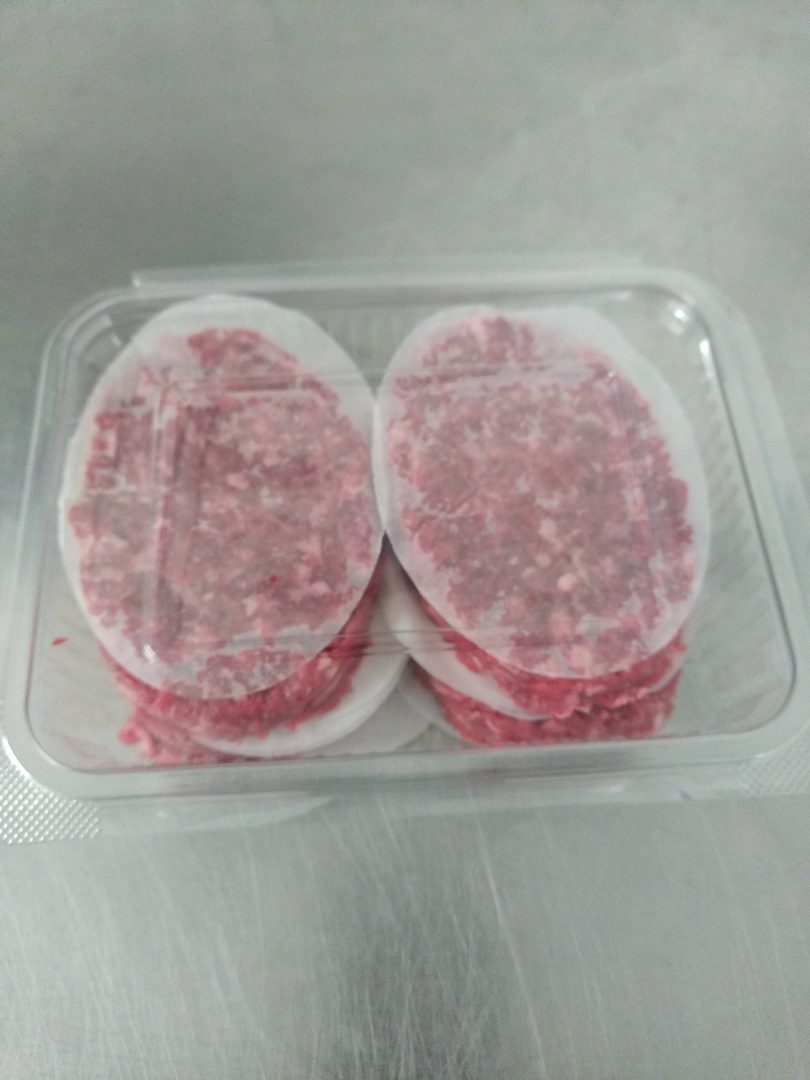
  • Model names or references 4 Ground beef tray 500g
  • Identification of products
    Batch Date
    2307SH101/2307DB403 Use-by date 07/22/2023
  • Products List list_of_products_affected_by_the_recall.pdfAttachment
  • Packaging tray x4 minced steak
  • Marketing start/end date From 07/20/2023 to 07/21/2023
  • Storage temperature Product to be stored in the refrigerator
  • Health mark EN 45.315.112.EC
  • Geographic area of ​​sale Regions: Centre-Val de Loire
  • Distributors EARL DE LA BLOUZE locality La Blouze 58330 JAILLY