Category Archives: STEC

RASFF Alert – STEC E.coli – Chilled Beef

RASFF-Logo

RASFF – shigatoxin-producing Escherichia coli (stx+ eae+ /25g) in chilled beef from Belgium in Belgium

Iceland – 4 STEC infections in Árnessýsla county children

Outbreak News Today

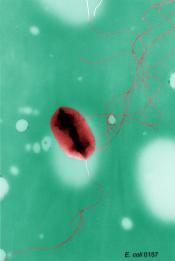
kswfoodworld E.coli O157

Image CDC


Iceland health officials have reported four pediatric Shiga-toxin-producing E. Coli (STEC) cases. Officials say all the children are from the capital of Reykjavik; however, all have probably been infected in Árnessýsla county or, more specifically, in Bláskógabyggð.

The source of the infection is unknown at this time. The Icelandic Food and Veterinary Authority and the South Iceland Health Inspectorate are now working to analyze the origin of the infections and stop further spread.

RASFF Alerts – STEC E.coli – Chilled Beef

RASFF-Logo

RASFF – shigatoxin-producing Escherichia coli (O104:H4 stx1+, stx2+) in chilled beef from Uruguay in Spain

RASFF – shigatoxin-producing Escherichia coli (O26 /25g) in chilled beef (tapa de cuadril) from Uruguay in Spain

USA – 2-year-old boy dies from E Coli infection linked to San Diego County Fair

Outbreak News Today

Petting zoo animals may be the source of an E. coli outbreak linked to the San Diego County Fair.

The County of San Diego Health and Human Services (HHSA) is urging anyone who visited the San Diego County Fair and then began experiencing symptoms of E. coli infection on or after June 8 to contact their healthcare provider⎯“especially if you have diarrhea that lasts for more than 3 days or diarrhea that is accompanied by a fever higher than 102°F, or blood in the stool, or so much vomiting that you cannot keep liquids down and you pass very little urine.”

Four children were infected with E. coli after coming into contact with animals at the San Diego County Fair.  One child died after developing E. coli complications.

The affected children ranged in age from 2 years to 13 years-old.  They each came into contact with animals at the San Diego County Fair between June 8 and June 15.  Their symptoms began between June 10 and June 16. The youngest child, a 2-year-old boy, was hospitalized with E coli complications.  He succumbed to E. coli complications and died on June 24.

Hemolytic Uremic Syndrome (HUS) is a serious complication of E coli infections.  5-10% of people diagnosed with Shiga-toxin-producing E. coli (STEC) develop HUS.  Children are particularly vulnerable to developing HUS.

Information – Lawyer Warns of E. coli Danger at Petting Zoos

Food Poisoning Bulletin 19243

Attorneys Fred Pritzker and Ryan Osterholm are warning about the dangers of E. coli infections from petting zoos. As the weather warms and summer starts, petting zoos are popular attractions for families with young children. Unfortunately, those venues can be and have been the source of serious and even deadly E. coli outbreaks.

USA – Occurrence of Foodborne Agents at Food Service Facilities in the Czech Republic

Journal of Food Protection

ABSTRACT

The aim of this study was to investigate the occurrence of foodborne agents at food service facilities in the Czech Republic. The sampling, performed from April 2016 to November 2017, focused on the microbiological monitoring of the environment at the establishment (EFS; n = 298) and the hands of staff (HFS; n = 159). The analysis targeted the presence of the following bacteria: Escherichia coli (focusing on the presence of Shiga toxigenic E. coli), Bacillus cereus, Staphylococcus aureus, Listeria monocytogenes, Salmonella spp., and Campylobacter spp. A swab method using sterile abrasive sponges was used to detect bacteria in EFS; a glove-juice method was used to monitor microbial contamination on HFS. The presence of E. coliwas confirmed in 11.8% of samples (12.4%, EFS; 10.7%, HFS; P = 0.650). The presence of Shiga toxigenic E. coli was not confirmed in the samples. B. cereus was detected most frequently, in 39.6% of all samples taken (44.6%, EFS; 30.2%, HFS; P= 0.003). S. aureus was detected in 17.9% of samples (17.4%, EFS; 18.9%, HFS; P = 0.703). Of S. aureus isolates, 58.5% were found to be positive for the presence of genes producing staphylococcal enterotoxins (70%, HFS; 52.0%, EFS). L. monocytogenes was detected in only one sample (0.2%; EFS). The presence of Salmonella spp. and Campylobacter spp. was not confirmed. The occurrence of B. cereus, S. aureus, and E. coli was dependent on the season of the year. B. cereus and S. aureus occurred less frequently in the summer months, although E. coli was recorded more frequently. B. cereus, S. aureus,and E. coli were detected in almost half of the tested samples. The relatively high percentage of B. cereus and S. aureusisolates from EFS corresponded with the model in the final European Food Safety Authority reports on the occurrence of foodborne disease outbreaks in the European Union. Managers of food service facilities should focus on reducing the occurrence of B. cereus and S. aureus.

HIGHLIGHTS
  • Contamination of food service facilities in the Czech Republic by foodborne agents was determined.

  • Bacillus cereus, Staphylococcus aureus, and Escherichia coli were detected in almost 50% of samples.

  • The occurrence of B. cereus, S. aureus, and E. coli depended on the season of the year.

  • Regular monitoring of food service facilities for agents of foodborne disease is necessary.

RASFF Alert – STEC E.coli 026- Frozen Meat for Minced Meat –

RASFF-Logo

RASFF – shigatoxin-producing Escherichia coli (stx1+ stx2+ eae+ O26:H11 /25g) in frozen meat for minced meat from Ireland in France

USA -Missouri Department of Health and Senior Services and Grant’s Farm in St. Louis Looking into Recent Illnesses Among Visitors – STEC E.coli

DHSS 19243

JEFFERSON CITY, MO — The Missouri Department of Health and Senior Services (DHSS), in collaboration with the Missouri Department of Agriculture (MDA), the United States Department of Agriculture (USDA) and local health agencies in the St. Louis metro area, is investigating five Shiga toxin-producing E. coli (STEC) cases that have visited Grant’s Farm since late May 2019. The investigation is ongoing and is focused on determining the specific risk that may have led to the illnesses.

MDA and DHSS have provided preliminary recommendations to Grant’s Farm to help remind patrons of the importance of handwashing after direct contact with animals. Grant’s Farm also is actively participating in the investigation by allowing animal specimens to be collected by investigators. This is in addition to routine visits from state inspectors to help supervise the health of the animals at the park.

USA – Multistate Outbreak of Gastrointestinal Illnesses Linked to Oysters Imported from Mexico is Over

CDC

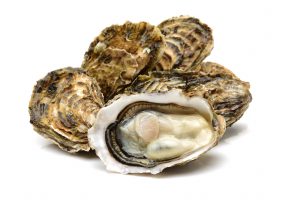
Photo of oysters.

Image CDC

This outbreak appears to be over. Consumers, restaurants, and retailers should always handle and cook oysters properly. Get CDC’s tips for preventing foodborne illness from oysters and other shellfish.

Final Outbreak Information
Illustration of a megaphone.
  • As of June 21, 2019, this outbreak appears to be over.
  • Sixteen ill people were reported from five states.
    • Illnesses started on dates ranging from December 16, 2018, through April 17, 2019.
    • Two people were hospitalized. No deaths were reported.
  • Laboratory testing on samples from patients identified multiple pathogens causing infections. Some people were infected with more than one pathogen.
  • Case counts by pathogen or illness:
    • Four cases of Shigella flexneri infection
    • Two cases of Vibrio parahaemolyticus infection
    • One case of Vibrio parahaemolyticus and Shiga toxin-producing Escherichia coli (STEC) non-O157 coinfection
    • One case of Vibrio parahaemolyticus and Shigella flexneri coinfection
    • One case of Shigella flexneri and Campylobacter lari coinfection
    • One case of Vibrio albensis infection
    • One case of norovirus genogroup 1 infection
    • One case of infection with Vibrio of unknown species
    • Four cases of illness without a pathogen identified
  • Epidemiologic and traceback evidence indicated that raw oysters harvested from Estero El Cardon in Baja California Sur, Mexico, were the likely source of this outbreak.
  • On May 6, 2019, one U.S. distributor of oysters harvested from Estero El Cardon issued a voluntary recallexternal icon.
  • At the request of Mexico’s public health authorities, all raw oysters distributed from Estero El Cardon from the last week of April 2019 through the first week of May 2019 were recalled pdf icon[PDF – 474 KB]external icon.


Research – Occurrence and Levels of Salmonella, Enterohemorrhagic Escherichia coli, and Listeria in Raw Wheat

Journal of Food Protection

ABSTRACT

Wheat flour has been implicated in several outbreaks of foodborne illness in recent years, yet little information is available regarding microbial pathogens in wheat and wheat flour. Information about microbial pathogens in wheat is needed to develop effective methods to prevent foodborne illnesses caused by wheat products. From 2012 to 2014, we conducted a baseline study to determine the prevalence and levels of pathogens in wheat samples taken before milling. A total of 5,176 wheat samples were tested for enterohemorrhagic Escherichia coli (EHEC), Salmonella spp., Listeria spp., and L. monocytogenes. Positive samples were assayed for most probable numbers (MPNs), and isolates were fingerprinted by pulsed-field gel electrophoresis (PFGE). The rate of detection of each pathogen tested was as follows: Salmonella was in 1.23% of the samples (average level of 0.110 MPN/g), EHECs occurred in 0.44% of the samples (0.039 MPN/g), and Listeria spp. occurred in 0.08% of samples (0.020 MPN/g), but L. monocytogenes was not detected. The PFGE assessment found a high diversity for all organisms. All EHEC PFGE patterns (22 of 22) were unique, and 39 of 47 Salmonella patterns (83%) were unique. These results indicate a diverse background of naturally occurring organisms. These findings suggest that the microbial contamination is coming from diverse sources and provide no evidence in support of a specific pathogen load. Altogether, our surveillance study shows that contamination of wheat with pathogens is clearly evident and poses a foodborne illness risk.

HIGHLIGHTS
  • Prevalence of Salmonella and E. coli in raw wheat emphasizes the need to cook wheat products.

  • 3,891 grain samples were tested for E. coli and Salmonella; 1,285 were tested for Listeria.

  • Of wheat berries sampled, 0.44% were positive for E. coli and 1.23% were positive for Salmonella.

  • Salmonella diversity was high, indicating various animal sources that are difficult to prevent.

  • Cooking wheat products is the best preventative measure against foodborne illness from wheat.