Category Archives: STEC E.coli

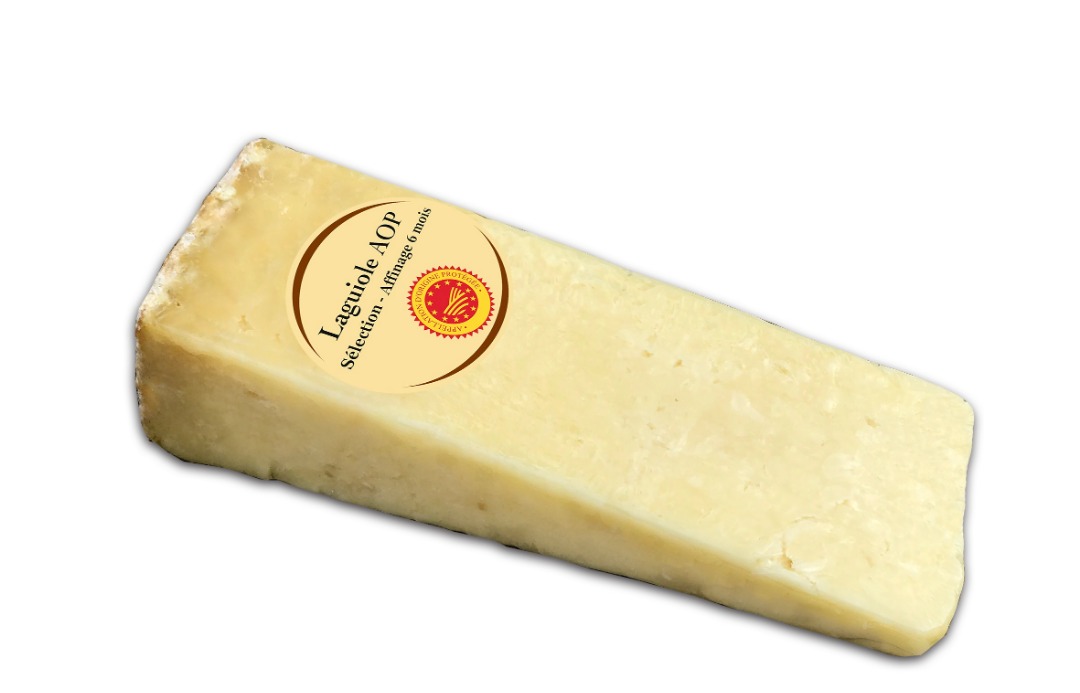
France – Laguiole Selection Aged 6 months lots 21229 and 21248 – STEC E.coli O26:H11

Gov france

Identification information of the recalled product

  • Product category Food
  • Product subcategory Milk and dairy products
  • Product brand name Unbranded
  • Model names or references Laguiole 6 months fresh packed
  • Identification of products
    GTIN Batch Date
    3321271194579 21229123 Use-by date 04/23/2022
    3321271194579 21248134 Use-by date 04/26/2022
    3321271194579 21229123 Use-by date 04/18/2022
  • Packaging Portions fresh packaged 275g approx
  • Marketing start/end date From 03/24/2022 to 04/26/2022
  • Storage temperature Product to be stored in the refrigerator
  • Health mark FR 63 113 081 EC
  • Geographic area of ​​sale Whole France
  • Distributors Intermarché
  • List of points of sale Press release.pdf

Practical information regarding the recall

  • Reason for recall Presence of STEC strain O26:H11
  • Risks incurred by the consumer Toxigenic Shiga Escherichia coli (STEC)

France -Laguiole 6 months, lot 21229 – STEC E.coli O26:H11

Gov france


Identification information of the recalled product

  • Product category Food
  • Product subcategory Milk and dairy products
  • Product brand name Unbranded
  • Model names or references Laguiole 6 months, fresh packed
  • Identification of products
    GTIN Batch Date
    3321271197556 21229 Use-by date 04/17/2022
    3321271196351 21229 Use-by date 04/21/2022
    3321271195675 21229063 Use-by date 04/18/2022
    3321271195583 21229 Use-by date 04/17/2022
  • Packaging Portions fresh packaged 200g approx
  • Marketing start/end date From 03/03/2022 to 21/04/2022
  • Storage temperature Product to be stored in the refrigerator
  • Health markFR12119054CE
  • Geographic area of ​​sale Whole France
  • Distributors Auchan, Casino, Leclerc Socamil, Solignac garden center (31)
  • List of points of sale Press release.pdf

Practical information regarding the recall

  • Reason for recall Presence of STEC strain O26:H11
  • Risks incurred by the consumer Toxigenic Shiga Escherichia coli (STEC)

France – Investigation of grouped cases of haemolytic-uremic syndrome (HUS) and shiga-toxin-producing E. coli (STEC) infections linked to the consumption of Buitoni® brand Fraîch’Up pizzas. Update on April 25, 2022.

Sante Publique

Update on April 25, 2022 on the grouped cases of haemolytic-uremic syndrome and E. coli infections producing shiga-toxin and the consumption of frozen pizzas from the Fraîch’Up range of the Buitoni® brand.

Public Health France and the National Reference Center (CNR) E. coli and its associated laboratory (Institut Pasteur, Paris, and Microbiology Laboratory of the Robert Debré Hospital, Paris), in conjunction with the Directorate General for Food, the Directorate General for Competition, Consumer Affairs and Fraud Prevention, and in coordination with the Directorate General for Health, have been investigating since 02/10/2022 an increase in the number of cases of haemolytic uremic syndrome (HUS) pediatric infections and Shiga toxin-producing Escherichia coli (STEC) infections.

The epidemiological, microbiological and traceability investigations carried out since that date have confirmed a link between the occurrence of these grouped cases and the consumption of frozen pizzas from the Buitoni brand Fraîch’Up range contaminated with STEC bacteria. On 03/18/2022, the company proceeded with the withdrawal-recall of all the pizzas in the Fraîch’Up range, marketed since June 2021 and the authorities asked the people who hold these pizzas not to consume them and to destroy them.

The total number of HUS cases linked to the consumption of these pizzas seems to have stabilized since the withdrawal-recall.

Case of SHU in France: update on 04/25/22

As of 04/25/2022, 55 confirmed cases have been identified, of which 53 are linked to STEC O26 strains, and 2 to STEC O103 strains. 

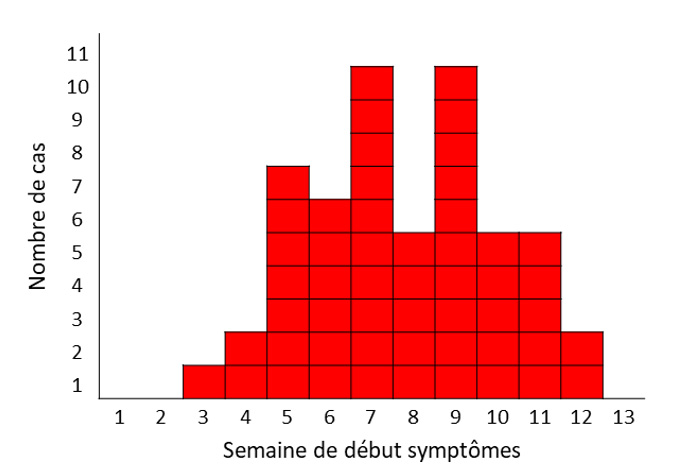
These 55 cases occurred in 54 children and 1 adult, who presented symptoms between 18/01/2022 (week 3) and 25/03/2022 (week 12) (Figure 1). The epidemic peak is in week 7 (14/02 to 20/02) and week 9 (28/02 to 06/03), with 10 cases each of these weeks.
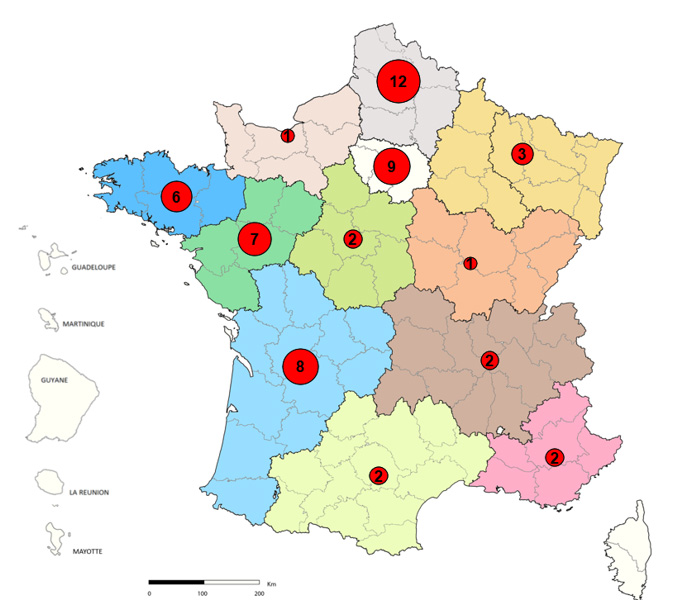
These 55 cases occurred in 12 regions of metropolitan France: Hauts-de-France (12 cases), Ile-de-France (9 cases), New Aquitaine (8 cases), Pays de la Loire (7 cases), Brittany ( 6 cases), Grand Est (3 cases), Auvergne-Rhône-Alpes (2 cases), Occitanie (2 cases), Provence-Alpes-Côte d’Azur (2 cases), Center Val-de-Loire (2 cases) , Bourgogne Franche-Comté (1 case) and Normandy (1 case) (figure 2).

The 54 sick children are aged from 1 to 17 years with a median age of 7 years; 24 (44%) are female; 47 (87%) presented with HUS, 7 (13%) with STEC gastroenteritis. Two children died. The adult did not present with HUS.

Figure 1 – Epidemic curve: number of confirmed cases of HUS and STEC infections, by week of onset of symptoms – Metropolitan France, weeks 3 to 12, 2022 (N=53: week of onset of symptoms not specified for 2 cases )
Figure 1 - Epidemic curve: number of confirmed cases of HUS and STEC infections, by week of onset of symptoms - Metropolitan France, weeks 3 to 12, 2022 (N=53: week of onset of symptoms not specified for 2 cases )
Figure 2 – Geographical distribution of confirmed cases of HUS and STEC infections (N=55) linked to the consumption of Buitoni® brand Fraîch’Up pizzas, by region of residence in metropolitan France, weeks 3 to 12, 2022
Figure 2 - Geographical distribution of confirmed cases of HUS and STEC infections (N=55) linked to the consumption of Buitoni® brand Fraîch'Up pizzas, by region of residence in metropolitan France, weeks 3 to 12, 2022

RASFF Alert – STEC E.coli – Bovine Carcass

RASFF

STEC (stx+;eae+) in bovine carcass from Belgium in France

USA – FSIS Issues Public Health Alert for Ground Beef Products Due to Possible E. coli O26 Contamination

FSIS USDA

WASHINGTON April 27, 2022, – The U.S. Department of Agriculture’s Food Safety and Inspection Service (FSIS) is issuing a public health alert due to concerns that specific ground beef products may be adulterated with E. coli O26. A recall was not requested because the products are no longer available for purchase.

The ground beef items for this public health alert were produced on December 16 and 17, 2021. The following products subject to the public health alert are [view labels]:

  • 1-lb. foam trays containing “ALL NATURAL LAURA’S LEAN BEEF 92% LEAN 8% FAT GROUND BEEF.” The product is labeled with 350/(timestamp)/Est.31805/002, with the timestamp ranging from 0602 to 1721.
  • 1-lb. foam trays containing “Kroger GROUND BEEF CARNE MOLIDA 96% LEAN 4% FAT.” The product is labeled with 350/(timestamp)/Est.31805/002, with the timestamp ranging from 0602 to 1721.
  • 1-lb. foam trays containing “Kroger GROUND BEEF CARNE MOLIDA 85% LEAN 15% FAT.” The product is labeled with 350/(timestamp)/Est.31805/002, with the timestamp ranging from 0602 to 1721.
  • 1.3-lb. foam trays containing “PRIVATE SELECTION ANGUS BEEF 90% LEAN 10% FAT GROUND SIRLOIN.” The product is labeled with 350/(timestamp)/Est.31805/002, with the timestamp ranging from 0602 to 1721. Additional product is labeled with 351/(timestamp)/Est. 31805/003, with the timestamp ranging from 1549 to 1651.
  • 1-lb. foam trays containing “Kroger GROUND BEEF CARNE MOLIDA 93% LEAN 7% FAT.” The product is labeled with 350/(timestamp)/Est.31805/002, with the timestamp ranging from 0602 to 1721.
  • 1-lb. foam trays containing “Kroger GROUND BEEF CARNE MOLIDA 80% LEAN 20% FAT.” The product is labeled with 350/(timestamp)/Est.31805/002, with the timestamp ranging from 0602 to 1721.

The ground beef products were distributed to warehouses in Oregon and Washington and sold at retail locations.

The problem was discovered after a consumer submitted a retail package of ground beef produced by Empire Packing bearing a use or freeze by date of “December 24, 2021” to a third-party laboratory for microbiological analysis. The consumer reported previously becoming ill but did not get tested for E coli.  The third-party laboratory confirmed the ground beef sample was positive for E. coli O26.

Anyone concerned about an injury or illness should contact a healthcare provider.

Many clinical laboratories do not test for non-O157 STEC, such as O26 because it is harder to identify than STEC O157:H7. People can become ill from STECs 2–8 days (average of 3–4 days) after consuming the organism.

Most people infected with STEC O26 develop diarrhea (often bloody) and vomiting. Some illnesses last longer and can be more severe. Infection is usually diagnosed by testing of a stool sample. Vigorous rehydration and other supportive care is the usual treatment; antibiotic treatment is generally not recommended. Most people recover within a week, but, rarely, some develop a more severe infection. Hemolytic uremic syndrome (HUS), a type of kidney failure, is uncommon with STEC O26 infection. HUS can occur in people of any age but is most common in children under 5 years old, older adults and persons with weakened immune systems. It is marked by easy bruising, pallor and decreased urine output. Persons who experience these symptoms should seek emergency medical care immediately

FSIS is concerned that some product may be in consumers’ freezers. Consumers who have purchased these products are urged not to consume them. These products should be thrown away or returned to the place of purchase.

FSIS advises all consumers to safely prepare their raw meat products, including fresh and frozen, and only consume ground beef that has been cooked to a temperature of 160 F. The only way to confirm that ground beef is cooked to a temperature high enough to kill harmful bacteria is to use a food thermometer that measures internal temperature, https://www.fsis.usda.gov/safetempchart.

Media and consumers with questions regarding the public health alert can contact Debbie Robinson, Vice President of Customer Service, Empire Packing, at drobinson@empirepk.com.

Consumers with food safety questions can call the toll-free USDA Meat and Poultry Hotline at 888-MPHotline (888-674-6854) or live chat via Ask USDA from 10 a.m. to 6 p.m. (Eastern Time) Monday through Friday. Consumers can also browse food safety messages at Ask USDA or send a question via email to MPHotline@usda.gov. For consumers that need to report a problem with a meat, poultry, or egg product, the online Electronic Consumer Complaint Monitoring System can be accessed 24 hours a day at https://foodcomplaint.fsis.usda.gov/eCCF/.

Product Images

Company Information

ESTABLISHMENT ID
PROCESSING CATEGORY

Raw – Non Intact

Company Contact Information

COMPANY MEDIA CONTACT
Empire Packing
Debbie Robinson, Vice President of Customer Service

FSIS Contact Information

MEDIA CONTACT
Congressional and Public Affairs
Cody Kahlig
(202)720-9113

France – Fresh packaged Laguiole – STEC E.coli

Gov france

Identification information of the recalled product

  • Product category Food
  • Product subcategory Milk and dairy products
  • Product brand name Unbranded
  • Model names or references Fresh packaged Laguiole
  • Identification of products
    GTIN Batch Date
    3760038279638 21229113 Use-by date 08/04/2022
    3760038279638 21229123 Use-by date 04/15/2022
    3573230004300 21229134 Use-by date 04/26/2022
  • Packaging portions fresh packed 250g
  • Marketing start/end dateFrom 03/18/2022 to 04/27/2022
  • Storage temperature Product to be stored in the refrigerator
  • Health markFR.63 113 081 EC
  • Geographic area of ​​sale Whole France
  • Distributors Carrefour U express St Saturnin (via Services Included)

Practical information regarding the recall

  • Reason for recall Receipt of an analysis made by a customer on Laguiole lot 21229: non-compliant result detection of STEC strain O26:H11
  • Risks incurred by the consumer Toxigenic Shiga Escherichia coli (STEC)

Research – Shiga toxin-producing Escherichia coli (STEC) data: 2019

UKSHA

Main points for 2019

The main points of the 2019 report are:

1. A total of 539 confirmed cases of Shiga toxin-producing Echerichia coli (STEC) O157 were reported in England and Wales in 2019.

2. The lowest incidence of STEC O157 was in the East Midlands region (0.56 per 100,000 population) and the highest in the Yorkshire and Humber region (1.51 per 100,000 population).

3. Children aged 1 to 4 years had the highest incidence of infection (3.28 per 100,000 population, CI 95% 2.63–4.04).

4. Nearly one-third of confirmed STEC O157 cases in England were hospitalised and 3% were reported to have developed haemolytic ureamic syndrome (HUS).

5. In England and Wales, detection of non-O157 STEC increased in line with the growing number of NHS labs implementing gastrointestinal (GI) diagnostics using polymerase chain reaction (PCR); in 2019, 768 culture-positive non-O157 STEC cases (655 in England, 113 in Wales) were reported.

6. A further 347 specimens in England and 66 in Wales were positive for Shiga toxins (stx) genes on PCR at the Gastrointestinal Bacteria Reference Unit (GBRU) but an organism was not cultured.

7. The most commonly isolated non-O157 STEC serogroup was STEC O26 (England: n=109/655, 17% and Wales: n=28/113, 25%).

8. Five outbreaks of STEC involving 65 cases in England were investigated in 2019.

Cases of STEC in England and Wales in 2019

In 2019, 1,720 confirmed cases of STEC were reported in England and Wales; these comprised 539 culture-confirmed cases of STEC serogroup O157 (515 cases in England and 24 in Wales) and 768 cases (655 in England, 113 in Wales) where a serogroup other than O157 was isolated (non-O157). For a further 413 cases, samples were confirmed as STEC by testing positive by PCR for stx genes, but STEC was not cultured (347 in England, 66 in Wales).

Five confirmed cases were infected with multiple serogroups:

  • O157 and O26
  • O26 and O103
  • O76 and O113
  • O91 and O128ab
  • O146 and O91

There were 13 probable cases with serological evidence of STEC infection, with antibodies detected to O157 lipopolysaccharides in 11 cases (England: 10, Wales: 1), for O111 lipopolysaccharides in one case, and for O26 lipopolysaccharides in another case.

The crude incidence rate of confirmed STEC O157 in England and Wales was 0.91 per 100,000 cases (95% CI 0.83–0.99), continuing the downward trend observed since 2015 (Figure 1). It is the lowest number of cases reported annually since 1996, when testing began in England for STEC O157 on all faecal specimens from patients with suspected gastrointestinal infection (7).

Non-O157 STEC cases in England and Wales
Historically, cases of non-O157 STEC have been under ascertained, with 89 cases of STEC non-O157 reported between 2009 and 2013, prior to PCR being implemented.

Following the increase in recent years in frontline laboratories using PCR, there has been a significant increase in the detection of non-O157 STEC in England. It is not possible to estimate a denominator for incidence calculations for non-O157 STEC because details of contract arrangements for referral of samples from primary care and catchment areas of each diagnostic laboratory using PCR are not known.

In 2019, of 5,760 samples received at GBRU for STEC testing, 1,002 non-O157 STEC cases were confirmed in England. Of the 1,002 non-O157 cases, 655 culture positive cases of 72 different serogroups were confirmed. For 21 isolates, a serotype could not be identified as the genes encoding the somatic O antigen did not match any known sequence in the database. Specimens for a further 347 cases in England were positive for stx genes on PCR at GBRU but an organism was not cultured (PCR positive-culture negative).

In Wales, 113 non-O157 cases of 40 different serotypes were confirmed and a further 66 were PCR positive-culture negative. The most common non-O157 serogroups isolated in 2019 were O26 (28/113, 25%), O146 (15/113, 13%), O128ab (10/113, 9%) and O91 (8/113, 7%) followed by O111 (4/113, 4%), O113 (4/113, 4%) and O156 (4/113, 4%).

USA -Lakeside Refrigerated Services Recalls Ground Beef Products Due to Possible E. coli O103 Contamination

FSIS USDA

WASHINGTON, April 25, 2022 – Lakeside Refrigerated Services, a Swedesboro, N.J. establishment, is recalling approximately 120,872 pounds of ground beef products that may be contaminated with E. coli O103, the U.S. Department of Agriculture’s Food Safety and Inspection Service (FSIS) announced today.

The ground beef products were produced from February 1, 2022, through April 8, 2022. The complete list of products and product codes for the beef products that are subject to recall can be found here. Labels for the ground beef products can be found here.

The products subject to recall bear establishment number “EST. 46841” inside the USDA mark of inspection. These items were shipped to retail locations nationwide.

The problem was discovered during routine FSIS testing of imported products. There have been no confirmed reports of illness or adverse reactions due to consumption of these products.

Many clinical laboratories do not test for non-O157 Shiga toxin-producing E. coli (STEC) such as O103 because it is harder to identify than STEC O157:H7. People can become ill from STECs 2–8 days (average of 3–4 days) after consuming the organism.

Most people infected with STEC O103 develop diarrhea (often bloody) and vomiting. Some illnesses last longer and can be more severe. Infection is usually diagnosed by testing of a stool sample. Vigorous rehydration and other supportive care is the usual treatment; antibiotic treatment is generally not recommended. Most people recover within a week, but, rarely, some develop a more severe infection. Hemolytic uremic syndrome (HUS), a type of kidney failure, is uncommon with STEC O103 infection. HUS can occur in people of any age but is most common in children under 5 years old, older adults and persons with weakened immune systems. It is marked by easy bruising, pallor and decreased urine output. Persons who experience these symptoms should seek emergency medical care immediately.

FSIS is concerned that some products may be in consumers’ refrigerators or freezers.  Consumers who have purchased these products are urged not to consume them. These products should be thrown away or returned to the place of purchase.

FSIS routinely conducts recall effectiveness checks to verify recalling firms notify their customers of the recall and that steps are taken to make certain that the product is no longer available to consumers. When available, the retail distribution list(s) will be posted on the FSIS website at www.fsis.usda.gov/recalls.

Media and consumers with questions regarding the recall can contact Lakeside Refrigerated Services at 800-493-9042 or customercare@lakesiderefrigerated.com.

Consumers with food safety questions can call the toll-free USDA Meat and Poultry Hotline at 888-MPHotline (888-674-6854) or live chat via Ask USDA from 10 a.m. to 6 p.m. (Eastern Time) Monday through Friday. Consumers can also browse food safety messages at Ask USDA or send a question via email to MPHotline@usda.gov. For consumers that need to report a problem with a meat, poultry, or egg product, the online Electronic Consumer Complaint Monitoring System can be accessed 24 hours a day at https://foodcomplaint.fsis.usda.gov/eCCF/.

Click to access 011-2022-labels_0.pdf

USA – Alabama warms of E. coli and Rotavirus cases in children

Food Poison Journal

The Alabama Department of Public Health (ADPH) is investigating four cases of E. coli O157:H7 and two cases of Rotavirus in younger children in Northeastern Alabama. ADPH regularly investigates clusters and outbreaks of communicable diseases as required by Notifiable Disease Rules in Alabama.

In 2021, ADPH investigated 113 cases of E. coli, shiga toxin-producing illness (includes O157:H7). People of any age can become infected with this germ, but very young children and the elderly are more likely to develop severe illness and kidney problems than others.

Research – Fall Seasonal Effects Connected to E. coli Outbreaks in Bagged Romaine

USDA

Agricultural Research Service scientists have begun to uncover details underlying a pattern of seasonal E. coli O157:H7 outbreaks linked to bagged romaine lettuce.

That E. coli O157:H7 infection outbreaks connected to romaine are more frequently associated with lettuce commercially grown and harvested at the end of the growing seasons in California and Arizona has been recognized for several years. Although contamination of lettuce products is rare, between 1998 and 2019, 36 outbreaks that traced back to lettuce were recorded by the Centers for Disease Control and Prevention. Most of these outbreaks involved romaine lettuce harvested in the fall on the California Central Coast such as in Salinas, and in late winter in Southern California and Arizona. These two states are the major lettuce growing areas in the United States with farm production valued at nearly $2.7 billion in 2021.

“To begin unravelling the causes of these seasonal outbreaks, our research team looked at various factors to identify conditions that may increase E. coli survival on fresh-cut lettuce that we grew in Salinas, and processed and cold-stored in modified atmosphere packaging as is done commercially,” said ARS microbiologist Maria Brandl, with the Produce Safety and Microbiology Research Unit of the ARS Western Regional Research Center in Albany, California, and leader of the study.

One of the most significant findings of this study is that E. coli survived on average 5.6 times better in cold-stored packaged romaine harvested in the fall than on the same varieties harvested in late spring.

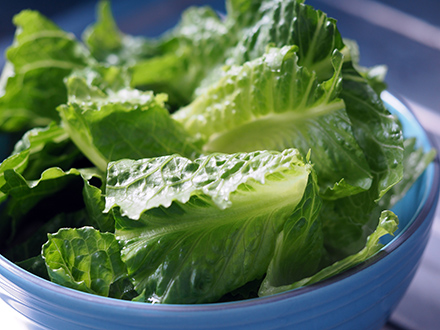
Romaine lettuce

ARS scientists have begun to unravel details that may underly a pattern of fall E. coli O157:H7 outbreaks linked to bagged romaine lettuce. (Photo courtesy of Getty Images)

“We also found that among romaine varieties with longer and shorter shelf life in this study, the deterioration rate of the variety with long shelf life was significantly greater when harvested in the fall than in spring. I have observed this in previous studies as well but the significance to E. coli on lettuce had not been tested. Here we showed that greater deterioration in the fall lettuce was associated with better pathogen survival,” explained study co-author ARS geneticist Ivan Simko, with the Crop Improvement and Protection Research Unit in Salinas, California.

In addition, the research team, which included biologist Susan Leonard and others at the U.S. Food and Drug Administration, demonstrated that the bacterial community present on bagged romaine differed by season, lettuce deterioration state, and whether survival of E. coli on the lettuce was high or low. This suggests a potential for using the microbiome as an indicator of the microbial quality of fresh-cut bagged lettuce.

The researchers were a little surprised to find such differences in E. coli survival in fall harvested-lettuces compared to spring-harvested ones because many current hypotheses about the seasonality of outbreaks linked to lettuce focus on differences in the prevalence of the E. coli pathogen in the environment.

“While prevalence may also be involved, our results strongly indicate that fall-harvested romaine and the microbe communities it harbors have intrinsic characteristics that make them a better place for E. coli to survive in fresh-cut product. These are the next areas we want to work on. For example, is this something we could try to manipulate in the long run through plant physiology and breeding, and microbiome engineering? And would this trend also be observed for E. coli survival in the field? Our observations definitely open an entire new branch of inquiry about outbreak seasonality,” Brandl said.