Category Archives: STEC E.coli

RASFF Alert – STEC E.coli- Minced Bovine Meat

RASFF

STEC (stx+;eae+) in minced bovine meat from Belgium in Poland

France – 5% FRESH PURE BEEF GROUND STEAKS – STEC E.coli O103

Gov france

  • Product category Food
  • Product subcategory Meats
  • Product brand name CARREFOUR The Market
  • Model names or references 5% FRESH PURE BEEF GROUND STEAKS
  • Identification of products
    GTIN Batch Date
    3245413750648 71502305 Use-by date 08/08/2023
  • Packaging 6 X 100g
  • Marketing start/end date From 01/08/2023 to 08/08/2023
  • Storage temperature Product to be stored in the refrigerator
  • Health mark FR 49 099 002 EC
  • Geographic area of ​​sale Departments: CALVADOS (14), EURE (27), INDRE-ET-LOIRE (37), ORNE (61), SARTHE (72), SEINE-MARITIME (76)
  • Distributors Only 8 Carrefour Market stores concerned (see attached document)
  • List of points of sale List_of_stores_involved_Grind_steaks.pdf

France – Fresh minced steaks 5% fat – STEC E.coli O103

Gov france

Identification information of the recalled product

  • Product category Food
  • Product subcategory Meats
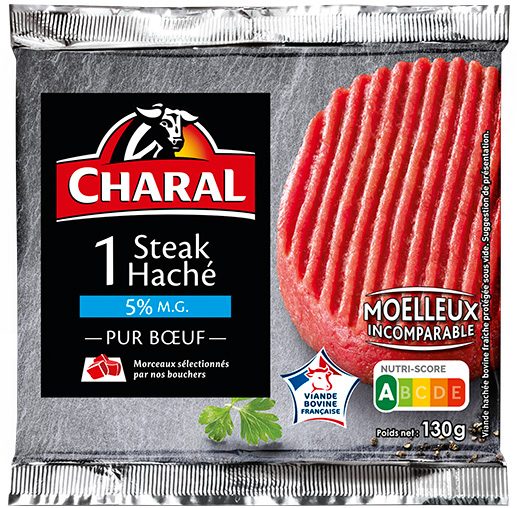
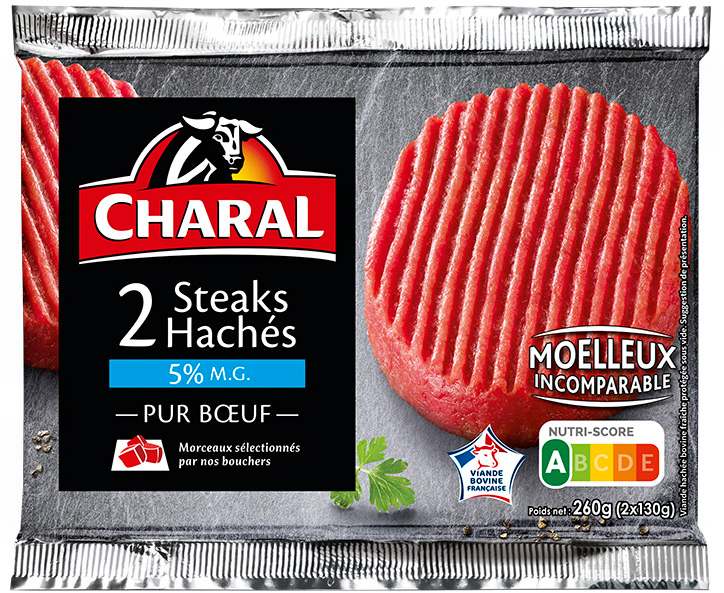
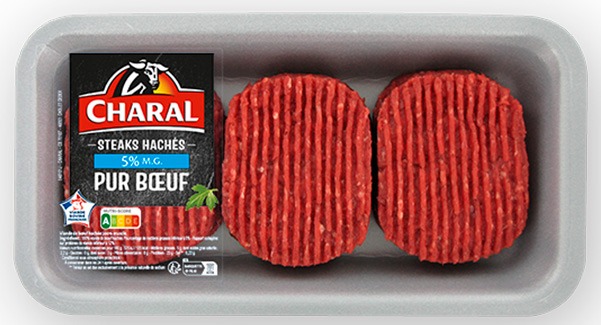
  • Product brand name Charal
  • Model names or references Ground beef weekly pack 5% 130g X 1 Ground beef weekly pack 5% 130g X 2 Ground beef under atm 5% 100g X 6
  • Identification of products
    GTIN Batch Date
    3181232220071 71502305 Use-by date 08/14/2023
    3181232220286 71502305 Use-by date 08/14/2023
    3181232120128 71502305 Use-by date 08/09/2023
    3181232120128 71502305 Use-by date 08/08/2023
  • Marketing start/end date From 02/08/2023 to 14/08/2023
  • Storage temperature Product to be stored in the refrigerator
  • Health mark FR.49.099.002 EC
  • Geographic area of ​​sale Whole France
  • Distributors AUCHAN, CARREFOUR, CASINO, DIAPAR, FRANCAP, FRANPRIX LEADER PRICE, INTERMARCHE, LECLERC, MATCH, MONOPRIX, SIMPLY MARKET, SYSTEM U, SEGUREL, ANTONA DISTRIBUTION FEES

Spain sees E. coli and Listeria infections rise in 2022

Food Safety News

Spain recorded an increase in E. coli and Listeria infections in 2022, according to recently released figures.

In 2022, 633 Shiga toxin-producing E. coli (STEC) infections were reported, as well as eight imported cases. This includes 620 confirmed and 13 probable cases. The number rose from 426 cases in 2021.

The highest incidences in 2022 were observed in children younger than 5 years of age, being higher in girls than in boys, according to data from the National Epidemiological Surveillance Network (RENAVE).

A total of 134 hospitalizations were reported and six people developed hemolytic uremic syndrome (HUS). HUS is a severe complication associated with E. coli infections that causes kidney failure. Four of these were younger than the age of 3, one was 10 years old, and the other was an 84-year-old adult.

Three deaths were recorded: one child younger than 3 years old who had HUS, and two adults aged 65 and 93.

For imported cases, two were younger than 10 years of age, and the rest were aged between 22 and 60.

Information on serogroup causing infection was available in 80 cases of which 67 corresponded to O157. One was O107, another was O128 and 11 were recorded as non-O157.

USA – CDC isolates specific strain of E. coli that is of great concern O157

Food Safety News

The Centers for Disease Control and Prevention has identified a strain of E. coli bacteria that it considers persistent and causing illnesses over a long period.

An article in the September issue of the publication Emerging Infectious Diseases describes a strain of E. coli O157:H7 that caused a large outbreak in late 2019. The outbreak included 167 patients and hospitalized 85 people from 27 states. The outbreak was associated with consuming romaine lettuce from Salinas Valley, CA.

“Researchers at CDC sought to characterize E. coli from this outbreak and other closely related strains. This strain is estimated to have emerged in late 2015, causing multiple outbreaks from 2016-2019,” according to the article.

“An additional outbreak associated with this strain was detected in late 2020 after the conclusion of this study in which a reported 40 infections occurred in 19 states; 20 people were hospitalized, and four developed hemolytic uremic syndrome. CDC defined this strain as a reoccurring, emerging, or persistent strain causing illness over an extended time.”

Italy- Formaggella della Val di Scalve – STEC E.coli

Salute

Brand : Scalve Social Dairy Soc. Agr. Coop.

Denomination : Formaggella della Val di Scalve

Reason for reporting : Recall due to microbiological risk

Publication date : 16 August 2023

Documentation

Documentation

RASFF Alert- STEC E.coli – Beef Meat

RASFF

STEC in taurus meat from Brazil, at the border in the Netherlands and Belgium

One dead and six in hospital after mystery E.coli outbreak in UK

GB News

An E.Coli outbreak in the UK has killed one and hospitalised six others, with health officials left puzzled at the source.

The UK Health Security Agency (UKHSA) is reportedly working with the Food Standards Agency (FSA) to determine what started the outbreak, which is believed to have begun in May.

24 cases of the illness have been reported since May, including 19 in England and 4 in Northern Ireland, according to Food Safety News.

“The outbreak’s source has not yet been identified, but we are working with partners, including the Food Standards Agency, to investigate,” she added.

The strain circulating currently, is the O183, a very rare strain of E.Coli, with only 15 reported cases in the UK since 2016.

Norway – Outbreak of E. coli (EHEC infection)

Matportalen

This outbreak is caused by a different EHEC bacterium than the outbreak reported in June. FHI has started an outbreak investigation together with relevant municipal chief medical officers, the Norwegian Food Safety Authority and the Veterinary Institute. All the infected fell ill in July and none of them have traveled abroad.

The infected are aged < 5 to 45 years, and live in Trøndelag (4), Viken and Vestfold and Telemark. Two of them have developed the serious complication haemolytic uraemic syndrome (HUS). In addition, a further HUS case has been notified where EHEC has been detected, but we are awaiting more analyzes before we can say whether the person is infected with the same strain of bacteria as the other cases. It is not yet known what the source of infection is, but it is common for gastrointestinal bacteria to become infected through food.

– At the present time, we cannot say whether this is a limited outbreak or whether there may be new cases, says Silje Bruland Lavoll, senior physician in the section for infection from food, water and animals at the Norwegian Institute of Public Health. Investigative work can be complicated and take time, and in many cases we are unable to find the source of infection or to clarify whether it is a common source.

– We follow the situation closely and work closely with the municipal health service, the Norwegian Food Safety Authority and the Veterinary Institute, she adds.

– The Norwegian Food Safety Authority assists the Norwegian Institute of Public Health and municipal chief physicians in obtaining information from the sick persons and their relatives. Interviews are conducted about what the people have eaten and what they have been in contact with, says senior advisor Turid Berglund in the biological food safety section of the Norwegian Food Safety Authority.

Preliminary analyzes show that it is the bacterium EHEC O26:H11, which has been detected in all those infected. FHI is now working on further analyzes (whole genome sequencing) to confirm this.

USA – Irrigation water likely link in Utah E. coli Outbreak

Food Poison Journal

According to Utah health official and media, in the last two weeks, eight cases of E. coli (likely a shiga-toxin producing E. coli like E. coli O157:H7) were reported in Utah County residents, with at least five of the subjects hospitalized (likely with hemolytic uremic syndrome – HUS) due to the severity of symptoms.

Currently, all reported cases are residents of Lehi or have close ties to the city, says a statement from the Utah County Health Department.

Epidemiologists are working to identify the source of infection, it says. Preliminary investigation links the likely source of spread to using pressurized irrigation water for drinking and play.