Category Archives: Shellfish

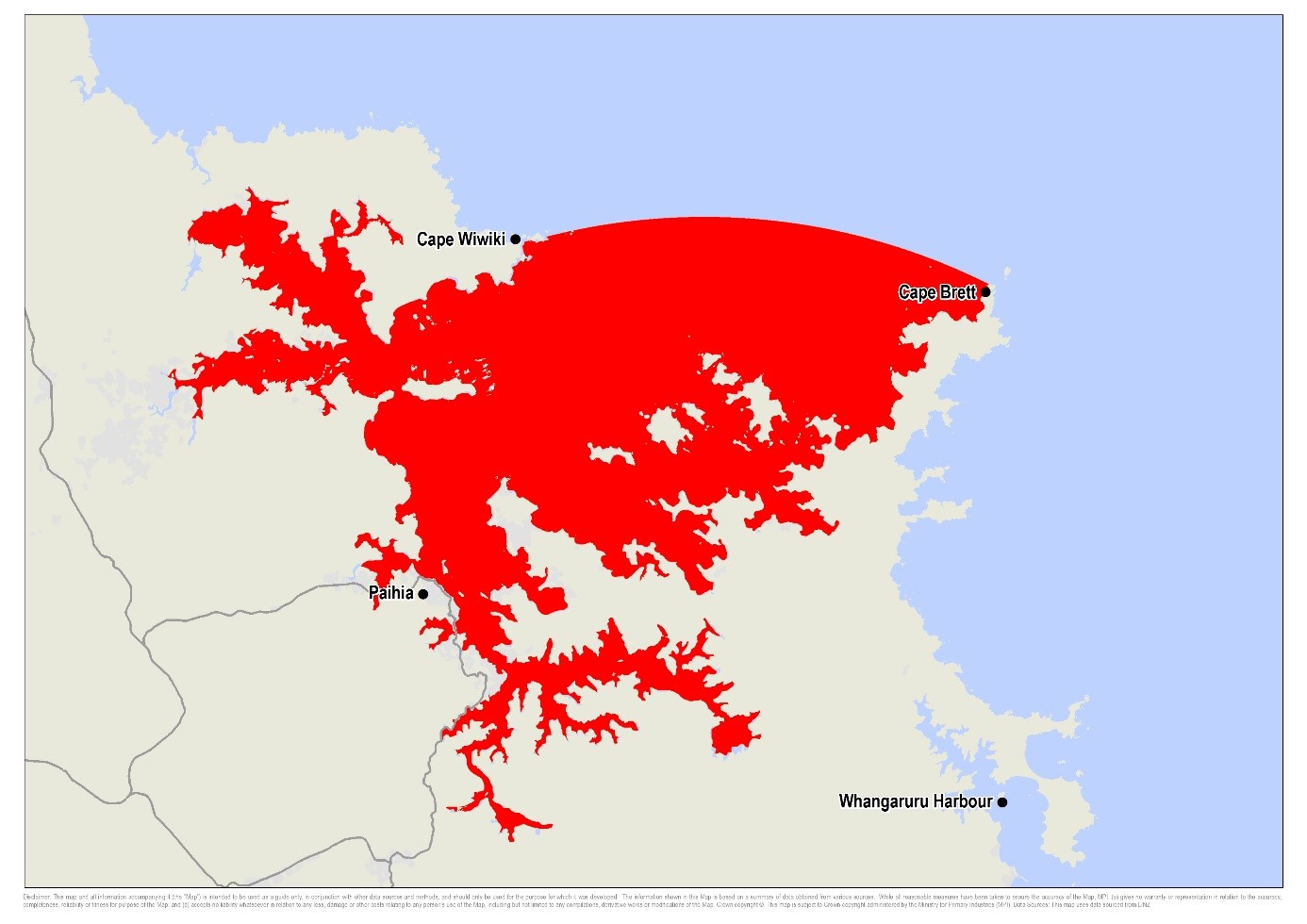
New Zealand – Shellfish biotoxin alert for the Bay of Islands in Northland


The affected area is inside a line between Cape Brett and Cape Wiwiki.

MPI 

The Ministry for Primary Industries (MPI) yesterday issued a public health warning advising the public not to collect or consume shellfish harvested from the entire Bay of Islands inside a line between Cape Brett northward to Cape Wiwiki.

Routine tests on shellfish samples taken from this region have shown levels of Paralytic Shellfish Poisoning (PSP) toxins above the safe limit of 0.8 mg/kg set by MPI. Anyone eating shellfish from this area is potentially at risk of illness.

RASFF Alerts – Norovirus – Cooked Clams

RASFF-Logo

RASFF -norovirus in frozen cooked clams from Vietnam in Spain

USA – Norovirus Outbreak – Oysters

Food Poisoning JournalVibrio

The U.S. Food and Drug Administration is warning consumers not to eat raw or partially cooked oysters harvested from Copano Bay, in Aransas County, Texas, harvested between Dec. 26, 2013 and Jan. 9, 2014.

Oysters harvested from Copano Bay, Texas, on Dec. 26, 2013, and then shipped by Alby’s Seafood of Fulton, Texas, have been linked to six norovirus illnesses in Louisiana.

The Texas Department of State Health Services closed Copano Bay to shellfish harvesting on Jan. 9, 2014.

The FDA is warning consumers not to eat raw or partially cooked shellfish from Copano Bay, in Aransas County, Texas, harvested between Dec. 26, 2013 and Jan. 9, 2014.

Alby’s Seafood disclaimer icon has issued a recall of the oysters harvested on Dec. 26; however, other shellfish harvested from Copano Bay before it was closed may still be in the marketplace.

RASFF Alerts – DSP – Mussels – Hepatitis A- Frozen Berries – E.coli – Clams – Mussels

RASFF -Diarrhoeic Shellfish Poisoning (DSP) toxins – okadaic acid (188 µg/kg – ppb) in chilled mussels (Mytlius Galloprovincialis) from Spain in Italy

RASFF -hepatitis A virus in frozen mixed berries processed in Italy, with raw material from Poland, Serbia, Chile, Bulgaria, Sweden and Bosnia and Herzegovina in Italy

RASFF -high count of Escherichia coli (5400 MPN/100g) in clams (Venus verrucosa) from Greece in Italy

RASFF -too high count of Escherichia coli (3500 MPN/100g) in chilled mussels from France

RASFF -too high count of Escherichia coli (9200; 2400 MPN/100g) in chilled mussels (Mytilus galloprovincialis) from Spain in Italy

RASFF Alerts – DSP – Live Mussels

RASFF -Diarrhoeic Shellfish Poisoning (DSP) toxins – okadaic acid (203 µg/kg – ppb) in live mussels (Mytillus galloprovincialis) from Spain in Italy

RASFF -Diarrhoeic Shellfish Poisoning (DSP) toxins – okadaic acid (287 µg/kg – ppb) in live mussels (Mytilus galloprovincialis) from Spain in Italy

RASFF -Diarrhoeic Shellfish Poisoning (DSP) toxins – okadaic acid (494 µg/kg – ppb) in live mussels (Mytilus galloprovincialis) from Spain in Italy

RASFF Alerts DSP – Live Mussels- E.coli – Clams

RASFF -Too high count of Escherichia coli (1130;2230;3230;5230 MPN/100g) in clams (Venus gallina) from Turkey in Greece

RASFF -Diarrhoeic Shellfish Poisoning (DSP) toxins – okadaic acid (826.3 µg/kg – ppb) in live mussels (Mytilus galloprovincialis) from Spain in italy

Canadian Recalls – Tahina – Salmonella – Raw Shellfish – PSP

C

Ottawa, August 16, 2013 – The Canadian Food Inspection Agency (CFIA) is warning the public, food service establishments, and retailers, not to consume, serve, use, or sell the tahina products described in the link above because they may be contaminated with Salmonella.

Some of the affected product was sold in bulk and may have been repacked at retail.  Consumers who cannot determine the original product identity are advised to check with their retailer to determine if they have one of the affected products.

There have been no reported illnesses associated with the consumption of these products.

The CFIA is working with the Canadian importers to remove all affected products from the market place.  The CFIA is monitoring the effectiveness of the recall.

All Tahina products, manufactured by Al Nakhil Co, of Lebanon between September 5, 2012 and April 21, 2013, are affected by this alert.

CFIA

Ottawa, August 16, 2013 – The Canadian Food Inspection Agency (CFIA) is warning the public not to serve or consume the raw shellfish products described in the link above because they may contain paralytic shellfish toxins that can cause illness if consumed.

These shellfish products were primarily distributed to wholesalers and institutional clients such as restaurants. However, the affected shellfish products may also have been sold in smaller quantities at some retail seafood counters. Consumers who are unsure whether they have the affected products are advised to check with their retailer or supplier.

These products have been distributed in Alberta and British Columbia.  However, they may have been distributed in other provinces and territories.

There have been no reported cases of Paralytic Shellfish Poisoning (PSP) associated with the consumption of these products.

Paralytic shellfish toxins are a group of natural toxins that sometimes accumulate in bivalve shellfish that include oysters, clams, scallops, mussels and cockles. Non-bivalve shellfish, such as whelks, can also accumulate PSP toxins. These toxins can cause PSP if consumed. Symptoms of PSP include tingling and numbness of the lips, tongue, hands and feet, and difficulty swallowing. In severe situations, this can proceed to difficulty walking, muscle paralysis, respiratory paralysis and death in as quickly as 12 hours.

The shellfish processors are voluntarily recalling the affected products from the marketplace. The CFIA is monitoring the effectiveness of the recall.

RASFF Alerts – Hepatitis A Oysters and Berries- ASP in Scallops- Enterococci in Dessciated Coconut

RASFF – Amnesic Shellfish Poisoning (ASP) toxins in chilled scallops from France

RASFF – Hepatitis A virus in chilled oysters from France and the Netherlands

RASFF – Hepatitis A virus in frozen berry mix from Italy, with raw material from Bulgaria in Italy

RASFF – Faecal streptococci (17000 CFU/g) in desiccated coconut from Indonesia, via Malaysia in Italy

Research- Rsing Sea Temperatures Increased Vibrio?

Huffington PostVibrio

In December, Darrell Dishon became one of the approximately 15 people each year who succumb to vibriosis after eating raw oysters. Vibriosis is an incredibly rare disease — but Centers for Disease Control and Prevention data show that it’s getting more common.

“While all the other pathogens have shown a nice decline, the vibrios are about twice what it was since 1998. In a little over a decade, incidence has doubled. They’re still relatively small numbers — but it’s a very striking increase,” leading vibrio researcher Glenn Morris of the University of Florida’s Emerging Pathogens Institute told The Huffington Post.

Vibrio thrive in warm water. (That’s why the majority of cases happen in the summer, and why vibriosis is more closely associated with oysters from the Gulf of Mexico than from, say, the Pacific Northwest.) One widely publicized study published in July 2012 indicated that a 1-degree increase in the temperature of a body of water triples its vibrio population. For that reason, many scientists believe that climate change has contributed to the recent rise in vibriosis, and that it could make vibrio bacteria much more prevalent in coming years.

“Vibrios are in many ways the poster children for global warming, because they are so temperature sensitive and the temperature breakpoint for them is right around the point that we’re seeing temperature increases,” Morris explained.

The disease has already cropped up in places it had never been seen before: Israel, the Baltic Sea, even Alaska. Yet vibrio vulnificus, the form of vibrio bacteria that’s considered the most dangerous and the one that killed Dishon, remains most closely associated with oysters from the Gulf of Mexico. With only about 30 total cases in the United States a year, it’s exceptionally rare. Your chances of finding a valuable pearl in one of the 2.5 billion oysters Americans eat a year are about 100 times greater than your chances of contracting vibrio vulnificus.

Yet when it strikes, it strikes hard. It kills about half the people who get it, a rate comparable, among foodborne illnesses, only to the dreaded listeria monocytogenes. And many of these deaths are unusually painful.

Research Papers – Pathogens – Celery – Irradiation – Spinach – Boiling Shrimp – Low Water Activity and Pathogens

Science Direct

Illnesses from Escherichia coli O157:H7, Listeria monocytogenes, and Salmonella have been associated with the consumption of numerous produce items. Little is known about the effect of consumer handling practices on the fate of these pathogens on celery. The objective of this study was to determine pathogen behavior at different temperatures under different storage conditions. Commercial fresh-cut celery was inoculated at ca. 3 log CFU/g onto either freshly cut or outer uncut surfaces and stored in either sealed polyethylene bags or closed containers. Samples were enumerated following storage for 0, 1, 3, 5, and 7 days when held at 4 °C or 12 °C, and after 0, 8, and 17 h, and 1, and 2 days when held at 22 °C. At 4 °C, all populations declined by 0.5–1.0 log CFU/g over 7 days. At 12 °C, E. coli O157:H7 and Salmonella populations did not change, while L. monocytogenes populations increased by ca. 0.5 log CFU/g over 7 days. At 22 °C, E. coli O157:H7, Salmonella, and L. monocytogenes populations increased by ca. 1, 2, or 0.3 log CFU/g, respectively, with the majority of growth occurring during the first 17 h. On occasion, populations on cut surfaces were significantly higher than those on uncut surfaces. Results indicate that populations are reduced under refrigeration, but survive and may grow at elevated temperatures.

The Packer

Researchers say common packinghouse practices for fresh spinach are not sufficient to avoid outbreaks of salmonella-related illnesses and recently showed that irradiation eliminated almost all cross contamination from field and packing operations.

Scientists at Texas A&M University and Pusan National University in South Korea set out to develop a quantitative risk assessment model to evaluate microbial hazards during the processing of baby spinach leaves, according to their abstract recently published with their results in the journal “ScienceDirect.”

IngentaConnect

The purpose of this study was to determine whether the current consumer method of boiling shrimp until floating and pink in color is adequate for destroying Listeria and Salmonella. Shrimp samples were submerged in bacterial suspensions of Listeria and Salmonella for 30 min and allowed to air dry for 1 h under a biosafety cabinet. Color parameters were then measured with a spectrophotometer programmed with the CIELAB system. Twenty-four shrimp samples were divided into groups (days 0, 1, or 2) and stored at 4°C. The samples were treated by placing them in boiling water (100°C) on days 0, 1, and 2. The shrimp were immediately removed from the boiling water once they floated to the surface, and color parameters were measured. Bacterial counts were determined, and the log CFU per gram was calculated. The effect of sodium tripolyphosphate on the color change of cooked shrimp also was determined. Initial bacterial counts on shrimp after air drying were 5.31 ± 0.14 log CFU/g for Salmonella Enteritidis, 5.24 ± 0.31 log CFU/g for Salmonella Infantis, 5.40 ± 0.16 log CFU/g for Salmonella Typhimurium, 3.91z 0.11 log CFU/g for Listeria innocua, 4.45 ± 0.11 log CFU/g for Listeria monocytogenes (1/2a), and 3.70 ± 0.22 log CFU/g for Listeria welshimeri. On days 0, 1, and 2, all bacterial counts were reduced to nondetectable levels for shrimp samples that floated. The average time for shrimp to float was 96 ± 8 s. The bacterial counts remained at nondetectable levels (<10 log CFU/g) during refrigerated (4°C) storage of cooked shrimp for 2 days. The redness, yellowness, and lightness were significantly higher (P < 0.0001) for the cooked shrimp than for the uncooked shrimp on all days tested. The standard deviation for redness in the cooked shrimp was large, indicating a wide range of pink coloration on all days tested. The results suggest that boiling shrimp until they float will significantly reduce Listeria and Salmonella contamination, but color change is not a good indication of reduction of these pathogens because of the wide natural color variation.

IngentaConnect

Foods and food ingredients with low water activity (aw) have been implicated with increased frequency in recent years as vehicles for pathogens that have caused outbreaks of illnesses. Some of these foodborne pathogens can survive for several months, even years, in low-aw foods and in dry food processing and preparation environments. Foodborne pathogens in low-aw foods often exhibit an increased tolerance to heat and other treatments that are lethal to cells in high-aw environments. It is virtually impossible to eliminate these pathogens in many dry foods or dry food ingredients without impairing organoleptic quality. Control measures should therefore focus on preventing contamination, which is often a much greater challenge than designing efficient control measures for high-aw foods. The most efficient approaches to prevent contamination are based on hygienic design, zoning, and implementation of efficient cleaning and sanitation procedures in the food processing environment. Methodologies to improve the sensitivity and speed of assays to resuscitate desiccated cells of foodborne pathogens and to detect them when present in dry foods in very low numbers should be developed. The goal should be to advance our knowledge of the behavior of foodborne pathogens in low-aw foods and food ingredients, with the ultimate aim of developing and implementing interventions that will reduce foodborne illness associated with this food category. Presented here are some observations on survival and persistence of foodborne pathogens in low-aw foods, selected outbreaks of illnesses associated with consumption of these foods, and approaches to minimize safety risks.