Category Archives: Salmonella

New Zealand – E-Health brand Organic Super Greens Wholefood Powder – Salmonella

MPI

9 February 2022: Ephraim Health Services Ltd is recalling all batches and all dates of its E-Health brand Organic Super Greens Wholefood Powder due to the possible presence of Salmonella.
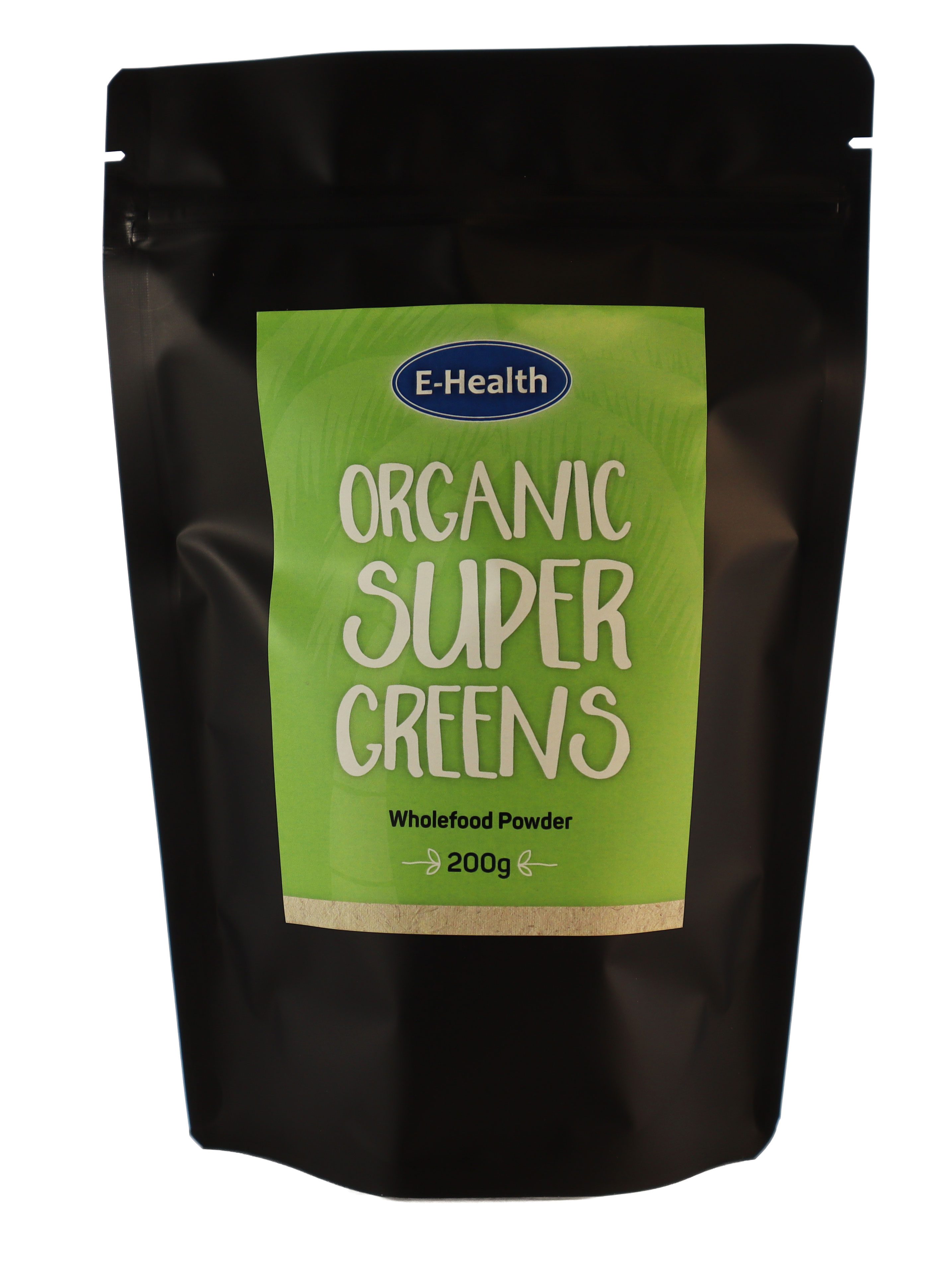
E-Health brand Organic Super Greens Wholefood Powder (200g)

Product identification
Product type Algae powder
Name of product (size) E-Health brand Organic Super Greens Wholefood Powder (various weights)
Batch and date marking All batches and all dates.
Package size and description The product is sold in paper and plastic packaging of various weights.
Distribution The product is sold online at Ephraim Health 

The product is also sold at the Ephraim Health retail store at 130 Newton Street, Mount Maunganui.

Notes This recall does not affect any other E-Health brand products.

This recall is associated with the recent recall of Natava SuperFoods brand Organic Chlorella Powder and Organic Clean Greens Wholefood Powder

Consumer advice

Affected product should not be consumed. There have been no reports of associated illness, however if you have consumed any of this product and have any concerns about your health, seek medical advice.

Customers should return the product to their retailer for a full refund.

Further information on Salmonella

Who to contact

If you have questions, contact Ephraim Health Services Ltd:

  • Phone: 07 575 7171
  • Address: 130 Newton Street, Mount Maunganui.
Luxembourg – ORGANIC NETTLE SEEDS FROM THE VITA NATURA BRAND – Salmonella

SAP

The Luxembourg food safety authorities are recalling the following product:

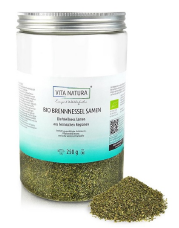
Last name Organic nettle seeds
Other denomination Organic Brennnessel Samen
Brand VitaNatura
Unity 250g
Date of minimum durability (MDD) 08/31/2024
Lot AI21K1

Danger: Presence of Salmonella

Salmonella can cause symptoms such as nausea, vomiting, abdominal cramps, diarrhea, fever and headache within 6 to 72 hours after consumption. These symptoms may be aggravated in young children, immunocompromised subjects and the elderly. People who have consumed these products and have these symptoms are invited to consult a doctor and report this consumption to him.

Click to access Ruckruftext-Brennnesselsamen-neu.pdf

Czech Republic – Meatloaf – spicy – Salmonella

Potravinynapranyri

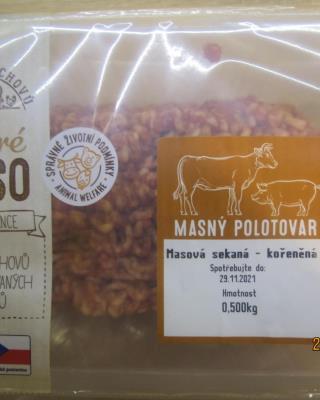
Illustration photo no. 1

Place of inspection:
Ostrava – Dubina ( Horní 298 / 64A, 700 30 Ostrava – Dubina )
ID: 64945880
Food group: Meat and meat products Meat semi -finished product

Meatloaf – spicy
Category: Dangerous food
Unsatisfactory parameter:

Salmonella

The presence of the pathogenic bacterium Salmonella Muenchen  was detected in the food  . This bacterium can cause a condition called salmonellosis.

Expiration date: Nov 29, 2021
Packaging: plastic tray with plastic foil
Quantity of product in package: 0.5 kg
Sampling date: Nov 24, 2021
Reference number: 22-000056-CAFIA-CZ
The sample was found by an official inspection of the State Agricultural and Food Inspection Authority.

EU – Multi-country outbreak of Salmonella Enteritidis sequence type (ST)11 infections linked to eggs and egg products

EFSA

Abstract

On 2 September 2021, France reported an increase in Salmonella Enteritidis ST11 infections. By 11 January 2022, 272 confirmed cases had been reported in five European Union/European Economic Area (EU/EEA) countries and the United Kingdom (UK): Denmark (n=3), France (n=216), the Netherlands (n=12), Norway (n=7), Spain (n=22), and the UK (n=12) in 2021. Two deaths were recorded in adult men. Twenty-five cases were hospitalised. Sixty cases reported consumption of eggs/egg products.

Some cases reported in France in 2021 had visited restaurants serving eggs distributed by a common supplier, Spanish Packing Centre A. The eggs originated from three Spanish farms, one testing positive for the outbreak strain. Fresh table eggs from the farms linked to the outbreak were withdrawn and redirected for use in heat-treated egg products. No other countries received eggs from the same farms via Packing Centre A during summer 2021. Therefore, the source of infection for cases in late 2021 and in countries other than Spain and France could not be established.

This 2021 outbreak is linked microbiologically to a historical cross-border outbreak reported by the Netherlands in 2019. Eggs consumed by cases in the Dutch outbreak were traced back to a Spanish farm, but it was not possible to identify an epidemiological link with the 2021 outbreak. This suggests a wide distribution of the outbreak strain that could affect the food supply chain and/or earlier steps in the production chain. There may be multiple heterogeneous sources of S. Enteritidis ST11, and the outbreak strain could also be circulating at other farms, inside or outside Spain.

The risk of new infections caused by the outbreak strain and contaminated eggs remains high in the EU/EEA. It is therefore important to foster cross-sectoral investigations of contaminations in the egg supply chain in countries where S. Enteritidis ST11 has been detected.

PDF

Argentina – So far in January, Salta registers about 500 cases of Salmonellosis

Salta

The highest percentage was located in the Capital department. 52% of affected individuals are children up to 9 years of age. Prevention lies in the safe handling of food.

In the first 25 days of January, 571 suspected cases of salmonella infection were reported in the province, of which 482 were confirmed, which represents 84% ​​positivity.

Of this amount, the largest proportion of affected individuals corresponds to the age range of 5 to 9 years, with a total of 130. In second place, with 122 cases, are children aged 0 to 4 years. These data show that 52% of the cases correspond to children between 0 and 9 years of age.

Regarding the location of cases, the department with the highest number is Capital, with 366, which means 76% of the total.

Of 23 departments in which the province of Salta is divided, in the period from January 1 to 25, cases of salmonellosis were registered in 19 of them. There were no cases in La Candelaria, Rosario de la Frontera, San Carlos and Los Andes.

According to records of the Epidemiological Surveillance program of the Ministry of Public Health, in 2021 there were 1,930 suspected cases, with 1,748 confirmed (91% positivity).

Prevention Guidelines

The Ministry of Public Health recommends taking precautions when handling food, since salmonellosis occurs through the ingestion of food contaminated with bacteria of the salmonella genus.

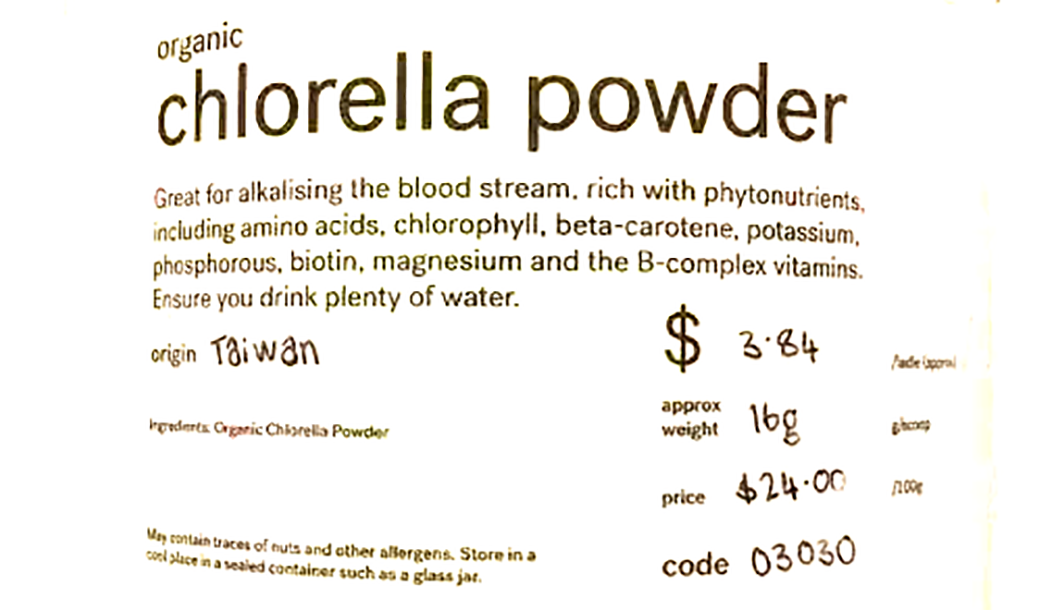
New Zealand – Organic Chlorella Powder purchased from GoodFor Ltd – Salmonella


MPI

8 February 2022: GoodFor Ltd is recalling Organic Chlorella Powder sold at their stores from June 2021 up to January 2022 due to the possible presence of Salmonella.

Product type

Algae powder

Name of product (size)

Organic Chlorella Powder (sold in bulk bins and various sized packs)

Purchase date

Products sold from June 2021 up to January 2022.

Package size and description

The product is sold in bulk bins and various sized packs.

Distribution

The product is imported from Taiwan.

The product is sold online at GoodFor 

The product is sold at the following GoodFor stores throughout New Zealand:

  • GoodFor Parnell, 4/79 St George’s Bay Rd, Parnell
  • GoodFor Ponsonby, 2 Williamson Ave, Grey Lynn
  • GoodFor Stonefields, Tenancy 12, Stoneridge on Lunn
  • GoodFor Takapuna, 360 Lake Road, Takapuna
  • GoodFor Wellington, 21 Jessie St, Te Aro
  • GoodFor Nelson, 151 McShane Rd, Appleby
  • GoodFor Christchurch, 20 Welles St, Christchurch Central

Notes

This recall does not affect any other GoodFor products.

This recall is associated with the recent recall of Natava SuperFoods brand Organic Chlorella Powder and Organic Clean Greens Wholefood Powder


Consumer advice

Customers are asked to check the date of purchase of the product.

Affected products should not be consumed. There have been no reports of associated illness, however if you have consumed any of these products and have any concerns about your health, seek medical advice.

Customers should return the products to their retailer for a full refund.

Research – Efficacy of a Mixed Peroxyorganic Acid Antimicrobial Wash Solution against Salmonella, Escherichia coli O157:H7 or Listeria monocytogenes on Cherry Tomatoes

Journal of Food Protection

A study was conducted to evaluate a new organic produce wash composed of a combination of organic acids and hydrogen peroxide, in the form of a mixed peroxyacid solution, against foodborne pathogens.  The mixed peroxyacid, composed of lactic acid, hydrogen peroxide and one or more fruit acids, was challenged against Salmonella enterica, E. coli O157:H7, or Listeria monocytogenes in suspension or on the surface of dip-inoculated cherry tomatoes.  Cherry tomatoes were also treated with 8 ppm of free chlorine added in the form of sodium hypochlorite (NaOCL).  When tested against planktonic cells in pure culture for 120 s, Salmonella, and E. coli O157:H7 were reduced by 7.5 and 7.1 log cycles with 0.40% of the peroxyacid solution, respectively, while L. monocytogenes decreased by 5.0 log by treatment with a 0.80% solution.  When cherry tomatoes were dip-inoculated and treated with 8 ppm free chlorine, Salmonella and E. coli O157:H7 populations decreased by 2.5 and 2.6 log, respectively, which were not significantly different than reductions incurred by sterile water rinses.  A 1.0% solution of peroxyacid solution, however, reduced the same microorganisms by 3.8 and 3.4 log per tomato, respectively, which was significantly greater ( P < 0.05) than reductions achieved by the 2 min sterile water rinse.  When dip-inoculated with L. monocytogenes, and treated, populations were reduced by 3.5 log per tomato with 1.0% peroxyacid solution which was greater ( P < 0.05) than reductions achieved by 8 ppm free Cl (2.6 log) or sterile water (1.7 log).  Results demonstrate that this peroxyacid combination antimicrobial wash may be an effective organic produce wash for preventing cross-contamination during the washing of cherry tomatoes, as well as being capable of inactivating up to 3.8, 3.4, and 3.5 log  per tomato of S. enterica, E. coli O157:H7 and L. monocytogenes , respectively.

Research – Effect of Anolyte on S. Typhimurium and L. monocytogenes Growth in Minced Pork and Beef Cuts

MDPI

In this paper, anolyte is considered as a possible disinfectant for inhibiting the growth of bacteria in meat (beef cuts and minced pork). Meat cuts were contaminated with two concentrations of L. monocytogenes and S. Typhimurium, as these are the most common meat pathogens that are closely regulated by the EU, and treated with two different concentrations of anolyte: 20% for beef cuts and 18% for minced pork. Then, the total viable count (TVC), L. monocytogenes count and S. Typhimurium count were determined. In meat cuts and minced pork, anolyte was able to reduce TVC, S. Typhimurium and L. monocytogenes counts effectively, significantly decreasing L. monocytogenes and S. Typhimurium counts after spraying and throughout 29 days of incubation at 0–4 °C. TVC was reduced after spraying and for 10 days of incubation but later increased to be the same as before spraying with anolyte. Anolyte was effective when spraying beef cuts with a 20% solution for 60 s against pathogenic bacteria L. monocytogenes and Salmonella spp. and also when using it at a concentration of 18% from the minced meat mass. Initially, anolyte significantly decreased TVC, however during the storage period (10–29 days) TVC increased but remained significantly lower compared to control. Anolyte was effective in reducing L. monocytogenes and S. Typhimurium counts throughout the study, and after 29 days of incubation, these bacteria could not be detected in the samples treated with anolyte. View Full-Text

Research – EU Commission notice on guidance document on addressing microbiological risks in fresh fruits and vegetables at primary production through good hygiene – 2017

EUR LEX

Norovirus Food Safety kswfoodworld

According to the 2014 Zoonosis Monitoring Report (1), the majority of verified outbreaks in the EU were associated with foodstuffs of animal origin. Fruit and vegetables were implicated in only 7,1 % of the verified outbreaks, primarily caused by frozen raspberries contaminated with Norovirus, albeit showing an increase compared to 2013 where ‘vegetables and juices’ were reported in 4,4 % of the outbreaks.

Nevertheless, the possible consequences of microbiological contamination of fresh fruits and vegetables (FFV) cannot be under­estimated as shown by the German crisis (2) linked to the contamination of sprouts by Verotoxin-producing Escherichia coli (VTEC).In the aftermath of this VTEC crisis in 2011, the Commission asked the European Food Safety Authority (EFSA) to advice on the public health risks posed by pathogens in food of non-animal origin (FNAO), addressing in particular the risk factors and the mitigation options including possible microbiological criteria.

As a result, EFSA issued six scientific opinions on the following food/pathogen combinations identified as the most important risks within FNAO:

1) VTEC in seeds and sprouted seeds

(2) Salmonella and Norovirus in food of leafy greens eaten raw as salads.

(3) Salmonella and Norovirus in berries.

(4) Salmonella and Norovirus in tomatoes.

(5) Salmonella in melons.

(6) Salmonella, Yersinia, Shigella and Norovirus in bulb and stem vegetables, and carrots.

This guideline takes account of the relevant opinions of EFSA, and consultation with Member States experts and relevant stakeholders. Though it is intended to offer practical help to growers, it may also be used by official inspectors during their audits where appropriate. EFSA confirmed that further research on possible risks and risk mitigating measures related to FFV should continue.

Ireland – Recall of a Batch of Roosters Gluten Free Breaded Chicken Fillet Goujons due to Presence of Salmonella

FSAI

Roosters Gluten Free Breaded Chicken Fillet Goujons

Summary
Category 1: For Action
Alert Notification: 2022.09
Product: Roosters Gluten Free Breaded Chicken Fillet Goujons;
pack size: 400g; approval number: IE 2410 EC
Batch Code: 211216, 16:00:00, 16.12.2021; best before date: 16.12.2022
Country Of Origin: Ireland

Message:

A batch of Roosters Gluten Free Breaded Chicken Fillet Goujons is being recalled due to the presence of Salmonella.  Point-of-sale recall notices will be displayed in Aldi stores supplied with the implicated batch.

Nature Of Danger:

People infected with Salmonella typically develop symptoms between 12 and 36 hours after infection, but this can range between 6 and 72 hours.  The most common symptom is diarrhoea, which can sometimes be bloody.  Other symptoms may include fever, headache and abdominal cramps.  The illness usually lasts 4 to 7 days. Diarrhoea can occasionally be severe enough to require hospital admission. The elderly, infants, and those with impaired immune systems are more likely to have a severe illness.

Action Required:

Consumers:

Consumers are advised not to eat the implicated batch.