Category Archives: Salmonella

USA – FDA – Investigations of Foodborne Illness Outbreaks

FDA

What’s New

  • For the outbreak of Salmonella Paratyphi B var. L(+) tartrate+ (ref #1157) in a not yet identified product, the case count increased from 31 to 33.
  • For the outbreak of Cyclospora cayetanensis (ref #1159), the case count has increased from 28 cases to 34 cases.
  • For the outbreak of Cyclospora cayetanensis (ref #1155), CDC, FDA, and state and local partners have determined that the outbreak has ended and have closed the investigation. Based on epidemiological investigations conducted by CDC and state and local partners, ill people reported eating broccoli before becoming sick. FDA and state and local partners conducted traceback investigations and determined that the product of interest was imported broccoli. FDA and state and local partners also collected and analyzed product samples and all samples were negative for Cyclospora. Due to the absence of supporting evidence collected from traceback and sample collection, investigators were unable to confirm a specific type or producer of imported broccoli as the source of the outbreak.

USA – USDA launches Salmonella Grand Challenge

Food Safety News

The U.S. Department of Agriculture’s Agricultural Research Service (USDA ARS) has initiated a far-reaching project called the Salmonella Grand Challenge.

The endeavor unites a group of scientists from ARS, universities, and the food industry, each specializing in various fields, to combat Salmonella, a foodborne pathogen that infects a million Americans annually. The challenge aligns with the ongoing efforts of the USDA’s Food Safety and Inspection Service (FSIS) to develop a more effective strategy for reducing human Salmonella illnesses associated with poultry.

The primary objective of ARS is to integrate its research and expand understanding of how and where Salmonella poses the highest risk of contamination in meat and poultry products. This knowledge will prove invaluable in developing enhanced monitoring tools for meat and poultry producers to detect Salmonella contamination.

UK – Polish meat giant supplied superbug-infected chicken to UK shelves

The Bureau Investigates

A major meat supplier to UK supermarkets is sourcing chickens dosed with antibiotics linked to the spread of deadly superbugs, raising the risk of future outbreaks of life-threatening disease, the Bureau of Investigative Journalism can reveal.

The Polish meat giant SuperDrob is sourcing chicken from factory farms that use medicines classified as “critically important” to human health, despite the grave risk this poses to consumers. SuperDrob sells frozen poultry products to Lidl, Asda and Iceland.

The company was linked to a fatal salmonella outbreak in 2020 – which TBIJ can now reveal involved bacteria resistant to multiple drugs – and there were at least 15 salmonella contaminations linked to SuperDrob poultry in the 18 months that followed.

Denmark Salmonella in medister, minced pork and minced ham

Foedevarestyrelsen

Himmerlandskød is recalling Frilandsmedister as well as minced pork and minced ham from Frilandsgris due to the discovery of Salmonella. The products should be returned to the store where they were purchased or discarded.

What foods

Medister of the brand Frilandsgris, 10% fat
Packages of 400 grams
Production date: 15.06.2023
Last date of use: 22.06.2023
EAN number: 5710238000899

Minced pork of the brand Frilandsgris, 8-12% fat
Packages of 400 grams
Production dates: 14.06.2023-16.06 .2023
Last use-by dates: 20.06.2023-22.06.2023
EAN number: 5705451650273

Minced ham from the brand Frilandsgris, 4-7% fat
Packs of 400 grams
Production dates: 14.06.2023-16.06.2023
Last use-by dates: 20.06.2022 3-22.06. 2023
EAN number: 5710238000882

Sold in: REMA 1000 stores nationwide.

Why are the products being recalled?

The company has, in connection with its own inspection, found Salmonella in the medister. Since the same raw material is included in the minced pork and minced ham, there is a risk that Salmonella is also present in these products. The symptoms of infection with Salmonella are diarrhoea, abdominal pain, fever, headache and possibly nausea and vomiting. The illness can last from a few days to several weeks.

What should you do as a consumer?

The Danish Veterinary and Food Administration advises consumers to return the products to the store where they were purchased, or to discard them.
If you experience symptoms in connection with consuming the products, you should contact your own doctor.

Who recalls the products

Himmerland beef

France sees a rise in outbreaks in 2021

Food Safety News

The number of outbreaks in France went up in 2021 but was still below 2018 and 2019 levels.

Figures from Santé publique France show there were 1,309 outbreaks affecting 11,056 people in 2021. A total of 512 people went to hospitals and 16 died.

Reported outbreaks rose from 1,010 in 2020 when figures were strongly impacted by the COVID-19 pandemic, according to officials.

For 327 incidents in 2021, a pathogen could be microbiologically confirmed in food or in at least one sick person per outbreak. A pathogen was suspected without microbiological confirmation for 734 outbreaks.

16 deaths in outbreaks
The most frequently microbiologically confirmed pathogen was Salmonella 147 times. It was mostly Salmonella Enteritidis, followed by monophasic Salmonella Typhimurium but the type was not known in 92 incidents. Confirmed Salmonella outbreaks were responsible for 935 patients and 166 hospitalizations.

Campylobacter caused 52 outbreaks with 178 patients and Bacillus cereus had 46 with 665 patients. Nineteen norovirus outbreaks sickened 493 and 11 histamine outbreaks affected 35 people.

Seven outbreaks were due to E. coli, six to Yersinia enterocolitica, four to Shiga toxin-producing E. coli (STEC), and one each because of Listeria monocytogenes, Clostridium botulinum, and Shigella.

The pathogen was identified in patients for 208 outbreaks, of which 143 were confirmed with Salmonella. Identification of the agent took place in food samples for 89 epidemics with 67 confirmed as Bacillus cereus, Staphylococcus aureus and Clostridium perfringens.

The top suspected pathogens based on epidemiological and clinical information, but not microbiologically confirmed, were the toxins Bacillus cereus, Staphylococcus aureus and Clostridium perfringens. For these three pathogens, 3,787 patients and 169 hospital trips were recorded.

Czech Republic – Filled pepper – Salmonella

Potravinynapranyri

Place of inspection:
Broumov ( U Dolní brány 313, Nové Město, 5501 Broumov )
ID: 07387156
Invalid parameter:

Salmonella Typhimurium

The pathogenic bacterium Salmonella Typhimurium was detected in the semi-finished meat This bacteria can cause a disease called salmonellosis.

Expiration date: 22/03/2023
Packaging: not packed
Manufacturer: ZEMAN MEAT – SAUSAGE
Country of origin:  Czechia
Date of sample collection: 16/03/2023
Reference number: 23-000009-SVS-CZ
The sample was detected by the official control of the State Veterinary Administration.

Czech Republic – Chilled Chicken Breast Steak – Salmonella

Potravinynapranyri

Place of inspection:
Bystřice pod Hostýnem ( Přerovská 357, 76861 Bystřice pod Hostýnem )
ID: 26852616
Invalid parameter:

Salmonella Enterica sera. Enteritidis

The pathogenic bacterium Salmonella Enterica sera was detected in the chilled chicken breast fillet . Enteritidis. This bacteria can cause a disease called salmonellosis.

Expiration date: 20/03/2023
Packaging: not packed
Manufacturer: TWIST Sp. z o. o., ul. PL 24153902 WE
Distributor: TWIST CZ s.r.o
Country of origin:  Poland
Date of sample collection: 15/03/2023
Reference number: 23-000008-SVS-CZ
The sample was detected by the official control of the State Veterinary Administration.

France – Pistachio rolled head – Salmonella

Gov france

Identification information of the recalled product

  • Product category Feed
  • Product subcategory Meats
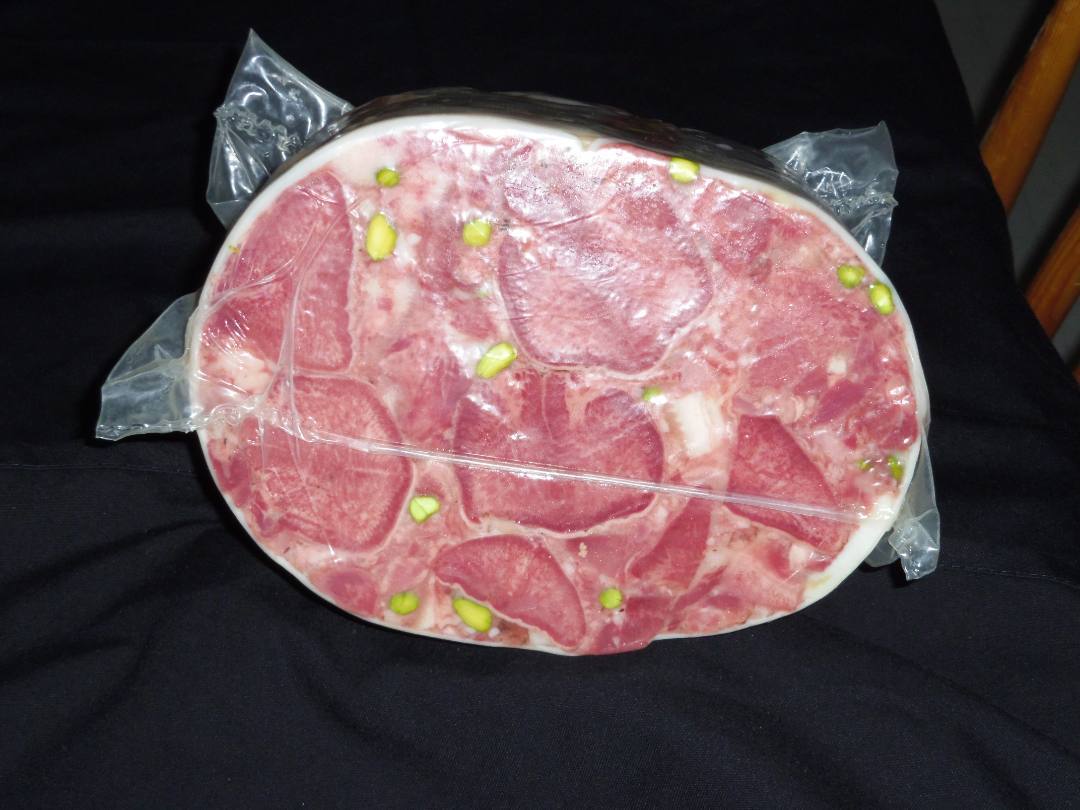
  • Product brand name DIENNET REGIONAL CHARCUTERIE
  • Model names or references PISTACHIO ROLL HEAD
  • Identification of products
    GTIN Batch Date
    2685011700000 232203 Use-by date 05/07/2023
  • Packaging Vacuum sliced ​​+/- 250g or per Piece Small or Medium Model
  • Marketing start/end date From 02/06/2023 to 15/06/2023
  • Storage temperature Product to be stored in the refrigerator
  • Health mark FR 01 263 001 EC
  • Further information Product sold at the LS and TRAD shelves, non-contractual photo
  • Geographic area of ​​sale Departments: AIN (01), RHONE (69)
  • Distributors Carrefour, Pomocash, Proxi, Leclerc, U Express, Useful
  • List of points of saleList_dist.pdf

France – Woks and spring rolls -Salmonella

Gov france

Identification information of the recalled product

  • Product category Feed
  • Product subcategory Others
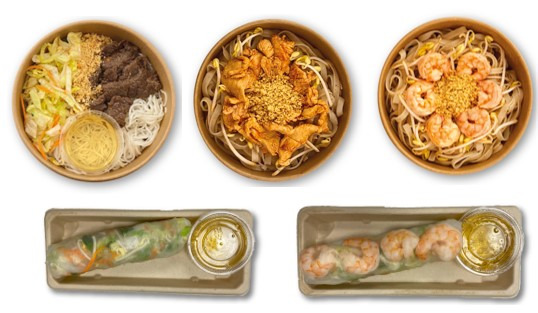
  • Product brand name Happy Yummy
  • Model names or references CHICKEN PAD THAI, SHRIMP PAD THAI, BEEF BO BUN, SHRIMP SPRING ROLLS, VEGGIE SPRING ROLLS, SALMON SPRING ROLLS, BEEF SPRING ROLLS, CHICKEN SPRING ROLLS
  • Identification of products
    GTIN Batch Date
    3760291421171 CHICKEN PAD THAI Use-by date between 06/11/2023 and 06/16/2023
    3760291421164 SHRIMP PAD THAI Use-by date between 06/11/2023 and 06/16/2023
    3760291421140 BO BUN BEEF Use-by date between 06/11/2023 and 06/16/2023
    3760291423755 SHRIMP SPRING ROLLS Use-by date between 06/11/2023 and 06/16/2023
    3760291421355 VEGGIE SPRING ROLLS Use-by date between 06/11/2023 and 06/16/2023
    3760291422499 SALMON SPRING ROLLS Use-by date between 06/11/2023 and 06/16/2023
    3760291424004 BEEF SPRING ROLLS Use-by date between 06/11/2023 and 06/16/2023
    3760291422642 CHICKEN SPRING ROLLS Use-by date between 06/11/2023 and 06/16/2023
  • Marketing start/end date From 09/06/2023 to 14/06/2023
  • Storage temperature Product to be stored in the refrigerator
  • Further information Products made on site at the Happy Yummy stand.
  • Geographic area of ​​sale Regions: Île-de-France, Provence-Alpes-Côte d’Azur
  • Distributors Monoprix Charenton-le-Pont, Monoprix Cap3000 and Monoprix Nice Cimiez.

Research – Cool for the Summer: Keep Your Favorite Salads Chilled

USDA

Vegetable Bacteria Danger

At your next picnic, let the spotlight shine on your food — not on party crashers like Salmonella or Listeria. When temperatures rise and food safety steps aren’t followed, cold dishes at a cookout are at risk for unsafe bacteria levels. Avoid foodborne illness by following these steps:
Clean: Remember to clean and sanitize all dishes and utensils used to make your salad and wash your hands before and after food prep.
Separate: Use different cutting boards, plates and utensils to avoid spreading bacteria when preparing your raw foods and ready-to-eat cold dishes.
Cook: Make sure the main meat or poultry ingredients used in cold salads (egg salad, chicken salad, etc.) are cooked to safe internal temperatures before mixing:
Cook eggs to 160 F.
Cook chicken to 165 F.
Although most cold salads use mayonnaise, the danger of foodborne illness lies with the main ingredient, such as eggs or chicken. Make sure they are cooked and chilled at the proper temperature. If you use homemade mayonnaise, follow these guidelines.
Chill: Avoid the Danger Zone (temperatures between 40 F and 140 F) by refrigerating perishable food within two hours — one hour if it’s a hot day (above 90 F). Keep cold foods at an internal temperature of 40 F or below by nestling food in ice or keeping food in a cooler.
For more information about food safety, call the USDA Meat and Poultry Hotline at 1-888-MPHotline (1-888-674-6854) or email MPHotline@usda.gov to reach a food safety specialist or chat live at ask.usda.gov from 10 a.m. to 6 p.m. Eastern Time, Monday through Friday.