Category Archives: Salmonella in Chicken

Iceland – Suspicion of Salmonella in Chicken

MAST

Food Poisoning Salmonella

Matvælastofnun warns against consuming a certain chicken due to suspicion of salmonella. Reykjagarður hf. has suspended sales and recalls from the market one batch of chicken.

The recall only covers the following traceability number:

  • Product names: Holta, Kjörfugl and Króna chicken (Whole bird, breast, puffins, bits)
  • Traceability number: 001-20-33-1-02
  • Distribution: Iceland stores, Hagkaupsverslanir, Krónan, KR, Kjarval, Nettó, Costco, Extra24, Heimkaup, Kaupfélag Skagfirðinga, Bjarnabúð, Kjörbúðin, Hlíðakaup

Consumers who have purchased chickens with this traceability number are asked to return the product to the relevant store or directly to Reykjagarður hf., Fossháls 1, 110 Reykjavík.

Belgium – Minced poultry meat and flavoured brand Kok O’rell. – Salmonella

AFSCA

In agreement with the AFSCA, EUROKIP is withdrawing SEASONED MINCED POULTRY MEAT from sale and is recalling it to consumers because of the possible presence of Salmonella.

EUROKIP asks its customers not to consume this product and to return it to the point of sale where it was purchased. It will be refunded even without a receipt.
The product is, at the same time, withdrawn from sale.

Product description

– Product name: SEASONED MINCED POULTRY MEAT
– Brand: Kok O’Rell
– Use by date (BBD) (“To be consumed until”): 23/09/2020
– Lot number (s) ( s): 134110
– Sales period: from 09/16/2020 to 09/19/2020
– Type of packaging: transparent / black plastic container – 500g

Label used by Goesting Delicatessen, PNK BV, Gevanvo:

The product has been distributed by:

 VAN EETVELDE – MEERT – Stwg naar oudegem 173, 9308 GIJZEGEM
– DISCOUNT SONCK – Groenlaan 79, 9550 HERZELE
– VLEUGELS VOEDING – Edegemsestraat 141, 2640 MORTSEL
– PROOST SUPERMARKT – Lange Leemstraat 145, 71STAVICT – Lange Leemstraat 145,71straat DEL71straat – 3071 DELAVICTING- 3071ANTWERTING- ZENWERTING – 3071straat – Lange Leemstraat
– 3071straat, ERPS KWERPS
– PNK BV – Geluwestraat 9, 8940 WERVIK
– GEVANVO – Ijzerhand 43, 9120 BEVEREN

For any further information , contact:
Madame Tina Vanschoubroek
03/771 14 35 or tina@eurokip.be

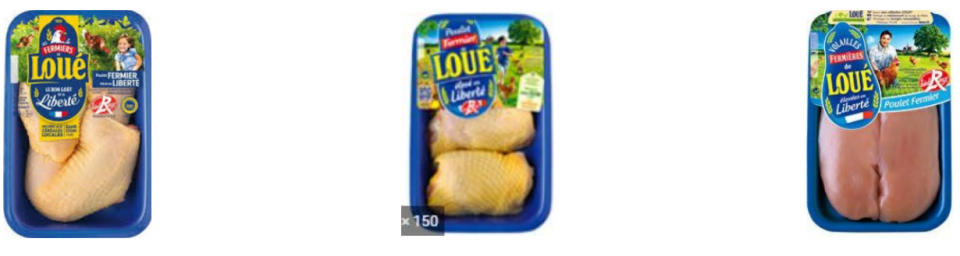
Luxembourg – TRAY OF 2 YELLOW CHICKEN THIGHS, TRAY OF 2 WHITE CHICKEN FILLETS, TRAY OF 3 HIGH CHICKEN THIGHS FROM THE LDC BRAND – PRESENCE OF SALMONELLA

SAP

Last name Tray of 2 yellow chicken thighs
Mark LDC
Bar code 0217823000000
Best before date (DLC) 09/09/2020
Lot 2020037392
Last name Tray of 2 white chicken fillets
Mark LDC
Bar code 3266980282882
Best before date (DLC)

NEW DLC!

1) 08/09/2020 & 09/09/2020

2) 09/22/2020

Lot

NEW LOT!

1) 2020037371

2) 2020038037

Last name Tray of 3 tall chicken thighs
Mark LDC
Bar code 3266980006969
Best before date (DLC) 09/11/2020
Lot 2020037371

Danger: Presence of salmonella


Salmonella can cause symptoms such as nausea, vomiting, abdominal cramps, diarrhea, fever and headache within 6 to 72 hours after consumption. These symptoms may be aggravated in young children, immunocompromised individuals and the elderly. People who have consumed these products and who present these symptoms are advised to consult a doctor, notifying him of this consumption.


Sale in Luxembourg by: Auchan

A sale by other operators cannot be excluded.

Source of information: Auchan recall notification.


Communicated by: Government Commission for Quality, Fraud and Food Safety .


RASFF Alerts – Salmonella – Paprika Powder – Frozen Whole Cockerels

European Food Alerts

RASFF

Salmonella (presence /25g) in paprika powder from China in Spain

RASFF

Salmonella enterica ser. Indiana (present /25g) in frozen whole cockerels from France in Finland

Belgium – Delikip Recall BV Product: Marinated Chicken Drumsticks – Salmonella

AFSCA

Delikip Recall BV
Product: marinated chicken drumsticks – 4 pieces.
Problem: Possible presence of Salmonella.

In agreement with the AFSCA, Delikip Bv is withdrawing the marinated chicken drumsticks from sale and is recalling it to consumers because of the possible presence of Salmonella.

Delikip Bv asks its customers not to consume this product and to return it to the point of sale where it was purchased or it will be refunded.


Product description
– Product name: marinated chicken drumsticks – 4 pieces
– Use by date (
Best before): 09/18/2020
– Lot number: 11092020 – Sale period: from 09/11/2020 to 09/14/2020
– Type of packaging: plastic
dish – Weight: between 0.420 kg and 0.480 kg

The product has been distributed by:
– Spar Hombeek – Kapelseweg 4, 2811 Hombeek.
– Spar Kuyle – Kortrijksepoortstraat 82, 9000 Gent.

For any further information , contact:
Madame Van Overberghe Lieve
info@delikip.be

Australia – NSW Annual Food Testing Report Released

Food Safety.com

Campylobacter kswfoodworld

Every year, the New South Wales Food Authority (NSW Food Authority) releases their Annual Food Testing Report on the testing conducted by their primary testing provider and by other laboratories. This year’s report highlights some key findings with regards to food safety testing results and trends.

Testing is conducted for a variety of reasons including food-borne illness investigations, Food Safety Program verifications and other types of research. In the report, the NSW Food Authority breaks down the significant findings in each of these categories which provides important information for the Australian food industry.

Key facts from the report

The NSW Annual Food Testing Report provides the following facts for the period of July 2018 to June 2019:

  1. During this time period, there were a total of 6,431 samples submitted for testing.
  2. Sample types analysed included:
  • meat
  • seafood
  • dairy
  • plant products
  • packaged food
  • eggs
  • food from retail outlets
  • environmental samples

3. There were over 70 different types of tests performed. These included:

  • microbiological assessment
  • pH
  • water activity
  • allergens
  • additives such as preservatives

Key findings from the report

The findings listed in the report are categorized based on different programs. The following is a breakdown of some of the key findings:

Food-borne illness investigation findings

The report states that between 2018 and 2019 there were a total of 4,010 samples (food and environmental) that were submitted for testing. These samples were submitted for testing due to food-borne illness investigations and the follow-ups for these investigations.

Increase in Salmonella Enteritidis cases

The report discusses a marked increase in the cases of Salmonella Enteritidis that has been observed since the middle of 2018. The cases have now been linked to an outbreak of Salmonella Enteritidis that was locally acquired. This a significant difference from cases of Salmonella Enteritidis in Australia in the past, with most cases typically presenting in people who had travelled overseas.

Testing was conducted and monitoring took place to determine where the outbreak was stemming from. The investigation involved taking 2,072 samples from egg production businesses and testing eggs and environmental samples. The results from the testing showed that Salmonella Enteritidis was on 13 properties that were interconnected through people, eggs and/or equipment.

The result was six food recalls at the consumer level from properties affected in NSW, and one consumer level recall in Victoria. The report states that surveillance and monitoring of NSW egg farms is slated to continue throughout 2020.

Decrease in Listeria prevalence in melons

The melon industry in Australia, particularly the rockmelon industry, has been linked to food-borne illness outbreaks of Listeria in recent years. The report states that listeriosis cases in New South Wales has actually declined sharply as of late, which is being attributed to the improved food safety measures that have been put in place in the Australian melon industry.

During the period of November 2018 and April 2019, the New South Wales Department of Primary Industries (NSW DPI) conducted food safety training workshops for rockmelon growers in NSW. NSW DPI also conducted sampling of melon harvests and packhouse environments to make sure that melon growers were following food safety protocols.

Verification findings

Concerns about Campylobacter and Salmonella on poultry

Campylobacter and Salmonella infections are both significant health concerns for Australians. In order to monitor the prevalence of these two food-borne pathogens, the raw poultry verification program gathers ongoing data on their prevalence and levels in raw poultry.

The report states that during the period of July 2018 and June 2019, samples were taken from raw poultry including 196 from whole chickens/chicken portions from processing plants, and 312 chicken portions from retail facilities. The samples were tested for the presence of Campylobacter and Salmonella.

The results for processing plants:

Salmonella

  • detected in 21.4% of samples
  • 9.2% of samples had quantifiable levels

Campylobacter

  • detected in 86.7% of samples
  • 1.5% of samples had quantifiable levels

The results for retail facilities:

Salmonella

  • detected in 25.8% of samples
  • 1.7% of samples had quantifiable levels

Campylobacter

  • detected in 89.9% of samples
  • 6.4% of samples had quantifiable levels

Research findings

Investigating algal biotoxins in wild harvest shellfish

There are other types of food-borne pathogens that are not as well known as Listeria, Salmonella or Campylobacter. The report touches on how some algae produce toxic compounds that can then accumulate in certain types of fish, particularly filter-feeding bivalve shellfish. The concern is that the toxic compounds can be harmful to humans if they are consumed by eating the shellfish.

The NSW Food Authority conducted testing between 2018 and 2019 which involved taking samples from pipis which are a type of shellfish group. There were 76 samples taken and they were tested for three different types of algae toxin groups which were amnesic shellfish toxins, paralytic shellfish toxins and diarrhetic shellfish toxins. The results revealed that diarrhetic shellfish toxins were detected in 13 of the 76 samples.

The NSW Food Authority will continue to investigate the health concerns around algae toxins in harvest shellfish in the 2019-2020 fiscal year.

RASFF Alerts – Salmonella – Black Pepper – Basil – Chicken Breast Fillets – Pre-Cooked Fish Products – Gouda Cheese – Rucola – Turkey Thigh Meat – Chicken Breast and Inner Fillet

European Food Alerts

RASFF

Salmonella enterica ser. Rubislaw (present /25g) in black pepper in Germany

RASFF

Salmonella enterica ser. Newport (presence /25g) in black pepper from Brazil in Germany

RASFF

Salmonella (presence /25g) and Salmonella enterica ser. Sandiego (presence /25g) in black pepper from Brazil in Germany

RASFF

Salmonella (presence /25g) and Salmonella enterica ser. Rubislaw (presence /25g) in black pepper from Brazil in Germany

RASFF

Salmonella enterica ser. Oranienburg (presence /25g) in black pepper from Brazil in Germany

RASFF

Salmonella enterica ser. Cerro and Salmonella enterica ser. Oranienburg (presence /25g) in black pepper from Brazil in Germany

RASFF

Salmonella enterica ser. Sandiego (presence /25g) in black pepper from Brazil in Germany

RASFF

Salmonella enterica ser. Münster (presence /25g) in black pepper from Brazil in Germany

RASFF

Salmonella enterica ser. München (presence /25g) and Salmonella enterica ser. Rubislaw (presence /25g) in black pepper from Brazil in Germany

RASFF

Salmonella enterica ser. Javiana (presence /25g) and Salmonella enterica ser. Sandiego (presence /25g) in black pepper from Brazil in Germany

RASFF

Salmonella enterica ser. Poona (presence /25g) in black pepper from Brazil in Germany

RASFF

Salmonella enterica ser. Enteritidis (in 1 out of 5 samples /25g) in chilled chicken breast fillets from Poland in Poland

RASFF

Salmonella in mix of frozen precooked fish products from Italy in Austria

RASFF

Salmonella (presence /25g) in gouda cheese cubes from the Netherlands in the Netherlands

RASFF

Salmonella enterica ser. Minnesota (presence /25g) in black pepper from Brazil in Germany

RASFF

Salmonella (presence /25g) in basil from Laos in Germany

RASFF

Salmonella in rucola from Poland, with raw material from Italy in Poland

RASFF

Salmonella enterica ser. Bargny in frozen boneless turkey thigh meat from Poland in Bulgaria

RASFF

Salmonella enterica ser. Paratyphi B (presence /25g) in fresh chicken breast fillets and inner fillet from the Netherlands in the UK

RASFF

Salmonella (presence /25g) in basil from Cambodia in Germany

RASFF

Salmonella (presence /25g) in basil from Cambodia in Germany

RASFF Alerts – Salmonella – Sesame Seeds – Chicken Thighs – Minced Beef – Chicken Quarters – Chicken Wings – Chicken Breast – Minced Veal – Beef Strips – Betel Leaves – Salad made of Rice, Vegetables, Eggs and Tuna – Eggs – Poultry Kebabs – Pepper – Black Pepper – Turkey Rump

European Food Alerts

RASFF

Salmonella (presence /25g) in hulled sesame seeds from Nigeria in Greece

RASFF

Salmonella (presence /25g) in frozen chicken thighs from the Netherlands in Netherlands

RASFF

Salmonella enterica ser. Infantis (presence /25g) in chilled minced beef from the Netherlands, with raw material from Hungary in Sweden

RASFF

Salmonella enterica ser. Enteritidis (presence /25g) in chilled chicken quarters from Poland in Poland

RASFF

Salmonella group C1 (presence /25g) in chicken wings from Poland in Poland

RASFF

Salmonella enterica ser. Infantis (presence /25g) in chilled chicken breast fillets from the Netherlands in the UK

RASFF

Salmonella enterica ser. Infantis (presence /25g) in frozen chicken thigh meat boneless skinless from Poland in Estonia

RASFF

Salmonella enterica ser. Infantis (in 2 out of 5 samples /25g) in frozen chicken broiler thighs from Hungary in Lithuania

RASFF

Salmonella (presence /25g) in frozen beef strips from Germany in Germany

RASFF

Salmonella (4 of 5 samples /25g) in betel leaves from Thailand in the UK

RASFF

Salmonella (presence /25g) in betel leaves from Thailand in the UK

RASFF

Salmonella (2 out of 5 samples /25g) and too high count of Escherichia coli (1200 CFU/g) in betel leaves from Thailand in the UK

RASFF

Salmonella (presence /25g) in chilled salad made of rice, vegetables, eggs and tuna from France in France

RASFF

Salmonella enterica ser. Enteritidis (in 1 out of 5 samples /25g) in chilled chicken thighs from Poland in Poland

RASFF

suspicion of Salmonella enterica ser. Enteritidis (found on egg shells /25g) in eggs from Poland in Poland

RASFF

Salmonella enterica ser. Typhimurium (in 4 out of 5 samples /25g) in chilled chicken meat from Poland in Poland

RASFF

Salmonella (in 3 out of 5 samples /25g) in frozen poultry kebab from Belgium in Belgium

RASFF

Salmonella enterica ser. Agona (presence /25g) and Salmonella enterica ser. Soerenga (presence /25g) in pepper from Brazil in Germany

RASFF

Salmonella enterica ser. Abaetetuba (presence /25g) and Salmonella enterica ser. Sandiego (presence /25g) in black pepper from Brazil in Germany

RASFF

Salmonella (presence /25g), Salmonella enterica ser. Enteritidis (presence /25g) and Salmonella enterica ser. Newport (presence /25g) in skinless boneless chicken fillets from Poland in Italy

RASFF

Salmonella enterica ser. Indiana (in 2 out of 5 samples /25g) and Salmonella enterica ser. Typhimurium monophasic (1 ,4, [5], 12:i:-) (in 3 out of 5 samples /25g) in frozen turkey rump from France in France

RASFF

Salmonella (presence /25g) in sesame seeds from India in the Netherlands

RASFF

Salmonella (presence /25g) in frozen salted chicken half breasts from Brazil in the Netherlands

Research – Enhanced elimination of Salmonella Typhimurium and Campylobacter jejuni on chicken skin by sequential exposure to ultrasound and peroxyacetic acid

Wiley Online

The present study investigated the effects of combined ultrasound (37 kHz, 380 W for 5 min) and peroxyacetic acid (PAA; 50–200 ppm) treatment on the reduction of Salmonella Typhimurium and Campylobacter jejuni on chicken skin. Ultrasound was not sufficient to inactivate . Typhimurium (0.48 log CFU/g reduction) or C. jejuni (0.25 log CFU/g reduction), whereas PAA significantly ( < .05) reduced . Typhimurium (0.93–1.59 log CFU/g reduction) and C. jejuni (0.77–1.52 log CFU/g reduction). However, maximum reductions of 2.21 and 2.08 log CFU/g were observed for . Typhimurium and C. jejuni , respectively, for combined treatment with 5 min of ultrasound and 200 ppm PAA. Our results indicate that a combination of ultrasound treatment for 5 min and 200 ppm PAA was more effective in reducing . Typhimurium and C. jejuni compared to the individual treatments, without significantly affecting the color or texture of the chicken skin, thus, demonstrating its potential to increase the microbial safety during poultry processing.

UK – Outbreak investigation finds different Salmonella strain in chicken nuggets

Outbreak investigation finds different Salmonella strain in chicken nuggets