Category Archives: Research

Research – Poland’s Salmonella poultry problem continues

Food Safety News


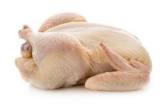
A variety of European countries have issued nearly 100 warnings about Salmonella in chilled and frozen poultry from Poland since the start of March this year.

Data from the Rapid Alert System for Food and Feed (RASFF) portal shows alerts from Bulgaria, Croatia, Czech Republic, Slovakia, Lithuania, Estonia, Latvia, Italy, France and Romania. Most notifications were made by Lithuania, followed by Czech Republic and Bulgaria.

Involved serotypes include Enteritidis, Infantis, Typhimurium, Saintpaul, Derby, Newport, and Mbandaka. European regulation on fresh poultry mentions Salmonella Enteritidis and Typhimurium as a food safety criterion as these serotypes represent the main risk for public health. It considers chicken contaminated with other types as compliant or that it should be assessed on a case-by-case basis.

The EU produced an estimated 15.2 million tons of poultry meat in 2018. The main producer in that year with 2.5 million tons was Poland.

Belgium – Belgium reports record high number of outbreaks

Food Safety News

Belgium has recorded the highest number of foodborne outbreaks in a year since recordkeeping began.

This past year, 571 outbreaks were reported to the National Reference Laboratory for Foodborne Outbreaks (LNR-TIA). A total of 2,457 people fell ill and 28 were hospitalized.

Data on outbreaks have been collected by Sciensano, the Belgian Institute for Health, since 1999. From 1999 to 2010, 39 to 116 outbreaks were reported each year, but this number doubled in 2011 to 281. There were an average of 336 outbreaks per year between 2011 and 2016. Almost 400 outbreaks were recorded in 2018.

Research – EFSA: Ochratoxin A in food likely poses health risk; licorice cited

Food Safety News

Ochratoxin A in food poses a health concern for most consumer groups, according to a European Food Safety Authority (EFSA) assessment.

Ochratoxin A (OTA) is a mycotoxin naturally produced by molds that can be found in foodss such as cereals, preserved meats, fresh and dried fruit, and cheese.

Data available since an opinion in 2006 suggest that OTA can be genotoxic by directly damaging the DNA and experts confirmed it can be carcinogenic to the kidney. OTA causes kidney toxicity in different animal species and kidney tumors in rodents.

The European Commission asked EFSA to update the 2006 opinion. In that work, a tolerable weekly intake (TWI) based on toxicity and carcinogenicity to the kidney of 120 nanograms per kilogram (ng/kg) of body weight was established.

Research – The fate of cold‐stressed or tetracycline‐resistant Vibrio spp. in precooked shrimp during frozen storage

Wiley Online

CDC Vibrio

Image CDC

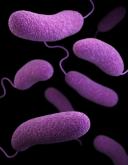
We compared the fate of cold‐stressed (CS) or tetracycline‐resistant (TR) Vibrio parahaemolyticus, Vibrio vulnificus , and Vibrio cholerae in precooked shrimp during frozen storage. The recovery ability of viable but nonculturable (VBNC) Vibrio cells was compared at 25°C. Each suspension of nonstressed (NS), CS, or TR Vibrio cells inoculated into cooked shrimps were subjected to frozen storage at −20°C or three freeze–thaw cycles. CS and TR cells were more rapidly converted to VBNC state than NS cells. Most of VBNC Vibrio cells were observed as viable cells after frozen storage. Although there were differences in the recovery extent of cells depending on the types of stress and strain, VBNC cells were resuscitated at 25°C. The most resistant to tetracycline and the lowest injury rate were observed in V. cholerae cells during frozen storage.

USA – FDA Releases Report on Investigation into Fall 2019 Outbreaks of Illnesses Tied to Romaine Lettuce

FDA


As the nation grapples with the COVID-19 public health emergency, the U.S. Food and Drug Administration is grateful for all that the food and agricultural sector is doing to provide safe and available food to consumers during this difficult time. As we work to get through the current challenge together, the FDA remains committed to protecting both the safety of workers and consumers from foodborne illness as we strive to ensure that America’s food supply remains resilient and among the safest in the world. As part of our ongoing efforts to combat foodborne illness, the FDA released the findings of an investigation into three outbreaks of E. coli O157:H7 illnesses that occurred in Fall 2019, all tied to romaine lettuce, that suggests the proximity of cattle to produce fields may have been a contributing factor.

Investigational Findings

The FDA worked with the Centers for Disease Control and Prevention (CDC) and state partners to investigate the contamination of romaine lettuce with several strains of E. coli O157:H7 that caused three outbreaks of foodborne illness beginning in September 2019 and which were declared over in January 2020. Some clusters (but not all) within each of these outbreaks were traced back to a common grower with multiple ranches/fields located in the Salinas, CA, growing region. Together, the outbreaks made 188 people ill.

During the course of on-farm investigations, one of the outbreak strains of E. coli O157:H7 was detected in a sample on public land less than two miles upslope from a produce farm with multiple fields that were identified during the traceback investigations. Other Shiga toxin-producing strains of E. coli (STEC) were found in closer proximity to where romaine lettuce crops were grown, including two samples from the border area of a farm immediately next to cattle grazing land in the hills above leafy greens fields and two samples from on-farm water drainage basins.

While these strains were not tied to the outbreaks, they do offer insight into the survival and movement of pathogens in this growing region. These findings, together with the findings from earlier leafy greens outbreaks, suggest that a potential contributing factor has been the proximity of cattle to the produce fields identified in traceback investigations. This is especially true when cattle are adjacent to and at higher elevations than produce fields.

In the report, “Investigation Report: Factors Potentially Contributing to the Contamination of Romaine Lettuce Implicated in the Three Outbreaks of E. coli O157:H7 During the Fall of 2019,” we’re calling on leafy greens growers to assess and mitigate risks associated with adjacent and nearby land uses, including grazing lands and animal operations. Of note, the number of cattle observed on nearby lands during the 2019 investigations was far lower than the volume of a large Concentrated Animal Feeding Operation, offering a useful reminder that high-density animal operations are not the only factor to consider. These key findings reinforce our concern about the possible impact of nearby and adjacent land use on the safety of leafy green crops and further underscore the importance of reviewing current operations and implementing appropriate risk mitigation strategies.

Research – Assessment of the risk of botulism from chilled, vacuum/modified atmosphere packed fresh beef, lamb and pork held at 3 °C–8 °C

Science Direct


The safety of current UK industry practice (including shelf-life) for chilled, vacuum/modified atmosphere-packed fresh red meat (beef, lamb and pork) held at 3°C–8°C has been evaluated with respect to non-proteolytic Clostridium botulinum. UK industry typically applies a retail pack shelf-life at 3°C–8°C to 13 days for fresh red meat, with a maximum of 23 days for beef, 27 days for lamb, and 18 days for pork. An exposure assessment established that current commercial practice for fresh red meat provided strong protection with more than 1010 person servings marketed in the UK without association with foodborne botulism. A challenge test demonstrated that spores of non-proteolytic C. botulinum inoculated on chilled vacuum-packed fresh red meat did not lead to detectable neurotoxin at day 50 for beef, day 35 for lamb, or day 25 for pork (i.e. <40 pg type B toxin and type E toxin g−1 of meat). The products were visually spoiled many days before these end points. The exposure assessment and challenge test demonstrated the safety of current UK industry practices for the shelf-life of fresh, vacuum-packed beef, lamb and pork held at 3°C–8°C with respect to C. botulinum, and that botulinum neurotoxin was not detected within their organoleptic shelf-life.

USA – California firm ordered to stop Norovirus claims

BARF BLOG

CBS Los Angeles reports a federal court ordered a Lake Forest company to stop distributing hand sanitizer products it touts as being able to fight specific diseases.

Innovative BioDefense Inc. of Lake Forest was ordered Monday to stop distributing its Zylast hand sanitizer products until it obtains FDA approval or removes removes disease-specific claims from its product labeling, according to the U.S. Department of Justice.

The Zylast product line — which includes a broad spectrum antimicrobial antiseptic, an antiseptic lotion and an antiseptic foaming soap — is sold by Innovative BioDefense online, directly to consumers. According to a 2018 federal complaint, the company marketed their products as being effective against pathogens such as norovirus, rhinovirus, rotavirus, flu virus, Methicillin-Resistant Staphylococcus Aerus bacteria and Ebola.

Research – Antibacterial activity and mechanism of Litsea cubeba essential oil against food contamination by Escherichia coli and Salmonella enterica

Wiley Online

Litsea cubeba essential oil (LC‐EO) has been reported as antibacterial agents, but there are few studies about its possible antibacterial mechanism. The antibacterial activities and the underlying mechanisms of LC‐EO against Escherichia coli O157: H7 and Salmonella enterica were investigated. The results showed that the LC‐EO was more effective against gram‐negative bacteria. The inhibition zone for E. coli O157: H7 and S. enterica were 3.1 ± 0.8 and 4.5 ± 0.6 mm, respectively. The minimum inhibitory concentration of LC‐EO against both bacteria was 0.9 μg/ml, while the minimum bactericidal concentrations were 4.5 and 9 μg/ml. Gas chromatography–mass spectrometry analysis confirmed that citral (86.8%) was the main component of LC‐EO. The results of a time–kill analysis illustrated that treatment with LC‐EO led to a rapid decrease in viable bacterial cell number. The release of electrolytes and nucleic acids from the bacterial cells increased with the dose of LC‐EO. Propidium iodide uptake revealed that LC‐EO caused cell membrane damage. Scanning electron and transmission electron microscopy showed that LC‐EO caused damage to the cell walls and membranes, resulting in cell deformation, atrophy, and large central voids. Thus, LC‐EO may provide the basis for the development of new natural food preservatives.

Research -Reducing contamination of carcasses during de-feathering

Watt Poultry USA Campylobacter kswfoodworld

Broiler carcasses are often contaminated with bacteria during feather plucking. Applying an acidic solution could prevent this.


Research – Chicken study probes resistance to Campylobacter

Poultry World

Transplanting gut microbes from chickens that are relatively resistant to Campylobacter bacteria into chickens that are susceptible does not improve resistance, a study by The Roslin Institute at the University of Edinburgh has shown.

Campylobacter is a cause of food poisoning in people and is often found in chickens. In the UK alone, it is estimated that more than half a million people are infected with Campylobacter each year.