Category Archives: outbreak

Finland – Several cases of food poisoning caused by oysters confirmed in Helsinki

Helsinki Times

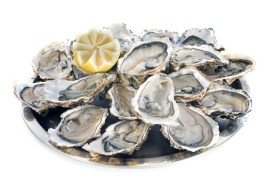
french oysters

The Environment Services of the City of Helsinki is investigating a number of suspected cases of food poisoning that are believed to be related to dining at several different restaurants and a pop-up event since the beginning of February. Currently, there are about 20 known cases of illness.

The individuals who have fallen ill all consumed oysters, and environmental services have taken food samples from the restaurants as well as patient samples from the city’s epidemiological action. Norovirus has been found in the samples.

The Food Safety Unit is requesting that anyone who has eaten oysters at Fisken på Disken, Ravintola Natura, Ravintola Gillet, The Cock, Ravintola Meripaviljonki, and the pop-up event at Ravintola Sake bar & Izakaya in February 2023 and has fallen ill after their meal, to contact the food safety unit. Illnesses may also be linked to other restaurants.

Those who have fallen ill are encouraged to contact the food safety unit primarily through an electronic food poisoning form at https://ilppa.fi. Contact can also be made by phone on weekdays from 8 am to 4 pm at +358 9 310 31527.

Norovirus is the most common cause of sudden intestinal infections in Finland.

USA – FDA Advises Restaurants, Retailers and Consumers to Avoid Raw Oysters from Baynes Sound, British Columbia, Canada Because They Are Potentially Contaminated with Norovirus

FDA

Eurofins

The FDA is advising consumers not to eat, and restaurants and food retailers not to sell, and to dispose of oysters that were harvested between January 16, 2023, and February 17, 2023, from Deep Bay, Baynes Sound subarea 14-8 or subarea 13-16 (landfile #140185) in British Columbia, Canada. Consumers who purchased oysters after January 16, 2023, should check the packaging to see if they were harvested in Baynes Sound subarea 14-8 or subarea 13-16 (landfile #140185). Contaminated shellfish can cause illness if eaten raw, particularly in people with compromised immune systems. Food contaminated with norovirus may look, smell, and taste normal. Consumers of these products who are experiencing symptoms of norovirus illness should contact their healthcare provider, who should report their symptoms to their local Health Department.

Research – Outbreak of Shigella sonnei in the EU/EEA and the United Kingdom among travellers returning from Cabo Verde

ECDC

As of 16 February 2023, 10 EU/EEA countries and the UK reported and the US reported 221 confirmed Shigella sonnei infections and 37 possible cases, all with a link to Cabo Verde.

Information on possible ways of infection or common exposure have not yet been identified but investigations are ongoing in Cabo Verde. Multiple modes of transmission are plausible, and the most likely way is through food, including via infected food handlers. However, person-to-person transmission is also possible.

The S. sonnei strain in the current outbreak indicates predicted resistance to trimethoprim and streptomycin but in some cases, multidrug resistance has also been detected.

Based on the available information, many cases are reported to have stayed in all-inclusive hotels located in the region of Santa Maria on the island of Sal. The most recent cases were reported in Sweden on 19 January 2023, suggesting an ongoing moderate risk of new infections among travellers to Cabo Verde, particularly among those staying in the region of Santa Maria on the Island of Sal.

Shigellosis is a gastrointestinal infection caused by one of four species of Shigella bacteria: Shigella sonnei, S. flexneri, S. boydii and S. dysenteriae. Humans are the primary reservoirs for Shigella.

Shigellosis is caught by oral contact with material contaminated by faeces, either through direct person-to-person contact, via contaminated food or water, or via objects which have been in contact with faeces. The necessary dose for infection is small, which increases transmissibility.

Food-related outbreaks are often caused by infected food handlers, who contaminate ready-to-eat food items like salads. Waterborne infection can occur if drinking or recreational water is contaminated with faeces from an infected person.

Handwashing with soap and water is important, especially after using the toilet and before preparing or eating food. Additional care with food and drinking water when travelling abroad is also important. There is no vaccine currently available to prevent Shigella infection.

People with shigellosis should not attend school, handle food, or provide child or patient care whilst ill. Children under the age of five, food handlers, and healthcare staff should stay at home for 48 hours after their symptoms have ceased.

ECDC encourages public health authorities in the EU/EEA to increase awareness among healthcare professionals on the possibility of Shigella infections among people that recently travelled to Cabo Verde.

Together with WHO/Europe, ECDC is in regular contact with authorities in Cabo Verde to support investigations on the sources of infection and to increase awareness among healthcare professionals in the country.

USA – FDA Core Food Outbreak Table Update

FDA

Date
Posted
Ref Pathogen
or
Cause of
Illness
Product(s)
Linked to
Illnesses

(if any)
Total
Case
Count

Status
2/15/2023 1123 Listeria
monocytogenes
Not Yet
Identified
See CDC
Investigation
Notice
Active
12/28/2022 1137 Salmonella
Typhimurium
Alfalfa Sprouts See
Outbreak
Advisory
Active
11/9/2022 1127 Listeria
monocytogenes
Enoki
Mushrooms
See
Outbreak
Advisory
Active

Wales – Public Health Wales confirms food poisoning outbreak in Welsh town

Daily Post

Public Health Wales (PHW) has confirmed a food poisoning outbreak believed to have been caused by the shigella bacteria. The infection can cause diarrhoea, a fever, and stomach cramps.

The infection, called shigellosis, is not life-threatening but can result in hospitalisation. Symptoms typically begin one to two days after being infected by the virus and can last up to seven days.

The outbreak in Abergavenny is said to be linked to a restaurant in the town, Wales Online reports. One person claims their family and friends have been put through “horrendous sickness” as a result of contracting shigella on February 12.

USA – Employees had nowhere to wash hands at ice cream factory behind Listeria outbreak, FDA says

CBS News

Employees at Big Olaf Creamery, the Florida-based creamery behind a multistate listeria outbreak last year, had nowhere to wash their hands before they entered the production room, according to an investigation conducted by the Food and Drug Administration. The outbreak killed at least one person and hospitalized 27 others across 11 states.

“It was observed that there was no handwash sink outside of the production area for employees to wash and sanitize hands before entering the production room,” the FDA wrote.

France Contaminated infant milk: the Lactalis group is indicted for aggravated deception and involuntary injuries – Salmonella

France Info

The Lactalis group and the Celia Laiterie company were indicted on Thursday, February 16, for aggravated deception and involuntary injuries in the investigation into the salmonella contamination of infant milk which affected dozens of infants at the end of 2017, announced the group in a press release. The two companies are placed under judicial supervision with a bond of 300,000 euros each, according to the group.

A total of 53 identified infants had been affected by salmonellosis in France at the end of 2017 after consuming a product for children, mainly of the Milumel or Picot brand, from the Craon factory, located in Mayenne.

Research – Avoiding a global chocolate disaster – how tracing and recalls avoided a worldwide Salmonella outbreak

Eurekalert

Largest ever recall of chocolate products in global history, just before Easter 2022, prevented thousands of extra cases; a total of 455 cases of Salmonella Typhimurium found in 17 countries; UK had most cases with 128.

Like any other manufactured food product, chocolate can be contaminated if key ingredients or processes break down. In a presentation in a pre-ECCMID day for this year’s European Congress of Clinical Microbiology & Infectious Diseases (ECCMID 2023, Copenhagen, 15-19 April), Dr Johanna Takkinen, Principal Expert for Food- and Waterborne Diseases at the European Centres for Disease Control and Prevention (ECDC), Stockholm, Sweden, will discuss the drama as the story unfolded, and the lessons learned from an outbreak of Salmonella Typhimurium in Kinder Chocolate Eggs traced to a Belgian chocolate factory.

”If not for clear and co-ordinated action across Europe and beyond, there may have been many thousands more children falling ill, and potentially many deaths,” says Dr Takkinen.

Authorities in the UK (the UK Health Security Agency [UKHSA]) first raised the alarm in ECDC-hosted alert platform EpiPulse on 17 February 2022, reporting a cluster of 18 children reported ill with monophasic Salmonella Typhimurium infections since January 2022. Of these, seven were hospitalised and five of the seven had bloody diarrhoea, a serious symptom. “Preliminary interviews of first cases indicated Kinder chocolate products as a possible vehicle of infection. Several countries then began reporting an increasing number of infections with strains the same as the UK outbreak,” explains Dr Takkinen. By 18 February, France had reported its first 2 cases, and by 18 March 59 cases were reported in five countries.

Late in March 2022, ECDC coordinated a teleconference with affected countries when four non-human monophasic S. Typhimurium isolates, genetically close to the human isolates, were identified in a public database. Within a week, these isolates were confirmed originating from one particular Belgian chocolate factory. Prior to this, identifying which factory or factories were involved was difficult since there are four factories within the European Union that produce Kinder chocolate in large quantities. This new microbiological evidence allowed the various agencies to focus their investigations on one factory.

Meanwhile, the Food Standards Agency (FSA) in the UK* and the Food Safety Authority (FSA) in Ireland and the UK FSA decided to recall, on April 2**, certain Kinder Chocolate products (including Kinder Surprise Eggs).  On April 8 authorities, now confident the factory was identified, ordered that chocolate factory (Ferrero) closed, and two days later had issued a global recall of products from the factory. The alert reached 130 countries, and in addition to the 401 cases* identified in the EU and UK combined (the UK had the most cases, with 128), further cases were identified in Switzerland (49) and Canada (4) and the USA (1) – giving a global total of 455 cases in 17 countries.  The ECDC and EFSA also published Rapid Outbreak Assessments to keep the public updated.

For link to Dr Takkinen’s slides, click here

*For the ECDC update showing case numbers from different countries, click here

**For the Food Standards Agency (UK) notice on this, original published April 2, 2022, click here

Jordan – 120 food poisoning cases reported in Jerash

Roya News

Approximately 120 food poisoning cases have been reported in Jerash, including two children, according to Roya’s correspondent Wednesday.

The Jodan Food and Drug Administration (JFDA) had shut down a fast food restaurant in Jerash Tuesday, as a precaution, after a significant number of people reported feeling ill after eating from that restaurant.

Sweden – The number of sick in the Swedish egg Salmonella outbreak continues to increase

Food Safety News

hazegg.jpg

The number of people sick in a Salmonella outbreak in Sweden traced to eggs has gone up again to nearly 80.

The Public Health Agency of Sweden (Folkhälsomyndigheten) said 76 people were sick, which is up from 48 in a previous update.

Patients from 16 different regions have been confirmed as infected with the outbreak strain of Salmonella Enteritidis.

Sick people include 36 women and 40 men who fell ill between early December 2022 and the end of January 2023. They are one to 91 years old with a median age of 35.