Category Archives: mold

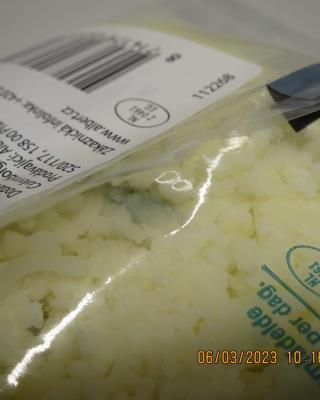
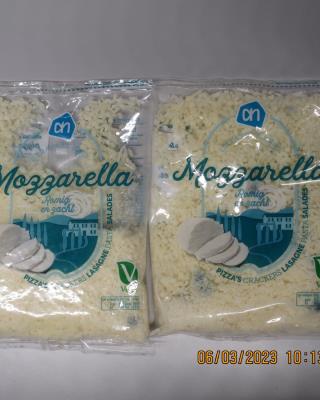
Czech Republic – Mozzarella grated – Mould/Mold

Potravinynapranyri

Illustrative photo #1

Illustrative photo #5

Place of inspection:
Hradec Králové ( E. Beneše 1797, 500 12 Hradec Králové )
ID: 44012373
Food group: Milk and milk products Cheese

Mozzarella grated
Category: Dangerous foods
Invalid parameter:

fungi visible to the eye

Some of the packaging had visible mold under the packaging. Food is not considered safe if it shows signs of spoilage.

Unsuitable storage temperatures for this food were not detected during the inspection. The food did not have an expired minimum durability date.

Batch: 0245
Best before date: 14/03/2023
Packaging: plastic packaging
Quantity of the product in the package: 150 g
Country of origin:  Netherlands
Date of sample collection: 6/3/2023
Reference number: 23-000152-SZPI-CZ
The sample was detected by the official control of the State Agricultural and Food Inspection.

RASFF Alerts – Mold/Mould – Corn – Hulled Sunflower Seeds – Feed Material

RASFF

Corn – mould from Ukraine in Poland

RASFF

Sunflower meal from hulled sunflower seeds – mold from Ukraine in Poland and Lithuania

RASFF

Mould in feed material from Ukraine in Poland

 USA – FDA – Nature’s Promise Organic Raspberries – Moulds

FDA

Enforcement Report

Event ID: 92011

Voluntary / Mandated:

Voluntary: Firm initiated

Product Type: Food

Distribution Pattern:

ME, CA, MA, CA

Recalling Firm:

B.C. Frozen Foods
33920 Lougheed Hwy
Mission
Canada

Press Release URL(s):

Recall Initiation Date:

3/31/2023

Center Classification Date:

4/13/2023

1. Nature’s Promise Organic Raspberries 10oz; Stand up plastic more…

F-0715-2023

Class II

1. UPC: 068826753504; Expiration: 03-06-2024; Lot 361-22 2. UPC: 07417502347; Expiration: 02-08-2024; Lot 334-22 3. UPC: 688267006043 (Pouch) and UPC 0068826784629 (Case); Expiration: 03-26-2024, 04-04-2024, 04-25-2024; Lot: 016-23, 025-23, 046-23 4. UPC: 009848795288; Expiration: 04-06-2024; Lot: 028-23

14,748 lbs.

Product contains high levels of mold.

Austria – Pets – Fiffy meadow hay 700g – Mold/Mould

AGES

Miscellaneous Recall

AGES informs about a recall of the company SPAR. On April 14th, 2023, the company initiated a recall of the product Fiffy meadow hay 700g:
©AGES
recall reason
Mold
Marketed by
SAVE
Manufacturer
SAVE
Expiry Date
02.2025
Batch number
No. 156 (Best before 11/24) / No. 161 (Best before 02/25)

SPAR continuously controls the products of the SPAR brands to ensure the highest quality – not only for food, but also for items for pets, for example. During a routine quality control, a microbiological deviation (mold formation) was found in the product “Fiffy Wiesenheu 700g” of batches no. 156 (best before 11/24) and no. 161 (best before 02/25). For this reason, SPAR is recalling the product with the above batch numbers. This warning does not imply that the nonconformity was caused by the producer, manufacturer, importer or distributor.

Customers are asked not to use the “Fiffy Wiesenhay 700g” with the batch numbers 156 and 161 for their pets due to a microbiological deviation (mold formation). All other Fiffy products or meadow hay of other brands are not affected by this recall.

All customers who have bought a product with the batch numbers mentioned can of course return it to the nearest SPAR, EUROSPAR or INTERSPAR store or Maximarkt. Customers are reimbursed the purchase price even without a receipt.

Customers who have questions about this are welcome to contact customer service at office@spar.at or call the freephone number 0800 / 22 11 20 .

original recall

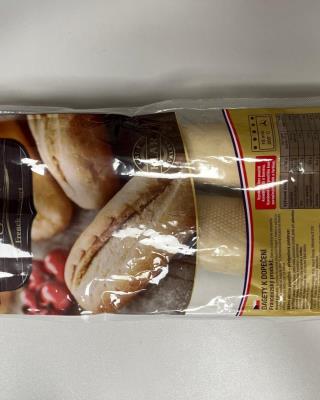
Czech Republic – L’Chefs Baguettes – Mold/Mould

Potravinynapranyri

Illustrative photo #1

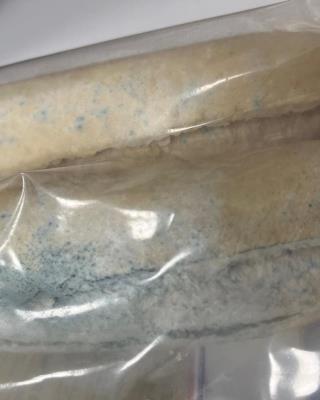
Illustrative photo #6

Place of inspection:
Brno ( Vídeňská 815/89a, 639 00 Brno )
ID: 44012373
Food group: Bakery products Common pastries

L’Chefs Baguettes
Category: Dangerous foods
Invalid parameter:

fungi visible to the eye

In part of the package, visible mold was detected under the packaging on the surface of the food. Food is not considered safe if it shows signs of spoilage.

Unsuitable storage temperatures of this product were not detected during the inspection. The food did not have an expired minimum durability date.

Best before date: 13/04/23
Packaging: PP bag with seams and printing
Quantity of the product in the package: 0.3 kg
Date of sample collection: 13/03/2023
Reference number: 23-000185-SZPI-CZ
The sample was detected by the official control of the State Agricultural and Food Inspection.

Research – Special Issue: Coffee, Fungi, Mycotoxins, and Climate Change

MDPI

Coffee is very lucrative and enjoyed by many. It is a major cash crop, especially for countries without many alternative sources of income. However, production is threatened by climate change, a phenomenon that is now universally accepted as occurring and represents a major threat to societies and industry worldwide. Paterson and Lima [1] expressed great concern in 2010 about the lack of methods to combat climate change. Thirteen years later, there has been little tangible action to reduce climate change, despite many warm words about what will be done “sometime in the future”.
It is apposite to consider what would be the effect of climate change on coffee, particularly in relation to spoilage fungi and the production of mycotoxins. Fungi already cause considerable damage to coffee and mycotoxins have highly significant consequences on human and animal health. The commodity can be rejected by authorities when the concentrations of ochratoxin A (OTA) are too high.
We were hoping for more than four papers on the subject, but were pleased that the quality was so high of those we did receive. Gratitude is extended to Naresh Magan’s group for contributing two papers [2,3], both of which present novel data. Akbar et al. [2] have already been cited 15 times (Scopus (18 February 2023)), indicating the high relevance of their work. The growth and OTA production of Aspergillus westerdijkiae were tested in relation to, for example, water activity, temperature and CO2 in media and beans. Interestingly, in green coffee-based media, OTA production was optimum at 0.98–0.95 aw and 30 °C. However, in roasted coffee-based media, very little OTA was produced. In stored green coffee beans, optimum OTA was produced at 0.95–0.97 aw/30 °C.
The objective of Akbar et al. [3] (five Scopus citations ((18 February 2023))) was to examine the effect of treatment of coffee beans with gaseous ozone (O3) for the control of ochratoxigenic fungi and OTA contamination during storage. The paper revealed that, inter alia, it is unlikely that fungi and the OTA contamination of stored coffee beans would be controlled even with high O3 concentrations under wetter conditions.
Our first review on the topic came from Brazil [4], which already has six citations (Scopus ((18 February 2023)). Brazil produces the most coffee globally and we were especially pleased to receive this paper. Temperatures in coffee-producing municipalities in Brazil have increased by about 0.25 °C per decade and annual precipitation has decreased. Therefore, the coffee sector will face serious challenges in the next few decades and the impacts of climate change directly affect coffee mycobiota. Aflatoxins may become dominant with climate change, promoting greater food insecurity in coffee production. Closer attention by authorities is fundamental to stimulate the displacement of areas currently apt for coffee production, that will deteriorate in the future to novel climate zones with suitable climates. This will ameliorate the scarcity of coffee on the world market in the future.
Adhikari et al. [5] (13 citations Scopus ((18 February 2023))) reviewed how (a) suitable areas for coffee cultivation and (b) the toxigenic fungal taxa belonging to AspergillusPenicillium, and Fusarium will be affected due to climate change. Studies predict that suitable coffee cultivation areas could drop by 50%. Increased temperatures will see an overall increase in mycotoxin production such as aflatoxins, particularly by A. flavus, which grows at higher temperatures. Information regarding climate change parameters and mycotoxin concentrations in real coffee samples is provided. Modelling of future changes in coffee cultivation is also required. Indications show that climate change will result in an increase in mycotoxin contamination.
The current author expresses his appreciation to all the authors of this Special Issue and trusts the papers will be of considerable use to workers in the field. He also hopes that very large advances in reducing climate change will occur in the next 13 years, unlike the previous 13.

RASFF Alert- Mycotoxin – Ochratoxin A – Cereal Bars for Children

RASFF

Ochratoxin A in cereal bars for children from Italy in Finland

RASFF Alert – Mycotoxin – Ergot Alkaloids – Rye Flour

RASFF

Ergot alkaloids in wholemeal rye flour from Spain in Andorra

RASFF Alert- Mycotoxin – Fumonisins – Corn Snack

RASFF

Fumonisins in corn snack for children  from Finland in the Netherlands

Finland – Mold toxins in corn kernels

Epressi

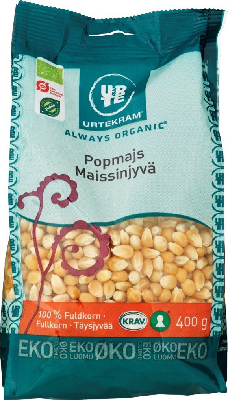
Midsona Finland Oy has announced that it has withdrawn from sale one lot of the product Urtekram Maize grain organic 400 g. The batch to be withdrawn can best be identified by the date before 25.07.2024. The batch in question has been found to contain aflatoxin, which is a mold toxin, exceeding the maximum amount defined in the legislation. In long-term use, it is harmful to health.

The product batch has been delivered this spring for sale to S and K group stores.

More information for consumers can be found on Midsona Finland Oy’s website. The company advises consumers for questions or to obtain possible product refunds to contact the consumer service by email: sättätäpalvelu@midsona.fi : “The email must include a picture of the product and the best before date. We will refund the price of the product, so please also include your contact information in the message.”

The matter is handled at the Food Agency by Chief Inspector Mika Varjonen, firstname.surname@ruokavirasto.fi .

Picture of the product
(Picture: Midsona Finland Oy)

Urtekram Corn grain organic 400 g.