Category Archives: Microbiology

USA – Resources for the Control of Listeria monocytogenes for Manufacturers of Soft Fresh Queso Fresco-type CheesesUSA –

FDA

Summary of FDA’s Strategy to Help Prevent Listeriosis Outbreaks Associated with Soft Fresh Queso Fresco-Type Cheeses

This fact sheet is intended to help Queso Fresco-type soft cheese manufacturing groups further their understanding of possible food safety risks that can occur in production and the resources available to help them consistently produce safe food.

What are soft Queso Fresco-type cheeses?

Soft Queso Fresco-type (QFT) cheeses are fresh, unripe cheeses that do not go through a significant aging process. These types of cheeses are white/off-white in color and very moist. They also have a low salt and acid content, which gives them a shorter shelf life compared to that of other aged cheeses. This also means soft QFT cheeses must always be refrigerated. Depending on the country of origin, some of the more popular fresh, soft QFT cheeses are labeled as either Latin-style or Mexican-style cheeses. Well-known examples of QFT cheeses include Oaxaca, Asadero, Queso Blanco, Queso Fresco, Requeson, and Panela, amongst others [1],[2].

What are some concerns with soft Queso Fresco-type cheeses?

The pathogen of primary concern among soft QFT cheeses is Listeria monocytogenes (L. monocytogenes), a type of disease-causing bacteria that specifically causes the infection listeriosis. Outbreaks of listeriosis have been linked with soft QFT cheeses made from raw milk or those that contain ingredients that were contaminated somewhere during the cheese-making process.  Historical outbreaks of listeriosis have been associated with QFT made from unpasteurized milk, but recent outbreaks have been caused by cheeses made from pasteurized milk that was contaminated during the cheese-making process. The soft QFT cheeses linked to past outbreaks were often manufactured by smaller-scale producers. These outbreaks have often affected a higher proportion of pregnant Hispanic women and their newborns. Listeriosis infections in pregnant women can result in serious illness, miscarriage, or even stillbirth. Older adults, newborns, and people with weakened immune systems are also at higher risk for developing serious symptoms associated with listeriosis. In addition to the risk of listeriosis linked to soft QFT cheese, the Centers for Disease Control and Prevention has reported multiple outbreaks linked to other pathogenic bacteria in these products, including SalmonellaCampylobacter jejuni, and Brucella [3],[4].
USA – Raw milk bill requires Hawaii Legislature to choose between health risks or food security

Food Safety News

Hawaii House Bill 521 reads like another attempt to weaken the regulation of raw milk until you notice that the year 3000 is currently listed as the effective date. That might be a long wait for those who want to legalize raw milk and raw milk products in the Aloha State including the bill’s powerful author.

Nevertheless, HB521 is getting serious consideration from Hawaii’s legislative committee. The bill has already been heard by the House Finance Committee and the Committee on Consumer Protection and Commerce. Those two committees agree that the purpose of HB 521 is to:

1) Authorize and decriminalize the sale of raw milk and raw milk products directly to consumers for human consumption, subject to certain conditions; and

(2) Authorize the sale of raw goat milk for pet consumption, subject to certain conditions.

USA – Two pet food companies warned after Salmonella and Listeria found in finished products

Food Safety News

As part of its enforcement activities, the Food and Drug Administration sends warning letters to entities under its jurisdiction. Some letters are not posted for public view until weeks or months after they are sent. Business owners have 15 days to respond to FDA warning letters. Warning letters often are not issued until a company has been given months to years to correct problems.

Primal Pet Foods
Fairfield, CA

An animal food firm in California is on notice from the FDA for serious violations of the FDA’s Current Good Manufacturing Practice, Hazard Analysis and Risk-Based Preventive Controls for Food for Animals regulation, including Listeria found in the finished product. Pathogens in pet food can make people as well as pets sick.

Arrow Reliance Inc.
Tukwila, WA

An animal food firm in Washington is on notice from the FDA for not being in compliance with FDA regulations due to adulterated animal food, including finished products with Salmonella. Pathogens in pet food can make people as well as pets sick.

Research – A Bit(e) of History of Hepatitis A and Frozen Fruits and Vegetables

Marler Blog

Another Hepatitis A outbreak appears to be brewing in the US linked to imported frozen strawberries. Here is a bit(e) of a compilation of past outbreaks.

Hepatitis A outbreaks associated with fresh, frozen, and minimally processed produce worldwide from 1983 to 2022—adapted and expanded from Sivapalasingam et al., 2004 and Fiore, 2004. Italics indicate instances where the food was locally sourced with respect to the cases. The implicated foods were raw unless listed otherwise.

Hepatitis A outbreaks associated with fresh, frozen, and minimally processed produce, worldwide, from 1983 to 2022 see the table at the link above.

Singapore – Downgrading of food shop Rasel Catering Singapore Pte Ltd (253 Pandan Loop, Singapore 128432) due to food poisoning incident

SFA

345 persons were reported to have developed gastroenteritis symptoms after consuming food prepared by Rasel Catering Singapore Pte Ltdbetween 8 and 16 November 2022. None of them were hospitalised.
A joint investigation by the Ministry of Health and the Singapore Food Agency (SFA) was conducted following the incident. Several hygiene lapses were identified during the inspections of the food shop on 10 and 18 November 2022, and SFA will be taking enforcement actions against the licensee for these lapses.
SFA has adjusted the food shop’s food hygiene grade from “A” to “C” with effect from 17 March 2023, to be reviewed in 12 months. The premises will also be kept under surveillance.
Food operators are reminded to adhere to good food hygiene and safety processes. Good hygiene practices such as the washing of hands before handling food can greatly reduce the incidence of gastroenteritis when adopted by all key stakeholders, including the industry and public
The information provided on this website should not be used as basis for any legal proceedings. Neither SFA nor any of its employees involved in the supply of the above information shall be liable for any loss or damage suffered by any member of the public by reason of any error or omission of whatever nature appearing therein or however caused.

Research – Microbiological Quality and Safety of Fresh Turkey Meat at Retail Level, Including the Presence of ESBL-Producing Enterobacteriaceae and Methicillin-Resistant S. aureus

MDPI

Abstract

The aim of this work was to study the microbiological safety and quality of marketed fresh turkey meat, with special emphasis on methicillin-resistant S. aureus, ESBL-producing E. coli, and K. pneumoniae. A total of 51 fresh turkey meat samples were collected at retail level in Spain. Mesophile, Pseudomonas spp., enterococci, Enterobacteriaceae, and staphylococci counts were 5.10 ± 1.36, 3.17 ± 0.87, 2.03 ± 0.58, 3.18 ± 1.00, and 2.52 ± 0.96 log CFU/g, respectively. Neither Campylobacter spp. nor Clostridium perfringens was detected in any sample. ESBL-producing K. pneumoniae and E. coli were detected in 22 (43.14%), and three (5.88%) samples, respectively, all of which were multi-resistant. Resistance to antimicrobials of category A (monobactams, and glycilcyclines) and category B (cephalosporins of third or fourth generation, polymixins, and quinolones), according to the European Medicine Agency classification, was found among the Enterobacteriaceae isolates. S. aureus and methicillin-resistant S. aureus were detected in nine (17.65%) and four samples (7.84%), respectively. Resistance to antimicrobials of category A (mupirocin, linezolid, rifampicin, and vancomycin) and category B (cephalosporins of third- or fourth generation) was found among S. aureus, coagulase-negative staphylococci, and M. caseolyticus isolates.

Research – Evaluation of Biofilm Cultivation Models for Efficacy Testing of Disinfectants against Salmonella Typhimurium Biofilms

MDPI

Abstract

Within the European Union, Salmonella is frequently reported in food and feed products. A major route of transmission is upon contact with contaminated surfaces. In nature, bacteria such as Salmonella are often encountered in biofilms, where they are protected against antibiotics and disinfectants. Therefore, the removal and inactivation of biofilms is essential to ensure hygienic conditions. Currently, recommendations for disinfectant usage are based on results of efficacy testing against planktonic bacteria. There are no biofilm-specific standards for the efficacy testing of disinfectants against Salmonella. Here, we assessed three models for disinfectant efficacy testing on Salmonella Typhimurium biofilms. Achievable bacterial counts per biofilm, repeatability, and intra-laboratory reproducibility were analyzed. Biofilms of two Salmonella strains were grown on different surfaces and treated with glutaraldehyde or peracetic acid. Disinfectant efficacy was compared with results for planktonic Salmonella. All methods resulted in highly repeatable cell numbers per biofilm, with one assay showing variations of less than 1 log10 CFU in all experiments for both strains tested. Disinfectant concentrations required to inactivate biofilms were higher compared to planktonic cells. Differences were found between the biofilm methods regarding maximal achievable cell numbers, repeatability, and intra-laboratory reproducibility of results, which may be used to identify the most appropriate method in relation to application context. Developing a standardized protocol for testing disinfectant efficacy on biofilms will help identify conditions that are effective against biofilms.

Research – Bacteriological Quality and Biotoxin Profile of Ready-to-Eat Foods Vended in Lagos, Nigeria

MDPI

Abstract

A comprehensive study of bacterial and biotoxin contaminants of ready-to-eat (RTE) foods in Nigeria is yet to be reported. Hence, this study applied 16S rRNA gene sequencing and a dilute-and-shoot LC-MS/MS method to profile bacteria and biotoxins, respectively, in 199 RTE food samples comprising eko (n = 30), bread (n = 30), shawarma (n = 35), aadun (n = 35), biscuits (n = 34), and kokoro (n = 35). A total of 631 bacterial isolates, clustered into seven operational taxonomic units, namely AcinetobacterBacillusKlebsiellaProteus and KosakoniaKurthia, and Yokenella, that are reported for the first time were recovered from the foods. One hundred and eleven metabolites comprising mycotoxins and other fungal metabolites, phytoestrogenic phenols, phytotoxins, and bacterial metabolites were detected in the foods. Aflatoxins, fumonisins, and ochratoxins contaminated only the artisanal foods (aaduneko, and kokoro), while deoxynivalenol and zearalenone were found in industrially-processed foods (biscuit, bread, and shawarma), and citrinin was present in all foods except eko. Mean aflatoxin (39.0 µg/kg) in artisanal foods exceeded the 10 µg/kg regulatory limit adopted in Nigeria by threefold. Routine surveillance, especially at the informal markets; food hygiene and safety education to food processors and handlers; and sourcing of high-quality raw materials are proposed to enhance RTE food quality and safeguard consumer health.

Research – Current Perspectives on Viable but Non-Culturable Foodborne Pathogenic Bacteria: A Review

MDPI

Abstract

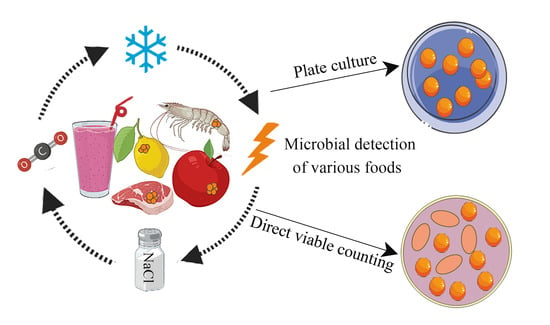
Foodborne diseases caused by foodborne pathogens pose risks to food safety. Effective detection and efficient inactivation of pathogenic bacteria has always been a research hotspot in the field of food safety. Complicating these goals, bacteria can be induced to adopt a viable but non-culturable (VBNC) state under adverse external environmental stresses. When in the VBNC state, pathogens cannot form visible colonies during traditional culture but remain metabolically active and toxic. The resulting false negative results in growth-related assays can jeopardize food safety. This review summarizes the latest research on VBNC foodborne pathogens, including induction conditions, detection methods, mechanism of VBNC formation, and possible control strategies. It is hoped that this review can provide ideas and methods for future research on VBNC foodborne pathogenic bacteria.

Research – Detection of Escherichia coli O157:H7 in imported meat products from Saudi Arabian ports in 2017

Nature.com

Escherichia coli O157:H7 is a foodborne pathogen, which causes various health conditions in humans, including fatigue, nausea, bloody diarrhoea and in some cases, even death. In 2017, 15.71% of the total imported food products in Saudi Arabia (SA) were meat-based. India and Brazil are two of the top five countries from where SA imports meat. According to the Saudi Food and Drug Authority, in 2017, at least 562, 280, and 50 samples of imported beef, chicken and sheep meat, respectively, were tested for the presence of E. coli O157:H7. Amongst these, E. coli O157:H7 was detected in respectively 6.80% and 2.20% of the tested beef meat samples imported from India and Brazil as well as in respectively 6.96% and 3.57% of the tested chicken samples imported from Brazil and Ukraine. Moreover, the pathogen was detected in 2.13% of the tested sheep meat samples imported from India. The present report provides evidence that imported meat can serve as the carrier of E. coli O157:H7, which may lead to epidemics within the Kingdom of Saudi Arabia.