Category Archives: Microbiology

USA – Sources of Foodborne Illness Report Released – IFSAC

Click to access P19-2018-report-TriAgency-508.pdf

USA – Sunstar Americas Inc. Expands Voluntary Nationwide Recall of Paroex® Chlorhexidine Gluconate Oral Rinse USP, 0.12% Due to Microbial Contamination

FDA

Schaumburg, Illinois, Sunstar Americas, Inc. (SAI) is voluntarily recalling Paroex® Chlorhexidine Gluconate Oral Rinse USP, 0.12% products bearing an expiration date from 12/31/2020 – 9/30/2022 to the consumer level. This product may be contaminated with the bacteria Burkholderia lata. This is an expansion of the recall initially announced on October 27, 2020.

Use of the defective product in the immunocompetent host may result in oral and, potentially, systemic infections requiring antibacterial therapy. In the most at-risk populations, the use of the defective product may result in life-threatening infections, such as pneumonia and bacteremia.

To date, 29 adverse events have been reported to SAI related to this recall. Affected patients tested positive for Burkholderia lata infections, typically found in sputum cultures while under treatment for other serious medical conditions. Use of the contaminated product on patients with pre-existing respiratory conditions, including those infected with Covid-19, is particularly unsafe.

The prescription oral rinse product, available through healthcare professionals only, is indicated for use as part of a professional program for the treatment of gingivitis and is packaged as follows:

  • 1789P GUM® Paroex® is distributed in cases each containing 6 amber bottles of 16 fluid ounce (473 ml) chlorhexidine rinse. The bottle has a childproof cap and a 15 ml metered dosage cup, is safety sealed, and is decorated with a multiple-panel wrap-around label.
  • 1788P GUM® Paroex® is distributed in cases each containing 24 amber bottles of 4 fluid ounce (118.25 ml) chlorhexidine rinse. The bottle has a childproof cap, is safety sealed, and is decorated with a multiple-panel wrap-around label.

The product can be identified as shown in the images below

Paroex was distributed Nationwide to Dental offices, Dental distributors, Pharmaceutical wholesalers, Dental schools, and Pharmacies.

SAI is notifying its direct distributors and customers by USPS Priority mail and is arranging for return of all recalled products. Patients, pharmacies, and healthcare facilities in possession of these products should stop using and dispensing immediately.

Consumers with questions regarding this recall can contact SAI by phone at 1-800-528-8537 or email us.pcr@us.sunstar.com on Monday-Friday from 8am-5pm CST. Consumers should contact their physician or healthcare provider if they have experienced any problems that may be related to using this drug product.

Affected products and lot numbers follow below:

Product name:Paroex® Chlorhexidine Gluconate Oral Rinse USP, 0.12%

Size/ Form:16 fl.oz. Amber Bottles

NDC #:052376-021-02

Product Code:1789P

Lots Recalled:ALL LOTS with expiration date from Dec. 31, 2020 through Sep. 30, 2022

Product name:Paroex® Chlorhexidine Gluconate Oral Rinse USP, 0.12%

Size/ Form:4 fl.oz. Amber Bottles

NDC #:052376-021-04

Product Code:1788P

Lots Recalled:ALL LOTS with expiration date from Dec. 31, 2020 through Sep. 30, 2022

Adverse reactions or quality problems experienced with the use of this product may be reported to the FDA’s MedWatch Adverse Event Reporting program either online, by regular mail or by fax.

  • Complete and submit the report Online
  • Regular Mail or Fax: Download form or call 1- 800-332-1088 to request a reporting form, then complete and return to the address on the pre-addressed form, or submit by fax to 1-800-FDA-0178

Sunstar is committed to delivering safe, fully compliant products of the highest quality and is taking necessary steps to prevent future occurrence of this issue.

This recall is being conducted with the knowledge of the U.S. Food and Drug Administration.

About Sunstar Americas Inc.

Sunstar Americas, Inc., a member of the Sunstar Group of companies, is a global organization headquartered in Switzerland that is a leader in the oral care industry and the manufacturer and distributor of the GUM and Butler Brands.

Original Press Release

Company Contact Information

Consumers:
Sunstar Americas
 1-800-528-8537
 us.pcr@us.sunstar.com
Media:
Greg Belair
 847-794-4241
 Greg.belair@us.sunstar.com

Product Photos

Research – The Occurrence of Aflatoxins in Nuts and Dry Nuts Packed in Four Different Plastic Packaging from the Romanian Market

MDPI

kswfoodworld

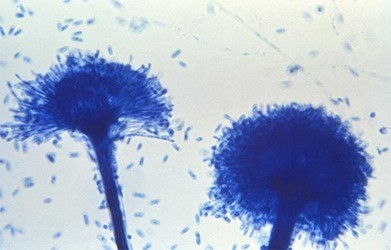
Image CDC

Mycotoxins are secondary metabolites produced by various fungi. A very important category of mycotoxins are aflatoxins, considered to be the most dangerous in humans. Aflatoxin B1, well known as a favorable factor in the occurrence of hepatocellular carcinoma in humans, is the most controversial of all mycotoxins. Aflatoxins, found in naturally contaminated food, are resistant to degradation by heat. Current food processing practices and conventional storage conditions do not completely eliminate aflatoxin contamination from the food supply chain. Long storage food products—such as peanuts, pistachio, nuts in general, and dried fruits—are susceptible to aflatoxins contamination. The type of plastic material can influence the concentration of aflatoxins during storage due to the permeability to gas and moisture exchange with the external milieu. Nuts in general and dried fruits are consumed in large quantities worldwide. Therefore, herein we investigated the effect of plastic material on the total aflatoxins and aflatoxin B1 content in 64 samples of nuts and dried fruits packed and stored in low-density polyethylene (LDPE), polypropylene (PP), polyethylene (PE), and polyethylene terephthalate (PET). The method consisted in a cleanup procedure using immunoaffinity columns coupled with RIDASCREEN FAST immunoenzymatic competitive assays based on the ELISA technique. Collected data were subjected to statistical analysis and multiple comparisons tests were applied. From the total analyzed samples, 14.06% exceeded the maximum admitted European levels for total aflatoxins. The highest concentrations of total aflatoxins were obtained from samples packed in LDPE, followed by PP, PE, and PET. Aflatoxin B1 was detected in all samples packed in LDPE, PP, and PE. Most of the samples packed in PET had concentrations <1 µg/kg. These results indicate that nuts in general packed and stored in LDPE are more prone to contamination with aflatoxins, while PET is more suitable for maintaining the quality and safety of these products. View Full-Text

France – Product recall: BORDE brand extra dried porcini mushrooms – Salmonella

Oulah

Product recall: BORDE brand extra dried porcini mushrooms

ENCOUNTERED PROBLEM

Presence of Salmonella

PROPOSED SOLUTION

Those in possession of this product are asked not to consume it and to return it to the point of sale where it was purchased for
reimbursement.

Foodborne illness caused by Salmonella results in gastrointestinal disturbances, diarrhea, vomiting and abdominal pain, often accompanied by fever; these symptoms may be more serious in young children, immunocompromised individuals and the elderly. The incubation period can range from 6 to 72 hours.
People who have consumed the products mentioned below and who have these symptoms are invited to consult their doctor, notifying him of this consumption.

FURTHER INFORMATION

▸ Net weight
40g

▸ Barcode
3112300101824

▸ Lot
E02218

▸ Best before
12/31/2022

▸ Consumer service contact
The Quality Department of BORDE is available to consumers to answer their questions at the telephone number: 04.71.77.70.70

▸ Source

USA – Imported herring in oil is recalled for risk of Listeria

Food Safety News

B&I Overseas Trading Inc located in  Van Nuys, CA over the holiday recalled frozen “Veladis herring in oil with Italian spices” because it has the potential to be contaminated with Listeria monocytogenes, an organism that can cause serious and sometimes fatal infections in young children, frail or elderly people, and others with weakened immune systems.

Others may suffer only short-term symptoms such as high fever, severe headache, stiffness, nausea, abdominal pain, and diarrhea, Listeria infection can cause miscarriages and stillbirths among pregnant women.

The recalled ” Veladis herring in oil with Italian spices” were sold at select International retail stores in the State of Washington. All affected product has been removed from sale. There were approximately 400 units sold in the months of November and December 2020.

Research -Efficient Reduction of Food Related Mould Spores on Surfaces by Hydrogen Peroxide Mist

MDPI

CDC Mould

The aim of the study was to evaluate the fungicidal effect of a H2O2 mist generating system for disinfection of spores of six food-related moulds (Alternaria alternataAspergillus flavusGeotrichum candidumMucor plumbeusPaecilomyces variotii, and Penicillium solitum) dried on stainless steel. Exposure to H2O2 mist for 2 or 4 h lead to >3 log reduction in mould spores in the majority of the tests. The presence of the soils 2% skim milk or 3% BSA did not significantly alter the fungicidal effect, while the presence of raw meat juice had an adverse fungicidal effect against Penicillium and Mucor in two out of three tests. Fungicidal suspension tests with liquid H2O2 confirmed the effectiveness of H2O2 on reducing the mould spores. Both the surface test and the suspension test indicated that P. variotii is more resistant to H2O2 compared to the other moulds tested. The study shows the efficiency of H2O2 mist on reducing food-related mould spores on surfaces. View Full-Text

Research – Photocatalytically Enhanced Inactivation of Internalized Pathogenic Bacteria in Fresh Produce using Ultraviolet Irradiation with Nano-titanium Dioxide

Journal of Food Protection

Once pathogens are internalized in fresh produce, they pose a challenging food safety issue since they are not effectively inactivated by conventional rinsing or sanitization. To protect food safety and public health, the objectives were to examine internalized levels of foodborne pathogens in different types of fresh produce and to investigate the effectiveness of photocatalytically enhanced inactivation of internalized pathogens in fresh produce using UV irradiation with titanium dioxide (TiO 2 ). For this, green fluorescent protein-labeled S. Typhimurium and E. coli O157:H7 were inoculated on the leaf surface of four types of fresh produce (~10 8 CFU (colony-forming unit)/leaf) and varying concentrations of TiO 2 suspension (0.50, 0.75, 1.00, 1.25, and 1.50 µg/ml)) were applied to the surface of contaminated leaves. Depending on the nature of each vegetable, the internalized bacterial level differed (log 2 – 5 CFU/g of leaf). When UV irradiation (6,000 J/m 2 ) was applied, the internalized S. Typhimurium and E. coli levels were reduced by 0.8 – 2.4 log CFU/leaf and was with TiO 2 , the reduction was 1.1 – 3.7 log CFU/leaf. The inactivation efficiency increased as the TiO 2 concentration (up to 1.50 μg/leaf). These results indicate that the TiO 2 application enhanced the photocatalytic inactivation of internalized foodborne pathogens. The application of TiO2 would be most practical before UV irradiation and before distributing the produce. This study established a platform for future research on the inactivation of various internalized pathogens for protecting public health and scaling up fresh produce treatments by the food industry.

Research – Antimicrobial Blue Light versus Pathogenic Bacteria: Mechanism, Application in the Food Industry, Hurdle Technologies and Potential Resistance

MDPI

Blue light primarily exhibits antimicrobial activity through the activation of endogenous photosensitizers, which leads to the formation of reactive oxygen species that attack components of bacterial cells. Current data show that blue light is innocuous on the skin, but may inflict photo-damage to the eyes. Laboratory measurements indicate that antimicrobial blue light has minimal effects on the sensorial and nutritional properties of foods, although future research using human panels is required to ascertain these findings. Food properties also affect the efficacy of antimicrobial blue light, with attenuation or enhancement of the bactericidal activity observed in the presence of absorptive materials (for example, proteins on meats) or photosensitizers (for example, riboflavin in milk), respectively. Blue light can also be coupled with other treatments, such as polyphenols, essential oils and organic acids. While complete resistance to blue light has not been reported, isolated evidence suggests that bacterial tolerance to blue light may occur over time, especially through gene mutations, although at a slower rate than antibiotic resistance. Future studies can aim at characterizing the amount and type of intracellular photosensitizers across bacterial species and at assessing the oxygen-independent mechanism of blue light—for example, the inactivation of spoilage bacteria in vacuum-packed meats. View Full-Text

RASFF Alerts – Salmonella – Chicken Fillets – Chicken Doner – Chicken Wings – Chicken Quarter – Chicken Fillet and Goulash Meat – Smoked Trout Fillets

European Food Alerts

RASFF

Salmonella enterica ser. Enteritidis (presence /25g) in chilled chicken fillets from the Netherlands in the Netherlands

RASFF

Salmonella enterica ser. Infantis (presence /25g) in chilled chicken fillets from the Netherlands in Denamark

RASFF

Salmonella (presence /25g) in frozen chicken doner from Romania in Romania

RASFF

Salmonella (presence /25g) in chicken wings from Poland in Lithuania

RASFF

Salmonella (presence /25g) in chicken quarter from Poland in Poland

RASFF

Salmonella enterica ser. Enteritidis (in 4 out of 5 samples /25g) in chilled chicken fillet and goulash meat from Poland in Lithuania

RASFF

Listeria monocytogenes (< 10 CFU/g) in smoked trout fillets from Denmark in the Netherlands

RASFF Alerts – Listeria monocytogenes – Chilled Smoked Salmon – Cooked Chicken Cuts – Pizza Baguette with Ham – Smoked Trout Fillets – Cooked Sausages with Smoked Garlic

European Food Alerts

RASFF

Listeria monocytogenes (<10 CFU/g) in chilled smoked salmon from the United Kingdom, via Germany in Switzerland

RASFF

Listeria monocytogenes (presence /25g) in frozen cooked chicken cuts from Austria in Switzerland

RASFF

Listeria monocytogenes (160 to 2900 CFU/g) in pizza baguette with ham from Poland in Poland

RASFF

Listeria monocytogenes (< 10 CFU/g) in smoked trout fillets from Denmark in the Netherlands

RASFF

Listeria monocytogenes (350 CFU/g) in cooked sausages with smoked garlic from France in France