Category Archives: Microbiology

Egypt – Over 30 Russian tourists suffer food poisoning in Hurghada hotel

Egypt Indpendent

The Russian Consul General in Hurghada, Viktor Voropaev said that 31 Russian tourists have suffered food poisoning during their stay in a hotel in Hurghada.

In statements to Al-Masry Al-Youm, Voropaev said that the health condition of the tourists is stable and they will be allowed to leave the hospital later on Sunday.

He added that he is closely following up the situation with health authorities and tourism companies to monitor medical care provided in the hospital.

The Russian consul confirmed that the tourists suffering from food poisoning will be transferred to an alternative hotel upon their discharge from the hospital.

USA – 5 E. Coli cases confirmed from the Georgia National Fair

41NBC

Five children have been diagnosed with E. Coli connected to the fair. Georgia Department of Public Health says it’s trying to figure out the source of where the bacteria came from.

“Our epidemiologists immediately started looking through our syndromic surveillance, which is just a database that medical providers just dump information into, and you can query certain symptoms,” said Carle Coley, an Environmental Health Director with Georgia DPH. “Once they began to query those symptoms, within 30 minutes we were able to find other cases across the state.”

Georgia DPH put out a survey Thursday and has received 800 responses so far. The investigation should only take a few weeks if it continues to get responses to their survey.

Even if you did not get sick after the fair, DPH is asking you to fill out their survey here: https://sendss.state.ga.us/sendss/!dynamicsurvey.surveypublicprompt?pQATemplateId=14259.

Research – Strategies for Nitrite Replacement in Fermented Sausages and Effect of High Pressure Processing against Salmonella spp. and Listeria innocua

MDPI

The development of nitrite-free meat products is a current industrial concern. Many efforts have been attempted to replace the nitrite effect in cured meats colour formation and pathogens control. Our previous work evidenced that lactic acid and a cold ripening were the best hurdle technologies for nitrite-free fermented sausages from metabolomics. In the first part of this work, we investigated the effect of lactic acid compared with both two alternative additives (glucono-D-lactone and a mix of sodium di-acetate/sodium lactate) and with low-nitrite sausages, all of them following either cold or traditional ripening. For this purpose, microbiological analysis, pH, water activity (aw), and a sensory study were performed. All nitrite-free sausages (cold or traditional ripened) showed quality and safety traits similar to low-nitrite traditionally ripened ones used as control. In addition, sensory study revealed that sausages with lactic acid were the most preferred cold ripened samples, supporting that this is an optimal strategy for the production of nitrite-free sausages. We selected this product for further studies. Indeed, in the second part, we evaluated the impact of ripening, and other hurdle technologies as High Pressure Processing (HPP) and under-vacuum storage against Listeria innocua and Salmonella spp. by a challenge test. Maximal declines were obtained for ripening along with HPP (i.e., 4.74 and 3.83 log CFU/g for L. innocua and Salmonella spp., respectively), suggesting that HPP might guarantee nitrite-free sausages safety. Although the quality of raw materials remains essential, these hurdle strategies largely contributed to nitrite-free sausages safety, offering a promising tool for the meat industry.

Research -Detection of Bacillus cereus sensu lato Isolates Posing Potential Health Risks in Mexican Chili Powder 

MDPI

bacillus

The potential presence of spore-forming bacteria related to the Bacillus cereus group in Mexican chili powder elaborated from Capsicum annuum L. is of commercial and clinical interest, because chili powder is an essential spice in the Mexican diet and in diets around the globe. To facilitate detection and isolation of members of this group of spore-forming bacteria from Mexican chili powder samples, we identified colonies that grew on agar medium selective for Bacillus cereus sensu lato, supplemented with polymyxin B (10 µg/mL) and ampicillin (10 to 100 µg/mL). The presumptive B. cereus (s.l.) isolates were tested using a tRNACys-PCR-based approach and the results identified species related phylogenetically to B. cereusB. thuringiensis, and B. toyonensis. Their toxigenic potential was assessed by serological tests to detect enterotoxins (Nhe and Hbl) and by PCR targeting the hemolysin BL (hbl) component C (hblC) and non-hemolytic enterotoxin component A (nheA). The antibiotic profiles of the isolates showed a high resistance to β-lactams (100% of the isolates), trimethoprim-sulfamethoxazole (100%), tetracycline (90%), erythromycin (77%), clindamycin (74%), and chloramphenicol (42%). Our results indicate the presence of B. cereus s.l. with toxigenic characteristics in Mexican chili powder. Because of the potential for these organisms to cause disease through their production of various toxins, and resistance to antibiotics, we recommend that a microbiological risk assessment must be considered in the Mexican regulatory requirements. View Full-Text

Research – Clostridial Neurotoxins: Structure, Function and Implications to Other Bacterial Toxins

MDPI

Gram-positive bacteria are ancient organisms. Many bacteria, including Gram-positive bacteria, produce toxins to manipulate the host, leading to various diseases. While the targets of Gram-positive bacterial toxins are diverse, many of those toxins use a similar mechanism to invade host cells and exert their functions. Clostridial neurotoxins produced by Clostridial tetani and Clostridial botulinum provide a classical example to illustrate the structure–function relationship of bacterial toxins. Here, we critically review the recent progress of the structure–function relationship of clostridial neurotoxins, including the diversity of the clostridial neurotoxins, the mode of actions, and the flexible structures required for the activation of toxins. The mechanism clostridial neurotoxins use for triggering their activity is shared with many other Gram-positive bacterial toxins, especially molten globule-type structures. This review also summarizes the implications of the molten globule-type flexible structures to other Gram-positive bacterial toxins. Understanding these highly dynamic flexible structures in solution and their role in the function of bacterial toxins not only fills in the missing link of the high-resolution structures from X-ray crystallography but also provides vital information for better designing antidotes against those toxins. View Full-Text

Research – Occurrence of the seven most common serotypes of Shiga toxin-producing Escherichia coli in beef cuts produced in meat-processing plants in the state of São Paulo, Brazil

JFP

Healthy cattle are considered the main reservoir of Shiga toxin-producing Escherichia coli (STEC) strains, so in some places in the world, products derived from beef are the most common source for disease outbreaks caused by these bacteria. Therefore, in order to guarantee that the beef produced by our slaughterhouses is safe, there is a need for continuous monitoring of these bacteria. In this study, 215 beef cuts were evaluated, including chilled vacuum-packed striploins (151 samples), rib eyes (30 samples), and knuckles (34 samples), from March to June, 2018. These meat samples were collected from the slaughter of unconfined cattle, being arbitrarily collected from eight meat-processing companies in São Paulo state, Brazil. Each sample was examined for the presence of STEC toxin type ( stx 1 and/or stx 2 genes) and also the E. coli attaching-and-effacing ( eae ) gene, which were determined by a multiplex PCR assay. Here we show that the major seven STEC strains (O serogroups O26, O45, O103, O111, O121, O145, and O157) are not detected in any of the analyzed beef cut samples; however, three of them presented the virulence eae gene. Therefore, the absence of STEC strains in the beef samples may be an indication of the low prevalence of this pathogen in the cattle herd on the farm, associated with good hygiene and handling practices adopted by the meat industry.

Research – What You Need to Know About Juice Safety -Microbiological Contamination

FDA

Juices provide many important nutrients, but consuming untreated juices can pose health risks to your family.

CFSAN Food Facts juice safety juicsaf2.jpg

Did You Know?

When fruits and vegetables are fresh-squeezed or used raw, bacteria from the produce can end up in your juice or cider. Unless the produce or the juice has been pasteurized or otherwise treated to destroy any harmful bacteria, the juice could be contaminated.

The U.S. Food and Drug Administration (FDA) has received in the past, reports of outbreaks of foodborne illness, often called “food poisoning,” that have been traced to drinking fruit and vegetable juice and cider that has not been treated to kill harmful bacteria.

While most people’s immune systems can usually fight off the effects of foodborne illness, children, older adults, pregnant women, and people with weakened immune systems (such as transplant patients and individuals with HIV/AIDS, cancer, or diabetes) risk serious illnesses or even death from drinking untreated juices.

Warning Labels

Most of the juice sold in the United States is pasteurized (heat-treated) to kill harmful bacteria. Juice products may also be treated by non-heat processes for the same purpose. However, some grocery stores, health food stores, cider mills, farmers’ markets, and juice bars sell packaged juice that was made on site that has not been pasteurized or otherwise treated to ensure its safety. These untreated products should be kept under refrigeration and are required to carry the following warning on the label:

WARNING: This product has not been pasteurized and therefore may contain harmful bacteria that can cause serious illness in children, the elderly, and persons with weakened immune systems. 

However, FDA does not require warning labels for juice or cider that is sold by the glass – for example, at apple orchards, farmers’ markets, roadside stands, juice bars, and some restaurants.


Follow These Simple Steps to Prevent Illness

When Purchasing Juice

  • Look for the warning label to avoid the purchase of untreated juices. You can find pasteurized or otherwise treated products in your grocers’ refrigerated sections, frozen food cases, or in non-refrigerated containers, such as juice boxes, bottles, or cans. Untreated juice is most likely to be sold in the refrigerated section of a grocery store.
  • Ask if you are unsure if a juice product is treated, especially for juices sold in refrigerated cases in grocery or health food stores, cider mills, or farmers’ markets. Also, don’t hesitate to ask if the labeling is unclear or if the juice or cider is sold by the glass.

When Preparing Juice At Home

  • Wash your hands for at least 20 seconds with soap and warm water before and after preparation.
  • Cut away any damaged or bruised areas on fresh fruits and vegetables. Throw away any produce that looks rotten.
  • Wash all produce thoroughly under running water before cutting or cooking, including produce grown at home or bought from a grocery store or farmers’ market. Washing fruits and vegetables with soap, detergent, or commercial produce wash is not recommended.
  • Scrub firm produce, such as melons and cucumbers, with a clean produce brush. Even if you plan to peel the produce before juicing it, wash it first so dirt and bacteria are not transferred from the surface when peeling or cutting into it.
  • After washing, dry produce with a clean cloth towel or paper towel to further reduce bacteria that may be present on the surface.

About Foodborne Illness

Know the Symptoms

Consuming dangerous foodborne bacteria will usually cause illness within 1 to 3 days of eating the contaminated food. However, sickness can also occur within 20 minutes or up to 6 weeks later. Although most people will recover from a foodborne illness within a short period of time, some can develop chronic, severe, or even life-threatening health problems.

Foodborne illness can sometimes be confused with other illnesses that have similar symptoms. The symptoms of foodborne illness can include:

  • Vomiting, diarrhea, and abdominal pain
  • Flu-like symptoms, such as fever, headache, and body ache

Research – The combined effect of green tea and peppermint oil against pathogenic bacteria to extend the shelf life of eggs at ambient temperature and the mode of action

Wiley Online

This work investigated the antimicrobial activities of green tea (GT) at 5 and 10.0% wt/vol and peppermint oil (PP) at 0.1, 0.15, and 0.2% wt/vol against major pathogen bacteria (Escherichia coliSalmonella enteritidis, and Staphylococcus aureus) found on eggs at room temperature (30°C). The quality factors (weight loss, Haugh unit, albumen pH, egg yolk, and albumen index) of treated eggs were also measured while they were stored at room temperature for 14 days. A 9-point hedonic scale was used for sensory evaluation. Scanning electron microscopy was used to examine the morphology of bacteria cells to understand this study’s mechanism of action. It was found that combining 10% GT and 0.15% PP had complete antibacterial activity against all pathogenic bacteria investigated, and could extend the shelf life of treated eggs from 7 days (control) to at least 14 days. The treated egg’s coliforms (≤3.0 log10 colony-forming unit [CFU] g−1), Ecoli (≤1.8 log10 CFU g−1), TVC (≤4.3 log10 CFU g−1), Salmonella spp., (not detected in 25 g), and Saureus (not detected in 25 g) were better able to meet the microbiological criteria for egg after 14 days of storage, when compared to the control, which exceeded the criteria within 7 days. In addition, consumers rated egg acceptability as favorable by giving a sensory score ranging from like slightly to like moderately (~6.7). Furthermore, when compared to the control (6–7 days), all treated eggs retained their quality during storage for 14 days and met the microbiological criteria for egg in food standard (<4.7–6.0 log10 CFU g−1 for total visible count). Compound leakage from within the bacteria, which was the mode of action when GT and PP were combined, resulted in a wrinkled appearance of bacteria cells and serious defects in bacteria membrane morphology. These findings suggest that a sanitizing spray derived from GT and PP can extend the shelf life of eggs and ensure their safety for human consumption at room temperature without using a refrigerator.

Ukraine – Audit finds fruit contamination may go undetected in Ukraine – Microbial Contamination

Food Safety News

Microbiological contamination in fruit from Ukraine for export to Europe might not be detected, according to findings from an audit.

A DG Sante assessment in Ukraine in June 2021 focused on viruses and bacteria in fresh and frozen soft berries like raspberries and blueberries. DG Sante is the European Commission’s unit for food safety and health.

The audit found there was no official system for monitoring, sampling and analyzing fruit for export to the EU for microbial contaminants. This means any contamination during harvesting, handling and freezing will not be detected, said auditors.

The COVID-19 pandemic meant the audit was based on a review of documentation and control records, interviews with staff from the State Service of Ukraine for Food Safety and Consumer Protection plus presentations from the Ukrainian Berries Association.

Exports of soft fresh and frozen fruit from Ukraine to the EU included 18,266 tons of raspberries and 9,894 tons of cultivated blueberries in 2020. In the past year, only three border rejections for fruit from Ukraine have been raised on the RASFF portal – all were notified by Poland due to mold in frozen raspberries.

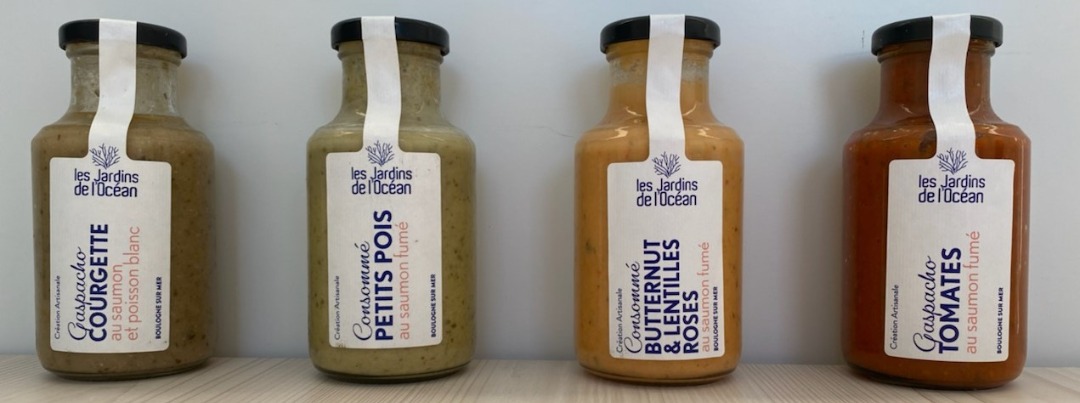
France – Consomme and vegetable gazpacho with smoked Salmon – Risk of Food Poisoning

Gov france

Identifying information for the recalled product

  • Product category Food
  • Product sub-category Soups, sauces and condiments
  • Product brand name THE OCEAN GARDENS
  • Names of models or references Zucchini gazpacho with smoked salmon Tomato gazpacho with smoked salmon Butternut and pink lentil consomme with smoked salmon Green pea consume with smoked salmon
  • Product identification
    GTIN Dated
    3760261181289 Recommended consumption date between 01/09/2020 and 20/10/2021
    3760261181319 Recommended consumption date between 01/09/2020 and 20/10/2021
    3760261181296 Recommended consumption date between 01/09/2020 and 20/10/2021
    3760261181272 Recommended consumption date between 01/09/2020 and 20/10/2021
  • Packaging250 ml bottle
  • Start date / End of marketing From 09/01/2020 to 10/20/2021
  • Storage temperature Product to be stored at room temperature
  • Health mark FR 62.160.011 CE
  • Geographical sales area Whole France
  • Distributors Supermarkets and groceries
  • List of points of saleSales_Consumers_Gaspacho_20202021.pdf

Practical information regarding the recall

  • Reason for recall Leakage of capsules
  • Risks incurred by the consumer Manufacturing defect, sealing defect (e.g. micro leaks, defective heat sealing) or packaging anomalies
  • Additional description of the risk Risk of food poisoning