Category Archives: Microbiology

Research – The Bactericidal Efficacy and the Mechanism of Action of Slightly Acidic Electrolyzed Water on Listeria monocytogenes’ Survival

MDPI

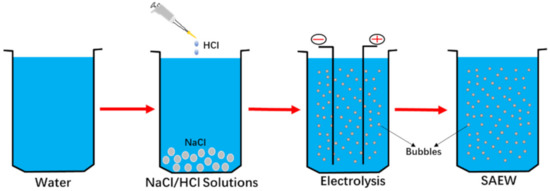
In the present work, the bactericidal efficacy and mechanism of slightly acidic electrolyzed water (SAEW) on L. monocytogenes were evaluated. The results showed that the strains of L. monocytogenes were killed completely within 30 s by SAEW whose available chlorine concentration (ACC) was higher than 12 mg/L, and it was confirmed that ACC is the main factor affecting the disinfection efficacy of SAEW. Moreover, our results demonstrated that SAEW could destroy the cell membrane of L. monocytogenes, which was observed by SEM and FT-IR, thus resulting in the leakage of intracellular substances including electrolyte, protein and nucleic acid, and DNA damage. On the other hand, the results found that SAEW could disrupt the intracellular ROS balance of L. monocytogenes by inhibiting the antioxidant enzyme activity, thus promoting the death of L. monocytogenes. In conclusion, the bactericidal mechanism of SAEW on L. monocytogenes was explained from two aspects including the damage of the cell membrane and the breaking of ROS balance. View Full-Text

EU – Eleventh external quality assessment scheme for Salmonella typing

ECDC

Executive summary

Salmonellosis was the second-most commonly reported zoonotic disease in the European Union (EU) in 2019, with a notification rate of 20.0 cases per 100 000 population. The total number of reported cases was 90 105 [3]. Since 2007, ECDC has been responsible for EU-wide surveillance of salmonellosis, including facilitating the detection and investigation of food-borne outbreaks. Surveillance data, including certain basic typing parameters, are reported by Member States to the European Surveillance System (TESSy). Since 2012, the EQA scheme has covered molecular typing methods used for EU-wide surveillance.

The effective molecular typing-enhanced surveillance relies on the capacity of NPHRLs in the FWD-Net to produce comparable typing results. ECDC has opened the possibility for Member States to submit WGS data for Salmonella and Listeria monocytogenes to TESSy to be used for EU-wide surveillance and cross-sector comparison. The previous EQA schemes from EQA-4 to EQA-8 included assessment of the PFGE typing methods for all Salmonella serovars and MLVA for S. Typhimurium (STm). Since EQA-8, the participants could participate in MLVA for S. Enteritidis (SE). From EQA-9, the separate PFGE part was excluded. Since then, PFGE has only been included into the cluster analyses part where the ability of identifying a cluster based on molecular typing by either using PFGE, MLVA and/or whole genome sequencing (WGS) derived data was assessed.

The objectives of the EQA-11 scheme were to assess the quality of data and comparability of molecular typing analysis results produced by NPHRLs in FWD-Net. Test isolates for the EQA were selected to cover isolates currently relevant for public health in Europe. Three sets of 10 isolates were selected, including S. Typhimurium and S. Enteritidis isolates for the respective MLVA methods and the cluster analysis included ten S. Enteritidis ST11 isolates.

Twenty-one laboratories signed up and 20 completed the exercise. This is a decrease from EQA-8 (N=23) by 13%. It is unknown if the removal of the PFGE part (gel quality and analysis) was the cause of this. Most laboratories (N=19) participated in the molecular typing-based cluster analysis. Out of the 20 laboratories participating in EQA-11, 14 (70%) performed molecular typing-based cluster analysis using WGS-derived data, which is one less compared to EQA-10.

In total, eight laboratories participated in the S. Typhimurium and S. Enteritidis MLVA analysis, which is slightly fewer compared with EQA-8, when 10 and eight laboratories participated, respectively. The performance level was high for both analyses (95% and 98% respectively) and within the range of the previous years.

The aim of the cluster analysis part of the EQA was to assess the NPHRL’s ability to identify a cluster of genetically closely related isolates i.e. correctly categorise cluster test isolates regardless of the method used. The cluster of closely related S. Enteritidis ST11 isolates could be investigated by PFGE, MLVA and WGS-derived data. The expected cluster was based on a predefined categorisation by the organiser and contained five isolates based on WGS-derived data.

The number of laboratories performing WGS has stabilised as no new laboratories performed WGS this year and over time, the use of PFGE and MLVA has become less frequent. Fewer laboratories performed cluster analysis with more than one method and only one laboratory performed cluster analysis using all three methods in EQA-11.

Six laboratories used PFGE for cluster analysis and for three participants; PFGE was the only cluster analysis method. None of the six laboratories were able to identify the correct cluster using PFGE. Four laboratories used MLVA for cluster analysis and two laboratories only used MLVA for the cluster analysis. All ten test isolates had the same MLVA profile and therefore it was not possible for the participants to identify the correct cluster of closely related isolates using this less discriminatory method.

The performance among the 14 participants using WGS derived data was very high, as 13 (93%) correctly identified the cluster of closely related isolates and the use of allele-based analysing method (mainly core genome multilocus sequence typing (cgMLST)/Enterobase scheme) was dominant.

An assessment of six EQA provided genomes was an additional part to the molecular typing-based cluster analysis. In an urgent outbreak situation, the sequence data available is not always of high quality, therefore, this EQA-part was designed to mimic this situation. The participants were asked to assess six genomes, which were modified by the EQA provider in order to give a realistic view of different quality issues. All participants (except one for one of the genomes) successfully identified the three genomes of high quality as either a cluster isolate (one genome) or a non-cluster isolate (two genomes). Two poor quality genomes with contamination of a different Salmonella ST34 (20%) were identified by all the participants. Ten of 14 participants identified the genome with 10% Citrobacter -contamination.

Hong Kong – Fresh Water Hairy Crabs and Food Safety

CFS

Autumn is the best season for savouring freshwater hairy crabs, when they are at their best with very tasty, tender meat and delectable roe, bringing great enjoyment to crab lovers. In many groceries, supermarkets and restaurants, this seasonal food is showcased prominently to entice customers. Some members of the public find this delicacy irresistable. However, they should not overindulge themselves with this cholesterol-rich cuisine. Hairy crabs may harbour parasites and pathogens. They should be cooked thoroughly before consumption. As regards concerns on chemicals (e.g. veterinary drug residues, synthetic hormones and heavy metals) in hairy crabs, the Centre for Food Safety has been testing hairy crab samples taken at import and retail levels, and the results of which have all been satisfactory in recent years.

The public are advised to note the following food safety tips when buying, preparing or consuming hairy crabs:

Purchase

  • Buy hairy crabs from reliable shops or restaurants
  • Buy live crabs with intact, shiny shells without a foul smell
  • Do not buy dead hairy crabs as they are highly perishable

Preparation

  • Prepare and consume hairy crabs soon after purchase
  • If not for immediate consumption, wrap and place the crabs properly in a clean utensil and store in the refrigerator to maintain their quality and avoid cross-contamination
  • Brush and wash the shells and claws with water before cooking
  • Cook thoroughly before consumption

Consumption

  • Maintain a balanced diet and avoid eating too many hairy crabs, particularly the cholesterol-rich roe
  • Avoid eating raw crabs. Condiments such as salt, vinegar, wine and wasabi cannot kill bacteria or parasites that may be present
  • Wash hands with soap and water before consumption
  • Remove the internal organs before eating

USA – Pet Food – ST. JOHN CREAMERY VOLUNTARILY RECALLS RETAIL RAW GOAT PET MILK BECAUSE OF POSSIBLE HEALTH RISK – Listeria monocytogenes

AGR

October 28, 2021—St. John Creamery of Stanwood, WA is voluntarily recalling retail raw goat milk treat for dogs and cats because it may be contaminated with Listeria monocytogenes (L. mono) that can cause serious illness.
Pets with L. mono infections may be lethargic and have diarrhea or bloody diarrhea, fever, and vomiting. Some pets will have only decreased appetite, fever and abdominal pain. Infected but otherwise healthy pets can be carriers and infect other animals or humans.
L. mono may cause serious and sometimes fatal infections in young children, frail or elderly people, and others with weakened immune systems. Although healthy individuals may suffer only short-term symptoms such as high fever, severe headache, stiffness, nausea, abdominal pain and diarrhea, a listeria infection can cause miscarriages and stillbirths among pregnant women.
Anyone experiencing these symptoms after handling the affected product or interacting with a pet that has consumed the affected product should immediately contact a health care provider. If your pet has consumed the affected product and has these symptoms, please contact your veterinarian. At this time, there are no known illnesses associated with the recalled product. The recall was initiated after routine sampling conducted by the Washington State Department of Agriculture (WSDA) Animal Feed Program revealed the presence of L. mono in retail raw goat pet milk dated 080722 (August 7), 090322 (September 3), and 091522 (September 15). St. John Creamery and WSDA have worked jointly to address the source of the problem. St. John Creamery retail raw goat pet milk displaying Best By dates of July 2022 (07##22) through October 2022 (10##22)has been recalled. The recalled product, which was bottled in half-gallon, one-quart and one-pint containers, was sold
at retail stores in Western Washington.

USA Research – Worst Foodborne Illness Outbreaks in Recent U.S. History

Healthline

Foodborne illness, or food poisoning, affects about one in six Trusted Source Americans every year. The Centers for Disease Control and Prevention (CDC)Trusted Source estimates that of these cases, there are 128,000 hospitalizations and 3,000 deaths annually.

You can get food poisoning when your food carries dangerous germs or toxins. Salmonella is the most common known cause of hospitalization due to food poisoning in the United States with over 19,000 cases per year Trusted Source.

This pathogen, along with others, can get into your food through:

  • improper food handling
  • unsafe practices on farms
  • contamination during manufacturing or distributing
  • contamination in stores

Read about the biggest foodborne outbreaks in recent U.S. history, and learn how to recognize food poisoning and protect yourself from it.

Saudi Arabia – 58 hospitalised for food poisoning

Gulf News

Some 58 people were hospitalised for showing symptoms of food poisoning after eating at a restaurant in south-western Saudi Arabia, a local newspaper reported.

The victims were taken to a hospital in the governorate of Sabya in the border region of Jazan, Okaz added, citing a hospital official.

“Until now, 58 cases have reached the hospital. They have been treated and 50 of them have been discharged,” director of Sabya General Hospital, Dr Abdu Jafari, said.

“There are initial indications that the number will rise in the coming hours for suffering poisoning after having meals at a local restaurant,” he added.

The victims suffered from vomiting and diarrhoea, the official said.

Ireland – WARNING: Boil Water Notice issued to protect 4,000 people in Carrick-on-Suir – Cryptosporidium

Tipperary Live

Irish Water and Tipperary County Council have issued a Boil Water Notice for households, businesses and other customers supplied by the Carrick-on-Suir (Lingaun) Public Water Supply following the detection of cryptosporidium in the water supply.

The Boil Water Notice, announced this evening, was imposed to protect approximately 4,000 people served by this water supply following advice received from the Health Service Executive and it will .

Vulnerable customers who have concerns can contact our customer care team on 1800 278 278.

For customers who wish to check if their property is on the Boil Water Notice themselves, please go to the following link on the Irish Water website: https://www.water.ie/?map= supply-and-service-updates, enter the property’s Eircode and you will then see if your property is on the Boil Water Notice.

Water must be boiled for:

Drinking;
Drinks made with water;
Preparation of salads and similar foods, which are not cooked prior to eating;
Brushing of teeth;
Making of ice – discard ice cubes in fridges and freezers and filtered water in fridges. Make ice from cooled boiled water.
What actions should be taken:

Use water prepared for drinking when preparing foods that will not be cooked (e.g. washing salads);
Water can be used for personal hygiene, bathing and flushing of toilets but not for brushing teeth or gargling;
Boil water by bringing to a vigorous, rolling boil (e.g. with an automatic kettle) and allow to cool. Cover and store in a refrigerator or cold place. Water from the hot tap is not safe to drink. Domestic water filters will not render water safe to drink;
Caution should be taken when bathing children to ensure that they do not swallow the bathing water;
Prepare infant feeds with water that has been brought to the boil once and cooled. Do not use water that has been re-boiled several times. If bottled water is used for the preparation of infant feeds it should be boiled once and cooled. If you are using bottled water for preparing baby food, be aware that some natural mineral water may have high sodium content. The legal limit for sodium in drinking water is 200mg per litre. Check the label on the bottled water to make sure the sodium or `Na’ is not greater than 200mg per litre. If it is, then it is advisable to use a different type of bottled water. If no other water is available, then use this water for as short a time as possible. It is important to keep babies hydrated.
Great care should be taken with boiled water to avoid burns and scalds as accidents can easily happen, especially with children.

Updates will be available on our Water Supply Updates section on water.ie including a map of the affected area, on Twitter @IWCare and via our customer care helpline, open 24/7 on 1800 278 278. Customers are advised to set their location on water.ie to view updates specific to their water supply. Further information in relation to the boil water notice is available from https://www.water.ie/water- supply/water-quality/boil- water-notice/

Irish Water continues to work at this time with our Local Authority partners, contractors and others to safeguard the health and well-being of both staff and the public and to ensure the continuity of critical drinking water and wastewater services. Irish Water would like to remind people to follow the HSE COVID-19 advice and ensure frequent handwashing.

Information – Spain – Omelette, yes. Salmonella, no

asca

Salmonella is a bacterium that causes one of the most common foodborne diseases: salmonellosis. In food it is found mainly in eggs and in raw pork and chicken. It can be spread to people through foods that contain Salmonella .

According to epidemiological data, salmonella causes a third of the food poisoning that occurs in Catalonia.

Thanks to the control measures applied at all stages of the food chain, from primary production until the food reaches the consumer, the number of salmonella cases and outbreaks in Catalonia has been considerably reduced.

Another essential element for the prevention of human salmonellosis is the improvement in food preparation practices in restaurants and at home.

Scientific knowledge supports that cooking is the only way to eliminate salmonella:

  • Food containing eggs must be cooked to a temperature that reaches 75 ° C in the center of the product.
  • The tortillas have to be well curdled.
  • Roasts of meat and chicken have to reach 75 ° C in the center of the piece. Make sure the juices are clear and not pink.

Click to access EFSA_Salmonela-no.pdf

Research – When the E. coli hits the fan! Evaluating the risks of dust-associated produce cross-contamination

CPS

Dust represents an understudied vehicle for microbial dispersal and produce contamination by pathogens. Dust deposition onto crops during cultivation is inevitable as plant surfaces serve as a major aerosol sink and dust can serve as a vehicle for bacteria. Wind-driven distribution of dust in agricultural environments can also impact food safety when the sources of dust include particles from natural and human-related reservoirs of pathogens. While the populations of enteric pathogens in water is frequently determined and the microbiological quality of soils are monitored, the evaluation of dust and soil-borne particulates is rarely conducted. This study proposes the following: 1). To evaluate the role of dust in transferring foodborne pathogens to produce surfaces grown in eastern and western regions of the US, 2). To determine the role of humidity in the deposition of dust on produce and the survival of pathogens in dust, and 3). To test dust particulates from animal operations in both regions for the presence of biomarkers indicative of fecal contamination and potentially the presence of pathogens. This study will enhance our understanding of pathogen transport from feces into and through produce fields and will quantify the risk associated with contamination from dust under varying environmental/atmospheric conditions.

Technical Abstract

Dust, broadly defined as fine particulate matter resulting from wind erosion on land surfaces and suspended in the air, is an inseparable component of the atmosphere. Dust represents an understudied vehicle for microbial dispersal in agricultural environments and produce contamination by microorganisms pathogenic to humans. Dust not only affects biological processes in plants, such as stomatal gas exchange, but also the plant surface microbiome. Dust deposition onto crops during field cultivation is inevitable as plant surfaces serve as a major aerosol sink. Studies have indicated that dust can serve as a vehicle for bacteria. Wind-driven distribution of dust in agricultural environments could also impact food safety when the sources of dust include particles from natural (soil, decaying vegetation, feral/wild animal droppings) and human-related (manure-amended soils, silage, municipal sewage-based biosolids, composting, and animal production facilities) reservoirs of human pathogens. While the populations of enteric pathogens in water is frequently determined through periodic testing as recommended by the Food Safety Modernization Act (FSMA) and the microbiological quality of soils are monitored, the evaluation of dust and soil borne particulates is rarely carried out. This study proposes the following: 1). To evaluate the role of dust in transferring foodborne pathogens to the surfaces of produce commodities specific to the eastern and western agricultural regions of the United States, 2). To determine the role of humidity in the deposition of dust on produce and the survival of foodborne pathogens in dust particulates, and 3). To test dust particulates from animal operations in Georgia and Arizona for the presence of biomarkers indicative of fecal contamination and the presence of enteric pathogens. This project will enhance our understanding of pathogen transport from feces into and through produce fields and will quantify the risk associated with contamination from dust under varying environmental and atmospheric conditions.

Click to access BRIGHT_FINAL.pdf

Research – Nanotechnology as a Processing and Packaging Tool to Improve Meat Quality and Safety

MDPI

Nanoparticles are gaining momentum as a smart tool towards a safer, more cost-effective and sustainable food chain. This study aimed to provide an overview of the potential uses, preparation, properties, and applications of nanoparticles to process and preserve fresh meat and processed meat products. Nanoparticles can be used to reinforce the packaging material resulting in the improvement of sensory, functional, and nutritional aspects of meat and processed meat products. Further, these particles can be used in smart packaging as biosensors to extend the shelf-life of fresh and processed meat products and also to monitor the final quality of these products during the storage period. Nanoparticles are included in product formulation as carriers of health-beneficial and/or functional ingredients. They showed great efficiency in encapsulating bioactive ingredients and preserving their properties to ensure their functionality (e.g., antioxidant and antimicrobial) in meat products. As a result, nanoparticles can efficiently contribute to ensuring product safety and quality whilst reducing wastage and costs. Nevertheless, a wider implementation of nanotechnology in meat industry is highly related to its economic value, consumers’ acceptance, and the regulatory framework. Being a novel technology, concerns over the toxicity of nanoparticles are still controversial and therefore efficient analytical tools are deemed crucial for the identification and quantification of nanocomponents in meat products. Thus, migration studies about nanoparticles from the packaging into meat and meat products are still a concern as it has implications for human health associated with their toxicity. Moreover, focused economic evaluations for implementing nanoparticles in meat packaging are crucial since the current literature is still scarce and targeted studies are needed before further industrial applications. View Full-Text