Category Archives: Microbiology

Denmark – Denmark aims to use education to reduce Norovirus risk when dining out

Food Safety News

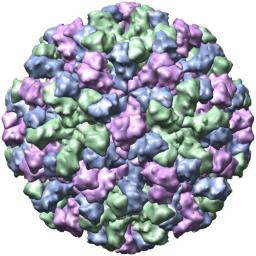
Norwalk_Caspid

The Danish Veterinary and Food Administration has launched a campaign to lower the risk of exposure to norovirus when dining out.

Ahead of Christmas, the Danish Veterinary and Food Administration (Fødevarestyrelsen) is focusing on how staff in professional kitchens, in cafés, canteens, restaurants and delicatessens can help to curb norovirus infections, which the agency said normally peak toward the end of the year.

Chefs and kitchen staff should stay home from work if they have symptoms of norovirus infection or have just had the disease. People can be infectious before feeling sick and at least 48 hours after having recovered.

Niels Ladefoged Nielsen, a consultant at the Danish Veterinary and Food Administration, said norovirus is extremely contagious, and there have been times when a single mistake in a professional kitchen has affected a large number of guests.

Nielsen said while the message of not cooking for others while feeling unwell is aimed at food professionals, it also applies to people at home in their own kitchen, and when preparing or serving food for family or friends.

Ireland – Boil water notice issued for thousands in Co Longford – Cryptosporidium

Irish Times

crypt

Almost half of the population of Co Longford is subject to a boil water notice which was issued on Thursday.

It comes after the cryptosporidium barrier at a treatment plant was compromised following a deterioration in the raw water quality of the lake source, Irish Water said.

Following consultation with the HSE, Irish Water and Longford County Council decided to issue a boil water notice for the area supplied by the Longford Central Public Water Supply to protect public health.

The population impacted by this notice is approximately 17,500 people. The areas affected include all customers in Longford Town, Newtown Forbes, Balinalee, part of Edgeworthstown, part of Drumlish, part of Killashee and surrounding areas.

Experts from Irish Water and Longford County Council are assessing the situation with a view to having the notice lifted as quickly as possible. In the meantime, all customers of this supply are advised to boil water before use until further notice.

USA – Shellfish growing area reopened after closure for link to outbreak

Food Safety News

A shellfish growing area has reopened for shellfish harvesting after a Camyboacter outbreak closed the pond two months ago.

Potter Pond is located in South Kingstown, RI, and was under investigation by the Rhode Island Department of Health (RIDOH), the Rhode Island Coastal Resources Management Council (CRMC), and Rhode Island of Environmental Management (DEM).

Potter Pond had been closed to shellfish harvesting because of bacterial contamination that was detected in early September. A RIDOH investigation indicated that eight people became ill after consuming raw shellfish harvested from Potter Pond and that the illnesses were because of Campylobacter bacterial contamination. The Campylobacter contamination has been linked to flocks of birds aggregating near shellfish growing areas.

Research – The Effective Use of HACCP for the Control of Environmental Microbial Contamination by the use of Operational Prerequisite Programs – Russell Berg – November 2021

LinkedIn

When the concept of prerequisites was first formulated in the late 1980s there was no distinction in importance between them. In many ways this goes against the principle of HACCP, in which resources should be allocated according to risk. Hence greater control should be imposed at Critical Control Points rather than Control Points. In the early days of HACCP (but unfortunately still is often the case) this principle has been applied to the direct product pathway, but barely to the processing environment. In this sense in the U.K. all fourteen allergens are treated the same way, as far as legislation, but many food manufacturers do not treat all the allergens the same as far as environmental control. Very food factories exclude staff from bringing any of the listed allergens on to site, but many exclude peanuts and tree nuts from site. Hence the risk from all the allergens is not considered the same, so as far as allergen control. In these circumstances peanuts and tree nuts could be considered and controlled by Operational Prerequisite Programs (OPRP), whilst other allergens would be controlled by Prerequisite Programs (PRP), to reflect the risk level.

The concept of OPRPs was first introduced in ISO 22000:2005 to address this problem with environmental controls but created some confusion in that they would bean intermediate control between Control Points and Critical Control Points along the direct product pathway. By this definition the main difference between CCPs and OPRPs is that CCPs are critical for safe food whilst OPRPs are essential for food safety. A better term for OPRP would be ECP (Essential Control Point).When this standard was updated in ISO 22000:2018 more details were included in the definition about controlling OPRPs (either by measurement or observation) but the use of OPRPs was not clarified to avoid the confusion.

However Ismail in his LinkedIn article of 15thNovember 2019(Ref. 1)gave a good resolution to the problem by splitting food safety hazards into two categories. Type A hazards are introduced with the raw materials and are best controlled by Critical Control Points and (Process) Control Points along the direct product pathway. Examples of these are Campylobacter in poultry or E. coli in raw meat. Type B hazards are introduced from the processing environment, usually due to poor or inadequate GMP (Good Manufacturing Practice). These hazards are controlled by (Environmental) Control Measures(as part of PRPs) and the ones essential to food safety should be controlled by OPRPs Examples of these hazards are Staphylococci aureus from food handler’s hands and pathogens(microbes with the potential to cause harm)spread by flies. Unlike CCPs, which deal with contamination, multiplication and survival of microbial hazards, environmental OPRPs are only concerned with contamination of food with microbial hazards.

For the rest of this article we will be concerned with Type B microbial hazards.

RASFF Alert- Microbiological and sensory complaints in seasoned pork belly skewers

RASFF

Microbiological and sensory complaints in seasoned pork belly skewers from Germany in Austria

RASFF Alert – Animal Feed – Salmonella – Horse Feed

RASFF

Salmonella in horse meal from the Netherlands in Austria

RASFF Alerts – Animal Feed – Enterobacteriaceae – Dog Treats

RASFF

Enterobacteriaceae in treats for dogs from India in Spain

Research – Israeli antimicrobial coating eliminates listeria 100% in factory pilot

Jpost

Israeli company Bio-Fence has created an antimicrobial coating that eliminated all traces of a deadly foodborne illness in a recent test.

An Israeli antimicrobial coating has managed to eliminate all traces of a deadly foodborne illness in a recent test conducted in a hot dog peeling room at a major sausage manufacturing facility in Israel.
The company, Bio-Fence, developed the coating, which was applied to the floor and lower part of the walls of the room which, despite repeated and strict disinfectant routines, had experienced high levels of listeria, particularly on the production floor.
Listeria is one of the deadliest foodborne illnesses. According to the US Food and Drug Administration, even if treated aggressively with antibiotics, as many as 30% of infected people die and more than 90% of people are hospitalized – often in intensive care units.
In the three weeks before the proof-of-concept (POC) pilot in which Bio-Fence’s coating was applied, listeria was detected in 21 out of 23 (91%) daily floor samples. After application, the bacteria were completely undetectable on the floor surface during day-to-day production.

USA – Core Investigations Table Update – 4 Ongoing Investigations

FDA

Research – Transmission of Escherichia coli from Manure to Root Zones of Field-Grown Lettuce and Leek Plants

MDPI

Pathogenic Escherichia coli strains are responsible for food-borne disease outbreaks upon consumption of fresh vegetables and fruits. The aim of this study was to establish the transmission route of E. coli strain 0611, as proxy for human pathogenic E. coli, via manure, soil and plant root zones to the above-soil plant compartments. The ecological behavior of the introduced strain was established by making use of a combination of cultivation-based and molecular targeted and untargeted approaches. Strain 0611 CFUs and specific molecular targets were detected in the root zones of lettuce and leek plants, even up to 272 days after planting in the case of leek plants. However, no strain 0611 colonies were detected in leek leaves, and only in one occasion a single colony was found in lettuce leaves. Therefore, it was concluded that transmission of E. coli via manure is not the principal contamination route to the edible parts of both plant species grown under field conditions in this study. Strain 0611 was shown to accumulate in root zones of both species and metagenomic reads of this strain were retrieved from the lettuce rhizosphere soil metagenome library at a level of Log 4.11 CFU per g dry soil. View Full-Text