Category Archives: Microbiological Risk Assessment

Research – Research Note Survival of Campylobacter jejuni, Salmonella, and Listeria monocytogenes and Temperature Change in Low-temperature–Long-time-cooked Chicken Meat 

Journal of Food Protection

Low-temperature­–long-time (LT–LT) cooking, also known as sous vide cooking, in which meat is sealed in a bag and cooked in hot water at a relatively low-temperature of around 60°C, increased in popularity; indeed, home-use low-temperature cookers are now commercially available. However, after LT–LT cooking, if even a small number of foodborne bacteria remain, they could cause infection and foodborne illnesses. Therefore, in the present study, the aim was to determine the appropriate LT–LT cooking methods for chicken by assessing temperature changes and studying the bacteria in LT–LT-cooked chicken meat. At set cooking temperatures of 60°C and 65°C, the temperatures were measured at the surface and in the centers of single- and double-layer samples of 300-g chicken breast meat. The time required to reach 50°C were 5–14 min at the surface, 25 min in the center of the single-layer sample, and 33–35 min in the center of the double-layer sample. The time taken to reach 50°C was fastest in SF followed by SG and DB (P < 0.05). When the meat was LT–LT cooked at 60°C and 65°C for 60 min, color changes in the meat and heating of the meat were observed all the way to the interior. Campylobacter jejuni, Salmonella O7 and Listeria monocytogenes were inoculated into chicken breasts, which were then cooked at set temperatures of 60°C and 65°C for 15, 30, 60, 90, and 120 min. Campylobacter jejuni survived for up to 30 min of cooking, Salmonella O7 survived for up to 60 min of cooking at 60°C and 30 min at 65°C, and L. monocytogenes survived for up to 90 min of cooking at 60°C and 60 min at 65°C. Thus, to prevent infection and illness caused by the three tested bacteria species, LT–LT cooking for 120 min at 60°C and 90 min at 65°C is recommended.

Research – Decontamination of Pathogenic and Spoilage Bacteria on Pork and Chicken Meat by Liquid Plasma Immersion

MDPI

In this research, we aimed to reduce the bacterial loads of Salmonella Enteritidis, Salmonella Typhimurium, Escherichia coliCampylobacter jejuniStaphylococcus aureus, and Pseudomonas aeruginosa in pork and chicken meat with skin by applying cold plasma in a liquid state or liquid plasma. The results showed reductions in S. Enteritidis, S. Typhimurium, E. coli, and C. jejuni on the surface of pork and chicken meat after 15 min of liquid plasma treatment on days 0, 3, 7, and 10. However, the efficacy of the reduction in S. aureus was lower after day 3 of the experiment. Moreover, P. aeruginosa could not be inactivated under the same experimental conditions. The microbial decontamination with liquid plasma did not significantly reduce the microbial load, except for C. jejuni, compared with water immersion. When compared with a control group, the pH value and water activity of pork and chicken samples treated with liquid plasma were significantly different (p ≤ 0.05), with a downward trend that was similar to those of the control and water groups. Moreover, the redness (a*) and yellowness (b*) values (CIELAB) of the meat decreased. Although the liquid plasma group resulted in an increase in the lightness (L*) values of the pork samples, these values did not significantly change in the chicken samples. This study demonstrated the efficacy of liquid plasma at reducing S. Enteritidis, S. Typhimurium, E. coliC. jejuni, and S. aureus on the surface of pork and chicken meat during three days of storage at 4–6 °C with minimal undesirable meat characteristics. View Full-Text

Research – Microbiological Profile, Prevalence and Characterization of Salmonella enterica in Peanuts, Pecans, Raisins, Sun-dried Tomatoes, and Chocolate Sprinkles Sold in Bulk in Markets of Queretaro, Mexico 

Journal of Food Protection

In Mexico, the prevalence of Salmonella enterica in low water activity foods and their link to outbreaks is unknown. The aim of this study was to determine the microbiological profile and the prevalence of S. enterica in low water activity foods (peanuts, pecans, raisins, sun-dried tomatoes, and chocolate sprinkles) purchased in retail establishments in Queretaro, Mexico. Seventy samples of each food item sold in bulk were purchased. Aerobic plate count (APC), molds, yeasts, total coliforms, Escherichia coli, and Staphylococcus aureus were quantified in 10-g samples. The prevalence of S. enterica in 25 g samples was determined. From positive samples, S. enterica  isolates (60) were characterized based on their antimicrobial susceptibility to 14 antibiotics, the presence/absence of 13 virulence genes and serotype. The concentration of APC, molds, yeast, total coliforms, and E. coli ranged from 3.1-5.2 Log CFU g-1, 2.0-2.4 Log CFU g-1, 2.0-3.0 Log CFU g-1, 0.6-1.1 Log MPN g -1, and 0.5-0.9 Log MPN g -1, respectively. S. aureus  was not detected in any sample (<10 CFU g -1). The prevalence of  S. enterica in chocolate sprinkles, raisins, peanuts, pecans, and sun-dried tomatoes was 26%, 29%, 31%, 40%, and 52%, respectively. Most isolates (68.3%) were resistant to at least one antibiotic. The chromosome-associated virulence genes were found in all isolates and only one strain had sopE, and 98.3% of the isolates were grouped in the same virulotype. Among the isolates, the most frequent serotype was Tennessee (51/60). According to the characteristics evaluated, the isolates were grouped in 24 clusters. The elevated prevalence of S. enterica highlight the role of low water activity food items sold in bulk at markets as a potential vehicle for pathogens transmission. Regardless of the low variability among S. enterica isolates, their characterization could be helpful to elucidate which strains are circulating in these foods for improving epidemiological surveillance.

Research – PDIA, an Iminosugar Compound with a Wide Biofilm Inhibitory Spectrum Covering Both Gram-Positive and Gram-Negative Human Bacterial Pathogens

MDPI

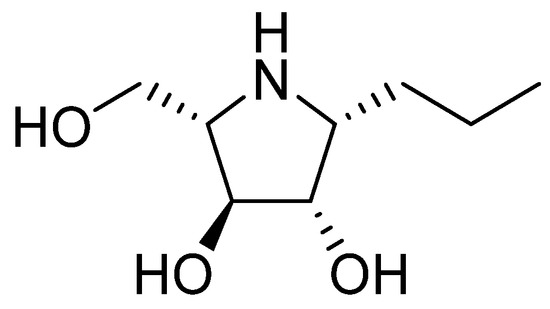
Many difficult-to-treat human infections related to catheters and other indwelling devices are caused by bacteria residing in biofilms. One of the key properties of microorganisms residing in a biofilm is decreased susceptibility towards antimicrobial agents. Therefore, many different approaches have been researched to destroy or inhibit biofilm production by bacteria. Different iminosugars (IS) were reported to inhibit biofilm formation in S. mutansS. aureus, and P. aeruginosa. The aim of this study was to look for a spectrum of the activity in one of these IS. The iminosugar PDIA beta-1-C-propyl-1,4-dideoxy-1,4-imino-L-arabinitol was tested in vitro at the same concentration against 30 different strains of the most important Gram-negative and Gram-positive human pathogens looking for their biofilm production and viability at different time intervals. It appeared that PDIA inhibited biofilm production of Enterobacter spp., P. aeruginosaEnterococcus spp. and S. aureus in 8 h, and Klebsiella spp., Acinetobacter spp. and S.epidermidis in 24 h. PDIA caused no growth inhibition of the tested bacteria at a concentration of 0.9 mM. Our results indicate a broad-spectrum biofilm inhibitory activity of PDIA. which may be the basis for future application studies that will help in control of the associated device and biofilm-related infections caused by a wide spectrum of the causative agents. View Full-Text

Research – Role of Marine Bacterial Contaminants in Histamine Formation in Seafood Products: A Review

MDPI

Histamine is a toxic biogenic amine commonly found in seafood products or their derivatives. This metabolite is produced by histamine-producing bacteria (HPB) such as Proteus vulgarisP. mirabilisEnterobacter aerogenesE. cloacaeSerratia fonticolaS. liquefaciensCitrobacter freundiiC. braakiiClostridium spp., Raoultella planticolaR. ornithinolyticaVibrio alginolyticusV. parahaemolyticusV. olivaceusAcinetobacter lowffiPlesiomonas shigelloidesPseudomonas putidaP. fluorescensAeromonas spp., Photobacterium damselaeP. phosphoreumP. leiognathiP. iliopiscariumP. kishitanii, and P. aquimaris. In this review, the role of these bacteria in histamine production in fish and seafood products with consequences for human food poisoning following consumption are discussed. In addition, methods to control their activity in countering histamine production are proposed. View Full-Text

Research – A Machine Learning Model for Food Source Attribution of Listeria monocytogenes

MDPI

Despite its low morbidity, listeriosis has a high mortality rate due to the severity of its clinical manifestations. The source of human listeriosis is often unclear. In this study, we investigate the ability of machine learning to predict the food source from which clinical Listeria monocytogenes isolates originated. Four machine learning classification algorithms were trained on core genome multilocus sequence typing data of 1212 L. monocytogenes isolates from various food sources. The average accuracies of random forest, support vector machine radial kernel, stochastic gradient boosting, and logit boost were found to be 0.72, 0.61, 0.7, and 0.73, respectively. Logit boost showed the best performance and was used in model testing on 154 L. monocytogenes clinical isolates. The model attributed 17.5 % of human clinical cases to dairy, 32.5% to fruits, 14.3% to leafy greens, 9.7% to meat, 4.6% to poultry, and 18.8% to vegetables. The final model also provided us with genetic features that were predictive of specific sources. Thus, this combination of genomic data and machine learning-based models can greatly enhance our ability to track L. monocytogenes from different food sources. View Full-Text

Research – New Challenges for Detection and Control of Foodborne Pathogens: From Tools to People

MDPI

Contamination of foods by human pathogenic microorganisms is a major concern to both food safety and public health. The changes in consumers’ demand, the globalization of the food trade, and the progress on food production practices and processing technologies all pose new challenges for food industries and regulatory agencies to ensure the safety in food products.
With regard to microbiological safety, bacteria and viruses are the most common foodborne pathogens associated with both sporadic cases and outbreaks.
However, bacterial and viral microorganisms differ in terms of their behaviour in food matrices, their stability in food-related environments (e.g., food-contact surfaces, irrigating and processing waters), and their response to food processing technologies and controlling measures. Current methods do not meet all relevant criteria for effective monitoring plans, the main limitations being their sensitivity, the high workload and time requirement, and the inability to differentiate between viable and non-viable microorganisms. Thus, specific and sensitive methods need to be developed for their detection and quantification in com-plex matrices, such as food, for tracking their occurrence along the food chain to determine the sources of contamination, and for ultimately estimating the risk for consumers.
To fill these gaps, this Special Issue comprises four original research articles and are view paper focusing on the implementation of novel analytical techniques and approaches to foodborne pathogens along the food chain.
Zand and colleagues [1] reviewed the most recent advances of the application of flowcytometry (FCM) and fluorescence in situ hybridization (FISH) for the rapid detection and characterization of microbial contamination. FCM allows for a culture-independent quantification of microbial cells, also providing information on their physiological and structural characteristics which are relevant to assess their viability status. FISH is a nucleic acid-based method mainly applied in the medical and diagnostic fields. While FCM has been successfully used to detect and monitor microorganisms in water, state-of-the-art FCM and FISH protocols for food matrices still show significant limitations. The main pitfalls include complex sample preparation steps; the use of toxic substances; their limits of detection, especially for FISH assays; and the equipment price. Because of all these aspects, FCM and FISH have not yet gained considerable interest in food safety area for the detection of microbial pathogens. Future studies should focus on potential optimisation strategies for FCM and FISH protocols in food samples and their validation, as well as on the development of automated lab-on-chip solutions.
Moving to explore next-generation sequencing (NGS) applications in the produce industry, Truchado et al. [2] contributed to identify potential contamination niches of Listeria monocytogenes in a frozen vegetable processing plant. NGS is a sequencing technology that offers ultra-high throughput, a scalable and fast technique that allows the authors to characterize the isolates by a whole-genome sequencing (WGS) of 3multi locus sequence typing (MLST). The WGS analysis revealed the presence of four different sequence types (ST) contaminating 18% of the samples, including food contact surfaces (FCS), non-food contact surfaces (n-FCS), and final product. These ST were further classified into four different virulence types (VT) according to multi-virulence locus sequence typing (MVLST). Interestingly, an isolate detected in non-food-contact surfaces(n-FCS) also contaminated the final product, highlighting the relevant role of n-FCS as reservoir of L.monocytogenes that reached the final product.
Staphylococcus aureus is a foodborne pathogen considered to be one of the etiological agents of food-related disease outbreaks. Leng et al. [3] supported this Special Issue with a study on its control using the skin mucus extract of Channa argus as a source of antimicrobial compounds. Of interest, untargeted metabolomics were applied to decipherits antibacterial mechanism against S. aureus. Results indicated that the extract had great inhibitory action on its growth by inducing the tricarboxylic acid cycle and amino acid biosynthesis, which are the primary metabolic pathways that affect the normal physiological functions of biofilms.
The present collection includes a second contribution on the control of S. aureus authored by Kim and colleagues [4] who developed a real-time PCR method (qPCR) for the rapid detection and quantification of pathogenic Staphylococcus species.
Four specific molecular targets were identified based on pan-genome analysis, and results showed 100% specificity for 100 non-target reference strains with a detection limit as low as 102CFU/mL. Thus, the proposed method allows an accurate and rapid monitoring of Staphylococcus species and may help control staphylococcal contamination of food.
Moving to human viral pathogens, Macaluso et al. [5] reported the results of an investigation aimed to characterize the occurrence of human enteric viruses in shellfish, a food item with relevant risk for consumers. The study included data collected over two years on the prevalence of enteric virus contamination along the shellfish production and distribution chain in Sicily, Italy. The findings based on quantitative reverse transcription polymerase chain reactions (RT-qPCRs), as gold-standard molecular technique, showed that almost 6% of samples were contaminated with at least one enteric virus such as norovirus, hepatitis A virus, and/or hepatitis E virus. The origin of contaminated shellfish was traced back to Spain and several municipalities in Italy. Such contribution highlights the relevance
of routine monitoring programs to prevent foodborne transmission of enteric viruses and
preserve the health of consumers.
In summary, this Special Issue compile several contributions focused on novel technologies, approaches, and strategies demonstrated to be effective in controlling microbial contamination in food. All the articles provide valuable information to monitor and/or reduce contamination in food, food industry settings, and along the food chain. On a final note, the collection emphasizes the relevance of ensuring food safety and limiting the risk of microbiological contamination along the food chain to protect consumers.

Belgium – The FASFC has decided to issue a conditional authorization to Ferrero – Kinder – Salmonella

AFSCA

In late March – early April, consumers fell ill after consuming Kinder brand chocolate products. Following epidemiological investigations and the analysis of samples, a link was established with the Ferrero factory in Arlon.

The FASFC then immediately began an in-depth investigation at Ferrero in Arlon and decided on April 8 to withdraw the authorization for this factory and to recall all the products in the Kinder range from this production site.

In May, Ferrero applied to the AFSCA for authorization to be able to produce again.

The FASFC has decided to give Ferrero a conditional authorization for their production plant in Arlon.

This conditional authorization will be granted for a period of 3 months . During this period, the raw materials, as well as each batch of foodstuffs produced, will be analysed. It is only if these analyses give a compliant result that the products can be placed on the market.

This decision comes after several weeks of in-depth analyses during which the FASFC carried out several on-site checks both at the level of the internal procedures put in place by Ferrero and of the factory’s infrastructure.

The FASFC is of the opinion that, in the current state of affairs, Ferrero offers the necessary guarantees of compliance with food safety rules and requirements.

Nevertheless, the FASFC opted for a conditional authorization because the Agency considers that it is essential to be able to verify the concrete application of all the internal procedures once the factory has resumed its production activities.

In the event of favourable inspection results at the end of this 3-month period, a final authorization may be issued.

For his part, the Federal Minister of Agriculture, David Clarinval, in charge of the FASFC, is delighted with the favourable progress of the file: “ I salute the quality work carried out by the FASFC in this complicated file. The conditional authorization of the Ferrero factory in Arlon is the first step towards a final authorization. I will continue to follow developments in this case closely. »

Italy – MILK & LAIT – Microbiology Risk

Salute

Brand : WORLD TRADE SRL

Name : MILK & LAIT

Reason for reporting : Recall due to microbiological risk

Publication date : June 16, 2022

Italy – Catfish, Sardines, Stockfish, Shrimp, Lizardfish, Tilapia, Horse Mackerel, Umbrina

Salute

Brand : Alimenti dal Mondo -Italia srl

​​Name : catfish, sardines, stockfish, shrimp, lizardfish, tilapia, horse mackerel, umbrina

Reason for reporting : Recall due to microbiological risk – not produced in an authourised facility

Publication date : June 16, 2022

Documentation

Documentation