Category Archives: microbial contamination

UK retailers record good numbers for results of Campylobacter in chicken testing

Food Safety News

Campylobacter kswfoodworld

Supermarkets in the United Kingdom have reported their Campylobacter in chicken results for the third quarter of 2022.

The Food Standards Agency (FSA) maximum level is no more than 7 percent of birds with more than 1,000 colony-forming units per gram (CFU/g) of Campylobacter.

Data from the retailers covers July to September 2022 on high findings of Campylobacter in fresh, shop-bought, UK-produced chickens.

Switzerland – Food Warnings and Recalls Report 2021

BLV

2021 Report: Public Warnings and Product Recalls

18.10.2022: The FSVO’s annual statistics for 2021 regarding nationwide product recalls, public warnings as well as collaboration with the European rapid alert system RASFF have been published.

A new flyer presents, in addition to the current figures, the collaboration between the various services (companies, cantons and Confederation), including the European rapid alert system – Rapid Alert System for Food and Feed (RASFF).

Austria – TANN Bacon 250g – Bacterial Contamination

AGES

AGES informs about a recall of the company SPAR. On January 20th, 2023, the company recalled the product TANN Jausenspeck 250g:
recall reason
Possible bacterial contamination
Marketed by
SAVE
Manufacturer
TANN
Expiry Date
02/23/2023
Batch number
6125040509, 6125110509, 6130121732, 6130141732, 6130342298

As a precaution, SPAR is recalling “TANN Jausenspeck 250g” in Vienna, Lower Austria and northern Burgenland

A possible bacterial contamination was found in the product “TANN Jausenspeck 250g” during a routine quality control.
The batches affected are:

  • 6125040509 – MHD: 01/19/2023
  • 6125110509 – MHD: 01/23/2023
  • 6130121732 – MHD: 07.02.2023
  • 6130141732 – MHD: 09.02.2023
  • 6130342298 – MHD: 02/23/2023

For this reason, SPAR is recalling the product with the stated best before dates. The bacon was only delivered in Lower Austria, Vienna and northern Burgenland. Other regions and batches are not affected.

SPAR asks customers not to consume the “TANN Jausenspeck 250g” with the batch numbers mentioned. All other TANN products are not affected by this recall.

All customers who have bought one of the products that may be affected can of course return it to the nearest SPAR, EUROSPAR or INTERSPAR store or Maximarkt. Customers are reimbursed the purchase price even without proof of purchase.

Customers who have questions about this are welcome to contact customer service at  office@spar.at  or call the free phone number 0800 / 22 11 20 .

original recall

Research – An outbreak of Hepatitis A virus infection in a secondary school in England with no undetected asymptomatic transmission among students

Cambridge Org

Abstract

In June 2019 the Health Protection Team in Yorkshire and Humber, England, was notified of cases of hepatitis A virus (HAV) infection in staff at a secondary school. Investigation revealed that an earlier case worked as a food handler in the school kitchen. Indirect transmission through food from the canteen was considered the most likely route of transmission. Cases were described according to setting of exposure. Oral fluid was obtained from students for serological testing. Environmental investigations were undertaken at settings where food handling was considered a potential transmission risk. Thirty-three confirmed cases were linked to the outbreak. All of those tested (n = 31) shared the same sequence with a HAV IB genotype. The first three cases were a household cluster and included the index case for the school. A further 19 cases (16 students, 3 staff) were associated with the school and consistent with indirect exposure to the food handler. One late onset case could not be ruled out as a secondary case within the school and resulted in vaccination of the school population. Five cases were linked to a bakery where a case from the initial household cluster worked as a food server. No concerns about hygiene standards were noted at either the school or the bakery. Oral fluid samples taken at the time of vaccination from asymptomatic students (n = 219, 11–16 years-old) showed no evidence of recent or current infection. This outbreak included household and foodborne transmission but limited (and possibly zero) person-to-person transmission among secondary school students. Where adequate hygiene exists, secondary transmission within older students may not occur.

Research – Study reveals Botulism impact in Italy

Food Safety News

kswfoodworld

Italian researchers have looked at botulism trends over two decades including a large outbreak in 2020.

Italy has one of the highest botulism rates in Europe with one factor being a strong home canning tradition in the country. From 1986 to September 2022, 406 botulism incidents involving 599 people were laboratory confirmed.

The study described the surveillance system as well as information on botulism cases reported by local health services and those from hospital discharge forms from 2001 to 2020.

Botulism is a rare but life-threatening condition caused by toxins produced by Clostridium botulinum bacteria. In foodborne botulism, symptoms generally begin 18 to 36 hours after eating a contaminated food. However, they can start as soon as six hours after or as long as 10 days later.

Symptoms can include general weakness, dizziness, double-vision, and trouble speaking or swallowing. It paralyzes respiratory muscles so most patients must be placed on life support. Difficulty breathing, weakness of other muscles, abdominal distention and constipation may also occur. People experiencing these problems should seek immediate medical attention.

Singapore introduces industry standard to guide sales of food products on online platforms to ensure food safety

SFA

gapore Standard (SS) 687: 2022 (Guidelines for food e-commerce) was launched at the Singapore Manufacturing Federation’s Singapore Innovation and Productivity Institute (SIPI) Food Tech 2023 event today to provide guidance to e-commerce players on their roles and responsibilities related to food safety and providing information to consumers. Announced by Ms. Grace Fu, Minister for Sustainability and the Environment, the standard covers key stages, best practices, and activities critical for the food e-commerce industry to ensure the safety of food products sold via online platforms.

SS 687 on Guidelines for food e-commerce can be purchased from the Singapore Standards eShop at http://www.singaporestandardseshop.sg

RASFF Alert- Animal Feed – Mold/Mould – Feed Material

RASFF

Mould in feed material from Ukraine in Poland and Lithuania

USA – More Listeria cases linked to Enoki Mushrooms

Food Poison Journal

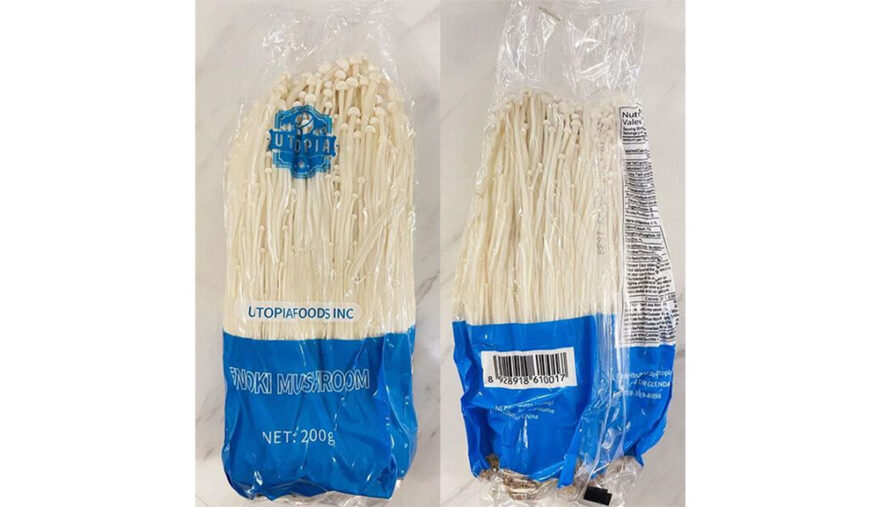
Epidemiologic and laboratory data show that enoki mushrooms are contaminated with Listeria and are making people sick. FDA found two strains of Listeria in an import sample of Utopia Foods brand enoki mushrooms. One strain is linked to the two illnesses that were already included in this outbreak, and the other strain is linked to one additional illness. Both strains are now included in this outbreak investigation.

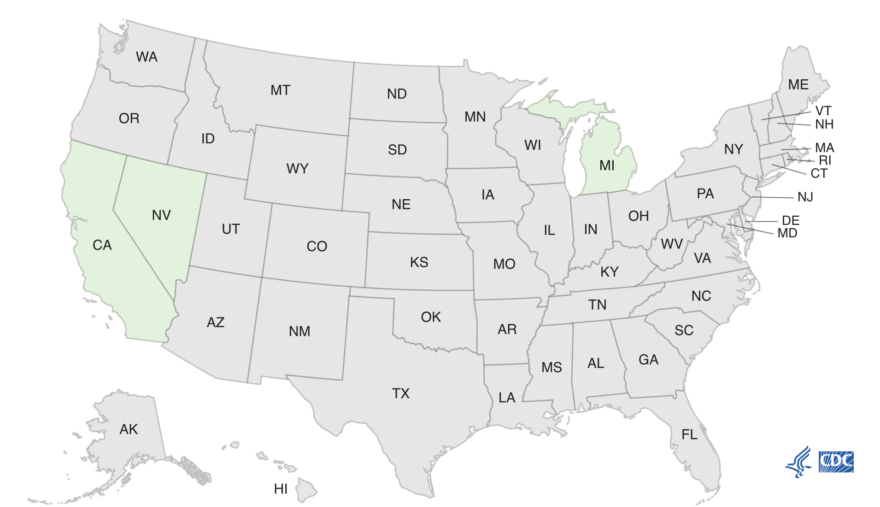
Since the last update on November 22, 2022, one more illness has been linked to this outbreak. As of January 18, 2023, three people infected with the outbreak strains of Listeria have been reported from three states. Sick people’s samples were collected from October 3, 2022, to October 8, 2022.

Sick people range in age from 30 to 56 years, with a median of 42 years, and 66% are male. Two people are Hispanic, and one person is Asian. All three have been hospitalized, and no deaths have been reported.

Two sick people reported eating enoki mushrooms or eating at restaurants with menu items containing enoki mushrooms. One patient did not report eating enoki mushrooms but reported shopping at various Asian grocery stores.

FDA found the outbreak strains of Listeria in an import sample of Utopia Foods brand enoki mushrooms.

Previously, in December 2022, Missouri state officials conducted routine sampling and found Listeria in a sample of Utopia Foods brand enoki mushrooms. The Listeria found in this sample was not the outbreak strains, and it was not linked to any reported Listeria illness in the United States. On December 13, 2022, Utopia Foods recalled these enoki mushrooms. On January 13, 2023, Utopia Foods expanded their recall of enoki mushrooms.

Do not eat, sell, or serve recalled enoki mushrooms. CDC also advises people who are pregnant, aged 65 or older, or have a weakened immune system to not eat any raw enoki mushrooms, even if they are not recalled. Instead, cook enoki mushrooms thoroughly before eating.

USA -FDA – Core Investigation Table – Investigations of Foodborne Illness Outbreaks

FDA

What’s New

  • An outbreak advisory has been issued for the outbreak of Listeria monocytogenes linked to enoki mushrooms (reference #1127).

Hong Kong – Food Safety Tips for Chinese New Year

CFS

Choosing and handling Chinese New Year foods and snacks

While purchasing or preparing new year foods, purchase them from reputable retail outlets. Buy sweetened lotus seeds and pistachio with natural colour and avoid those looking extraordinarily white because they may have been bleached with chemicals. Avoid buying melon seeds that are too glossy as they may contain mineral oil, which may cause gastrointestinal discomfort.

You should check the expiry date before buying any prepackaged festive items like puddings, sesame balls and sweets, and make sure the packaging is intact. Note the hygienic condition of the shop and the food containers and the hygiene practices of the staff, when buying unpackaged items like crispy triangles, sweetened dried fruits and melon seeds.

After purchase, pre-cooked foods like puddings should be stored in the refrigerator as soon as possible and be consumed before the “use by” date shown on the package. Fried festive foods such as sesame balls and crispy triangles should be kept in air-tight containers and stored in the refrigerator or in a cool, dry place.

Melon seeds and nuts are often served during the Chines Year. However, these foods contain hard hulls. Cracking melon seeds and nuts with your own teeth can result in tooth damage. Use a seed or nut cracker instead. Nut are also often used in making Chinese New Year foods. Should you be allergic to nuts or have other food allergy , read food allergen information on food labels to identify if any food or food ingredients of your allergic concern are present in the food. Avoid the food or food ingredients which you are allergic to.

Keep poon choi at safe temperatures

Chinese New Year is a great time of year to have ‘winter warmers’ such as poon choi when we host large gatherings. These dishes are often prepared through bulk cooking ahead of time, due to the large number of portions required. Poon choi contains various food ingredients and requires complicated and long preparation procedures such as cutting, marinating, precooking and cooling and finally re-heating. If the food is left at room temperature for too long after precooking, foodborne pathogens can multiply and some can even produce heat-stable toxins which are not readily eliminable by reheating.

Therefore, it is important to store food properly by storing precooked ingredients at 4°C or below to prevent the formation of toxins, cool down the precooked ingredients by dividing into small portions, placing in shallow containers or placing in ice bath. Reheating foods thoroughly to the core temperature of at least 75°C or above. Keep hot food above 60°C if it is not consumed immediately. Do not leave reheated food at room temperature for long, and discard it if held at room temperature for more than four hours. Of note, heat from the heat source may not be evenly distributed in a large poon choi during reheating, therefore requiring more time to bring poon choi to a boil before eating.

Safe handling of leftovers

Large holiday meals could leave you with leftovers, such as rice cake and puddings, to dig in for days. For the sake of food safety, all perishables should be refrigerated within two hours of being cooked or cooled, and discard items that have been left out for longer than four hours. To minimise spoilage, leftovers should be kept in clean and airtight containers, and refrigerated within two hours of finishing preparation. All leftovers should be reheated thoroughly with the core temperature of food reaching at least 75°C, and they should only be reheated once. Take note of the expiry dates of the food items before consumption. Food beyond its “use by” date should be discarded while be wary of the quality of food beyond the “best before” date.

Stop eating and discard puddings or other food that are found mouldy or with an abnormal taste. Abnormal taste indicates that the puddings have perished due to improper or prolonged storage. Remember, a “sniff test” is not an appropriate method for testing if food is safe to eat, as food can look and smell fine even after the “use by” date has passed. Any leftovers that have been kept in the refrigerator for more than three days should be disposed.