Category Archives: foodbourne outbreak

UK – Salmonella outbreak causes hundreds of cases and several deaths in UK

New Food Magazine

A Salmonella outbreak has swept the UK, causing nearly 500 people to fall ill with the bacteria and several products to be recalled form supermarket shelves.

According to the Daily Mirror, five people are reported as having died and hundreds seriously ill after eating chicken imported from Poland.

The newspaper reports that 480 cases of Salmonella have been reported in the UK, with around 44 per cent of those affected believed to be children.

Note: There have been many RASFF Alerts concerning Salmonella in chicken products from Poland for over a year now.

Bizarre Cases of Food Poisoning on Three Different Ships

Maritime Executive

Three ships operating in different parts of the world are all reporting cases of food poisoning among their crew. At least two crew members have died while others have been transferred from their ships and hospitalized. It might be coincidental or an outbreak of the more common norovirus, a common gastrointestinal disease, but it rarely causes deaths.

USA – Outbreak Investigation of Listeria monocytogenes – Hispanic-style Fresh and Soft Cheeses (February 2021)

FDA

The FDA, along with CDC and state and local partners, are investigating a multistate outbreak of Listeria monocytogenes infections linked to queso fresco cheeses made by El Abuelito Cheese, Inc.

As part of this outbreak investigation, the Connecticut Department of Public Health collected product samples of El Abuelito-brand Hispanic-style fresh and soft cheeses from a store where a sick person bought cheeses. Sample analysis showed the presence of Listeria monocytogenes in samples of El Abuelito Queso Fresco sold in 10 oz packages, marked as Lot A027 with an expiration date of 02/26/2021. On 2/19/2021, Whole Genome Sequencing (WGS) analysis conducted by the Connecticut State Laboratory determined that the Listeria monocytogenes found in the samples is a match to the outbreak strain.

On 2/19/2021, El Abuelito Cheese, Inc. of Paterson, NJ recalled all Queso Fresco products with “sell by” dates through 03/28/21. Products include El Abuelito, Rio Grande, and Rio Lindo brand queso frescos, distributed to CT, MD, NC, NJ, NY, PA, and VA. A full list of recalled products is included below. At this time, El Abuelito Cheese, Inc. has ceased production and distribution of all products.

Recommendation

Consumers, restaurants, and retailers should not eat, sell, or serve any recalled queso fresco cheeses.

FDA recommends that anyone who purchased or received recalled products use extra vigilance in cleaning and sanitizing any surfaces and containers that may have come in contact with these products to reduce the risk of cross-contamination. Listeria can survive in refrigerated temperatures and can easily spread to other foods and surfaces.


Product Images

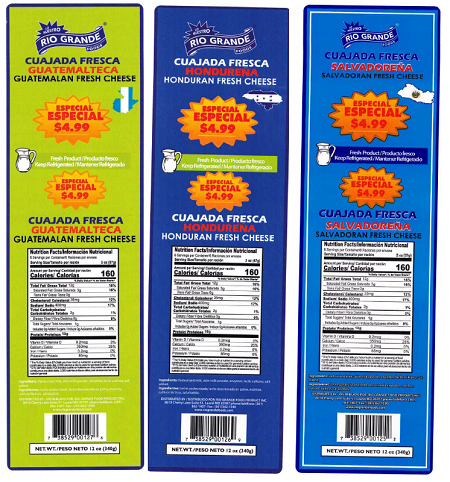
Sample Product Label from the Outbreak Investigation of Listeria monocytogenes in Hispanic-style Fresh and Soft Cheeses (February 2021) - Rio Grande


Sample Product Label from the Outbreak Investigation of Listeria monocytogenes in Hispanic-style Fresh and Soft Cheeses (February 2021) - Rio Grande


Sample Product Label from the Outbreak Investigation of Listeria monocytogenes in Hispanic-style Fresh and Soft Cheeses (February 2021) - Rio Lindo


Sample Product Label from the Outbreak Investigation of Listeria monocytogenes in Hispanic-style Fresh and Soft Cheeses (February 2021) - El Abuelito


Sample Product Label from the Outbreak Investigation of Listeria monocytogenes in Hispanic-style Fresh and Soft Cheeses (February 2021) - Chirilagua, Yorito


Recall Information

On 2/19/2021, El Abuelito Cheese of Paterson, NJ recalled all Queso Fresco products within expiration. Products include:

Brand

Product Name

Size

Container Type

UPC Code

El Abuelito Cheese

Queso Fresco Regular

12 oz.

Plastic Container

673130100003

El Abuelito Cheese

Queso Fresco Promoción

10 oz.

Plastic Container

673130100078

El Abuelito Cheese

Queso Fresco de Hoja

12 oz.

Plastic Container

673130100065

El Abuelito Cheese

Queso Fresco

5 Lb.

Vaccuum Packed

673130100058

El Abuelito Cheese

Queso Fresco Guatemala

12 oz.

Plastic Container

673130100027

Rio Grande Food Products, Inc.

Chirilagua Queso de Hacienda

12 oz.

Plastic Container

738529005571

Rio Grande Food Products, Inc.

Queso Fresco Campestre con Hoja

14 oz.

Plastic Container

812324031161

Rio Grande Food Products, Inc.

Queso Fresco Campestre Artesanal

14 oz.

Plastic Container

738529002518

Rio Grande Food Products, Inc.

Queso Fresco con Hoja

14 oz.

Plastic Container

738529004581

Rio Grande Food Products, Inc.

Queso Fresco Yorito

12 oz.

Plastic Container

738529005564

Rio Grande Food Products, Inc.

Queso Fresco Olancho

14 oz.

Plastic Container

812324031222

Rio Grande Food Products, Inc.

Cuajada Fresca Guatemalteca

12 oz.

Plastic Container

738529001276

Rio Grande Food Products, Inc.

Cuajada Fresca Hondureña

12 oz.

Plastic Container

738529001269

Rio Grande Food Products, Inc.

Cuajada Fresca Salvadoreña

12 oz.

Plastic Container

738529001252

Rio Lindo

Queso Fresco Mexicano

12 oz.

Plastic Container

718122088587

Rio Lindo

Queso Fresco Hondureño

12 oz.

Plastic Container

718122088591

Rio Lindo

Queso Fresco Salvadoreño

12 oz.

Plastic Container

718122088607

U.S. Distribution of Recalled El Abuelito Queso Fresco

Product Distribution*: CT, MD, NC, NJ, NY, PA, VA

*States with confirmed distribution; product could have been distributed further


Case Count Map Provided by CDC

CDC Case Count Map for the Outbreak Investigation of Listeria monocytogenes in Hispanic-style Fresh and Soft Cheeses - 2/12/2021

Case Counts

Total Illnesses: 7
Hospitalizations: 7
Deaths: 0
Last Illness Date: 1/22/2021
States with Cases: MD (4), CT (1), NY (1), and VA (1)

Germany and Morocco: Working together for safe food

bfr

The German Federal Institute for Risk Assessment (BfR) and the Moroccan Food Safety Authority (ONSSA) agree on close cooperation

Food and feed must also be safe along global and increasingly complex commodity chains. With a volume of 3.6 billion euros, Morocco is an important trading partner for Germany in North Africa. Against this background, the German Federal Institute for Risk Assessment (BfR) has signed a Memorandum of Understanding with the Moroccan Food Safety Authority (ONSSA). The aim is to strengthen cooperation between the two authorities through a continuous partnership dialogue in consumer health protection “The focal points of the future alliance are the risk assessment of plant protection products and risk communication, especially in connection with foodborne disease outbreaks”, says BfR President Professor Dr. Dr. Andreas Hensel. This project also implements the Africa concept of the Federal Ministry of Food and Agriculture (BMEL).

In view of the liberalisation of global trade, it is, in the view of the BfR, indispensable in the sense of consumer health protection that the risk assessment of foodstuffs is harmonised and standardised internationally. In this context, cooperation with the countries of the European Neighbourhood Policy, to which Morocco belongs, is also increasingly important. Therefore, the Memorandum of Understanding with Morocco is an important milestone.

For the first time, BfR and ONSSA worked together with the BMEL and the Federal Office of Consumer Protection and Food Safety (BVL) from 2015 to 2018 in the project “Control of plant protection products, fertilisers and growing media”. Since then, contact has grown continuously through mutual visits by experts and discussions at management level.

The Moroccan Food Safety Authority (ONSSA) is a scientific body under the Moroccan Ministry of Agriculture, Fisheries, Rural Development, Water and Forests. It works on behalf of the Moroccan government for consumer protection and in the field of animal and plant health. Within this framework, the ONSSA is also responsible for the risk management of food and feed.

About the BfR

Canada – Salmonella outbreak sickens dozens in Newfoundland and Labrador and Nova Scotia

Outbreak News Today

hazegg.jpg

The Public Health Agency of Canada (PHAC) reports investigating an outbreak of Salmonella infections infections involving Newfoundland and Labrador, and Nova Scotia.

As of February 18, 2021, there have been 57 laboratory-confirmed cases of Salmonella Enteritidis illness investigated in the following provinces: Newfoundland and Labrador (25), and Nova Scotia (32). Individuals became sick between late October 2020 and late January 2021. Nineteen individuals have been hospitalized. No deaths have been reported.

Based on the investigation findings to date, exposure to eggs has been identified as a likely source of the outbreak. Many of the individuals who became sick reported consuming, preparing, cooking and baking at home with eggs. Some individuals reported exposure to eggs at an institution (including nursing homes and hospitals) where they resided or worked before becoming ill.

USA – CORE Investigation Table – Updates

FDA

FDA

12/23/2020

11

Salmonella Potsdam

Not Yet Identified

1/13/2021

10

Salmonella Miami

Not Yet Identified

2/17/2021

14

E. coli O157:H7

Not Yet Identified

2/17/2021

15

Listeria monocytogenes

Hispanic-style fresh and soft cheese


USA – Outbreak Investigation of Listeria monocytogenes – Hispanic-style Fresh and Soft Cheeses (February 2021)

FDA

The FDA, along with CDC and state and local partners, are investigating a multistate outbreak of Listeria monocytogenes infections potentially linked to Hispanic-style fresh and soft cheeses.

FDA has initiated an investigation and is collecting information to try to determine the source of the outbreak. Although the investigation is ongoing, CDC’s analysis of epidemiologic information indicates that Hispanic-style fresh and soft cheeses are the leading hypotheses for the cause of the illnesses. No specific type or brand of cheese has been confirmed as the source of illness. CDC reported that seven people infected with the outbreak strain of Listeria monocytogenes have been reported in Connecticut, Maryland, New York, and Virginia. Six of the seven ill people are Hispanic. Of the four people interviewed, three reported eating at least one type of Hispanic-style fresh and soft cheeses, and each of the three reported eating queso fresco.

As part of this outbreak investigation, the Connecticut Department of Public Health collected product samples of El Abuelito-brand Hispanic-style fresh and soft cheeses from a store where a sick person bought cheeses. Sample analysis showed the presence of Listeria monocytogenes in samples of El Abuelito Queso Fresco sold in 10 oz packages, marked as Lot A027 with an expiration date of 02/26/2021. Samples are currently undergoing Whole Genome Sequencing (WGS) analysis to determine if the Listeria monocytogenes found in these samples is a match to the outbreak strain. At this time, there is not enough evidence to determine if this outbreak is linked to El Abuelito Queso Fresco.

FDA and state partners are working with the firm to recall the affected lot and to determine if additional products should be recalled. Additional information will be provided as it becomes available.

Recommendations

Consumers, restaurants, and retailers should not eat, sell, or serve El Abuelito Queso Fresco cheese until more information is known.

If you are at higher risk for severe Listeria illness (if you are pregnant, aged 65 or older, or have a weakened immune system due to certain medical conditions or treatments) do not eat any Hispanic-style fresh and soft cheeses, including El Abuelito brand queso fresco cheese, until we identify which cheeses are making people sick in this outbreak.

Call your healthcare provider right away if you have these symptoms after eating Hispanic-style fresh and soft cheeses:

  •  Pregnant people typically experience only fever, fatigue, and muscle aches. However, Listeria infection during pregnancy can lead to miscarriage, stillbirth, premature delivery, or life-threatening infection of the newborn.
  •  People who are not pregnant may experience headache, stiff neck, confusion, loss of balance, and convulsions, in addition to fever and muscle aches.

Generally, make sure the Hispanic-style fresh and soft cheeses (like queso fresco) you eat have labels that state, “Made with pasteurized milk.”

Be aware that Hispanic-style fresh and soft cheeses made from pasteurized milk have caused Listeria outbreaks. Although pasteurization of milk kills Listeria, products made from pasteurized milk can still become contaminated if they are produced in facilities with unsanitary conditions.

Restaurants and retailers that serve or sell Hispanic-style fresh and soft cheeses should follow FDA’s safe handling and cleaning advice.


Case Count Map Provided by CDC

CDC Case Count Map for the Outbreak Investigation of Listeria monocytogenes in Hispanic-style Fresh and Soft Cheeses - 2/12/2021

Case Counts

Total Illnesses: 7
Hospitalizations: 7
Deaths: 0
Last Illness Date: 1/22/2021
States with Cases: MD (4), CT (1), NY (1), and VA (1)

Jamaica – A reason to get married at City Hall: Dozens of guests at Jamaica resort sickened by likely salmonella outbreak

Barf Blog

Lisa Fickenscher of the New York Post writes that an apparent salmonella outbreak at a resort in Jamaica in Dec. has ruined vacations for potentially dozens of holiday travelers — and now some sickened guests are considering legal action, The Post has learned.

“It was a nightmare,” Chantel Ele of Lincoln, Nebraska, told The Post of her experience at the Grand Palladium Resort and Spa, which was echoed by other people online. “I don’t know how many people go on an all-inclusive vacation and lose weight.” 

USA – History of Soft Cheese Linked Listeria Monocytogenes Outbreaks

Food Poisoning Bulletin

With the news that the CDC and FDA have launched an investigation into a possible Hispanic-style soft cheese listeriosis outbreak late last week, the history of soft cheese linked Listeria monocytogenes outbreaks comes into focus. Seven people in four states are sick, including Maryland, Connecticut, New York, and Virginia. This is not the first time a deadly outbreak has been linked to those types of soft and fresh cheeses.

History of Soft Cheese Linked Listeria Monocytogenes Outbreaks

With the news that the CDC and FDA have launched an investigation into a possible Hispanic-style soft cheese listeriosis outbreak late last week, the history of soft cheese linked Listeria monocytogenes outbreaks comes into focus. Seven people in four states are sick, including Maryland, Connecticut, New York, and Virginia. This is not the first time a deadly outbreak has been linked to those types of soft and fresh cheeses.

These types of cheeses have long been a risk for Listeria monocytogenes contamination, according to the CDC. The issue is that many of these soft and fresh cheeses are made with unpasteurized milk. The government estimates that “the risk for listeriosis per serving is estimated to be 50- to 160-fold greater for cheese made from unpasteurized milk than pasteurized milk.”

Research – 10 common food safety mistakes

Safety and Health Magazine

Did I cook that long enough? I’m supposed to rinse off chicken when I take it out of the package, right? Eating raw cookie dough won’t really make me sick.

These are just some of the food safety mistakes people make. Help prevent foodborne illnesses by follow these guidelines from the Centers for Disease Control and Prevention.

  1. Folks older than 65 and younger than 5, pregnant women, and people who have health issues or weakened immune systems are at higher risk of food poisoning. Foods to avoid: undercooked or raw food items, unpasteurized milks and juices, and soft cheeses.
  2. Did you wash your hands? If the answer is “no,” drop that food you’re handling and wash your hands for 20 seconds with soap and hot water. Wash them again once you’ve finished preparing the food.
  3. Don’t wash raw meat, chicken or turkey. This spreads germs to your sink, countertops and other kitchen surfaces. Cooking these foods to the proper temperature will kill any germs.
  4. On the other hand, you should wash fruits and veggies under running water before you cook with them – even if you’re going to peel them. Germs on the skin of these foods can transfer when they’re cut or peeled.
  5. Before you put cooked meat on a plate, ask yourself: Did the same plate hold the raw meat? If so, you risk spreading germs from the raw meat juices to your cooked food. Get a new plate.
  6. Cook food at a high enough temperature to kill all germs:
    • 145° F for beef, pork, veal, lamb, ham and seafood
    • 160° F for ground meats
    • 165° F for poultry, leftovers and casseroles
  7. Help eliminate E. colisalmonella and other bacteria risks by cooking or baking flour and eggs thoroughly.
  8. Not sure if that leftover food is safe to eat? Check a storage time chart to see how long you can safely store food.
  9. If you typically thaw or marinate food items on your kitchen counter, don’t. This can spread germs quickly. Get in the habit of thawing food in the refrigerator, in cold water or in the microwave, and always marinate food in the fridge.
  10. Don’t let food sit out. Germs can grow in perishable foods, so put food in the fridge within two hours or throw it out.