Category Archives: Foodborne Illness

Singapore – Suspension of Rasel Catering Singapore Pte Ltd’s food business operations – Gatroenteritis

SFA

The Ministry of Health (MOH) and the Singapore Food Agency (SFA) are investigating two incidents of gastroenteritis affecting a total of 284 persons who reported gastroenteritis symptoms after consuming food prepared by Rasel Catering Singapore Pte Ltd between 8 and 16 November 2022. They either sought outpatient treatment, self-medicated, or recovered without treatment. None were hospitalised.

USA – CDC Investigation Notice – Listeria Outbreak Linked to Enoki Mushrooms

CDC

Listeria is especially harmful if you are pregnant, aged 65 or older, or have a weakened immune system. If you are in any of these groups, do not eat raw enoki mushrooms. Cook enoki mushrooms thoroughly to kill any foodborne germs.

Investigators are working to identify specific brands of enoki mushrooms that may be contaminated with the outbreak strain of Listeria. However, many brands of enoki mushrooms have been recalled since the 2020 Listeria outbreak linked to enoki mushrooms.

Fast Facts
  • Illnesses: 2
  • Hospitalizations: 2
  • Deaths: 0
  • States: 2
  • Recall: No
  • Investigation status: Active
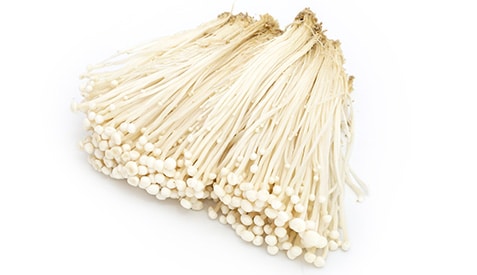
Enoki mushrooms on a white background
Listeria in Enoki Mushrooms

Enoki mushrooms are white and have long, thin stems. They are often sold in a bunch with roots in sealed plastic packaging. They are popular in Japanese, Chinese, and Korean food, and they are almost always eaten cooked in soups, hot pots, and stir-fried dishes.

In 2020, CDC investigated the first known Listeria outbreak in the United States linked to enoki mushrooms. This outbreak resulted in three recalls of enoki mushrooms that were imported from Korea. Since then, the U.S. Food and Drug Administration (FDA) and public health officials from several states have been collecting samples of enoki mushrooms and found Listeria in many samples, resulting in more than 20 recalls of enoki mushrooms.

Source of the Outbreak

Information collected so far shows that enoki mushrooms are the likely source of these illnesses.

Both sick people reported eating enoki mushrooms or eating at restaurants with menu items containing enoki mushrooms. The outbreak strain was previously found in one sample of enoki mushrooms that FDA collected at import. However, to date, the firm associated with this sample has not been identified as a potential source of enoki mushrooms in this outbreak.

Investigators are working to identify specific brands of enoki mushrooms linked to these illnesses.

Sweden – At least 100 ill in Swedish Cryptosporidium salad outbreak

Food Safety News

water contamination

A rise in Cryptosporidium infections in Sweden has been attributed to contaminated salad by public health officials.

The Public Health Agency of Sweden (Folkhälsomyndigheten) said 101 cases of a certain type of Cryptosporidium parvum had been confirmed in 13 regions of the country.

Patients fell ill from Sept. 25 to Oct. 15 this year and women were more affected than men. Cases range from 4 to 86 years old with an average age of 42.

Link to salad
The agency added there are another 99 potential cases being investigated. The type of Cryptosporidium parvum involved is common so there could be several possible sources.

Local infection control units, the Swedish Food Agency (Livsmedelsverket) and Folkhälsomyndigheten investigated the increase in infections to find a source.

Analysis of information from patients on what they had eaten before becoming ill shows they ate mixed or bagged salad more often than a control group.

Salad has a short shelf life so health officials don’t think it is still available for sale but no products have been sampled.

Livsmedelsverket has looked into possible producers and growers but has been unable to find the likely source of infection.

As reported cases of Cryptosporidium have decreased and are at similar levels to previous years, officials believe the outbreak is over.

Research – Fatal Listeria outbreak linked to Scottish fish processor

Food Safety News

A deadly Listeria outbreak in the United Kingdom has been linked to one company but product testing has only found low levels of contamination.

Food Standards Scotland (FSS) and the Food Standards Agency (FSA) suspect the source of contamination to be a salmon-smoking processing factory in Scotland.

Food Standards Scotland wouldn’t name the company or answer questions about the incident from Food Safety News.

Instead, a spokesperson said: “This is an ongoing outbreak of Listeria monocytogenes and, as yet, no definitive source of contamination has been found. Investigations to determine the root cause continue. Investigations of any outbreaks of foodborne illness will comprise both patient questionnaires and sampling of products.

“Local authorities are responsible for working on mitigations with any implicated businesses, and FSS, alongside partners the UK Health Security Agency, Public Health Scotland, and the Food Standards Agency, have been involved in raising awareness of the outbreak with consumers, most recently with targeted messaging to vulnerable groups.”

There have been 14 confirmed Listeria monocytogenes cases in just under two years. At least 10 sick people are above 65 years old, and one was a pregnant woman.

Three people older than 65 have died and for two Listeria monocytogenes was a contributory cause of death. All cases had underlying health conditions.

Of the linked cases of listeriosis since October 2020, eight have been identified since January 2022. The majority of them reported eating ready-to-eat smoked fish.

Research – EU and UK record travel-related Shigella infections

Food Safety News

A multi-country Shigella outbreak in Europe has been linked to stays at some hotels in Cape Verde.

Confirmed Shigella sonnei cases have been reported in the Netherlands, Denmark, France, Germany, Portugal, and the United Kingdom.

The European Centre for Disease Prevention and Control (ECDC) said there is no information about the source of infection but given the increase in travel during the coming holiday season, new cases are likely.

However, Holiday Claims Bureau and Hudgell Solicitors in the UK have noted complaints of illness and poor hygiene standards from holidaymakers, suggesting the source could be contaminated food or water. Holiday Claims Bureau said it had been informed of sick people testing positive for Shigella.

Travelers have described symptoms such as diarrhea, vomiting, stomach cramps, and pains, which in some cases lasted until they returned home.

Anne ThomsonHudgell Solicitors’ travel litigation executive, said people can suffer as a result of a change in diet and climate.

“However, when we are alerted to situations where a number of holiday guests are affected by similar symptoms, particularly when they are not part of the same traveling group, we feel an investigation is needed to contain any wider outbreak and prevent future problems,” she said.

“Holidaymakers becoming ill having only ever eaten at the specific hotel they are staying at, and concerns raised by guests over standards of hygiene and cleanliness throughout premises, and not just in dining areas, are often red flags to potential underlying problems.”

USA – Listeria Outbreak Linked to Deli Meat and Cheese

cdc

You are at higher risk for severe Listeria illness if you are pregnant, aged 65 or older, or have a weakened immune system due to certain medical conditions or treatments. If you are in any of these groups, do not eat meat or cheese from any deli counter, unless it is reheated to an internal temperature of 165°F or until steaming hot.

Fast Facts
  • Illnesses: 16
  • Hospitalizations: 13
  • Deaths: 1
  • States: 6
  • Recall: No
  • Investigation status: Active
Listeria in Deli Meat and Cheese

Deli meats (cold cuts, lunch meats, hot dogs, and pâtés sold at the deli) and cheeses are known sources of Listeria illnesses. This is because Listeria can easily spread among food on deli countertops, deli slicers, surfaces, and hands. Listeria is a hardy germ that can be difficult to fully remove once it is in the deli. It can survive and grow at cold temperatures in the refrigerator.

Source of the Outbreak

Information collected so far shows that deli meat and cheese purchased at deli counters in multiple states are the likely sources of this outbreak.

It is difficult for investigators to identify a single food as the source of outbreaks linked to deli meats and cheeses. This is because Listeria spreads easily between food and the deli environment and can persist for a long time in deli display cases and on equipment. A contaminated food likely introduced the outbreak strain of Listeria into delis in multiple states. Investigators are working to identify any specific products or delis that may be contaminated with the outbreak strain.

USA – Deli Meat and Cheese with Listeria sickens 16 in 6 States since 2021

Food Poison Journal

Key Facts: 16 sick people in California (1), Illinois (2), Maryland (3), Massachusetts (2), New Jersey (1) and New York (7) range in age from 38 to 92 years, with a median age of 74, and 62% are male. Of 13 people with ethnicity information available, 11 are of Eastern European background or speak Russian. Of 14 people with information available, 13 have been hospitalized. One person got sick during their pregnancy, resulting in pregnancy loss. Additionally, one death has been reported from Maryland. Sick people’s samples were collected from April 17, 2021, to September 29, 2022.

CDC, public health and regulatory officials in several states, the U.S. Department of Agriculture’s Food Safety and Inspection Service (USDA-FSIS), and the U.S. Food and Drug Administration (FDA) are collecting different types of data to investigate a multistate outbreak of Listeria monocytogenes infections.

Epidemiologic and laboratory data show that meat and cheese from deli counters contaminated with Listeria are making people sick. Investigators are still working to identify any specific products or delis that may be contaminated with the outbreak strain.

As of November 9, 2022, 16 people infected with the outbreak strain of Listeria have been reported from 6 states – California, Illinois, New York, Maryland, Massachusetts, New Jersey.

USA – Cooper’s Hawk Winery Cyclospora Outbreak in Jacksonville, Florida:  Victims Still Coming Forward to Seek Justice as 4-Year Statute of Limitations Approaches

Food Poisoning News

Cooper’s Hawk Winery Cyclospora Outbreak in Jacksonville, Florida:  Victims Still Coming Forward to Seek Justice as 4-Year Statute of Limitations Approaches

In June of 2019, the Florida Department of Health in Duval County (DOH-Duval) was notified of an outbreak of gastrointestinal illness (food poisoning) among employees of the local Jacksonville Cooper’s Hawk Winery – the restaurant corporate manager called in the notification. By that time, about 20 employees had become ill. On Sunday, June 23 the Regional Environmental Epidemiologist (REE) was notified by Florida Poison Information Control Network that 16 out of 17 persons who dined at Cooper’s Hawk with a group on June 11, 2019 were ill with a gastrointestinal illness.  This information was sent to DOH-Duval who began an outbreak investigation on June 24.

That same day, another individual called to report he was in a different group (24 persons) who all became ill (except one person) after eating at Cooper’s Hawk Winery in Jacksonville on June 13.

Between June 24 and July 3, 2019, a total of six independent parties contacted DOH-Duval Epidemiology to report gastrointestinal illness after they ate food from the Jacksonville Cooper’s Hawk Winery between June 11 and June 15.

On July 8, the local news media reported on the outbreak which resulted in additional patrons calling in and reporting their illnesses.

USA – Another Seattle area E. coli O157 Outbreak

Food Poison Journal

Public Health is investigating an outbreak of three people infected with Shiga toxin-producing E. coli O157:H7 (also known as STEC). Between October 4 – 16, 2022, 3 people from 3 separate households reported becoming ill. Cases have been among people ranging in age from 18 to 36 years old. Symptoms reported include diarrhea and abdominal pain.

The investigation is ongoing, and no source has been identified. Two of the three ill people report eating dishes that were prepared with raw or undercooked beef but we cannot rule out other possible sources at this time.

Confirmed cases have been linked through genetic fingerprinting results (whole genome sequencing) which indicate that they have the same genetic strain, meaning they likely have a common source of infection.

Denmark -Fish meatballs cause disease outbreaks with Listeria

SSI

Since mid-August, the Statens Serum Institut has registered seven patients who have become ill from the same type of Listeria monocytogenes . The Statens Serum Institut, the Danish Food Agency and the DTU Food Institute have jointly investigated the disease outbreak and have identified fish cakes as the cause. The fish meatballs have been recalled from the stores.

Last edited on November 9, 2022
Since mid-August, Statens Serum Institut has registered seven patients with the same type of the food-borne bacterium Listeria monocytogenes . Among the sick are one child and six people over the age of 70, of whom one person has subsequently died. The patients are distributed across the country and are four women and three men.

“By comparing bacteria from patients and samples from Jeka Fish, we have found that the bacteria are exactly the same. Combined with the fact that the patients have stated that they have eaten fish meatballs, this shows that the infection came from here”
Luise Müller, who is an epidemiologist at the Statens Serum Institut

The fish meatballs have been called back

On Tuesday 8 November, Jeka Fish recalled all fish cakes produced between 1 August and 31 October 2022 from the market. The recall was made because the Danish Food and Drug Administration had found listeria in production and in products at the company.

“Jeka Fish has recalled a number of different fish patties, which have now been taken off the shelves, but if you have the product at home, it is important to throw it away”
Annette Perge, section manager at the Danish Food and Drug Administration

The DTU Food Institute, SSI and the Danish Veterinary and Food Administration have analyzed and compared the listeria bacteria that were found in the patients and in samples from the company, using DNA typing.

See which types of fishcakes have been recalled

What should you do if you have eaten fish cakes from the recalled batch?

Even if you have eaten the fishmeals that have now been recalled, there is very little risk that you will get sick. You are at risk of becoming seriously ill with listeria if you are older, have a weakened immune system due to another serious illness or are pregnant.

You should contact a doctor if you have symptoms of illness. The symptoms include high fever, chills, muscle soreness and affected general condition; neck/back stiffness or altered level of consciousness.

The work continues

In addition to patients with the listeria bacteria in question, significantly more patients infected with listeria than usual have been registered since October 2022. So the work to find the causes of the other cases of illness continues.

“To avoid listeria infection, it is extremely important to stick to a refrigerator temperature of no more than 5 degrees and to eat foods such as cold cuts, cold-smoked fish and gravad salmon as fresh as possible. If we change habits, for example due to the energy and economic crisis, we risk that the bacteria will have good growth opportunities and that more people will get sick”
Senior researcher and research group leader Marianne Sandberg, DTU Food Institute