Category Archives: Foodborne Illness

Europe – Multi-country outbreak of Listeria monocytogenes clonal complex 8 infections linked to consumption of cold-smoked fish products

ECDC ecdclogo

Summary
A prolonged multi-country outbreak of 22 listeriosis cases caused by Listeria monocytogenes sequence type (ST) 1247, clonal complex (CC) 8 has been identified through whole genome sequencing (WGS) in five EU countries: Denmark (9 cases), Estonia (6), Finland (2), France (1) and Sweden (4). Five patients have died due to, or with, the disease. The first case had symptom onset in July 2014 in Estonia, and the most recent case occurred in Denmark in February 2019. Eight patients, out of twelve for whom a food consumption history was available, confirmed the consumption of cold-smoked fish products. L. monocytogenes food isolates, matching the human outbreak strain by WGS, were detected at wholesale and retail level in four countries (i.e. France, Denmark, Italy and Sweden) from 13 batches of cold smoked or gravad salmon and from six batches of cold smoked trout products. Traceability information of the contaminated batches pointed to the Estonian processing Company A as the single common manufacturer of these fish products. The raw fish was received from suppliers in Norway and Finland. Environmental investigations and food testing at the Estonian processing plant showed the presence of L. monocytogenes that matched the outbreak strain in two samples on the processing line and in four batches of the final product.
The presence of L. monocytogenes matching the outbreak strain over several years in the fish products suggests the persistence of the microorganism at the Estonian company’s premises. Further investigation is needed to identify points of (cross-)contamination in the food processing plant. Control measures were implemented in Estonia, Denmark, France and Italy following the RASFF (Rapid Alert System for Food and Feed) notifications, but until the source of infection has been identified and controlled, new invasive listeriosis cases associated with this event may still occur.
In general, pregnant women, the elderly and immunocompromised individuals are at increased risk of invasive listeriosis, which is associated with severe clinical course and potentially death.
 

USA – Outbreak of Salmonella Infections Linked to Frozen Raw Tuna – has ended

CDC

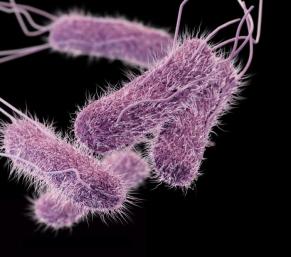
Salmonellaa

Image CDC

This outbreak appears to be over, but recalled frozen tuna may still be in freezers. People could get sick if restaurants and retailers who are unaware of the recall continue to serve and sell sushi made with recalled frozen tuna. Check the U.S. Food and Drug Administration website for the list of recalled productsexternal icon.

Restaurants and retailers should not sell or serve recalled frozen, ground tuna from Jensen Tuna.

  • On April 15, 2019, Jensen Tuna in Houma, La., voluntarily recalledexternal icon frozen ground tuna imported from JK Fish of Vietnam.
    • The recalled tuna was individually packaged in one-pound bags and sold in 20-pound boxes under lot numbers z266, z271, and z272.
    • Jensen Tuna distributed product to distributors in Connecticut, Iowa, Illinois, Minnesota, New York, North Dakota, and Washington. Recalled product might have been redistributed to additional states.
    • Restaurants and retailers should contact the distributor if they don’t know whether their frozen ground tuna is recalled. If in doubt, they should not sell or serve it.
  • Consumers who order sushi made with raw tuna, including “spicy tuna,” should ask the restaurant or grocery store if the tuna is from Jensen Tuna. If you are not sure if the tuna has been recalled, do not eat it.
  • Contact your health care provider if you think you may have become ill from eating raw tuna sushi.
  • In general, people who are at higher risk for serious foodborne illness should not eat any raw fish or raw shellfishexternal icon. People at higher risk include children younger than 5 years, pregnant women, adults 65 years and older, and people with weakened immune systems.

FDA

May 22, 2019

The United States Food and Drug Administration, along with the Centers for Disease Control and Prevention (CDC), and state and local partners, investigated a multistate outbreak of Salmonella Newport illnesses linked to frozen ground tuna imported from JK Fish of Vietnam.

On May 20, 2019, the CDC announced that this outbreak appears to be over.

Recommendation

Restaurants and retailers should check with their suppliers and not sell or serve the recalled ground tuna from Jensen Tuna. They should also be sure to wash and sanitize locations where the recalled ground tuna was stored or prepared.

It is unlikely that the recalled ground tuna was sold directly to consumers in grocery stores; rather, it was likely used in food dishes sold by restaurants or retailers. Consumers with concerns should ask their restaurants and retailers whether the tuna dish they are purchasing contains the recalled ground tuna.


Research – Lab work in South Africa’s Listeria outbreak was ‘remarkable’

Food Safety News

Researchers have described how a laboratory handled increased demand during the 2017-2018 listeriosis outbreak in South Africa.

Whole genome sequencing (WGS) and epidemiological data were used to determine the source of the outbreak as ready-to-eat processed meat manufactured by Enterprise Foods.

A total of 1,060 cases were reported from January 2017 to July 2018 and 216 people died.

The largest ever reported outbreak of listeriosis included an alert in mid-June 2017, a peak in mid-November 2017, and identification of the outbreak source in mid-February 2018.

“This eight-month timeline was rather remarkable, considering the large number of cases involved and the limited capacity and resources available for foodborne disease outbreak investigations in South Africa,” according to researchers.

The study is published in the Foodborne Pathogens and Disease journal

Information – Advice CDC – Do not rinse chicken!

CDC

Americans eat more chicken every year than any other meat. Chicken can be a nutritious choice, but raw chicken is often contaminated with Campylobacter bacteria and sometimes with Salmonella and Clostridium perfringens bacteria. If you eat undercooked chicken or other foods or beverages contaminated by raw chicken or its juices, you can get a foodborne illness, which is also called food poisoning.

That’s why it’s important to take special care when handling and preparing chicken.


Information – WHO to help countries estimate foodborne diseases

Food Safety News

GENEVA — The World Health Organization’s leaders say it will help countries estimate their respective foodborne disease burdens.

Kazuaki Miyagishima, director of food safety and zoonoses and foodborne diseases at the international organization, said there are plans to equip countries with a tool to provide national estimates. It is expected to be available later this year.

He said nations need to demonstrate and estimate the burden of foodborne diseases to make a strong case to invite investors to come to food safety. Estimates will allow countries to make the point for sustained investments in the area.

USA – E.coli O103 Outbreak Updates

FSIS USDA

K2D Foods Recalls Raw Ground Beef Products Due to Possible E. coli O103 Contamination

FSIS USDA

Grant Park Packing Recalls Raw Ground Beef Products Due to Possible E. coli O103 Contamination

Food Poisoning Bulletin

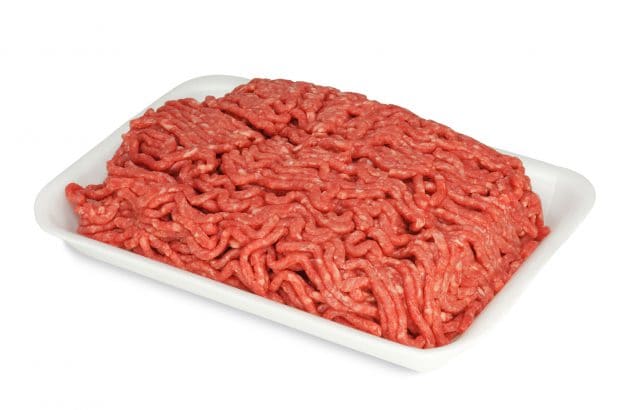
The ground beef E. coli O103 outbreak has now sickened at least 156 people in 10 states. according to the Centers for Disease Control and Prevention (CDC). Twenty people are hospitalized because they are so ill. UPDATE: K2D Foods has recalled more than 100,000 pounds of ground beef for possible E. coli O103 contamination. But the recall notice states that “At this time, there is no definitive link between this positive product and the ongoing E. coli O103 outbreak.”

USA – Outbreak of E. coli Infections – E.coli O103 STEC

CDC

Latest Outbreak Information
Illustration of a megaphone.
At A Glance


Photo of romaine lettuce in a wood bowl.

  • A total of 109 people infected with the outbreak strain of E. coli O103 have been reported from six states.
    • Seventeen people have been hospitalized. No cases of hemolytic uremic syndrome, a type of kidney failure, have been reported. No deaths have been reported.
  • Preliminary epidemiologic information suggests that ground beef is the source of this outbreak.
    • Ill people in this outbreak report eating ground beef at home and in restaurants.
    • Traceback investigations are ongoing to determine the source of ground beef supplied to grocery stores and restaurant locations where ill people ate.
  • At this time, no common supplier, distributor, or brand of ground beef has been identified.
  • CDC is not recommending that consumers avoid eating ground beef at this time. Consumers and restaurants should handle ground beef safely and cook it thoroughly to avoid foodborne illness.
  • At this time, CDC is not recommending that retailers stop serving or selling ground beef.
  • This is a rapidly evolving investigation. We will provide updates as more information becomes available.

Research – Estimate of the annual burden of foodborne illness in nondeployed active duty US Army Service Members: five major pathogens, 2010–2015

Cambridge.org

In this study, we estimate the burden of foodborne illness (FBI) caused by five major pathogens among nondeployed US Army service members. The US Army is a unique population that is globally distributed, has its own food procurement system and a food protection system dedicated to the prevention of both unintentional and intentional contamination of food. To our knowledge, the burden of FBI caused by specific pathogens among the US Army population has not been determined. We used data from a 2015 US Army population survey, a 2015 US Army laboratory survey and data from FoodNet to create inputs for two model structures. Model type 1 scaled up case counts of Campylobacter jejuniShigella spp., Salmonella enterica non-typhoidal and STEC non-O157 ascertained from the Disease Reporting System internet database from 2010 to 2015. Model type 2 scaled down cases of self-reported acute gastrointestinal illness (AGI) to estimate the annual burden of Norovirus illness. We estimate that these five pathogens caused 45 600 (5%–95% range, 30 300–64 000) annual illnesses among nondeployed active duty US Army Service members. Of these pathogens, Norovirus, Campylobacter jejuni and Salmonella enterica non-typhoidal were responsible for the most illness. There is a tremendous burden of AGI and FBI caused by five major pathogens among US Army Soldiers, which can have a tremendous impact on readiness of the force. The US Army has a robust food protection program in place, but without a specific active FBI surveillance system across the Department of Defence, we will never have the ability to measure the effectiveness of modern, targeted, interventions aimed at the reduction of specific foodborne pathogens.

USA -More frozen breaded chicken nuggets recalled in connection with outbreak

Food Safety News

Canadian officials have posted the 13th recall notice related to more than a dozen Salmonella outbreaks — some ongoing — in their country in the past 22 months. Investigators have traced the outbreaks to frozen breaded chicken nuggets, patties and similar products.

In the latest recall, posted March 21, the Canadian Food Inspection Agency urged consumers to check their homes for certain Janes brand “Pub Style – Chicken Nuggets – Breaded Chicken Cutlettes” and throw them away even if some have been eaten and no one appeared to have become sick. The agency reported the Sofina Foods Inc. distributed the recalled products to retailers nationwide.

The Public Health Agency of Canada continues to warn the public about the dangers of raw frozen breaded chicken products. The agency reported that as of March 1, there had been a total of 555 laboratory-confirmed outbreak victims nationwide. Of those for whom complete information is available, 92 people had to be admitted to hospitals. 

Kenya – 18 Nyabururu Girls High School students treated for food poisoning

Daily Nation

At least 18 students from Nyabururu Girls High School have been in and out of the Nyangena Hospital in Kisii town over suspected food poisoning since Thursday.

On Saturday, the school circulated a message to all parents seeking to dispel fake news spread on social media that more than 100 students had been taken sick.

“Dear parent, kindly ignore malicious news circulating on social media that all girls are admitted in hospital. There are only seven girls who were admitted and discharged over various ailment, their parents were informed.”

But students who secretly informed their parents of their ill health after borrowing phones from other patients said they had been cautioned against informing anyone of their state.