Category Archives: Food Toxin

RASFF Alerts – Bacillus cereus – Fermented Banku Flour – Cassava Flour

RASFF-Logo

RASFF-aflatoxins (B1 = 8.1; Tot. = 11 µg/kg – ppb) and Bacillus cereus enterotoxigenic (40000 CFU/g) in fermented banku flour from Ghana, via the Netherlands in Germany

RASFF-Bacillus cereus enterotoxigenic (72000 CFU/g) in cassava flour from Nigeria, via the Netherlands in Germany

RASFF Alerts – Aflatoxin -Pistachios – Almonds – Fermented Banku Flour – Hazlenuts – Groundnuts

RASFF-Logo

RASFF-aflatoxins (B1 = 38.2; Tot. = 42.2 µg/kg – ppb) in pistachios in shell from the United States in Germany

RASFF-aflatoxins (B1 = 17.7; Tot. = 18.8 µg/kg – ppb) in almonds from the United States in Spain

RASFF-aflatoxins (B1 = 8.1; Tot. = 11 µg/kg – ppb) and Bacillus cereus enterotoxigenic (40000 CFU/g) in fermented banku flour from Ghana, via the Netherlands in Germany

RASFF-aflatoxins (B1 = 91.6; Tot. = 106 µg/kg – ppb) in hazelnuts from Turkey in Sweden

RASFF-aflatoxins (B1 = 170; Tot. = 180 µg/kg – ppb) in unshelled pistachios from Iran in France

RASFF-aflatoxins (B1 = 8.7; Tot. = 14) in groundnut kernels from Argentina in the Netherlands

RASFF-aflatoxins (B1 = 6.3 / B1 = 2.2 µg/kg – ppb) in groundnut kernels from Argentina in the Netherlands

RASFF-aflatoxins (B1 = 2.6 µg/kg – ppb) in groundnuts kernels from Argentina in the Netherlands

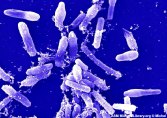
Hong Kong – Packed milk drink sample found to contain excessive Bacillus cereus

CFS bacillus

Issue Date 4.9.2018
Source of Information Centre for Food Safety
Food Product Kowloon Dairy Hi-Calcium Skimmed milk drink
Product Name and Description Product name: Kowloon Dairy Hi-Calcium Skimmed milk drink

Manufacturer: The Kowloon Dairy Ltd

Volume: 236 millilitres per pack

Use-by date: August 23, 2018

Reason For Issuing Alert
  • Following up on a food complaint, the Centre for Food Safety (CFS) collected the concerned sample from a supermarket in Sha Tin for testing. The test result showed that the sample contained Bacillus cereus at a level of 3.8 million per gram. Under the Microbiological Guidelines for Food, if ready-to-eat food contains Bacillus cereus at a level of more than 100 000 per gram, it is considered unsatisfactory.
Action Taken by the Centre for Food Safety
  • The CFS had informed the manufacturer and the vendor concerned of the test result. Investigation was conducted at the production plant and the supermarket concerned and follow-up samples were collected for further testing. Investigation is ongoing.
  • The CFS has also provided health education on food safety and hygiene for the staff of the production plant and the supermarket and requested them to carry out thorough cleaning and disinfection.
  • The CFS will alert the trade, continue to follow up on the incident and take appropriate action in order to safeguard public health and food safety.
Advice to the Trade
  • According to Section 54 of the Public Health and Municipal Services Ordinance (Cap 132), all food available for sale in Hong Kong, locally produced or imported, should be fit for human consumption. An offender is subject to a maximum fine of $50,000 and imprisonment for six months upon conviction.
Advice to Consumers
  • Bacillus cereus is commonly found in the environment. Unhygienic conditions in food processing and storage may give rise to its growth. Consuming food contaminated with excessive Bacillus cereus may cause gastrointestinal upset such as vomiting and diarrhoea.
Further Information The CFS press release

Information – Prevent Food Poisoning

Food Safety.Gov 

kswfoodworld mrsa


Anybody can get food poisoning, but some people are more likely to get seriously ill.

Every year, an estimated 1 in 6 Americans (or 48 million people) get sick, 128,000 are hospitalized, and 3,000 die of foodborne diseases. However, certain groups of people are more likely to get a foodborne illness (also called food poisoning) or get seriously ill. Learn why certain groups have a higher chance for food poisoning and what steps they can take to protect themselves.

People more likely to get a foodborne illness are:

  • Children younger than 5 years of age
  • Adults aged 65 and older
  • People with weakened immune systems from medical conditions or their treatment, such as cancer, HIV/AIDS, or diabetes
  • Pregnant women

Some People are at Higher Risk

Some people are more likely to get food poisoning because their ability to fight germs and sickness is not as effective as other people’s for a variety of reasons.

Young children have immune systems that are still developing, so their ability to fight germs and sickness isn’t as strong. Food poisoning can be particularly dangerous for them because illness can lead to diarrhea and dehydration. Children younger than 5 are three times more likely to be hospitalized if they get a Salmonella infection. And kidney failure strikes 1 out of 7 children under age 5 who are diagnosed with E. coli O157 infection.

Older adults have a higher risk because as people age, their immune systems and organs don’t recognize and get rid of harmful germs as well as they once did. Nearly half of people aged 65 and older who have a lab-confirmed foodborne illness from Salmonella, CampylobacterListeria or E. coli are hospitalized.

People with weakened immune systems can’t fight germs and sickness as effectively. People on dialysis are 50 times more likely to get a Listeria infection.

Pregnant women are more likely than other people to get sick from certain germs. For example, pregnant women are 10 times more likely to get a Listeria infection.

RASFF Alerts – Aflatoxin – Dried Figs – Almonds – Groundnuts – Psitachios

RASFF-Logo

RASFF-aflatoxins (B1 = 21.8; Tot. = 23.3 µg/kg – ppb) in dried figs from Turkey in Germany

RASFF -aflatoxins (B1 = 16.2 µg/kg – ppb) in unshelled almonds from the United States in Spain

RASFF-aflatoxins (B1 = 7.3; Tot. = 8.2 µg/kg – ppb) in groundnuts from Argentina in France

RASFF-aflatoxins (B1 = 24 µg/kg – ppb) in pistachios with shell from Iran in Spain

RASFF Alert- STEC E.coli -Chilled Fillet Americain

RASFF-Logo

RASFF-shigatoxin-producing Escherichia coli (stx+, eae+ /25g) in chilled filet americain from Belgium in Belgium

RASFF Alert – Histamine – Raw Mackerel

RASFF-Logo

RASFF-histamine (171 mg/kg – ppm) in frozen raw mackerel from India in the UK

USA – 18 E. coli O26 Illnesses Prompts Florida Publix to Recall Ground Beef

Food Poison Journal  CDC E.coli

Publix Super Markets Inc., a Lakeland, Fla., retail grocery store chain is voluntarily recalling an undetermined amount of ground beef products made from chuck that may be contaminated with Escherichia coli O26, the U.S. Department of Agriculture’s Food Safety and Inspection Service (FSIS) announced today.

The ground chuck items were purchased by consumers from June 25, 2018, through July 31, 2018. The following products are subject to recall: https://www.fsis.usda.gov/wps/wcm/connect/330436d0-f5bb-4ee3-a3eb-cca6459bf014/072-2018-List-Products.pdf?MOD=AJPERES&useDefaultText=0&useDefaultDesc=0

Research – Aflatoxin Contamination of Dried Insects and Fish in Zambia

Journal of Food Protection

Dried insects and fish are important sources of income and dietary protein in Zambia. Some aflatoxin-producing fungi are entomopathogenic and also colonize insects and fish after harvest and processing. Aflatoxins are carcinogenic, immune-suppressing mycotoxins that are frequent food contaminants worldwide. Several species within Aspergillus section Flavi have been implicated as causal agents of aflatoxin contamination of crops in Africa. However, aflatoxin producers associated with dried fish and edible insects in Zambia remain unknown, and aflatoxin concentrations in these foods have been inadequately evaluated. The current study sought to address these data gaps to assess potential human vulnerability through the dried fish and edible insect routes of aflatoxin exposure. Caterpillars (n = 97), termites (n = 4), and dried fish (n = 66) sampled in 2016 and 2017 were assayed for aflatoxin by using lateral flow immunochromatography. Average aflatoxin concentrations exceeded regulatory limits for Zambia (10 μg/kg) in the moth Gynanisa maja (11 μg/kg), the moth Gonimbrasia zambesina (Walker) (12 μg/kg), and the termite Macrotermes falciger (Gerstacker) (24 μg/kg). When samples were subjected to simulated poor storage, aflatoxins increased (P < 0.001) to unsafe levels in caterpillars (mean, 4,800 μg/kg) and fish (Oreochromis) (mean, 23 μg/kg). The L strain morphotype of A. flavus was the most common aflatoxin producer on dried fish (88% of Aspergillus section Flavi), termites (68%), and caterpillars (61%), with the exception of Gynanisa maja, for which A. parasiticus was the most common (44%). Dried fish and insects supported growth (mean, 1.3 × 10⁹ CFU/g) and aflatoxin production (mean, 63,620 μg/kg) by previously characterized toxigenic Aspergillus section Flavi species, although the extent of growth and aflatoxigenicity depended on specific fungus-host combinations. The current study shows the need for proper storage and testing of dried insects and fish before consumption as measures to mitigate human exposure to aflatoxins through consumption in Zambia.

Research – Fungal diversity and frequency carried by housefly (Musca domestica L.) and their relation with stored grains in rural areas of Pakistan

Wiley Online fly

Abstract

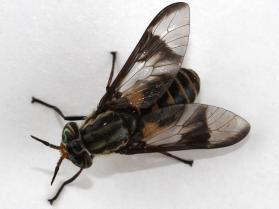
Housefly (Musca domestica L.) contaminates food by transferring microbes. Fungi carried by houseflies cause postharvest losses by food spoilage produce mycotoxins and spread various infectious diseases in human beings and animals. This study was planned to determine the diversity and frequency of fungal species carried by houseflies and their relation with stored grains. Houseflies in the vicinity of stored wheat and rice grains were collected from the rural areas of four districts of Pakistan. Overall, 897, 631, and 687 fungal species were isolated from houseflies, rice, and wheat grains, respectively. Aspergillus and Fusarium species followed by Alternaria and Penicillium species were found dominant in houseflies, rice, and wheat grains. Correlation analyses revealed a significant association between most of the fungal species isolated from houseflies, wheat, and rice grains. The study concludes that a strong correlation of fungi exists between stored grains and houseflies around the unhygienic storage places.

Practical applications

It is highly important to understand the role of houseflies in spreading various fungal species to stored grains, particularly in our persisting rural grain storage system. Our study is first of its kind in which we have studied the correlation of fungal diversity and abundance between houseflies, wheat, and rice grains stored in the same vicinity/place/house. Our findings show a strong correlation in fungal diversity and abundance, isolated from flies and stored grains. This study demonstrates the role of houseflies in the dispersal of various fungal species to contaminate the stored grains. Therefore, appropriate measures should be taken to control the houseflies or their entrance to store houses. There is a strong need to give awareness and improve the grain storage system in houses, especially in rural areas, by food regulating authorities.