Brand : PORTICELLO
Name : TUNA IN SUNFLOWER OIL CAN FROM GR. 1730
Reason for reporting : Recall due to microbiological risk
Publication date : 7 October 2020


Brand : PORTICELLO
Name : TUNA IN SUNFLOWER OIL CAN FROM GR. 1730
Reason for reporting : Recall due to microbiological risk
Publication date : 7 October 2020

Presence of salmonella
Those in possession of this product are asked not to consume it and to return it to the point of sale where it was purchased.
Foodborne illnesses caused by salmonella result in gastrointestinal disturbances, diarrhea, vomiting and abdominal pain, often accompanied by fever; these symptoms may be more serious in young children, immunocompromised people and the elderly. The incubation period can range from 6 to 72 hours.
People who have consumed the products mentioned below and who have these symptoms are invited to consult their doctor, notifying him of this consumption.
▸ Presentation
In boxes of 6 or 12 and trays of 30 eggs
▸ Recommended consumption date
from 05/10/20 to 21/10/20
▸ Lot
1FRUFC01
▸
Packager code FR.26.014.052
▸ Marketing date
from 09/11/20 to 09/28/20
▸ Consumer service contact
SAS DEROUX FRERES – L’Œuf des Collines is available to consumers to answer their questions on the following email address: qualite.odc@gmail.com
▸ Source
https://www.auchan.fr/
Posted in food contamination, Food Hygiene, Food Inspections, Food Micro Blog, Food Microbiology, Food Microbiology Blog, Food Microbiology Testing, Food Pathogen, food recall, Food Safety, Food Safety Alert, Food Temperature Abuse, microbial contamination, Microbiology, Oulah, Salmonella, Salmonella in Eggs, Uncategorized

aflatoxins (Tot. = 0.214 µg/kg – ppb) in milk from Italy in Italy
aflatoxins (B1 = 26.8; Tot. = 78.8 µg/kg – ppb) in chili mix powder from Ethiopia, packaged in Germany in Switzerland
aflatoxins (B1 = 8.2; Tot. = 9.4 µg/kg – ppb) in groundnuts from the United States in the Netherlands
aflatoxins (B1 = 7.9; Tot. = 9.1 µg/kg – ppb) in groundnuts from Argentina in the Netherlands
aflatoxins (B1 = 16.4; Tot. = 17.4 µg/kg – ppb) in chilli powder from Sri Lanka in the UK
aflatoxins (B1 = 11; Tot. = 13 µg/kg – ppb) in groundnuts from India, via Switzerland in the Netherlands
Posted in Aflatoxin, food contamination, Food Hygiene, Food Inspections, Food Micro Blog, Food Microbiology, Food Microbiology Blog, Food Microbiology Testing, Food Poisoning, food recall, Food Safety, Food Safety Alert, Food Temperature Abuse, Food Testing, Food Toxin, Mould Toxin, Mycotoxin, RASFF, Toxin
Almonds rejected as inedible are often used for production of almond oil. However, low-quality almonds are frequently contaminated with aflatoxins, and little is known regarding transfer of aflatoxins to almond oil during processing. In this study, oil was produced from reject almonds by hexane extraction. Of 19 almond samples that were naturally contaminated with aflatoxins, 17 oil samples contained measurable amounts of aflatoxins, and aflatoxin content of contaminated oil was correlated with aflatoxin content of the nuts. However, oil aflatoxin levels were not correlated with the oxidation level of the oil as measured by percent free fatty acids and peroxide value. Adsorbents used in oil refining were tested for their ability to remove aflatoxins from contaminated oil. Fuller’s earth and bentonite were the most effective, removing 96% and 86% of total aflatoxins from contaminated oil samples, respectively. Treatment with diatomaceous earth, in contrast, had no effect on aflatoxin levels in oil. These results show that oil refining steps using mineral clay adsorbents may also function to remove aflatoxins from contaminated oil.
Posted in Aflatoxin, food contamination, Food Hygiene, Food Micro Blog, Food Microbiology, Food Microbiology Blog, Food Microbiology Research, Food Microbiology Testing, Food Poisoning, Food Temperature Abuse, Food Testing, Food Toxin, microbial contamination, Microbiology, mold, Mould Toxin, Mycotoxin
FAO and WHO experts are to look again at Listeria monocytogenes in ready-to-eat (RTE) foods.
The move by the Food and Agriculture Organization (FAO) and the World Health Organization (WHO) is due to developments in diagnostics and changes in the epidemiology of listeriosis outbreaks.
The Joint FAO/WHO Expert Meetings on Microbiological Risk Assessment (JEMRA) is planned for Oct. 20 to Nov. 6.
Posted in food contamination, food death, Food Hygiene, Food Illness, Food Inspections, Food Micro Blog, Food Microbiology, Food Microbiology Blog, Food Microbiology Testing, Food Pathogen, food recall, Food Safety, Food Safety Alert, Food Temperature Abuse, Food Testing, Listeria, Listeria monocytogenes
Posted in Bacteria, bacterial contamination, food contamination, Food Hygiene, Food Inspections, Food Micro Blog, Food Microbiology, Food Microbiology Blog, Food Microbiology Testing, food recall, Food Safety, Food Safety Alert, Food Spoilage, Food Temperature Abuse, Food Testing, Pseudomonas, Pseudomonas fluorescens, RASFF
A catering company in Wales has been fined in relation to five people who became ill from eating mackerel in July 2019.
DM Catering (Pembs) Ltd. was fined £2,550 ($3,300) by Haverfordwest magistrates in late September after pleading guilty to storing foods likely to support the growth of pathogenic microorganisms or the formation of toxins at a temperature above 8 degrees C (46.4 degrees F).
The prosecution was brought by Pembrokeshire County Council’s Environmental Health department.
The Food Standards Agency (FSA) has today launched a formal six-week consultation with key stakeholders to inform a review of the guidance on the safety and shelf-life of vacuum and modified atmosphere packed (VP/MAP) chilled beef, lamb and pork.
Currently, the FSA guidance (Opens in a new window)advises that the maximum shelf-life of VP/MAP chilled beef, lamb and pork should be 10 days , unless suitable controls are in place to appropriately reduce associated risks.
This summer the FSA, industry and other partners signed up to a joint statement, committing to working together to review the existing guidance and consider possible changes.
For more information about the consultation and to take part, visit the FSA consultation webpage. The consultation will close on 11 November 2020.
Posted in Bacteria, bacterial contamination, Clostridium botulinum, food contamination, Food Hygiene, Food Illness, Food Micro Blog, Food Microbiology, Food Microbiology Blog, Food Microbiology Research, Food Microbiology Testing, Food Poisoning, Food Safety, Food Technology, Food Temperature Abuse, Food Testing, Food Toxin
| Brand Name | Common Name | Size | UPC | Code(s) on Product |
|---|---|---|---|---|
| Happy Planet | Berkeley Butternut Squash Soup | 2 x 832 ml | 7 79172 61647 9 | All Best Before dates from 2020OC30 up to and including 2020DE05 |
| Happy Planet | Thai Coconut Soup | 2 x 832 ml | 7 79172 61644 8 | All Best Before dates from 2020OC28 up to and including 2020DE08 |
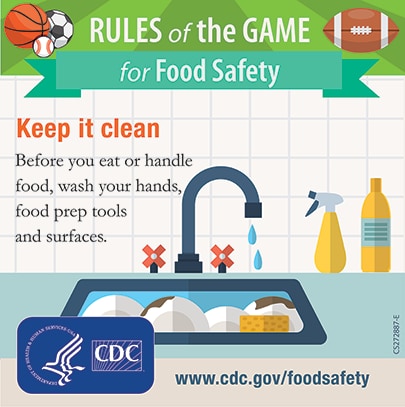
Make sure your game day gathering is memorable for all the right reasons! Follow these six tips to avoid food poisoning:
Cooking food to the right temperature kills harmful germs. Use a food thermometer to check meat, egg, and microwaved dishes on your menu.

 FoodWorld