Category Archives: Food Safety

France – Sheep fresh and Grated organic sheep cheese from the Fromagerie du Val d’Ormèze brand – Salmonella

Oulah

Product reminder: Sheep fresh and Grated organic sheep cheese from the Fromagerie du Val d'Ormèze brand

ENCOUNTERED PROBLEM

Presence of salmonella

PROPOSED SOLUTION

People who may have this product are asked not to consume it and to return it to the point of sale where it was purchased.

Foodborne illness caused by Salmonella results in gastrointestinal disturbances, diarrhea, vomiting and abdominal pain, often accompanied by fever; these symptoms may be more severe in young children, immunocompromised individuals and the elderly. The incubation period can range from 6 to 72 hours.
People who have consumed the products mentioned below and who have these symptoms are invited to consult their doctor, notifying him of this consumption.

FURTHER INFORMATION

▸ Sheep
fresh 120g • Barcode: 3368131220115
• Lot: 212006
• DLC: 11/02/2021 – 14/02/2021 – 16/02/2021

▸ Grated organic sheep 90g
• Barcode: 3368130719078
• Lot: 212006
• DLC: 02/14/2021 – 02/15/2021 – 02/17/2021 – 02/18/2021

▸ Sanitary
approval N ° FR 07.095.001 CE

▸ Consumer service contact
For more information, please contact the cheese factory on 0611110638 or 0475062131

▸ Source
https://www.naturalia.fr/

Canada – Food Recall Warning – Clover Leaf brand Sardines Boneless Fillets – Garlic & Chive in Oil and Sardines Boneless Fillets – Smoked Jalapeño in Oil recalled due to potential presence of dangerous bacteria – Clostridium botulinum

CFIA

Recall details

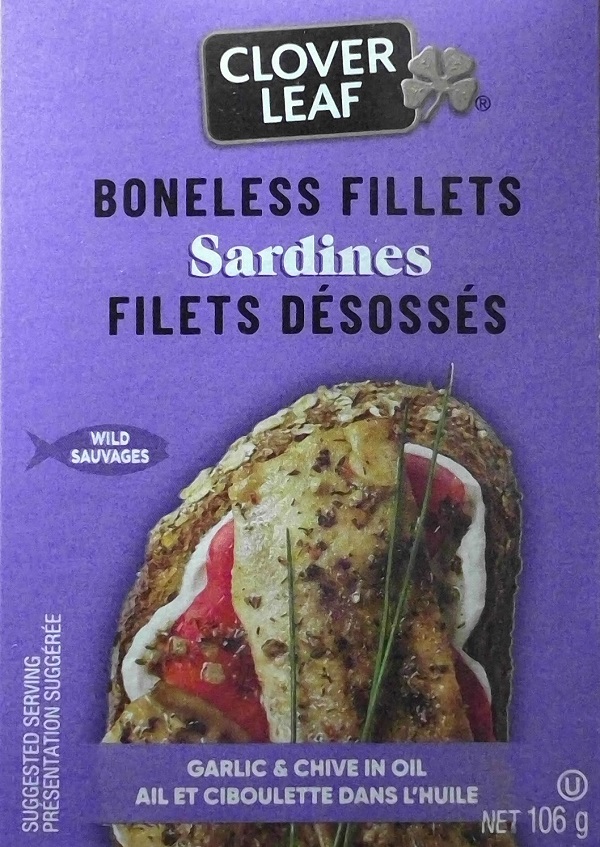
Ottawa, January 22, 2021 – Clover Leaf Seafoods Corp. is recalling Clover Leaf brand Sardines Boneless Fillets – Garlic & Chive in Oil and Sardines Boneless Fillets – Smoked Jalapeño in Oil from the marketplace because they may permit the growth of Clostridium botulinum. Consumers should not consume the recalled products described below.

Recalled product

Brand Product Size UPC Codes
Clover Leaf Sardines Boneless Fillets – Garlic & Chive in Oil 106 g 0 61362 46008 6

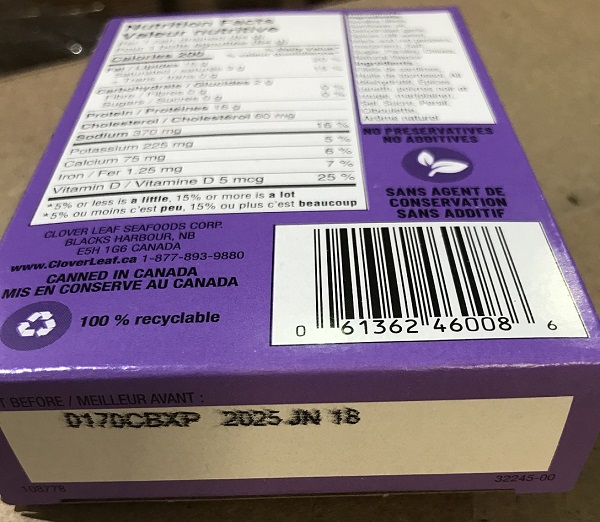
0170CBXP 2025 JN 18

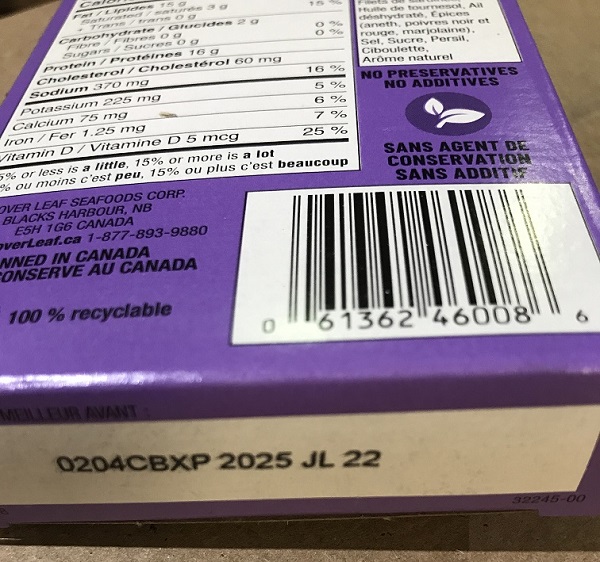
0204CBXP 2025 JL 22

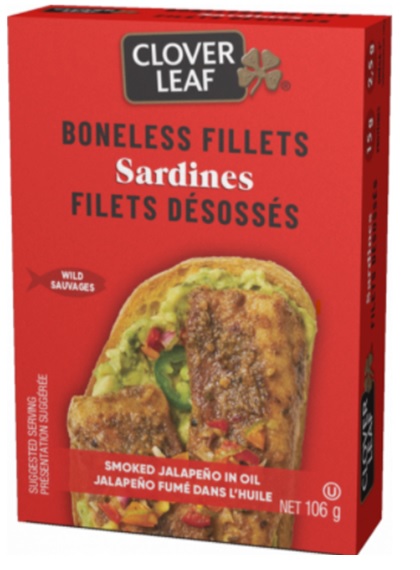
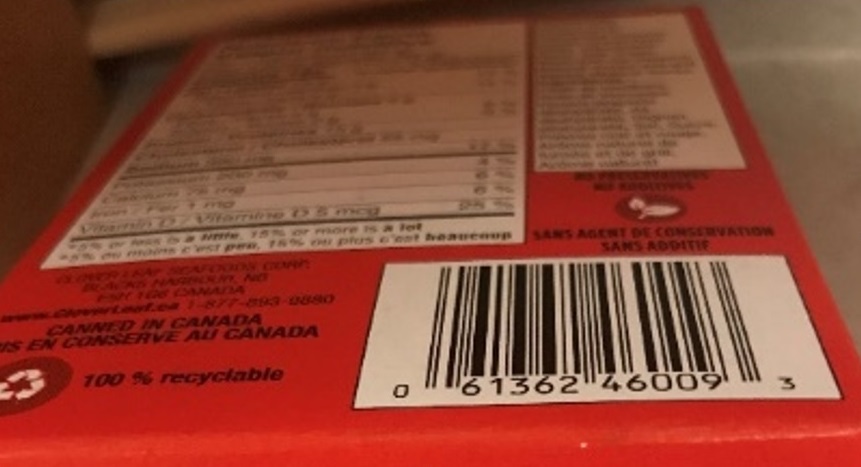
Clover Leaf Sardines Boneless Fillets – Smoked Jalapeño in Oil 106 g 0 61362 46009 3

0171CBXP 2025 JN 19

0218CBXP 2025 AU 05

0307CBXS 2025 NO 02

What you should do

If you think you became sick from consuming a recalled product, call your doctor.

Check to see if you have the recalled products in your home. Recalled products should be thrown out or returned to the store where they were purchased.

Food contaminated with Clostridium botulinum toxin may not look or smell spoiled but can still make you sick.

Symptoms in adults can include facial paralysis or loss of facial expression, unreactive or fixed pupils, difficulty swallowing, drooping eyelids, blurred or double vision, difficulty speaking, including slurred speech, and a change in sound of voice, including hoarseness.

Symptoms of foodborne botulism in children can include difficulty swallowing, slurred speech, generalized weakness and paralysis. In all cases, botulism does not cause a fever. In severe cases of illness, people may die.

Background

This recall was triggered by the company. The Canadian Food Inspection Agency (CFIA) is conducting a food safety investigation, which may lead to the recall of other products. If other high-risk products are recalled, the CFIA will notify the public through updated Food Recall Warnings.

The CFIA is verifying that industry is removing the recalled products from the marketplace.

Illnesses

There have been no reported illnesses associated with the consumption of these products.

Product photos

Printer ready version of photos

  • Clover Leaf – Sardines Boneless Fillets – Garlic & Chive in Oil – 106 grams (front)
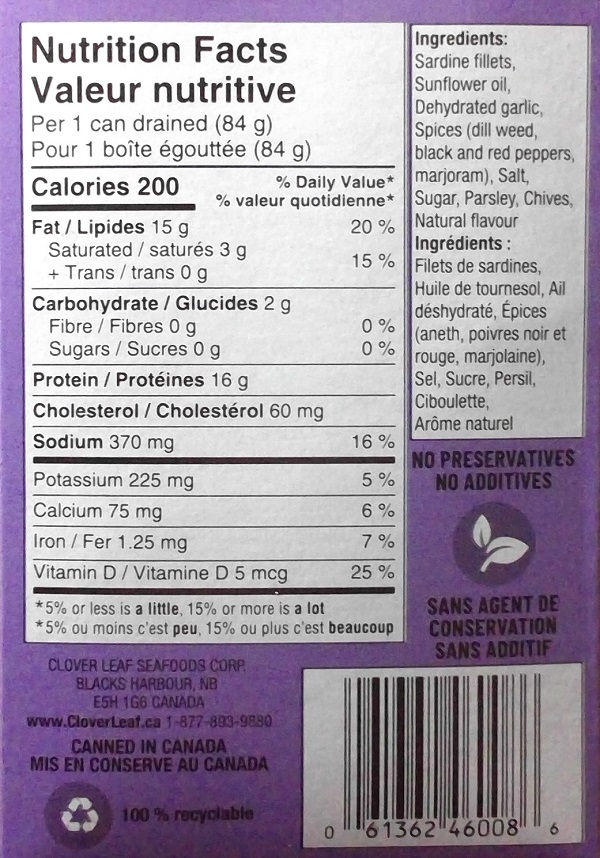
  • Clover Leaf – Sardines Boneless Fillets – Garlic & Chive in Oil – 106 grams (back)
  • Clover Leaf – Sardines Boneless Fillets – Garlic & Chive in Oil – 106 grams (lot code - JN)
  • Clover Leaf – Sardines Boneless Fillets – Garlic & Chive in Oil – 106 grams (lot code - JL)
  • Clover Leaf – Sardines Boneless Fillets – Smoked Jalapeño in Oil – 106 grams(front)
  • Clover Leaf – Sardines Boneless Fillets – Smoked Jalapeño in Oil – 106 grams(back)

Public enquiries and media

Company information
Clover Leaf Seafoods Corp.: Consumer Affairs Recall Line, 1-888-686-1535
Public enquiries
Toll-free: 1-800-442-2342 (Canada and U.S.)
Telephone: 1-613-773-2342 (local or international)
Email: cfia.enquiries-demandederenseignements.acia@canada.ca
Media relations
Telephone: 613-773-6600
Email: cfia.media.acia@canada.ca

UK – Several retailers recall chilled and frozen seafood products because of possible contamination with Salmonella

FSA

Several retailers listed below are recalling several chilled and frozen seafood products because they might be contaminated with salmonella.

Product details

by Sainsbury’s Mussels (Chilled)
Pack size 150g
Best before All Date codes
by Sainsbury’s Cockles (Chilled)
Pack size 90g
Best before All Date codes
Co-op Cooked Mussels (Chilled)
Pack size 140g
Best before All date codes
Asda Seafood Selection (Mussels, seafood bites and king prawns) (Chilled)
Pack size 240g
Best before 22, 24, 25, 26, 27 and 28 January 2021
Asda Cooked Mussels (Chilled)
Pack size 150g
Best before 22, 23, 24, 25, 26, 27 and 28 January 2021
by Sainsbury’s Seafood Selection (Chilled)
Pack size 200g
Best before All Date codes
by Sainsbury’s Cooked Cockles (Frozen)
Pack size 200g
Best before All Date codes
by Sainsbury’s Cooked Mussels (Frozen)
Pack size 300g
Best before All Date codes
by Sainsbury’s Seafood Selection (Frozen)
Pack size 300g
Best before All Date codes
Waitrose & Partners Essential Frozen Seafood Selection, (King prawns, mussels and squid rings) (Frozen)
Pack size 250g
Best before All dates up to and including end January 2022
Co-op Cooked Seafood Selection (Frozen)
Pack size 300g
Best before All date codes
Product
Pack size Pack Size
Best before Use by dates
Waitrose & Partners Essential Cooked Seafood Selection, (Mussels, king prawns and squid) (Chilled)
Pack size 200g
Best before All use by dates from 20 December 2020 to 20 January 2021

Risk statement

The products listed above might be contaminated with salmonella. Symptoms caused by salmonella usually include fever, diarrhoea and abdominal cramps.

Action taken by the company

The retailers listed are recalling the above products. Point of sale notices will be displayed in all retail stores that are selling these products. These notices explain to customers why the products are being recalled and tell them what to do if they have bought the product. Please see the attached notices.

Our advice to consumers

If you have bought any of the above products do not eat them. Instead, return them to the store from where they were bought for a full refund.

Research – Inactivation of Foodborne Viruses by High-Pressure Processing (HPP)

MDPI

Rotavirus

High-pressure processing (HPP) is an innovative non-thermal food preservation method. HPP can inactivate microorganisms, including viruses, with minimal influence on the physicochemical and sensory properties of foods. The most significant foodborne viruses are human norovirus (HuNoV), hepatitis A virus (HAV), human rotavirus (HRV), hepatitis E virus (HEV), human astrovirus (HAstV), human adenovirus (HuAdV), Aichi virus (AiV), sapovirus (SaV), and enterovirus (EV), which have also been implicated in foodborne outbreaks in various countries. The HPP inactivation of foodborne viruses in foods depends on high-pressure processing parameters (pressure, temperature, and duration time) or non-processing parameters such as virus type, food matrix, water activity (aw), and the pH of foods. HPP was found to be effective for the inactivation of foodborne viruses such as HuNoV, HAV, HAstV, and HuAdV in foods. HPP treatments have been found to be effective at eliminating foodborne viruses in high-risk foods such as shellfish and vegetables. The present work reviews the published data on the effect of HPP processing on foodborne viruses in laboratory media and foods. View Full-Text

RASFF Alerts – Salmonella – Various Chicken/Turkey/Egg Products from Poland – Raw Smoked Bacon Strips – Organic Chilli Pepper – Black Pepper – Sesame Seeds – Chipolata – Paprika Powder – Turkey Fillets – Turkey Escalopes

European Food Alerts

RASFF

Salmonella (in 1 out of 5 samples /25g) in raw smoked bacon strips from Germany in Germany

RASFF

Salmonella (presence /25g) in organic chilli pepper from Uganda in the Netherlands

RASFF

Salmonella (presence /25g) in organic sesame seeds from Turkey in the Netherlands

RASFF

Salmonella (presence /25g) in chipolata from the Netherlands in the Netherlands

RASFF

Salmonella (presence /25g) in paprika powder from China in Spain

RASFF

Salmonella enterica ser. Matadi (presence /25g), Salmonella enterica ser. München (presence /25g), Salmonella enterica ser. Newport (presence /25g) and Salmonella enterica ser. Saintpaul (presence /25g) in black pepper from Brazil in Germany

RASFF

Salmonella enterica ser. Abaetetuba (in 1 out of 10 samples /25g), Salmonella enterica ser. Coeln (in 1 out of 10 samples /25g), Salmonella enterica ser. Matadi (in 1 out of 10 samples /25g), Salmonella enterica ser. Newport (in 1 out of 10 samples /25g) and Salmonella enterica ser. Oranienburg (in 2 out of 10 samples /25g) in black pepper from Brazil in Germany

RASFF

Salmonella enterica ser. Saintpaul (presence /25g) in black pepper from Brazil in Germany

RASFF

Salmonella enterica ser. Typhimurium (presence /25g) in chilled turkey fillets and escalopes from France in Finland

RASFF

Salmonella enterica ser. salamae (in 3 out of 5 samples /25g) in frozen turkey breast fillets from Poland, via Estonia in Finland

RASFF

Salmonella enterica ser. Enteritidis (in out of 5 samples /25g) in chilled chicken thighs from Poland in Lativa

RASFF

Salmonella enterica ser. Liverpool (in 1 out of 5 samples /25g) in sesame seeds from Uganda in Germany

RASFF

suspicion of Salmonella enterica ser. Enteritidis (found in faecal samples) in eggs from Poland in Poland

RASFF

Salmonella enterica ser. Enteritidis (presence /25g) in frozen chicken broiler fillets from Poland in Lithuania

RASFF

Salmonella (presence /25g) in chilled chicken meat from Poland in Poland

RASFF

Salmonella enterica ser. Enteritidis (presence/ /25g) in chilled chicken broiler soup sets from Poland in Lithuania

RASFF

Salmonella enterica ser. Infantis (presence /25g) in chicken wings from Poland in Lithuania

RASFF Alert – Listeria monocytogenes – Frozen Pre-Cooked Chicken Curry Cassolettes

European Food Alerts

RASFF

Listeria monocytogenes (< 10 CFU/g) in frozen pre-cooked chicken curry cassolettes from Spain in France

RASFF Alerts – Aflatoxin – White Rice – Pistachios

European Food Alerts

RASFF

aflatoxins (B1 = 3 µg/kg – ppb) in white rice from Pakistan in Spain

RASFF

aflatoxins (B1 = 24; Tot. = 27 µg/kg – ppb) in pistachios from Turkey in Belgium

Switzerland – Early detection for food safety

FFSVO

For sustainable assurance of food safety and the prevention of fraud, the FSVO identifies newly emerging risks to the health of Switzerland’s population. Early detection of this kind allows appropriate action to be taken in real time.

The FSVO compiles the most important food safety information every month 

Monitoring developments in the field of food safety is an essential task of early detection. This is why the FSVO summarises and evaluates the main information in Seismo Info. The publication is sent out by newsletter.

The aim of early detection for food safety is to identify and assess potential risks of food to the health of consumers.

The FSVO distinguishes between different types of risk:

  • Microbiological risks in foodstuffs and food fraud and deception
  • Chemical risks in foodstuffs and commodities
  • Nutrition-related risks

Monitoring system

The detection of newly emerging risks requires vigilant monitoring of societal and ecological changes, technological developments, economic trends and political conditions.

To perform these tasks, the FSVO manages an early detection system for food safety. This system considers information from a variety of sources, as well as the opinion of experts from the federal government, the cantons, industry and universities. The FSVO is also part of an international network that regularly shares information on new risks, assesses these risks and discusses the action to be taken.

Information and communication

The information gathered is compiled in the ADURA database, which can be accessed by federal and cantonal experts and to some extent also by the public.

The FSVO summarises and evaluates the main information every month in Seismo Info. The publication is communicated via the «Food safety and nutrition» newsletter (Subscription in French, German or Italian).

«Briefing letters» are short summaries of issues. They are characterised by in-depth research on a specific topic. Their purpose is to draw attention to hazards or risks that could endanger food safety in the medium to long term.

Anyone can contribute to early detection by submitting information to seismo@blv.admin.ch. Specialists check the information and incorporate it into the ADURA database or Seismo Info as appropriate.

USA – Lancaster Foods Recalls All Conventional Butternut Squash Items That Were Processed between the Dates of 12/22/20 and 01/08/21 Due to Possible Health Risk

FDA

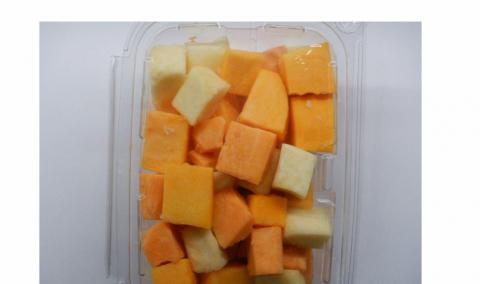
Lancaster Foods LLC has initiated a voluntary product recall of its processed butternut squash items because they have the potential to be contaminated with Listeria Monocytogenes, an organism which can cause serious and sometimes fatal infections in young children, frail or elderly people, and others with weakened immune systems. Although healthy individuals may suffer only short-term symptoms such as high fever, severe headache, stiffness, nausea, abdominal pain and diarrhea, Listeria infection can cause miscarriages and stillbirths among pregnant women.

No illnesses have been reported to date in connection with this problem.

The recalled items were distributed in NC, VA, DC, MD, PN, NY, NJ, CT, RI, MA, NH, and VT mainly through retail stores.

The products noted:

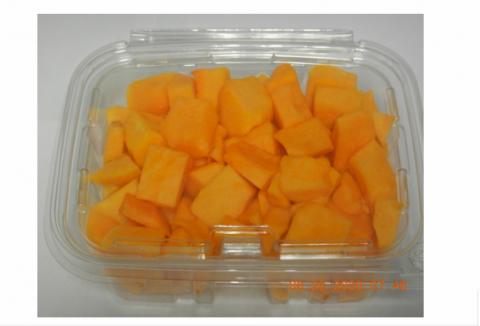
  1. 16 oz Autumn Medley – UPC 8 13055 01115 6; with the expiration dates of 01/05/21, 01/07/21, and 01/09/21 noted on the bottom scan label. The brand name is Lancaster Foods and the package is a clear plastic tamper-evident clamshell.
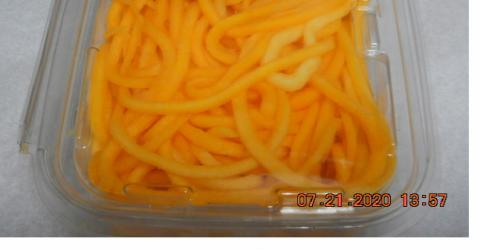
  2. 12 oz Butternut Squash Noodles – UPC 8 13055 01749 3; with the expiration date of 01/10/21 noted on the bottom scan label. The brand name is Lancaster Foods and the package is a clear plastic tamperevident clamshell.
  3. 12 oz Butternut Squash Noodles – UPC 8 13055 01864 3; with the expiration dates of 01/05/21, 01/08/21, 01/10/21, 01/11/21, 01/12/21, 01/15/21, and 01/17/21 noted on the bottom scan label. The brand name is Lancaster Foods and the package is a clear plastic tamper-evident clamshell.
  4. 12 oz Butternut Squash Noodles – UPC 6 88267 17259 5; with the expiration dates of 01/08/21, 01/10/21, 01/12/21, 01/13/21, 01/14/21, 01/15/21, and 01/17/21 noted on the bottom scan label. The brand name is Store Brand and the package is a clear plastic tamper-evident clamshell.
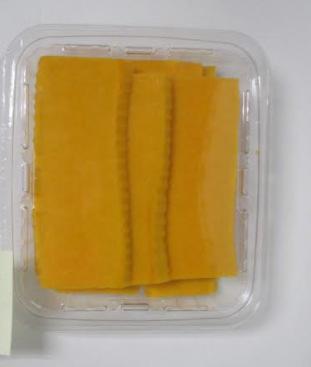
  5. 21 oz Butternut Squash Planks – UPC 8 13055 01272 6; with the expiration dates of 01/02/21, 01/08/21, 01/12/21, 01/15/21, and 01/17/21 noted on the bottom scan label. The brand name is Lancaster Foods and the package is a clear plastic tamper-evident clamshell.
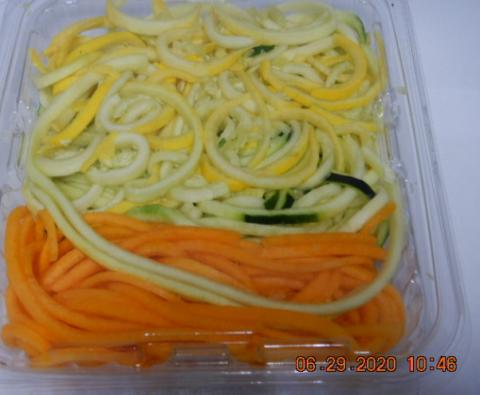
  6. 20 oz Squash Noodle Medley – UPC 8 13055 01836 0; with the expiration dates of 01/05/21, 01/08/21, 01/13/21, 01/14/21, and 01/16/21 noted on the bottom scan label. The brand name is Lancaster Foods and the package is a clear plastic tamper-evident clamshell.
  7. 20 oz Squash Noodle Medley – UPC 6 88267 18585 4; with the expiration dates of 01/03/21, 01/08/21, 01/11/21, 01/17/21, 01/18/21, and 01/19/21 noted on the bottom scan label. The brand name is Store Brand and the package is a clear plastic tamper-evident clamshell.
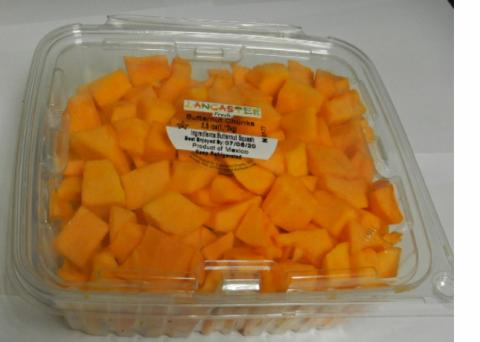
  8. 2.5# Butternut Squash Chunks – UPC 8 13055 01596 3; with the expiration dates of 01/04/21, 01/12/21, 01/15/21, and 01/18/21 noted on the bottom scan label. The brand name is Lancaster Foods and the package is a clear plastic tamper-evident clamshell.
  9. 20 oz Butternut Squash Chunks – UPC 8 13055 01150 7; with the expiration dates of 01/05/21, 01/08/21, 01/09/21, 01/13/21, and 01/16/21 noted on the bottom scan label. The brand name is Lancaster Foods and the package is a clear plastic tamper-evident clamshell.
  10. 24 oz Butternut Squash Chunks – UPC 8 13055 01300 6; with the expiration dates of 01/12/21, 01/13/21, 01/15/21 noted on the bottom scan label. The brand name is Lancaster Foods and the package is a clear plastic tamper-evident clamshell.
  11. 12 oz Butternut Squash Chunks – UPC 8 13055 01391 4; with the expiration dates of 01/04/21, 01/05/21, 01/07/21, 01/11/21, 01/12/21, 01/15/21, 01/17/21, and 01/20/21 noted on the bottom scan labels. The brand name is Lancaster Foods and the package is a clear plastic tamper-evident clamshell.
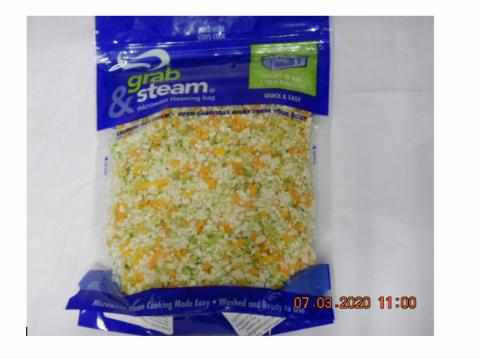
  12. 15 oz Veggie Rice Blend – UPC 8 13055 01014 2; with the expiration dates of 01/07/21 and 01/09/21 noted on the bottom scan labels. The brand name is Lancaster Foods and the package is a stand-up steam pouch with ‘grab & steam’ printed on the header.

Out of an abundance of caution, Lancaster Foods has temporarily halted production of these items as the FDA and the company investigate the source of the issue. Consumers who have purchased units noted above are urged to return them to the place of purchase for a full refund.

Consumers with questions may contact the company at 1-410-799-0010, extension 1530. The hours are from 0800 to 1700 in the Eastern time zone on the days of Monday through Sunday. Voicemails received after hours will be returned the next day.


Company Contact Information

Consumers:
Lancaster Foods, LLC
 1-410-799-0010, extension 1530

Product Photos

New Zealand – Pestell’s confirmed as source of listeria in ham products in December 2020 food recall

MPI

A New Zealand Food Safety and Nelson Marlborough Public Health Service investigation has confirmed the source of listeria contamination last month that resulted in illness for 4 people and led to recalls of ham products from a number of South Island supermarkets, and 3 stores in the greater Wellington region.

The contamination originated at meat supplier Pestell’s Rai Bacon Company Ltd, where it was discovered in products and in the processing environment. This was confirmed through the results of DNA testing, received this week.

As a result of the recall in December, Pestell’s have stopped producing and selling ready-to-eat ham products.

Investigations into the source of listeria involved followup with the suppliers of the cooked ready-to-eat meats to the supermarket, including Pestell’s.

In October, routine testing by Pak’n Save Blenheim detected listeria in some packaged meat products and the affected products were recalled. It was identified after genome testing that the listeria found as a result of the testing, had the same sequencing as the listeria found in Pestell’s products.

New Zealand Food Safety’s food compliance services national manager, Melinda Sando, says, “We knew where the supermarket was getting its stock from. We went to Pestell’s and took samples for testing from their processing environment and their products. Listeria was detected in product and environment samples.

“These samples were then sent to ESR, and they did genome sequencing. The sequencing of those isolates (cells) showed they were identical, which means they are from a specific source.

“Nobody wants to put their customers at risk. We worked quickly to minimise the risk to the public and resolve the issues.

“There was good cooperation from the supplier and retailers,” Ms Sando says.

Nelson Marlborough Public Health Service medical officer of health, Dr Andrew Lindsay, says: “Listeriosis infection can be serious among vulnerable groups such as pregnant women and their unborn babies, newborn babies, people with weakened immune systems and elderly people.

“We will continue to work closely with New Zealand Food Safety should any more cases emerge. To date, no further cases associated with the recalled products have been identified. However, as listeria can survive freezing, consumers are reminded to check food in their fridges and freezers and if they have any of the recalled product follow the advice from New Zealand Food Safety.”

For information about the recalled product, including dates, and batches, refer to:

Pestell’s brand ham products food recall