Category Archives: Food Safety Management

Norway – Coop withdraws Coop Mediterranean salad 125g – E.coli

Matportalen

Coop Mediterranean salad

Coop Norge SA withdraws Coop Mediterranean lettuce 125g, best before date 14.09.2022. The reason is the discovery of E.coli.

Coop Mediterranean lettuce 125 g, best before date 14.09.2022 is sold in all Coop stores.

The withdrawal is due to the discovery of too high values ​​of the E.coli bacteria in accordance with the regulations.

E. coli is an intestinal bacterium that occurs naturally in the intestines of animals and humans. The bacteria are usually harmless, but some varieties of E. coli have properties that allow them to cause disease. The course of the disease depends on the type of E. coli and can range from a mild gastrointestinal infection to more serious disease with kidney complications.

The vast majority of the goods were stopped before they reached the shops. Coop Norge SA nevertheless asks consumers who have bought the product with the specific expiry date to return the product to the store, so that they can get a refund, or throw it away.

See Coop’s press release of 07/09/2022

Spain – Alert for hepatitis A virus in frozen fruit from Belgium

ACSA

The Spanish Agency for Food Safety and Nutrition has informed the autonomous communities through the Coordinated System of Rapid Information Exchange of an alert notification transferred by the health authorities of Hungary, regarding the presence of Hepatitis A in frozen fruit, of the ARDO brand.

The product involved is the following:

  • Product: Mixture of frozen red berries
  • Product number (on the label): ARDO FRUIT BERRY MIX
  • Trademark: ARDO
  • Appearance, weight and packaging: 1Kg or 2.5Kg plastic packaging
  • Lot number: 58622130 and 58622131
  • Preferred consumption: May 2024
  • Storage temperature: frozen

This product has been alerted in the Coordinated System of Rapid Information Exchange. The manufacturing company and the distribution companies have initiated the withdrawal of the product from sale and the recovery of the product from consumers.

The competent authorities are verifying the withdrawal of the product affected by the marketing channels.

With the information available, there is evidence of a case notified in Hungary, associated with this alert.

It is recommended that people who have this product at home refrain from consuming it and return it to the point of sale.

Spain – Alert for the presence of histamine in tuna pizza from Italy

ACSA

Tuna pizza CONSUME

The Spanish Agency for Food Safety and Nutrition has informed the autonomous communiqués through the Coordinated Rapid Information Exchange System of an alert notification sent by the health authorities of the Valencian Community, regarding the presence of histamine in frozen tuna pizzas of the CONSUM brand, made in Italy.

The product involved is as follows:

  • Product name (on the label): Tuna pizza
  • Trademark: CONSUM
  • Appearance, weight and packaging: 370g cardboard packaging
  • Batch number and expiry/best before: NE16, NE25, NE09, NF27, NF23, NG08, NB17, NB24, NC03 and NH05
  • Storage temperature: frozen product

The distribution company (CONSUM and CHARTER supermarkets) have initiated the withdrawal of the product from sale and the recovery of the product from consumers. The company CONSUM has also made a communication on its website.

The relevant authorities are verifying the withdrawal of the affected product from the marketing channels. It is recommended that people who have this product at home refrain from consuming it and return it to the point of sale.

With the information available, there is no evidence in Spain of any notified case associated with this alert.

We provide you with the link to the informative note published on the AESAN website, with details of the product and batches subject to withdrawal.

Ireland – Irish officials warn about rise in E. coli infections

Food Safety News

Health officials in the Republic of Ireland have issued a warning after an increase in E. coli cases and outbreaks in recent weeks.

The Department of Public Health Mid-West reported that in a four week period there have been more than 20 E. coli cases reported in the region, including several hospitalizations.

Public health teams have managed and investigated outbreaks and cases in households and rural settings, particularly on or near farms, and sites with access to a private well supply. Sources of infection are under investigation.

Officials also confirmed a “small number” of hemolytic uremic syndrome (HUS) cases. HUS is a type of kidney failure associated with E. coli infection.

The Mid-West region, which includes Clare, Limerick and North Tipperary, has one of the top rates of E. coli in the country, and Ireland has one of the highest rates in Europe.

In the past decade, there have been 1,250 cases of E. coli in the Mid-West region, with the highest number being 164 infections in 2021.

Infection can be acquired through contact with farm animals or their environment, from eating unwashed or undercooked contaminated food, drinking water from contaminated sources, and from contact with infected people such as in household or childcare settings where there are nappy changing or shared toilet facilities.

Meanwhile, an E. coli outbreak in Scotland has affected at least 50 people. Two nurseries in East Lothian have now reopened. Some patients were hospitalized but most people had mild symptoms and did not require hospital treatment.

Public Health Wales also recently reported an increase in cases of diarrhea and vomiting, specifically those caused by E. coli, in the Wrexham and Flintshire areas.

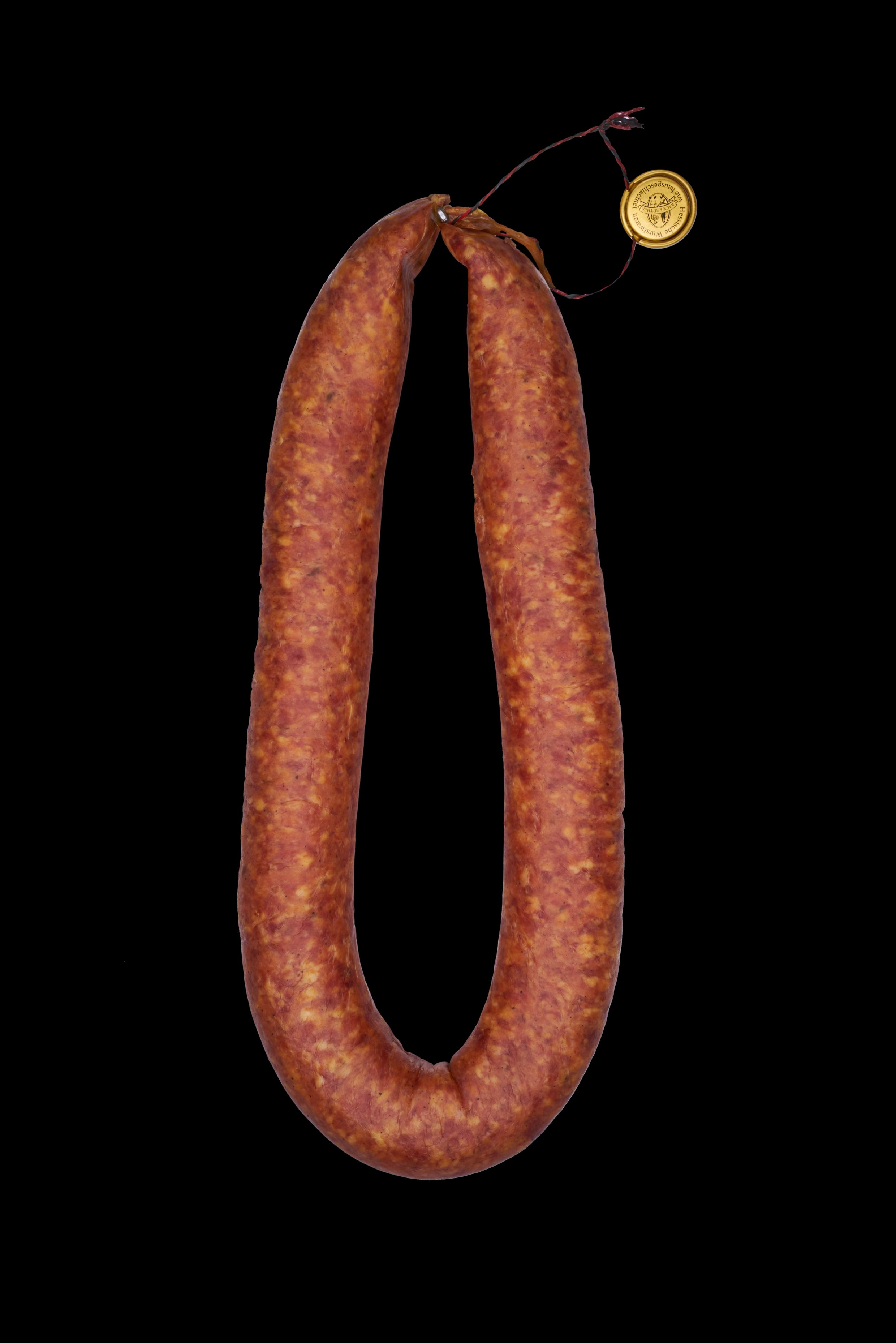
Germany – Farmer’s bratwurst, spreadable raw sausage – STEC E.coli

LMW

Alert type: Food
Date of first publication: 06.09.2022
Product name:

Farmer’s bratwurst, spreadable raw sausage

Product images:

Hessische_Bauernbratwurst_streichfaehig.jpg

Rack & Rüther GmbH

Manufacturer (distributor):

Rack & Rüther GmbH Steinbreite 14 34277 Fuldabrück

Reason for warning:

Detection of shigatoxin-producing Escherichia coli (STEC)

Durability: 09/30/2022
Lot identification: 238
Further information:

An EHEC (synonyms: STEC, VTEC) disease usually manifests itself within a week after infection with diarrhea and abdominal cramps. Babies, small children, the elderly and people with a weakened immune system in particular can develop more severe illnesses with bloody diarrhea. Rarely, especially in small children, acute kidney failure can occur in a second flare-up a few days after the onset of diarrhea. Anyone who has eaten this food and develops severe or persistent symptoms should seek medical attention and report possible EHEC infection. It makes no sense to seek preventive medical treatment without symptoms.

Further information on the pathogen can be found here: http://www.infectionsschutz.de/erregersteckbriefe/ehec/

For more information, please refer to the attached customer information.

Manufacturer’s website:

Luxembourg – MUSSELS FROM SPAIN – BULK SALE – Salmonella

SAP

Cora Company is recalling the following product:

ast name Mussels from Spain
Mark Unbranded – Bulk Sale
Unity 3kg
Batch 124723
Sales period from 08/30/2022 to 09/05/2022

Danger  : Presence of salmonella

Salmonella can cause symptoms such as nausea, vomiting, abdominal cramps, diarrhea, fever and headache within 6 to 72 hours after consumption. These symptoms may be aggravated in young children, immunocompromised subjects and the elderly. People who have consumed these products and have these symptoms are invited to consult a doctor and report this consumption to him.

USA – Magnolia Provision Company, Inc., Recalls Beef Jerky Products Due to Possible Listeria Contamination

FSIS USDA

FSIS Announcement

WASHINGTON, Sept. 6, 2022 – Magnolia Provision Company, Inc., a Knoxville, Tenn. establishment, is recalling approximately 497 pounds of beef jerky products that may be adulterated with Listeria monocytogenes, the U.S. Department of Agriculture’s Food Safety and Inspection Service (FSIS) announced today.

The ready-to-eat beef jerky items were produced on August 25, 2022. The following products are subject to recall [view labels]:

  • 2-oz. packages of “BEEF JERKY EXPERIENCE CHOP HOUSE STYLE PRIME RIB FLAVORED BEEF JERKY” with “EXP 8/25/23” displayed on the back of the package.
  • 8-oz. packages of “BEEF JERKY EXPERIENCE CHOP HOUSE STYLE PRIME RIB FLAVORED BEEF JERKY” with “EXP 8/25/23” displayed on the back of the package.
  • 16-oz. packages of “BEEF JERKY EXPERIENCE CHOP HOUSE STYLE PRIME RIB FLAVORED BEEF JERKY” with “EXP 8/25/23” displayed on the back of the package.

The products subject to recall bear establishment number “EST. 8091” inside the USDA mark of inspection. These items were shipped to retail locations nationwide.

The problem was discovered when the establishment reported to FSIS that it received confirmation from their third-party lab that a product contact surface sample returned as positive for Listeria monocytogenes.

There have been no confirmed reports of adverse reactions due to consumption of these products. Anyone concerned about an injury or illness should contact a healthcare provider.

Consumption of food contaminated with L. monocytogenes can cause listeriosis, a serious infection that primarily affects older adults, persons with weakened immune systems, and pregnant women and their newborns. Less commonly, persons outside these risk groups are affected.

Click to access Recall-030-2022-Labels.pdf

France – Coffee Eclair – Listeria monocytogenes

Gov france

Identification information of the recalled product

  • Product category Feed
  • Product subcategory Cereals and baked goods
  • Product brand name Saint-Nicolas Gourmet
  • Model names or references Saint-Nicolas Gourmet
  • Identification of products
    Batch Date
    220825459 Best before date 08/28/2022
  • Marketing start/end date From 08/25/2022 to 08/28/2022
  • Storage temperature Product to be stored in the refrigerator
  • Geographic area of ​​sale INTERMARCHE UNIVERSITY
  • Distributors intermarché university

Practical information regarding the recall

  • Reason for recall LISTERIA presence
  • Risks incurred by the consumer Listeria monocytogenes (causative agent of listeriosis)

Australian Food Safety Week 2022 will be held from 12 – 19 November 2022

Food Safety Council

The theme will be ‘Food safety – raw and risky’ covering the risk of food poisoning from raw or minimally cooked meat, poultry, fish, eggs and vegetables as well as possible  parasite infections. We will also be celebrating our 25th anniversary of educating the Australian community in food safety.

Our community package for AFSW2022 containing social media tiles, posters, sample media release, a quiz and event registration will be available in September subscribe to our newsletter to keep up to date.

Proudly sponsored by Fit for Food an initiative of our member ACCORD Australasia.

Thanks also to our member SA Health for sponsoring our consumer research

Promote your local event by using our sample media release

Share our Raw and Risky quiz

Reusable Food Containers and Food Safety

Food Safety Council

The Food Safety Information Council today issued advice about safely using reusable food containers, especially as they are gaining acceptance with food retailers.

Cathy Moir, Council Chair, said whether it is your coffee keep cup, refillable water bottle, or if you are taking your own container to the deli, take away or cafe we need to follow some safety tips to make sure we aren’t increasing cases of food poisoning.

‘We support the reduction of singe use plastics but not at the expense of increasing the number of cases of food poisoning. For example, we support the use of thin plastic bags to stop the contamination of ready to eat salad vegetables at the checkout or loose in supermarket trolleys.’ Ms Moir said.

‘But you need to follow these 6 simple tips to keep your food safe:

  1. Make sure the container is easy to keep clean and that you clean it thoroughly with hot water and detergent (or in the dishwasher) between uses. Some types of containers, such as plastic takeaway food containers are only meant for single use or are very difficult to clean so are not suitable to reuse as a food container.
  2. Your container must have a sealable lid that won’t leak and have removable seals for easy cleaning. This is especially important for raw meat that could drip onto other food.
  3. Stick to the rules of the retailer, for example, some retailers won’t accept glass or ceramic containers in case they are dropped and shatter.
  4. Where your retailer doesn’t offer plastic ‘barrier’ bags for fruit and vegetables, that won’t be cooked before eating, take your own washable bag and, as always, thoroughly rinse the fruit and veggies under running water before use. If you do use a plastic produce bag remember that soft plastics can be recycled at RED facilities in many major supermarkets.
  5. If you are purchasing hot food or taking a ‘doggy bag’ of leftovers home from a restaurant transport the food in an insulated bag and use or refrigerate within 2 hours. Make sure the container you use is suitable for reheating in the microwave or oven. Leftovers will last 2 to 3 days in the fridge and should be reheated to 75°C or using the microwave reheat auto function.
  6. Discard your plastic container once it shows signs of wear and tear as cracks, breaks, scores in the plastic can allow contaminants to enter or make the container difficult to clean. This may allow chemicals to migrate into the food or contaminate it with shards of plastic.

‘Finally, don’t forget to empty and wash your reusable water bottles daily after use to prevent bacteria, and even fungi, growing inside the bottle from it touching your mouth or even leaving a half-finished bottle lying about at room temperature. Use hot water and a bottle brush then allow the bottle to air dry thoroughly before refilling or put it in the dishwasher if the bottle is dishwasher safe. If you use a water bladder when jogging or cycling you can clean it with hot water and two tablespoons of baking soda or bleach, hold the bladder up and pinch the bite valve so the solutions runs into the tube, then leave for 30 minutes. Then rinse with clean water. Some brands also sell cleaning tablets to use,’ Ms Moir concluded.

Media contact: Lydia Buchtmann, Food Safety Information Council, 0407 626 688 or info@foodsafety.asn.au