Category Archives: Food Poisoning

France – Product recall: LES VIGNES MARINES brand organic rope mussels in France – E.coli

Oulah

Product recall: LES VIGNES MARINES brand organic rope mold in France

ENCOUNTERED PROBLEM

Presence of Escherichia coli

PROPOSED SOLUTION

People who hold the product in question are asked not to consume them – and more particularly young children, pregnant women, immunocompromised people and the elderly – and to return them to the point of sale where they were purchased.

People who have consumed it and who present symptoms such as diarrhea, abdominal pain or vomiting should consult their doctor as soon as possible, mentioning this consumption and the possible link with the bacterium Escherichia coli.

In the absence of symptoms within 10 days after consuming the affected products, there is no need to worry and consult a doctor.

The E. coli bacterium is naturally present in the digestive microflora of humans and warm-blooded animals. Some strains of E. coli are pathogenic, and can be responsible in humans for various disorders ranging from mild diarrhea to more serious forms such as hemorrhagic diarrhea or severe kidney damage such as HUS, mainly in young children.

FURTHER INFORMATION

▸ Barcode
3000121311723


▸ Lot
• 20210515
• 20210516


▸ DLC – DDM
between 05/23/2021 and 05/24/2021


▸ Start date / End of marketing
From 05/18/2021 to 05/21/2021


▸ Health mark
FR 44.069.002 CE


▸ Distributors
E. Leclerc Stores


▸ Contact
customer service 0960445769


▸ Source
COOPERATIVE SUPPLY COMPANY – SCAPMAREE LECLERC

France – Product reminder: LES VIGNES MARINES branded rope mussels for Dumet Island breeding France

Oulah

Product reminder: LES VIGNES MARINES branded rope mold for Dumet Island breeding France

ENCOUNTERED PROBLEM

Presence of Escherichia coli

PROPOSED SOLUTION

People who hold the product in question are asked not to consume them – and more particularly young children, pregnant women, immunocompromised people and the elderly – and to return them to the point of sale where they were purchased.

People who have consumed it and who present symptoms such as diarrhea, abdominal pain or vomiting should consult their doctor as soon as possible, mentioning this consumption and the possible link with the bacterium Escherichia coli.

In the absence of symptoms within 10 days after consuming the affected products, there is no need to worry and consult a doctor.

The E. coli bacterium is naturally present in the digestive microflora of humans and warm-blooded animals. Some strains of E. coli are pathogenic, and can be responsible in humans for various disorders ranging from mild diarrhea to more serious forms such as hemorrhagic diarrhea or severe kidney damage such as HUS, mainly in young children.

FURTHER INFORMATION

▸ Barcode
3663515862999


▸ Lot
• 20210515
• 20210516


▸ DLC – DDM
between 05/23/2021 and 05/24/2021


▸ Start date / End of marketing
From 05/18/2021 to 05/21/2021


▸ Health mark
FR 44.069.002 CE


▸ Distributors
E. Leclerc Stores


▸ Contact
customer service 0960445769


▸ Source
COOPERATIVE SUPPLY COMPANY – SCAPMAREE LECLERC
Germany – “Every day” pepper salami 200 g – Enterohaemorrhagic E.coli (STEC)

LMW

Warning type: Food
Date of first publication: 05/26/2021
Product name:

“Every day” pepper salami 200 g

Manufacturer (distributor): Zentrale Handelsgesellschaft mbH Offenburg The item was sold exclusively through branches of the Globus retail chain.
Reason for warning:

Enterohaemorrhagic E.coli (STEC) were detected in samples as part of a routine check.

Packaging Unit: 00 g
Durability:

Best before: 05/29/2021

Lot identification: Batch: 1104
Additional Information:

Please refer to the company’s press release attached.

Contact to the responsible authorities:

Baden-Württemberg: poststelle@mlr.bwl.de

Bavaria: poststelle@lgl.bayern.de
Hesse: Schnellwarnung@rpda.hessen.de
Mecklenburg-Western Pomerania: poststelle@lm.mv-regierung.de
Lower Saxony: poststelle@ml.niedersachsen.de
North Rhine-Westphalia: poststelle@mulnv.nrw.de
Rhineland-Palatinate: Poststelle.Referat22@lua.rlp.de
Saarland: poststelle-luv@lav.saarland.de
Saxony: poststelle@sms.sachsen.de
Saxony-Anhalt: poststelle@ms.sachsen-anhalt.de
Thuringia: LM-Ueberendung@tlv.thueringen.de

USA – FDA Releases Results of FY20-FY21 Romaine Lettuce Sampling Assignment


FDA

Eurofins Food Testing UK

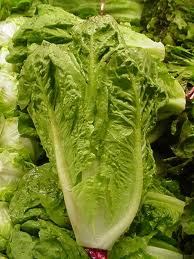
The U.S. Food and Drug Administration is releasing the findings of a sampling assignment that tested raw agricultural commodity romaine lettuce mostly at facilities and on farms in the Salinas, California, and Yuma, Arizona growing regions for the presence of pathogens that have been linked to outbreaks of foodborne illness.

The assignment to detect pathogenic Escherichia coli (specifically, Shiga toxin-producing E. coli or STEC) and Salmonella spp began in November 2019 and ended in December 2020, after a pause in sample collection and testing from March through October 2020 due to the COVID-19 pandemic. The FDA did not detect any pathogens during the assignment.

The agency prioritized sample collection at farms and FDA-registered facilities identified in traceback investigations as suppliers of romaine lettuce possibly linked or linked to outbreaks of foodborne illnesses from 2017 to 2019.   The FDA collected and tested 279 samples for both pathogens. Each sample was made up of 10 subsamples, with each subsample consisting of one or more heads or hearts of romaine lettuce and weighing at least 300 grams. This approach – the collection and testing of samples composed of multiple subsamples – increases the probability of detecting pathogens if present, given that microbial hazards may not be uniformly present. Agency field staff collected all samples in their natural form but for the outer leaves having been removed. No fresh-cut lettuce was collected.

Ensuring the microbiological safety of leafy greens continues to be a priority to the FDA. Although no pathogens were detected during this assignment, maintaining surveillance during the growing/harvesting season is helpful to informing the agency’s leafy greens prevention efforts, specifically those outlined in the FDA’s  Leafy Greens Action Plan. The FDA originally released the action plan in March 2020 to foster a more urgent and collaborative approach to preventing leafy greens outbreaks caused by STEC.  In April 2021, the FDA released an updated version of the plan which reaffirms our commitment to advancing leafy greens safety.

For More Information

EU Research – Risk characterisation of ciguatera poisoning in Europe

EFSA

The EuroCigua project main objective is to characterize the risk of Ciguatera Poisoning (CP) in Europe including several specific objectives: to determine the incidence of ciguatera in Europe and the epidemiological characteristics of cases; to assess the presence of ciguatoxin in food and the environment in Europe and to develop and validate methods for the detection, quantification and confirmation of the presence of ciguatoxin contaminated specimens.

This report compiles the activities carried out during the EuroCigua project from the signing in April 2016 until December 2020. The present document corresponds to Deliverable No. 6: “Final Scientific Report” on Risk characterization of ciguatera food poisoning in Europe of the Specific Agreement no. 1 “MANAGEMENT AND SCIENTIFIC COORDINATION” within the Framework Partnership Agreement GP/EFSA/AFSCO/2015/03 “Risk characterization of ciguatera food poisoning in Europe”.

Research – Presence, seasonal distribution and biomolecular characterization of Vibrio parahaemolyticus and Vibrio vulnificus in shellfish harvested and marketed in Sardinia (Italy) between 2017 and 2018

Journal of Food Protection

Food Illness

In the present study, we aimed to investigate the presence, seasonal distribution and biomolecular characterization of Vibrio parahaemolyticus and Vibrio vulnificus in samples of bivalve molluscs ( Mytilus galloprovincialis, Crassostrea gigas, Ruditapes decussatus, Venus verrucosa and Solen vagina ) and gastropod molluscs (Murex brandaris) harvested and marketed in Sardinia (Italy) between 2017 and 2018. A total of 444 samples were submitted to qualitative determination of Vibrio spp., V. parahaemolyticus and V. vulnificus. Identification and virulence profile of the isolated strains were performed by biomolecular methods. The overall prevalence of Vibrio spp. was 7%. The highest prevalence was pointed out in R. decussatus (8.3%). The prevalence of V. parahaemolyticus and V. vulnificus were 2.7% and 4.7% respectively. Higher levels of V. parahaemolyticus and V. vulnificus prevalence were highlighted in R. decussatus (4.2%) and C. gigas (6.2%) respectively. Potentially pathogenic V. parahaemolyticus strains were a minority ( n. 2 isolates tdh-/trh+ and n. 1 isolate tdh+/trh- ) and were recovered from M. galloprovincialis . None of the isolates was tdh+/ trh+. Pathogenic Vibrios infections are often underestimated and the reports of human infections in Europe are constantly increasing. European data on the true distribution of Vibrionaceae are scarce: the results of the present study highlight the need of constant monitoring plans to update the distribution of potentially pathogenic Vibrios.

France – Product recall: CELNAT brand Wholemeal Small Spelled Flour – Ochratoxin A

Oulah

Product recall: CELNAT brand Wholemeal Small Spelled Flour

ENCOUNTERED PROBLEM

Presence of Ochratoxin A

PROPOSED SOLUTION

Do not consume and return to the point of sale for reimbursement.

FURTHER INFORMATION

▸ Names of models or references
Reference IEP – Whole wheat flour – 500g


▸ Barcode
3273120020969


▸ Lot
• 09721
• 09821


▸ DLC – DDM
• 04/07/2022
• 04/08/2022


▸ Packaging
Plastic bag – 500g


▸ Start date / End of marketing
Since 04/12/2021


▸ Distributors
Organic specialty store and organic chain store


▸ Consumer service contact
0471030414


▸ Source
CELNAT

France – Product recall: CELNAT brand Wholemeal Small Spelled Flour 10kg – Ochratoxin A

Oulah

Product recall: CELNAT brand Wholemeal Small Spelled Flour 10kg

ENCOUNTERED PROBLEM

Presence of Ochratoxin A

PROPOSED SOLUTION

Do not consume and return to the point of sale for reimbursement.

FURTHER INFORMATION

▸ Names of models or references
Reference IEP / 10 – Whole wheat flour – 10kg


▸ Barcode
3273120029665


▸ Lot
• 05621
• 09621


▸ DLC – DDM
• 11/25/2021
• 01/06/2022


▸ Packaging
Paper bag – 10kg


▸ Start date / End of marketing
Since 03/02/2021


▸ Distributors
Organic specialty store and organic chain store


▸ Consumer service contact
0471030414


▸ Source
CELNAT

France – Product recall: CELNAT brand Wholemeal Small Spelled Flour 25kg – Ochratoxin A

Oulah

Product recall: CELNAT brand Wholemeal Small Spelled Flour 25kg

ENCOUNTERED PROBLEM

Presence of Ochratoxin A

PROPOSED SOLUTION

Do not consume and return to the point of sale for reimbursement.

FURTHER INFORMATION

▸ Names of models or references
Reference IEP / 10 – Whole wheat flour – 10kg


▸ Barcode
3273120020983


▸ Lot
• 08221
• 09621


▸ DLC – DDM
• 23/12/2021
• 06/01/2022


▸ Packaging
Paper bag – 25kg


▸ Distributors
Organic specialty store and organic chain store


▸ Consumer service contact
0471030414


▸ Source
CELNAT

Bahamas – Conch Alert After Cases Of Suspected Poisoning

Tribune 242

KSWFOODWORLD

FOOD safety officials are cautioning against the consumption of fresh conch after several suspected cases of conch poisoning.

Several reports of conch poisoning made the rounds on social media over the past few days before the Bahamas Agricultural Health and Food Safety Authority issued a statement yesterday.

The authority warned consumers to avoid fresh conch until officials are able to determine the source of the contamination.

Conch poisoning is typically caused by the bacterium, Vibrio parahaemolyticus, with contamination attributed to poor hygienic practices during its handling and preparation.

Health Minister Renward Wells said there had been about 10 reported cases of conch poisoning. He said the ministry was concerned that this has risen in recent days. He was unable yesterday to say where the cases originated.

Meanwhile, Bahamas Commercial Fishers Alliance President Adrian Laroda said he would not caution against eating conch because it could have implications on the industry. Instead, he urged handlers to wash the mollusk properly during preparation.