Category Archives: Food Microbiology

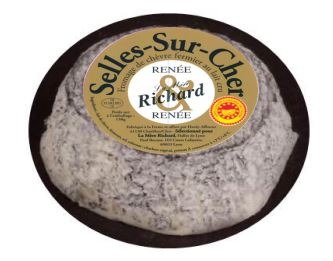
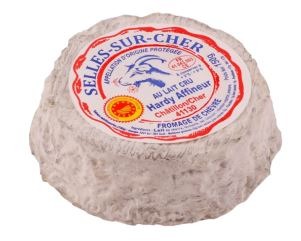
France – Cheese – Stools on Dear Farmer – STEC E.coli O103

Gov france

  • Product category Food
  • Product subcategory Milk and dairy products
  • Product brand name Hardy refiner – La Mère Richard
  • Model names or references Saddles on Cher Farmer AOP
  • Identification of products
    Batch Date
    59-216 Date of minimum durability 09/27/2023
  • Packaging bare or blister product
  • Marketing start/end date Since 08/21/2023
  • Storage temperature Product to be stored in the refrigerator
  • Health mark EN 41.043.003 CE
  • Geographical sales area Whole France
  • Distributors EDOUARD CO TEAM WEST

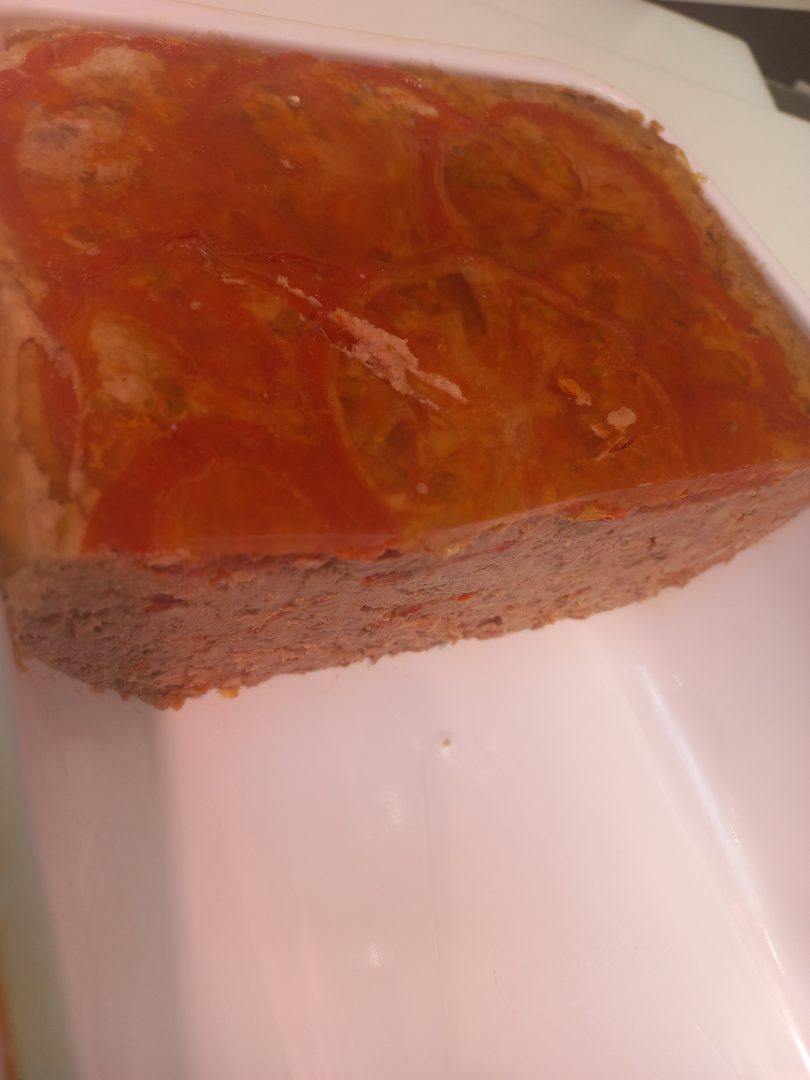
France – CHILI PASTE SOLD IN THE CHARCUTERIE DEPARTMENT CUP DU CARREFOUR SAINT MARTIN AU LAERT – Listeria monocytogenes

Gov france

  • Product category Food
  • Product subcategory Meats
  • Product brand name UNBRANDED
  • Model names or references CHILI PASTE SOLD IN THE CHARCUTERIE DEPARTMENT CUP DU CARREFOUR SAINT MARTIN AU LAERT BETWEEN 08/25/2023 AND 08/28/2023
  • Identification of products
    GTIN Batch
    1111111111116 FROM 08/25/2023 TO 08/28/2023
  • Packaging BAG
  • Marketing start/end date From 08/25/2023 to 08/28/2023
  • Storage temperature Product to be stored in the refrigerator
  • Health mark EN 59.526.002 EC
  • Further information CHILI PASTE SOLD IN THE CHARCUTERIE DEPARTMENT CUP DU CARREFOUR SAINT MARTIN AU LAERT BETWEEN 08/25/2023 AND 08/28/2023
  • Geographical sales area CARREFOUR SAINT MARTIN IN LAERT
  • Distributors CARREFOUR HYPER SAINT MARTIN IN LAERT ONLY

Norway – Raw Hamburger Classic frozen 800 g and Big Beef Burger 2 x 180 g are withdrawn from the market due to suspicion of E.coli (EHEC)

Matportalen

The products are sold in REMA 1000 stores throughout the country.

Consumers who may have products lying around at home are asked to throw the product away or return it to the store where it was purchased for a refund.

Good kitchen hygiene and correct heat treatment will prevent you from getting sick from eating the products in question. Consumers who think they have become ill after eating the products are asked to contact a doctor for advice and follow-up.

Contact persons:

Contact person Nordfjord Kjøtt AS:
Randi Støyva, e-mail: randis@nordfjord-as.no, mobile 40 55 17 81

Contact person for the Norwegian Food Safety Authority:
Head of Department Bente Sande, Nordfjord Department. E-mail: bente.sande@mattilsynet.no, mobile 91 52 42 85

Austria – TUNA FILLET (WEIGHT ITEM from the FISH COUNTER) – Histamine

AGES

Billa AG is recalling the tuna fillet from the fish counter. 

Increased histamine levels were found in the product, so a potential health hazard cannot be ruled out. Consuming this product is not recommended. The product was sold openly over the fish counter.

Product data: TUNA FILET (WEIGHT ITEM from the FISH COUNTER)

The inventory of the affected product has been removed from sale.

– Affected products that have already been purchased can now be returned without a receipt

– If you have any questions, please contact BILLA customer service at Tel. 0800 828 700 (Mon-Fri 7:15 a.m. – 7:30 p.m., Sat 7:15 a.m. – 6:00 p.m.) or by email to kundenservice@billa.at

Billa AG regrets the incident and apologizes to all customers for the inconvenience caused.

The warning does not state that the health risk was caused by the producer, manufacturer, importer or distributor.

Link to the original message

Research -Effect of Sodium Nitrite, Nisin and Lactic Acid on the Prevalence and Antibiotic Resistance Patterns of Listeria monocytogenes Naturally Present in Poultry

MDPI

Abstract

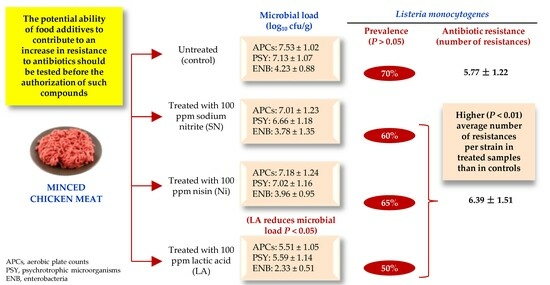
The impact of treating minced chicken meat with sodium nitrite (SN, 100 ppm), nisin (Ni, 10 ppm) and lactic acid (LA, 3000 ppm) on the levels of some microbial groups indicating hygiene quality were investigated. Specifically, aerobic plate counts and culture-based counts of psychrotrophic microorganisms and enterobacteria were obtained. Additionally, the prevalence of Listeria monocytogenes and the resistance of 245 isolates from this bacterium to 15 antibiotics were documented. L. monocytogenes was isolated using the ISO 11290-1:2017 method and confirmed with polymerase chain reaction using the lmo1030 gene. Antibiotic resistance was established using the disc diffusion technique (EUCAST and CLSI criteria). Twenty-four hours after treatment, the microbial load (log10 cfu/g) was reduced (p < 0.05) relative to controls in those samples treated with LA, with counts of 5.51 ± 1.05 (LA-treated samples) vs. 7.53 ± 1.02 (control) for APC, 5.59 ± 1.14 (LA) vs. 7.13 ± 1.07 (control) for psychrotrophic microorganisms and 2.33 ± 0.51 (LA) vs. 4.23 ± 0.88 (control) for enterobacteria. L. monocytogenes was detected in 70% (control samples), 60% (samples receiving SN), 65% (Ni) and 50% (LA) (p > 0.05) of samples. All strains showed resistance to multiple antimicrobials (between 3 and 12). In all, 225 isolates (91.8%) showed a multi-drug resistant (MDR) phenotype, and one isolate (0.4%) showed an extensively drug-resistant (XDR) phenotype. The mean number of resistances per strain was lower (p < 0.01) in the control samples, at 5.77 ± 1.22, than in those receiving treatment, at 6.39 ± 1.51. It is suggested that the use of food additives might increase the prevalence of resistance to antibiotics in L. monocytogenes, although additional studies would be necessary to verify this finding by analyzing a higher number of samples and different foodstuffs and by increasing the number of antimicrobial compounds and concentrations to be tested.

Research – Microbiological Quality and Safety of Fresh Quail Meat at the Retail Level

MDPI

Abstract

The objective of this study was to evaluate the microbiological quality and safety of 37 fresh quail meats. Mesophiles, Pseudomonas spp., Enterobacteriaceae, and staphylococci counts were 5.25 ± 1.14, 3.92 ± 1.17, 3.09 ± 1.02, and 2.80 ± 0.64 log CFU/g, respectively. Listeria monocytogenes was detected in seven samples (18.92%). Campylobacter jejuni was detected in one sample (2.70%). Clostridium perfringens was not detected in any sample. The dominant bacteria were Pseudomonas spp. (30.46%), Micrococcaceae (19.87%), lactic acid bacteria (14.57%), and Enterobacteriaceae (11.92%). Brochotrix thermosphacta and enterococci were isolated to a lesser extent, 7.28% and 1.99%, respectively. The dominant Enterobacteriaceae found were Escherichia coli (42.53%). ESBL-producing E. coli was detected in one sample (2.70%), showing resistance to 16 antibiotics. Sixteen different Staphylococcus spp. and three Mammaliicoccus spp. were identified, the most common being S. cohnii (19.86%) and M. sciuri (17.02%). S. aureus and S. epidermidis were also found in one and four samples, respectively. Methicillin-resistant M. sciuri and S. warneri were found in 13.51% and 10.81% of quail samples, respectively. These bacteria showed an average of 6.20 and 18.50 resistances per strain, respectively. The high resistance observed in ESBL-producing E. coli and methicillin-resistant S. warneri is of special concern. Measures should be adopted to reduce the contamination of quail meat.

Research – Natural preservatives for hams: Essential oil mixtures and major compounds’ efficacy against Clostridium sporogenes

Wiley Online

Abstract

The demand for healthier products by consumers has prompted research into the use of essential oils (EOs), which are known for their antimicrobial properties. This study investigated the antimicrobial properties of EOs as a potential alternative to synthetic preservatives, specifically, cinnamon, clove, and oregano EOs, as well as their majority compounds (cinnamaldehyde, eugenol, and carvacrol) on Clostridium sporogenes inoculated in hams. The findings of the study revealed that cinnamon EO and its major compound cinnamaldehyde were the most efficient in inhibiting the growth of C. sporogenes, demonstrating the lowest minimum bactericidal concentration MBC (0.1%). The combination of oregano EO, cinnamon EO, cinnamaldehyde, and carvacrol led to a significant decrease in bacterial growth (approximately 3 log) after 28 days in hams. Furthermore, the presence of spores was not observed for 14 days (at 14°C) and 21 days (at 7°C) of storage, indicating a delay in sporulation. The treatments using the combination of EOs, and their major compounds had minimal impact on the color of the hams while maintaining the physicochemical characteristics of the product. This study demonstrates that EOs and their major compounds can be applied as natural preservatives in ham, offering a potential alternative for reducing the use of nitrites in various food types. The research emphasizes the antibacterial efficacy of cinnamon, clove, and oregano EOs, along with their major compounds, in inhibiting C. sporogenes in ham. The findings indicate that these natural alternatives could be valuable in preserving food products and reducing the reliance on synthetic preservatives.

Research – Viability and Virulence of Listeria monocytogenes in Poultry

MDPI

Abstract

The prevalence of Listeria monocytogenes in 30 samples of poultry was determined using culture-dependent (isolation on OCLA and confirmation by conventional polymerase chain reaction -PCR-, OCLA&PCR) and culture-independent (real-time polymerase chain reaction, q-PCR) methods. L. monocytogenes was detected in 15 samples (50.0%) by OCLA&PCR and in 20 (66.7%) by q-PCR. The concentrations (log10 cfu/g) of L. monocytogenes (q-PCR) ranged from 2.40 to 5.22 (total cells) and from <2.15 to 3.93 (viable cells). The two methods, q-PCR using a viability marker (v-PCR) and OCLA&PCR (gold standard), were compared for their capacity to detect viable cells of L. monocytogenes, with the potential to cause human disease. The values for sensitivity, specificity and efficiency of the v-PCR were 100%, 66.7% and 83.3%, respectively. The agreement between the two methods (kappa coefficient) was 0.67. The presence of nine virulence genes (hlyAactAinlBinlAinlCinlJprfAplcA and iap) was studied in 45 L. monocytogenes isolates (three from each positive sample) using PCR. All the strains harbored between six and nine virulence genes. Fifteen isolates (33.3% of the total) did not show the potential to form biofilm on a polystyrene surface, as determined by a crystal violet assay. The remaining strains were classified as weak (23 isolates, 51.1% of the total), moderate (one isolate, 2.2%) or strong (six isolates, 13.3%) biofilm producers. The strains were tested for susceptibility to a panel of 15 antibiotics. An average of 5.11 ± 1.30 resistances per isolate was observed. When the values for resistance and for reduced susceptibility were taken jointly, this figure rose to 6.91 ± 1.59. There was a prevalence of resistance or reduced susceptibility of more than 50.0% for oxacillin, cefoxitin, cefotaxime, cefepime ciprofloxacin, enrofloxacin and nitrofurantoin. For the remaining antibiotics tested, the corresponding values ranged from 0.0% for chloramphenicol to 48.9% for rifampicin. The high prevalence and level of L. monocytogenes with numerous virulence factors in poultry underline how crucial it is to follow correct hygiene procedures during the processing of this foodstuff in order to reduce the risk of human listeriosis.

South African scientists sound warning after Listeria found in beef

Food Safety News

South African researchers have warned about the risk of another outbreak after a study found Listeria in the beef sector.

The study was conducted by scientists at the University of Pretoria (UP) in 2019 and 2020 into the prevalence of Listeria monocytogenes in beef and beef products at abattoirs and retailers in the Gauteng, Mpumalanga and North West provinces.

It showed that 4.6 percent of chilled carcasses sampled at seven abattoirs in Gauteng were positive for Listeria. This means that contaminated items could enter the food chain as beef products sold at retail outlets in the province.

The study, funded by Red Meat Research and Development South Africa, was prompted by the 2017-2018 outbreak of listeriosis with 1,065 confirmed cases and 218 deaths. It was traced to a ready-to-eat processed meat product called polony, made at a plant in Polokwane run by Enterprise Foods, which at that time was owned by Tiger Brands.

Ready-to-eat (RTE) food, including polony, were also positive for Listeria in the current study.

 Belgium -Organic gluten-free Speculoos 150g – Organic Honey Waffles gluten-free 240g – Organic Vanilla Waffles gluten-free 120g – from the Mamita’s Bakeries brand – Aflatoxin

AFSCA

Recall of Mamita’s Bakeries bv
Products: Organic gluten-free Speculoos 150g – Organic Honey Waffles gluten-free 240g – Organic Vanilla Waffles gluten-free 120g – from the Mamita’s Bakeries brand.
Problem: Too high aflatoxin B1 content.

In agreement with the FASFC, Mamita’s Bakeries bv is withdrawing the products:
       • Organic gluten-free Speculoos 150g
       • Organic Honey Waffles gluten-free 240g
       • Organic Vanilla Waffles gluten-free 120g
of the Mamita’s Bakeries brand from sale and is recalling them from consumers in due to too high aflatoxin B1 content.

Mamita’s Bakeries bv asks its customers not to consume these products and to return them to the point of sale in which they were purchased.

Description of products:

– Product name: Organic gluten-free speculoos
– Brand: Mamita’s Bakeries
– Minimum durability dates (DDM) (“Best before (or end)”): 01/10/24 – 02/15/24 – 02/28/24 – Batch
numbers: 100124 – 150224 – 280224
– Sales period: from 06/19/23 to 08/14/23
– Nature of packaging: blister
– Weight: 150g

– Product name: Gluten-free Organic Honey Waffles
– Brand: Mamita’s Bakeries
– Minimum durability dates (DDM) (“To be consumed preferably before (or end)”): 12/30/23 – 01/15/24 – 01/30/24 – 02/07/24 – 02/14/24 –
Numbers of lots: 301223 – 150124 – 300124 – 070224 – 140224
– Sales period: from 06/19/23 to 09/06/23
– Nature of packaging: printed bag
– Weight: 240g

– Product name: Gluten-free Organic Vanilla Waffles
– Brand: Mamita’s Bakeries
– Best before dates (Best before): 06/10/23 – 23/10/23 – 27/10/23 – 02/11/23 – 14/11/23 – 22/11/23
– Lot numbers: 061023 – 231023 – 271023 – 021123 – 141123 – 221123
– Sales period: from 06/19/23 to 08/14/ 23
– Nature of packaging: printed bag
– Weight: 120g

The product was distributed by:
– ​​Delhaize De Leeuw NV – Brusselsesteenweg 347 B-1730 Asse.
– Biofresh NV – Legen Heirweg 51 B-9890 Gavere.

For any further information , contact:
Mr Christophe
Info@mamitasbakeries.com